
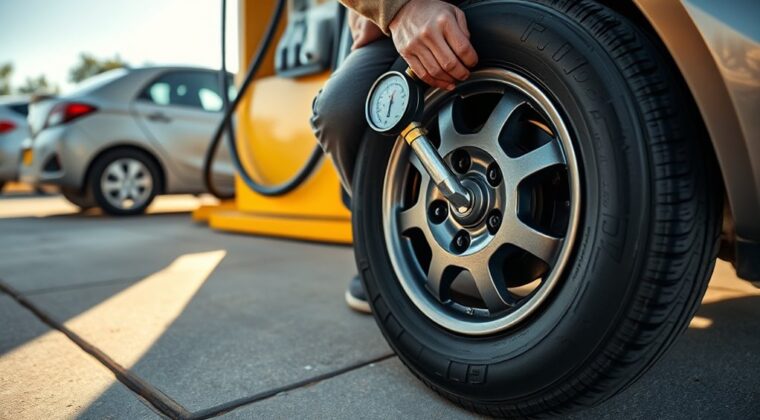
You can inflate tires after driving, but warm air raises pressure, so check the reading first. Locate your vehicle’s recommended PSI on the door jamb or owner’s manual, then measure each tire with a gauge. If the tire is hot, add air in short bursts and recheck often, staying at or below the target. When you finish, replace the valve caps tightly. A few careful steps can keep pressure accurate and safe.
Key Takeaways
- Check the manufacturer’s recommended cold PSI on the driver’s door jamb or owner’s manual before inflating.
- Remember warm tires can read 1–2 psi higher, so do not fully trust the current hot pressure.
- Use a pressure gauge on the valve stem, then add air in short bursts while rechecking often.
- Stop inflating when you reach the recommended PSI, avoiding overinflation and reduced traction.
- Replace the valve cap securely and recheck pressure when tires are cold for the most accurate reading.
Why Tire Pressure Reads Higher When Hot
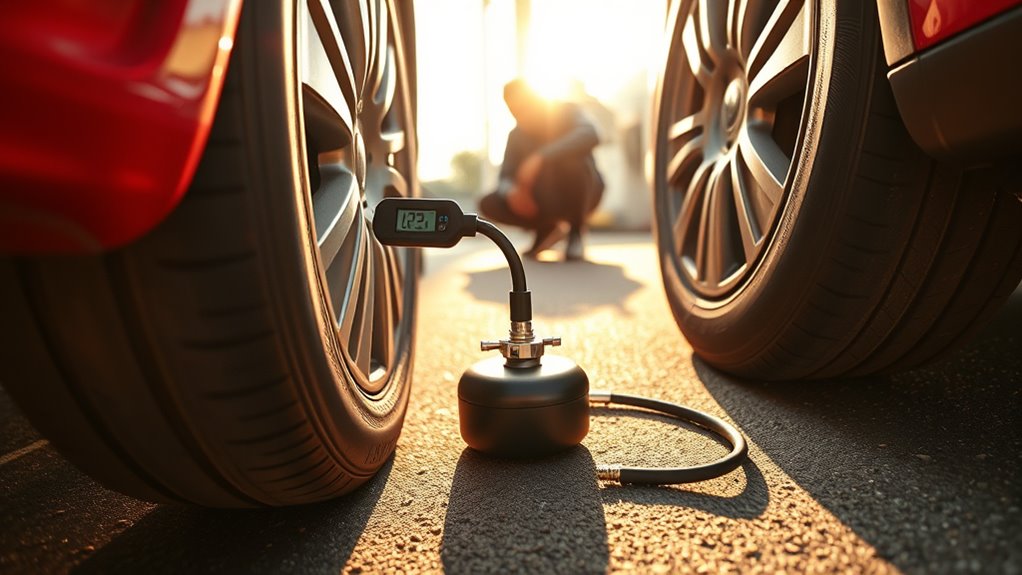
When your tires are hot from driving, the air inside them expands as temperature rises, so the pressure reading increases—typically by about 1 to 2 psi for every 10°F change. You’ll see this because pressure expands as air molecules move faster inside the tire casing.
A warm tire can show a higher number than your recommended PSI, even if the tire was correct when cold (your car) left the driveway. If you check tire pressure right after driving, you may make incorrect inflation adjustments based on inflated readings.
For accurate results, wait 2 to 3 hours after driving, or check tire pressure before you start the car. That gives you a true cold reading and protects you from overfilling or underfilling.
When you understand this thermal shift, you take control of your maintenance, preserve performance, and avoid conditions that quietly reduce tire life and road stability.
Find the Right PSI for Your Tires
Once you know that hot tires can show a higher pressure reading, the next step is to verify the correct PSI for your vehicle. Look for the recommended pressure on the driver’s door jamb sticker or in the owner’s manual.
Check both front and rear PSI levels, because they can differ. Use the lower cold tires specification as your baseline; if the tires are warm, subtract 3 to 5 PSI from the measured value to estimate the true target.
To check the pressure accurately, place a calibrated gauge firmly on the valve stem and read the result without delay. Don’t rely on an air pump alone, since its display can drift.
Confirm the numbers monthly, because tires lose about 1.45 psi per month. Precision here gives you freedom from guesswork and protects handling, wear, and safety.
Check Tire Pressure After Driving
When you check tire pressure after driving, the tires’ heat can raise the reading above the true baseline.
You should use the warm pressure only as a reference and wait 2 to 3 hours for a cold measurement.
Compare that cold reading to the manufacturer’s recommended PSI on the door jamb sticker.
Warm Tire Pressure
After driving, tire pressure readings can be artificially high because heat from the road and tire flexing increases internal air pressure by several PSI.
When you check warm tire pressure, use a gauge to check each tire, but don’t treat the number as the correct pressure. Heat creates higher pressure, so the reading can mislead you into thinking the tires are fine when they’re not.
If you must assess them now, subtract about 3 to 5 PSI to estimate where they’ll settle once tires are cold.
For the most accurate result, check the air pressure before driving. That simple habit gives you control, prevents underinflation after cool-down, and keeps your vehicle responsive.
Consistent monitoring helps you stay ahead of gradual pressure loss and maintain safe, efficient performance.
Cold Pressure Baseline
A true tire-pressure baseline comes from a cold reading, so check your tires before driving or wait 2 to 3 hours after the vehicle has been parked.
Heat from driving can raise tire pressure by 1 to 2 psi, so a hot reading may mislead you. Measure each tire, then compare it to the manufacturer’s recommended PSI on the driver’s door jamb sticker.
If pressure is low, add air carefully and recheck until you’re properly inflated. If you must use gas station air after driving, subtract about 3 to 5 psi from the displayed number to offset heat.
Your car loses about 1.45 psi each month, so inspect it regularly. Cold checks keep your ride efficient, safe, and independent.
How to Inflate Tires After Driving
To inflate tires after driving, first recognize that a warmed tire can show a slightly higher pressure than it would cold, so you shouldn’t rely on the reading as-is if you want maximum accuracy.
Warmed tires may read slightly high, so don’t trust the number at face value.
If you must check your car tires now, expect the pressure to read about 1–2 psi higher for every 10°F of heat gain.
Remove the valve cap carefully, then press a pressure gauge firmly onto the tire valve stem to seal it and limit air loss.
Compare the result with the recommended pounds per square inch. If you’re low, start adding air in short bursts, then recheck after each burst so you can stay precise and in control.
Once you’ve reached the target, replace the valve cap securely to keep dirt out and preserve pressure.
This method lets you respond immediately when needed, while still respecting the cold-pressure standard that keeps your ride free, stable, and safe.
Avoid Overinflating Your Tires
Once you’ve added air, don’t keep going past the manufacturer’s recommended PSI. Use your air compressor in short bursts, then check your tire pressure against the door-jamb placard or owner’s manual.
If the tires are warm, remember that internal pressure rises from driving, so a reading taken now can run 1-2 psi high for every 10°F increase. For accuracy and control, you should adjust only when the tires are cold, ideally before you drive or after several hours parked.
Overinflating tires reduces contact with the road, so you lose traction, stability, and braking confidence, especially in wet conditions. It also concentrates wear in the center of the tread, cutting tire life by up to 20%.
More importantly, a tire above the recommended PSI faces a higher blowout risk during highway speeds or when you carry heavy loads. Stay precise, stay free: set pressure correctly, then stop.
Recheck Pressure and Replace the Valve Caps
Check the tire pressure again with a reliable gauge to confirm it matches the manufacturer’s recommended PSI on the driver’s door-jamb sticker. This recheck pressure step verifies you haven’t underfilled or overfilled the tire after warming it during driving.
| Action | Purpose |
|---|---|
| Compare PSI | Confirms target inflation |
| Replace valve caps | Blocks air loss and contamination |
| Inspect caps | Detects cracks, wear, or damage |
After the reading is correct, reinstall the valve caps securely on each valve stem. Tighten them by hand only; tools can over-torque the cap, stress the valve stem, and create leaks. Good valve caps protect tire health by sealing out dirt and moisture, while damaged or missing caps can cause slow pressure loss over time. Check the caps during routine service, especially at the driver’s side door reference point, so you keep pressure stable and your ride free.
Frequently Asked Questions
How to Fill Tires With Air After Driving?
You fill tires with air after driving by first checking tire pressure with a tire gauge, then waiting until the tires cool for accurate readings.
Remove the valve cap, attach the air compressor, and add air in short bursts. Recheck often to match the door-jamb spec.
Follow safety tips, replace the cap, and include this in regular maintenance checks. Track inflation frequency so you stay mobile and in control.
Can I Inflate My Tires After Driving?
Yes, you can inflate your tires after driving, but you shouldn’t rely on that reading for tire pressure. Heat expansion raises pressure, so wait 2–3 hours if you want accuracy.
If you must add air, use an air compressor briefly, then recheck later. Follow the door-jamb PSI and avoid common mistakes like overinflation.
These safety tips support disciplined tire maintenance and protect performance, freedom, and control on the road.
How to Put Air in a Tire Step by Step?
You remove the valve cap, then check tire pressure with a tire gauge when the tire’s cold. Compare it to your vehicle’s recommended PSI.
Attach the air compressor fitting firmly to the valve stem, then add air in short bursts. Recheck often, following inflation tips and safety precautions to avoid overfilling.
Replace the cap, and include this task in your maintenance schedule. You’ll keep control and move freely.
What Is the 4 PSI Rule on Tires?
The 4 PSI rule says you should subtract about 4 PSI from a hot reading because your tires always seem to prefer drama over accuracy.
You check tire pressure after driving, then adjust for heat expansion. Use an air compressor, follow your maintenance schedule, and watch seasonal changes.
Correct pressure improves safety tips, reduces tire wear, and keeps handling precise. Measure cold whenever you can for the cleanest result.
Conclusion
Now you know how to inflate tires after driving without guesswork. Hot tires read higher, so check pressure carefully, add air in small increments, and stop at the manufacturer’s PSI. Recheck once the tires cool, then replace the valve caps to keep dirt and moisture out. Your tire pressure should now sit steady and safe, like a gauge settling on target. With this method, you’ll keep your tires balanced, efficient, and ready for the road.