
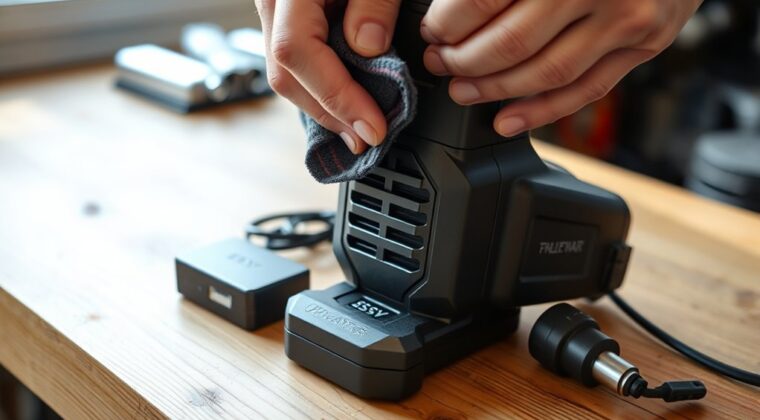
Store your cordless tire inflator battery in a 40-60°F location at about 40-60% charge, and avoid hot trunks or freezing spaces. Let the battery cool to room temperature before charging, and use only the supplied charger. Inspect terminals for dirt or corrosion, clean them safely, and keep connections tight. Check voltage every three months to catch loss early. If you keep going, you’ll see how to test cold-weather performance and protect runtime.
Key Takeaways
- Store the battery at 40–60% charge in a cool, stable 40–60°F location.
- Avoid charging a hot battery; let it cool to room temperature before using the charger.
- Inspect and clean terminals regularly, removing corrosion and keeping connections tight.
- Keep the battery away from extreme heat or cold, which can reduce lifespan and output.
- Perform quarterly voltage checks and maintenance logs to catch problems early and prevent failure.
How Should You Store a Cordless Tire Inflator Battery?
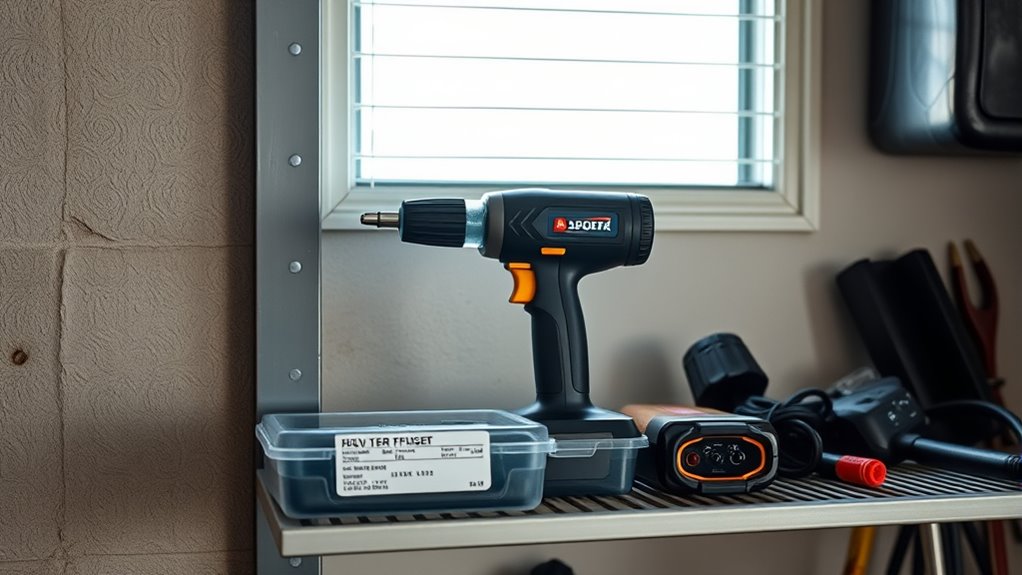
To store a cordless tire inflator battery properly, keep it in a 40-60°F environment and maintain a 40-60% state of charge, since both heat and full-charge storage accelerate degradation.
You should store the cordless tire inflator battery within this temperature range to limit chemical stress and preserve ideal longevity.
Don’t leave it at 100% SOC; partial charge reduces oxidation and helps prevent performance issues later.
Use safe steps: disconnect the pack, clean terminals, and place it where temperatures stay stable, not in a vehicle trunk.
Perform quarterly voltage checks to confirm the battery stays above 40% SOC and to catch debris on the contacts.
For seasonal tests, you can cold-soak the battery in a refrigerator for 24 hours, then verify output before use.
These disciplined habits keep your cordless tire inflator ready, reliable, and under your control.
Why Trunk Heat and Cold Hurt Batteries
Your trunk can swing by as much as 50°F, and heat above 130°F accelerates oxidation and electrolyte breakdown, which shortens lithium-ion cycle life.
Cold-soak conditions cut output fast, and at around 20°F, your inflator may run for only seconds before voltage sag limits operation.
To reduce stress, keep the battery near 40–60% state of charge instead of storing it full.
Heat Degrades Battery Life
Heat is one of the fastest ways to age a cordless tire inflator battery: when a pack sits in a vehicle trunk, temperatures can exceed 130°F, which accelerates chemical degradation and shortens service life.
You should treat heat as a primary stressor for lithium-ion batteries, because high temperatures raise internal wear and reduce performance over time.
For safe storage, keep the pack out of parked cars and place it in a cool, dry location. Store it at a 40-60% state of charge, not full, to limit oxidation and degradation.
Extreme temperatures undermine reliable operation and can compromise readiness when you need the inflator.
You don’t need to accept avoidable battery loss; disciplined storage protects capacity and preserves your freedom to respond with dependable power.
Cold Soaks Reduce Output
Cold-soak conditions can cut a cordless tire inflator battery’s output sharply, and around 20°F you may notice slower response, lower peak power, and shorter run time as internal resistance rises and electrolyte movement slows. You can verify this with regular maintenance and cold-soak checks.
| Condition | Effect | Result |
|---|---|---|
| cold-soak | higher internal resistance | lower battery performance |
| lithium-ion in trunk heat | faster battery degradation | reduced cycle life |
| controlled storage conditions | steadier State of Charge | more reliable output |
High temperatures in vehicle trunks can exceed 130°F, which accelerates SEI growth and raises resistance further. You free the tool from avoidable loss when you monitor storage conditions, avoid extreme temperatures, and treat the pack as a precision energy source, not a disposable accessory.
Store Around Half Charge
Keeping a lithium-ion cordless tire inflator at about 40-60% State of Charge is the safest storage range, because a full 100% charge speeds oxidation and other degradation processes that shorten battery life.
To store around half charge, you lower electrochemical stress and protect a healthy battery.
In a trunk, extreme temperatures intensify risk: heat can trigger electrolyte breakdown and gas generation, while cold-soak conditions raise internal resistance and hurt performance.
- Keep your lithium battery near mid-charge before storage.
- Avoid parking in sun-baked trunks or freezing garages.
- Check charge monthly, then recharge only as needed.
- Use moderate temperatures to preserve longevity and reliability.
What the 40-60 Rule Means for Storage
For storage, the 40-60 Rule means you should keep a cordless tire inflator’s lithium-ion battery at about 40% to 60% state of charge, because that range reduces chemical stress and slows long-term degradation.
In this ideal range, your tire inflator’s lithium cells stay less reactive, so you limit oxidation, protect battery life, and preserve safety during idle periods.
Within this ideal range, lithium cells stay calmer, reducing oxidation, preserving battery life, and improving idle safety.
If you leave the pack at 100% State of Charge, you drive faster degradation, and you can lose as much as 30% of lifespan. You also raise internal resistance and risk electrolyte breakdown when temperatures swing.
A healthy battery management system helps hold storage SOC in range and enforces charge lockouts.
Check the gauge regularly, then adjust only as needed so you keep control without overhandling the pack.
That disciplined method gives you reliable performance, steadier output, and more freedom from premature battery replacement.
How to Charge a Tire Inflator Battery Safely
To charge your cordless tire inflator battery safely, let it cool to room temperature first—ideally between 40°F and 60°F—so you don’t trap heat in the cells and accelerate wear. This simple discipline reduces thermal volatility and protects performance.
- Use the supplied charger for your tire inflator battery.
- Follow manufacturer guidelines to control charge rate and prevent overcharging.
- Inspect the charging port for dirt or corrosion before you connect it.
- After use, let the battery rest so residual heat can dissipate.
Keep the battery at least 40% SOC before long storage; that range supports stability without pushing stress into the pack.
Avoid charging right after heavy use, because heat plus current raises safety risks and can shorten service life.
When you charge methodically, you keep control, reduce downtime, and preserve the freedom to inflate on your own terms.
Check and Clean the Battery Terminals
Inspect the battery terminals regularly for corrosion, because buildup can restrict electrical flow and reduce inflator performance.
Before you clean your tire inflator, disconnect the battery to protect safety and preserve the circuit. Mix baking soda with water, then apply it gently to the battery terminals with a soft brush. Remove corrosion without forcing debris into the connections. Wipe the area dry so moisture doesn’t remain on the metal.
Check terminal tightness next; loose connections can interrupt power and create heat, which undermines reliability.
After the surfaces are clean, add a thin film of petroleum jelly or a battery terminal protector to slow future corrosion and keep electrical flow stable.
Repeat this maintenance quarterly so you keep control over battery performance and extend service life. Consistent care lets your tire inflator stay ready, responsive, and free from avoidable terminal damage.
How to Test Cold-Weather Performance
Cold-weather testing starts with a full charge: charge the cordless tire inflator battery to 100%, then place it in a refrigerator for 24 hours to simulate low-temperature conditions.
When you test in cold conditions, watch cold-weather performance closely; cold-soak can cut battery performance, raise internal resistance, and reduce peak output near 20°F.
- Start with a measured state of charge.
- Log run time and pressure rise.
- Note short bursts under 30 seconds.
- Compare results after each cycle.
You may see weaker lithium-ion movement as electrolyte viscosity climbs, so the inflator can quit early.
Keep your method consistent, and maintain battery health by repeating testing in cold conditions at regular intervals.
If you charge to a 40-60% state of charge before storage, you can ease stress and spot potential issues sooner.
This disciplined routine helps you verify a reliable inflator for winter freedom without guesswork.
What the Fridge Test Shows
When you run the Fridge Test, you’re checking how the cordless tire inflator battery behaves after a 24-hour cold soak at full charge. You charge it to 100%, place it in a refrigerator, then evaluate its low-temperature performance with discipline.
This Fridge Test reveals how lithium-ion chemistry responds when internal resistance rises and usable output drops. In cold conditions near 20°F, the battery may still power the inflator, but only briefly, because electrochemical energy storage weakens under stress.
You’re measuring whether it can operate long enough to matter, not just whether it turns on. Use the result to judge reliability before you depend on the inflator in emergencies.
If the unit struggles after the cold soak, you’ve found a limitation now, not on the roadside. Regular testing gives you clear evidence of performance and longevity, so you can prepare with confidence and keep your equipment ready for hard weather.
What to Check Every 3 Months
Every three months, check the battery’s charge level and confirm its state of charge stays above 40% to limit degradation.
Inspect the terminals for corrosion or debris, since clean contacts help maintain stable power delivery.
Then run a battery health test, including the fridge test and a visual check for swelling or damage, to confirm the pack still operates safely and efficiently.
Charge Level Check
Quarterly, verify your cordless tire inflator’s charge level and battery condition to keep it performing reliably.
Check the battery level indicator and confirm the charge level stays above 40% SOC for peak performance. Then inspect the charging port and cable for wear or corrosion that could slow charging and weaken battery health.
- Run a voltage check; lithium-ion packs should read 3.2V to 4.2V.
- Note any slow charging or reduced runtime.
- Keep charging in a stable environment, away from extreme temperatures.
- Log repeated faults; they may point to battery replacement.
This routine helps you stay self-sufficient and keeps your gear ready when pressure drops.
Terminal Inspection
After you confirm the charge level, inspect the battery terminals every three months for corrosion, dirt, or debris that can interrupt electrical contact and reduce performance.
During terminal inspection, verify the battery terminals stay tight, clean, and aligned; looseness or wear can create unstable electrical connections and performance issues.
If you find corrosion, clean it with a baking soda and water solution, then dry the area completely.
Use a multimeter for voltage measurement at the terminals and confirm it stays above the minimum operational threshold.
Record each inspection so you can compare conditions over time, support proactive maintenance, and plan timely replacements when deterioration appears.
This method keeps your inflator ready, preserves secure connections, and protects your autonomy from avoidable failure.
Battery Health Test
Once each quarter, run a battery health test to confirm your cordless tire inflator still holds a safe charge and shows no early signs of failure.
Check voltage and verify the state of charge stays above 40% to prevent performance issues. Charge the pack fully, then use the Fridge Test: store it at 100% in a refrigerator for 24 hours, and confirm cold-soak response.
Inspect battery terminals for debris and corrosion, because poor contact cuts efficiency. Look for swelling, cracks, or other physical damage that can signal thermal issues or internal failure.
If the battery management system seems off, reset it to restore peak performance. Keep these checks disciplined, and your battery health stays strong.
Frequently Asked Questions
How to Maintain a Cordless Tire Inflator?
You maintain your cordless tire inflator by practicing battery care: clean terminals, follow charging tips, and store it at 40–60% SOC.
Use it regularly to support usage frequency and performance optimization, then recharge promptly after each job.
Apply storage guidelines that avoid extreme temperatures, and inspect voltage quarterly.
If issues appear, use troubleshooting methods.
These safety precautions extend lifespan and improve reliability without wasting your freedom.
What Are the Common Problems With Portable Tire Pumps?
Common problems with portable tire pumps include dead batteries, loose connections, weak motors, hose blockages, and faulty pressure sensors.
Why settle for unreliable inflation? You’ll notice air pressure issues, lower tire pump efficiency, slower inflation speed, higher noise levels, overheating concerns, and nozzle compatibility problems.
These faults reduce battery lifespan and performance. Use maintenance tips, inspect seals, and read user reviews before you buy or troubleshoot.
Is It Safe to Keep a Portable Tire Inflator in the Car?
Yes, you can keep a portable tire inflator in your car, but you’ve got to manage car storage carefully.
Temperature effects, moisture exposure, and charging habits directly affect battery safety and inflator lifespan. Keep it between 40-60% charge, secure it to prevent damage, and review the user manual.
That way, you preserve tire pressure support, improve emergency preparedness, and reduce risk from heat, cold, or short circuits.
Why Is the Portable Tire Inflator Not Working?
Your portable tire inflator isn’t working because you’re likely facing power, battery life, or motor faults.
Check tire pressure settings, inflator features, and the battery first; loose plugs or a blown fuse can stop startup.
If it runs but won’t inflate, you may need common repairs.
Follow troubleshooting tips, safety precautions, usage guidelines, and a maintenance schedule to prevent performance issues and restore reliable air output.
Conclusion
Keep your cordless tire inflator battery in a cool, dry place, not in a hot trunk or freezing garage. Aim for the 40-60% charge range during storage, and charge it only with the correct charger. Wipe terminals clean before use, then test performance in cold conditions if needed. Every three months, inspect, recharge, and verify holding power. Treat the battery like a well-kept tool, and it’ll stay ready, steady, and bright.