
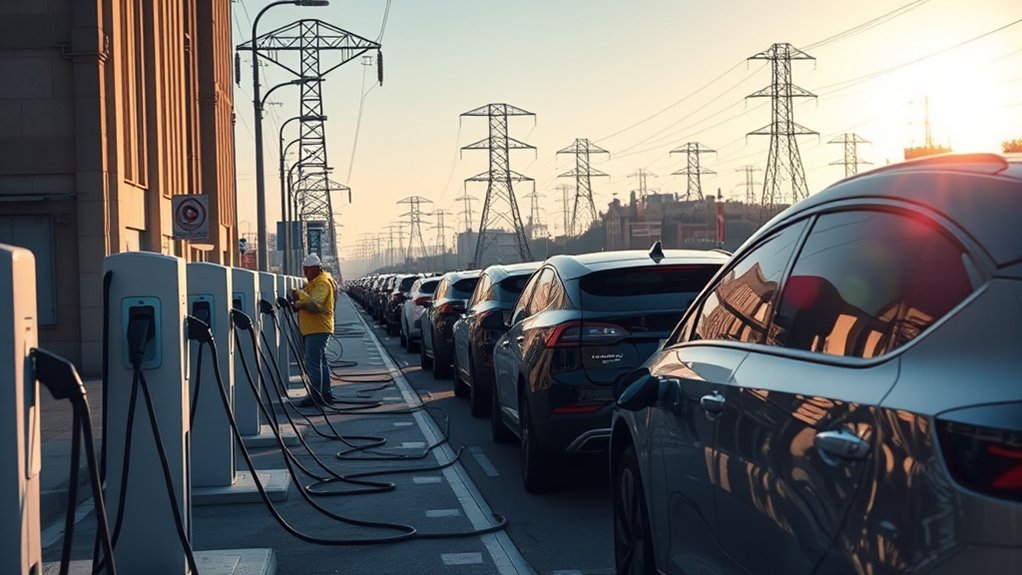
EV charging is adding new electricity demand to the U.S. power system, but the biggest challenge is usually not a national shortage of electricity. The real pressure often shows up locally, where many vehicles charge on the same neighborhood transformer, fleet depot, workplace lot, or fast-charging corridor. With smart charging, better planning, and targeted grid upgrades, EVs can be managed as flexible demand instead of becoming a peak-load problem.
Quick Answer
EV charging can stress the power grid when many vehicles charge at the same time, especially during evening peaks or at high-power fast-charging sites. The grid can handle much more EV adoption if utilities use managed charging, time-of-use rates, local upgrades, energy storage, and vehicle-to-grid programs where they make sense.
Key Takeaways
- EVs are still a small share of U.S. electricity use, but that share is growing as adoption rises.
- The main grid risk is local peak demand on transformers, feeders, substations, and fast-charging sites.
- Level 1 and Level 2 home charging are easier to manage than large DC fast-charging hubs.
- Smart charging can shift charging to lower-demand hours and help utilities avoid unnecessary peak stress.
- Vehicle-to-grid technology can support the grid in some use cases, but it needs compatible vehicles, chargers, rates, and utility programs.
Current EV Charging Trends and Their Impact on Grid Stability
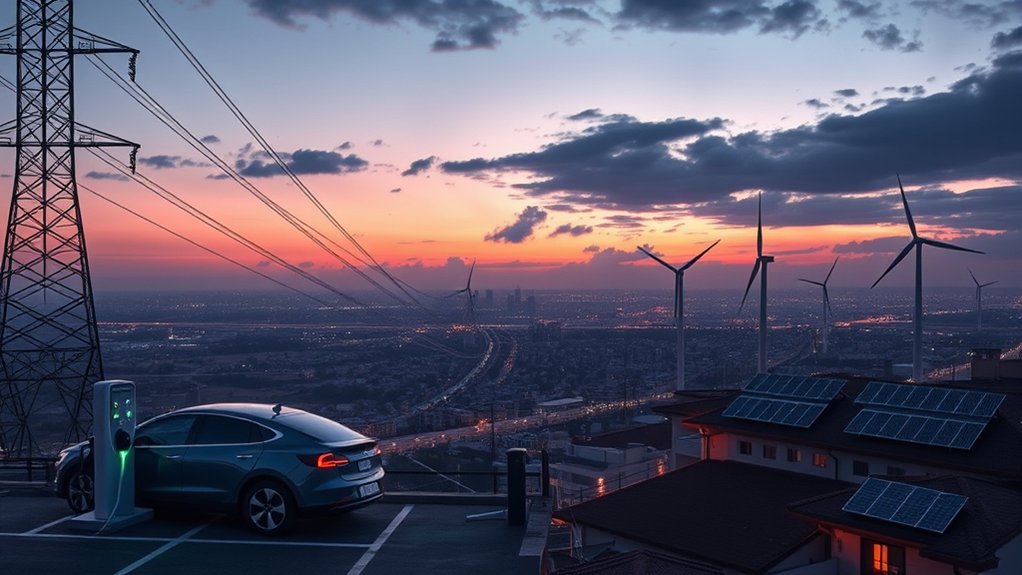
EV electricity demand is growing, but it is important to keep the scale in perspective. The International Energy Agency estimates that EVs accounted for about 0.6% of final electricity demand in the United States in 2024 and could reach about 2.2% by 2030. That means EVs are not using a large share of total electricity yet, but their impact can be concentrated in specific places and times.
The U.S. charging network is also expanding quickly. The IEA reports that U.S. public charging stock grew by about 20% in 2024 to just under 200,000 public charging points. At the same time, the National Renewable Energy Laboratory estimates that a 2030 national charging network may need 26 million to 35 million charging ports to support 30 million to 42 million plug-in vehicles.
The grid impact depends less on the total number of EVs and more on when, where, and how fast they charge. A neighborhood where many drivers plug in at 6 p.m. creates a different challenge than a driver charging overnight. A highway fast-charging plaza creates a different challenge than a single Level 1 charger in a garage.
EV charging is manageable when it is flexible. It becomes harder to manage when high-power charging clusters on the same local equipment during peak demand.
Key Challenges in EV Adoption
The biggest EV-grid challenge is not that the entire U.S. grid suddenly cannot produce enough electricity. The bigger issue is that local distribution equipment was not always designed for several homes, businesses, or fleet depots to add high-power charging at the same time.
Common grid challenges include:
- Evening peak demand: Many drivers arrive home and plug in around the same time that homes are using air conditioning, cooking appliances, lighting, and electronics.
- Transformer and feeder limits: A single neighborhood transformer or distribution feeder may need upgrades before a wider region runs short of electricity.
- Fast-charging hubs: DC fast chargers can draw much more power than home chargers, especially when several vehicles charge at once.
- Fleet depot charging: Delivery vans, buses, and trucks may need many chargers at one site, which can require new service equipment, utility coordination, and careful scheduling.
- Uneven charging access: Drivers in apartments, condos, and older neighborhoods may rely more on public charging, which can shift demand toward commercial sites.
Warning: Level 2 chargers, multi-charger sites, and fleet charging projects should be planned with a qualified electrician and, when needed, the local utility. Poorly planned installations can overload panels, transformers, or site electrical equipment.
Why Charging Level Matters for the Grid
Not all EV charging has the same impact. A slow home charger spreads demand over many hours, while a fast charger draws a large amount of power in a short period. The U.S. Department of Energy Alternative Fuels Data Center explains the basic differences between Level 1, Level 2, and DC fast charging.
| Charging Type | Typical Use | Grid Impact |
| Level 1 | Standard 120-volt outlet, often used for overnight home charging. | Low power draw, easiest for the grid to absorb, but slow for drivers with long daily mileage. |
| Level 2 | 240-volt residential or commercial charging, common at homes, workplaces, apartments, and public lots. | Moderate power draw. Manageable when scheduled outside peak hours, but clustered home charging can stress local transformers. |
| DC Fast Charging | Highway corridors, commercial charging sites, rideshare, fleets, and long-distance travel. | High power draw. Sites often need utility coordination, demand management, upgraded service, or onsite storage. |
For most daily driving, home and workplace Level 2 charging can meet the need without creating fast-charger-level demand. Fast charging is still essential for long trips, drivers without home charging, and commercial fleets, but it requires more careful grid planning.
What Are the Solutions for Managing EV Charging Demand?
Managing EV charging demand requires both customer-side tools and utility-side planning. The best solution is not one technology. It is a mix of smart rates, charger controls, forecasting, local upgrades, and flexible charging programs.
- Use managed charging programs: Managed charging lets a utility, charging provider, or customer schedule charging outside the most expensive and stressful grid hours. This can reduce peak pressure without stopping drivers from getting the range they need.
- Offer time-of-use rates: Lower overnight or midday electricity prices can encourage drivers to charge when demand is lower or renewable generation is more available.
- Plan upgrades where EVs are clustered: Utilities can use vehicle adoption forecasts, permitting data, and charging-station plans to identify transformers, feeders, and substations that may need upgrades.
- Add onsite energy storage at high-power sites: Batteries can help fast-charging locations reduce short spikes in grid demand and improve site resilience.
- Use vehicle-to-grid where practical: V2G can let compatible EVs send energy back to a building or the grid, but it works best when vehicles, chargers, software, utility rules, and compensation programs are aligned.
- Improve public charging placement: Charging stations should be placed where drivers need them and where the grid can support them without excessive upgrade delays.
Pro Tip: If your utility offers an off-peak EV rate or managed charging rebate, set your vehicle or charger app to start after peak evening hours. You can often lower your charging cost while helping reduce local grid stress.
How Smart Charging Strengthens Grid Resilience
Smart charging strengthens grid resilience by making EV load flexible. Instead of every vehicle charging immediately when plugged in, charging can be delayed, slowed, or scheduled around grid conditions.
This matters because electricity demand changes throughout the day. A hot summer evening may already push the grid close to peak load. Charging during that period can add stress. Charging later at night, or during midday when solar generation is strong in some regions, can make better use of existing grid capacity.
Smart charging can also help utilities integrate renewable energy. When wind or solar output is high, EVs can absorb electricity that might otherwise be curtailed. When demand is high, charging can pause or slow for drivers who do not need immediate range.
Note: Smart charging does not mean drivers lose control of their vehicles. Good programs let drivers set a departure time, minimum range, or override option so the car is ready when needed.
Vehicle-to-grid technology goes one step further. A V2G-capable vehicle can discharge stored energy back to a home, building, or grid. This can support backup power, reduce peak demand, or help balance renewable energy. The technology is promising, but it is not universal yet. It needs bidirectional chargers, compatible vehicles, interconnection rules, customer incentives, and battery-warranty clarity.
What EV Owners, Fleets, and Utilities Can Do Now
For EV Owners
Most owners can reduce grid strain with simple habits. Charge overnight when rates and demand are lower, avoid charging to 100% unless you need the range, and use your vehicle app to schedule charging. If you install a Level 2 charger, choose the right amperage for your panel and driving needs instead of automatically choosing the highest power setting.
For Apartment and Condo Communities
Multifamily charging needs early planning. Property managers should evaluate electrical capacity, charger placement, billing, access rules, and future expansion. A few shared Level 2 chargers with load management can often serve more residents than a smaller number of unmanaged high-power chargers.
For Fleets
Fleets should model routes, dwell time, charger power, utility rates, and site capacity before buying chargers. A fleet that charges every vehicle immediately after the route ends may create a sharp evening peak. Staggered charging, depot energy management, and onsite storage can reduce demand charges and upgrade needs.
For Utilities and Grid Planners
Utilities need better visibility into where chargers are being installed. Tools such as the DOE Alternative Fuels Data Center and related planning resources can help estimate infrastructure needs and electricity-demand impacts. Local planning should focus on neighborhoods, commercial hubs, highway corridors, and fleet depots where charging load may grow fastest.
Future Outlook: Transformations From EV Charging in the U.S. Electrical Grid
EV charging will become a larger part of electricity demand as more drivers switch to electric vehicles. The IEA projects global EV electricity demand could rise from about 180 TWh in 2024 to about 780 TWh in 2030 under stated policies. In the United States, EV electricity use is projected to remain a minority share of total electricity demand by 2030, but the local effects will become more important.
Public charging will also need to grow. The NREL 2030 National Charging Network study estimates that tens of millions of charging ports may be needed by 2030, with most ports serving private home or workplace charging and a smaller but important share serving public fast charging.
The future grid will likely combine several approaches: more distribution upgrades, more automated load management, better rate design, more charging at workplaces and multifamily buildings, more public fast charging, and selective use of V2G. That mix can turn EVs from a simple load increase into a flexible resource that supports cleaner transportation and a more efficient grid.
Frequently Asked Questions
Will EV charging overload the U.S. power grid?
EV charging is unlikely to overload the entire U.S. power grid by itself, but it can overload local equipment if many chargers are added in one area without planning. The biggest risks are clustered evening home charging, fleet depots, and high-power fast-charging hubs.
How much electricity do EVs use?
EVs currently use a small share of total U.S. electricity, but that share is rising. The IEA estimates U.S. EVs used about 0.6% of final electricity demand in 2024 and could reach about 2.2% in 2030.
What is managed EV charging?
Managed EV charging is a system that schedules or adjusts charging based on grid conditions, electricity prices, driver preferences, or utility programs. It can shift charging away from peak hours while still making sure the vehicle is ready when the driver needs it.
What is vehicle-to-grid technology?
Vehicle-to-grid technology, often called V2G, lets a compatible EV send electricity back to a building or the grid through a bidirectional charger. It can help during peak demand or outages, but it requires compatible equipment, utility approval, and the right rate or incentive program.
Is home charging better for the grid than fast charging?
Home charging is usually easier to manage because it can happen slowly over many hours, often overnight. Fast charging is important for road trips and drivers without home charging, but high-power sites can require more utility planning, stronger service connections, and sometimes onsite energy storage.
Conclusion
EV charging is changing the U.S. electrical grid, but it does not have to weaken it. The key is managing when and where charging happens. Home charging, workplace charging, fast-charging corridors, and fleet depots all create different grid needs. With smart charging, time-of-use rates, local infrastructure upgrades, energy storage, and selective V2G programs, EVs can support a cleaner transportation system while keeping the grid reliable.
Sources
- International Energy Agency — Global EV Outlook 2025: Outlook for energy demand — supports EV electricity-demand estimates and 2030 projections.
- International Energy Agency — Global EV Outlook 2025: Electric vehicle charging — supports public charging growth, home charging trends, and high-power charging context.
- National Renewable Energy Laboratory — The 2030 National Charging Network — supports U.S. charging-port needs and 2030 planning estimates.
- U.S. Department of Energy Alternative Fuels Data Center — Electric Vehicle Charging Stations — supports Level 1, Level 2, and DC fast-charging explanations.
- U.S. Department of Energy Alternative Fuels Data Center — Electric Vehicle Charging Infrastructure Trends — supports public charging infrastructure trend context.