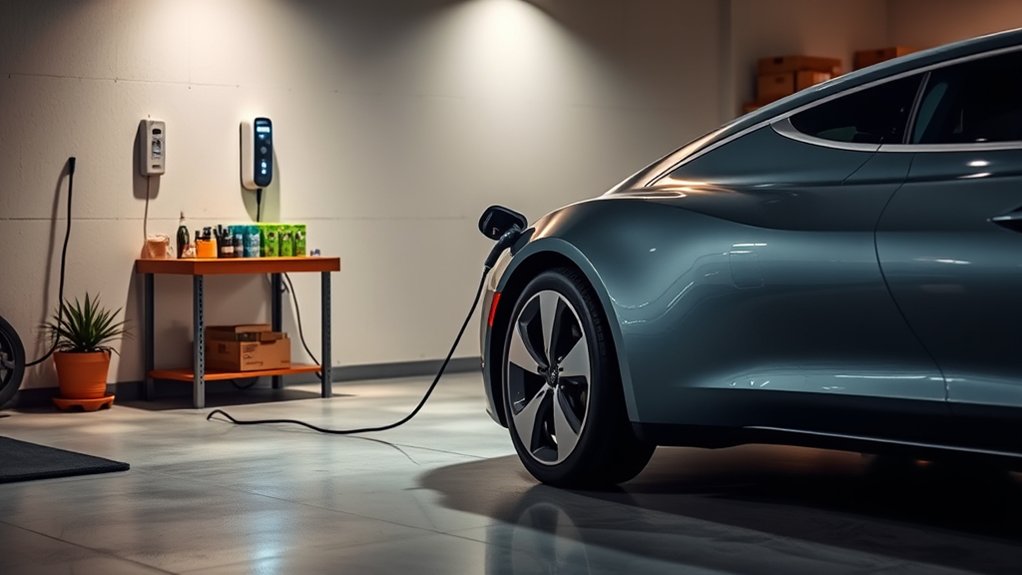
About 80% of EV charging happens at home in the United States, according to the U.S. Department of Energy. Home charging is convenient because you can plug in when you park and start the next day with the range you need. A Level 2 charger typically adds about 10 to 30 miles of range per hour, while actual speed depends on the vehicle, charger power, battery state, and conditions. Home electricity also usually costs less than public fast charging, especially when your utility offers lower off-peak rates.
Why Home Charging Is the Preferred Choice for EV Owners
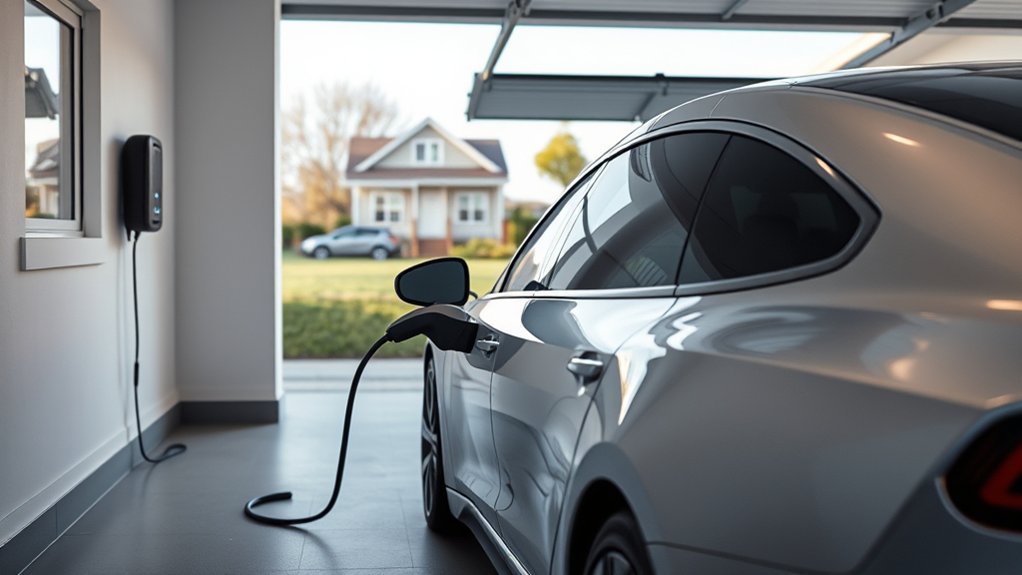
For drivers who have access to a garage, driveway, or dedicated parking space, home EV charging removes much of the planning associated with public charging. Instead of making a separate fueling stop, you can plug in after parking and let the vehicle charge while you sleep or spend time at home.
The U.S. Department of Energy says about 80% of EV charging happens at home. That does not mean every EV owner can or should rely only on home charging. Apartment residents, people without off-street parking, and drivers on long trips may depend more heavily on workplace or public chargers.
Home charging can also be less expensive than public charging. Residential electricity rates vary by location, and some utilities offer time-of-use plans that make electricity cheaper during off-peak periods. Public DC fast charging usually costs more than charging at home.
How Home Charging Simplifies Daily Routines
The biggest advantage of home charging is that the car can recharge while it is already parked. Many drivers do not need to refill the battery from nearly empty every night; they only need to replace the energy used during the day.
A Level 2 home charger can make this routine easier. The U.S. Department of Energy lists Level 2 charging at roughly 10 to 30 miles of range added per hour, with about 25 miles per hour being a common estimate. That is often enough to recover a typical day of driving during an evening or overnight charging session.
Charging speed still varies by vehicle and equipment. For example, Rivian lists its current Wall Charger at up to 11.5 kW. Rivian says it can add up to about 25 miles of range per hour to R1T and R1S models and up to about 38 miles per hour to the R2 under suitable conditions.
Discover the Cost Benefits of Charging at Home
Home EV charging is usually cheaper than public charging because residential electricity commonly costs less than electricity sold through public charging networks, especially DC fast chargers. Your actual cost depends on your utility rate, the vehicle’s efficiency, charging losses, and when you charge.
If your utility uses time-of-use pricing, scheduling charging for off-peak hours can reduce the cost further. Some utilities also offer EV-specific rates or rebates, so it is worth checking local programs before buying or installing equipment.
There is no reliable nationwide installation price that applies to every home. Cost depends on the charger, electrical-panel capacity, wire run, permitting, labor, and whether service upgrades are required. Get a site-specific quote from a qualified electrician rather than budgeting from a single national figure.
Federal tax-credit note: As of October 7, 2026, the federal Alternative Fuel Vehicle Refueling Property Credit should not be treated as available for a new residential charger installation. Under current IRS guidance, qualifying property generally had to be placed in service no later than June 30, 2026, and the location also had to meet eligible-census-tract rules. State, local, or utility incentives may still be available.
How Level 2 Chargers Improve Home Charging Efficiency
Level 1 and Level 2 both use AC power, but Level 2 provides substantially more charging power. That makes it better suited to drivers who cover more miles each day or want to restore range more quickly at home.
| Charging option | Typical power source | Approximate range added | Best use |
|---|---|---|---|
| Level 1 | 120 V AC | About 2–5 miles per hour | Low daily mileage or overnight top-ups |
| Level 2 | 208–240 V AC | About 10–30 miles per hour | Faster routine home charging |
Those figures are general estimates, not guarantees. The vehicle’s onboard charger may limit AC charging speed even if the wall unit can provide more power. Cold temperatures, battery temperature, state of charge, and vehicle settings can also affect how quickly energy is added.
For many households, the practical benefit of Level 2 is not that the battery must reach 100% every night. It is that the charger can replace a normal day’s energy use in a convenient window while the vehicle is parked.
Optimize Your Home Charging Setup for Maximum Benefit
A good home charging setup should match your driving needs, electrical system, utility rate, and vehicle. Use these priorities when planning an installation:
| Action | Benefit | Consideration |
|---|---|---|
| Assess your electrical capacity | Helps size the charger safely | A panel or service upgrade may be needed |
| Choose Level 1 or Level 2 based on mileage | Avoids paying for more charging power than you need | Vehicle AC charging limits still apply |
| Schedule off-peak charging when available | Can lower electricity cost | Savings depend on your utility rate plan |
| Use the vehicle maker’s daily charge guidance | Supports battery management and needed range | Recommended limits vary by battery chemistry |
Have a qualified electrician evaluate the circuit, panel capacity, wiring route, and local permit requirements for a Level 2 installation. The correct circuit and charger configuration depend on the equipment and your home’s electrical system.
Avoid applying one universal battery charge limit to every EV. Some manufacturers recommend an everyday limit around 70% or 80% for certain nickel-based battery packs, while some lithium iron phosphate batteries may require periodic charging to 100% for accurate range estimation or battery management. Follow the guidance for your exact vehicle and battery.
The Environmental Impact of Charging at Home
Home charging does not automatically make an EV cleaner than public charging. The environmental impact depends mainly on how the electricity is generated and, in some areas, when the vehicle charges.
EVs have no tailpipe emissions, but producing electricity can create emissions. The U.S. Environmental Protection Agency notes that EV greenhouse-gas emissions vary with the local electricity mix and are typically lower than those of an average new gasoline vehicle. Using electricity from lower-emission or renewable sources can reduce charging-related emissions further.
Managed charging can also help. Delaying a charging session to lower-demand periods can reduce electricity costs where time-of-use rates apply, and smart charging can be coordinated with grid conditions or renewable generation. The environmental benefit of a specific schedule varies by region, so local utility programs are the best guide.
How Public Charging Complements Home Charging
Home charging covers much of everyday EV use, but public charging remains essential for road trips, drivers without reliable home charging, and quick top-ups. The U.S. public charging network continues to expand.
Expansion of Charging Networks
As of October 7, 2026, the Joint Office of Energy and Transportation reports about 263,800 public EV charging ports nationwide. That figure is more useful than the article’s older 2025 estimates because the network changes continually.
The National Electric Vehicle Infrastructure (NEVI) Formula Program remains one part of the federal charging effort. Its implementation guidance was revised in August 2025, and federal funding rules changed again in 2026, so old forecasts about how much of the highway network would be built out by a specific 2025 date should not be presented as current fact.
NEVI-funded corridor charging has historically been planned around convenient fast-charging access on designated Alternative Fuel Corridors, including spacing targets of roughly 50 miles where program requirements apply. Actual station locations and build-out status vary by state.
Integration of Renewable Energy
Public and home charging can both benefit from cleaner electricity and smarter scheduling. Charging when renewable generation is abundant can reduce the emissions associated with electricity use in some regions, while managed charging can also help utilities reduce peak demand.
The practical opportunity depends on local grid conditions. Drivers should look for utility time-of-use rates, managed-charging programs, renewable-energy options, or home solar plans that fit their location rather than assuming the same benefit everywhere.
Charging Standards and Reliability
Public charging is also becoming easier to use as vehicles, charging networks, and connector standards evolve. Federal rules for publicly funded charging address areas such as interoperability, network connectivity, pricing information, real-time availability, accessibility, and reliability.
Connector compatibility still matters. Before a trip, confirm which connector your vehicle uses, whether an adapter is required, and whether the charging network supports your vehicle. Home charger buyers should make the same compatibility check before installation.
Frequently Asked Questions
What Percentage of EV Charging Happens at Home?
The U.S. Department of Energy says about 80% of EV charging happens at home. The percentage for an individual driver can be very different depending on housing, parking access, commuting distance, and road-trip frequency.
What Is the 80/20 Rule for EV Charging?
In this context, “80/20” is a rough description of where charging occurs: about 80% at home and the remainder elsewhere. It is not a battery-care rule and should not be confused with advice to charge a battery only between 20% and 80%.
Is 80% of EV Charging Done at Home?
About 80% is the current U.S. Department of Energy estimate for charging that happens at home. Treat it as a national estimate, not a requirement or prediction for every driver.
How Often Should an EV Be Charged at Home?
Charge often enough to maintain the range you need, and follow the manufacturer’s guidance for your battery. Many owners plug in regularly for convenience, but there is no universal requirement to charge every EV every day or to reach 100% each night.
Is Level 2 Charging Necessary at Home?
No. Level 1 can be sufficient for drivers with low daily mileage or long overnight parking periods. Level 2 is more useful when you drive farther, need quicker recovery between trips, or share one charger among multiple vehicles.
Is There a Federal Tax Credit for a Home EV Charger in 2026?
Not for a new residential charger placed in service after June 30, 2026 under the current federal Section 30C rules. Earlier qualifying installations also had to meet location and other IRS requirements. Check state, local, and utility programs for incentives that may still be available.
Conclusion
Home EV charging is popular because it turns parked time into charging time. About 80% of U.S. EV charging happens at home, and Level 2 charging can typically add 10 to 30 miles of range per hour, making overnight charging practical for many drivers.
The best setup is the one that matches your actual mileage, electrical capacity, utility rate, and vehicle’s battery guidance. Use public fast charging when home charging is unavailable or when you travel beyond your normal daily range, and recheck incentives and charging-network information before making decisions because both change over time.