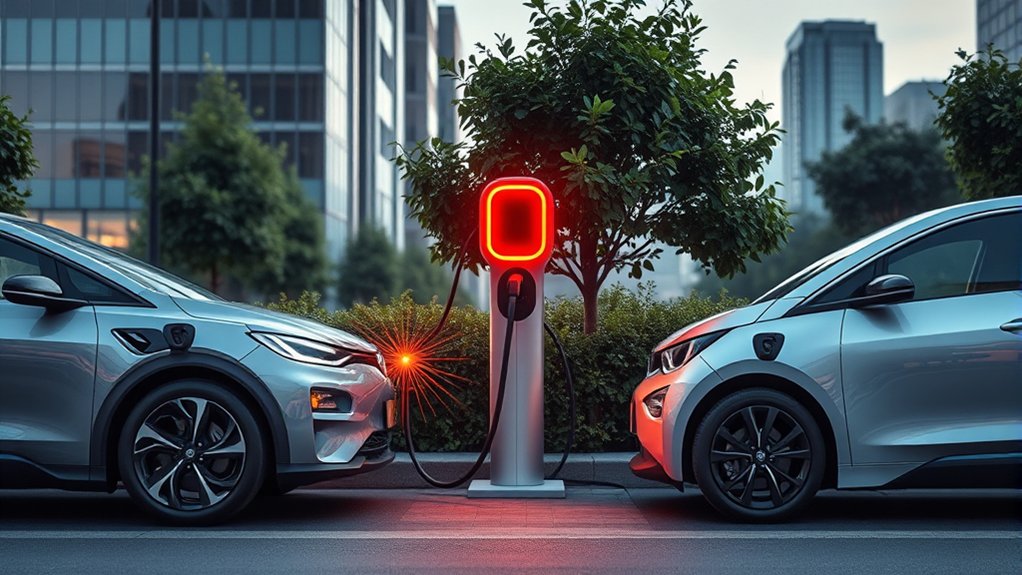
Fast charging and slow charging both have a place in a healthy EV routine. The best choice depends on how far you drive, how soon you need the car, the charger type, the battery temperature, and your vehicle’s own battery-management limits. For most daily driving, slower AC charging is gentler and cheaper. For trips or busy workdays, DC fast charging is fine when used as needed.
Quick Answer
Slow AC charging is usually better for long-term EV battery health because it creates less heat and lower cell stress. DC fast charging is safe for occasional use, especially in modern EVs with thermal management, but it is best saved for road trips, urgent top-ups, and charging stops where speed matters.
Key Takeaways
- Use Level 1 or Level 2 AC charging for most daily charging when time allows.
- Use DC fast charging when you need range quickly, but avoid making high-power charging your only routine if you can charge at home or work.
- For many EVs, keeping the battery around 20% to 80% for daily use reduces high-voltage and deep-discharge stress.
- Charging speed depends on charger output, vehicle limits, battery temperature, and state of charge, not just the number printed on the charger.
- Always follow your owner’s manual because battery chemistry and manufacturer recommendations vary.
Fast Charging vs Slow Charging: What the Terms Mean
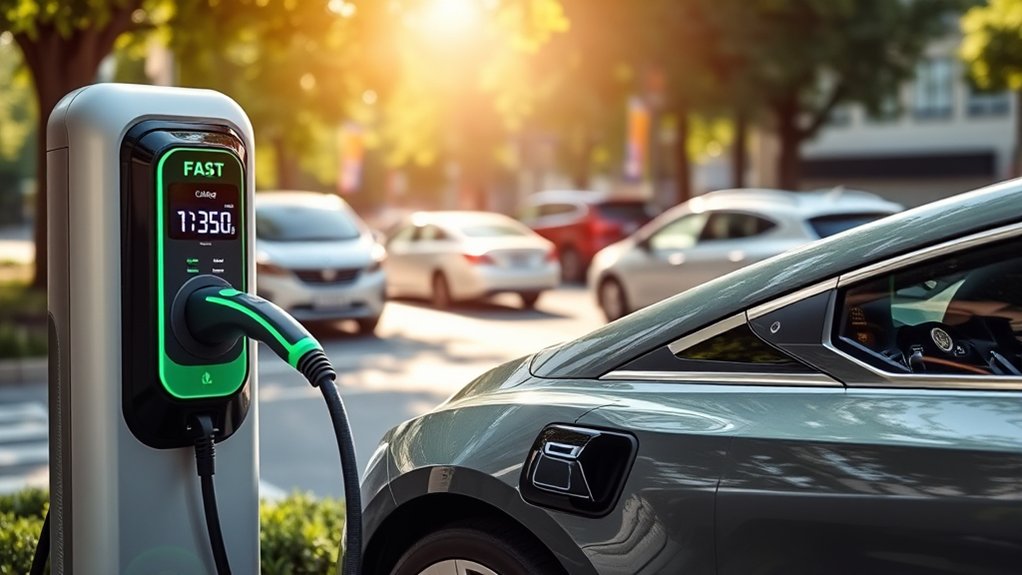
Before comparing battery health, it helps to separate charger types. Many drivers use “fast charging” to mean anything faster than a wall outlet, but EV charging has more precise categories.
The U.S. Department of Energy Alternative Fuels Data Center explains that AC Level 1 uses a 120-volt outlet, AC Level 2 uses 240-volt or 208-volt service, and DC fast charging sends direct current to the battery through higher-power equipment. Level 2 is common at homes, workplaces, and public parking areas. DC fast charging is common along highways and high-traffic routes.
At a Glance
| Best Daily Choice | Level 2 AC charging for most EV owners; Level 1 can work for short daily drives. |
| Best Road-Trip Choice | DC fast charging when you need to add range quickly between stops. |
| Battery-Friendly Habit | Keep daily charging near the middle of the battery range when your vehicle allows it. |
| Main Caution | Repeated high-power charging in heat, at high state of charge, or without preconditioning can add stress. |
Charging Type Comparison for Battery Health
| Charging Type | Typical Use | Battery-Health Note |
|---|---|---|
| Level 1 AC | Overnight charging from a standard 120-volt outlet | Very gentle, but slow. Works best for low daily mileage. |
| Level 2 AC | Home, workplace, apartment, and destination charging | Best balance for most owners: practical speed with lower heat than DC fast charging. |
| DC Fast Charging | Road trips, urgent top-ups, commercial use, and high-mileage driving | Safe when used properly, but repeated high-power sessions can add heat and cell stress. |
Fast Charging: Benefits Explained
Fast charging is useful because it reduces waiting time. On a trip, a DC fast charger can add meaningful range during a rest stop instead of requiring an overnight charge. For delivery drivers, rideshare drivers, and fleet vehicles, that shorter stop can keep the vehicle in service.
Fast charging is most effective when the battery is at a lower state of charge. As the battery fills, the car usually lowers the charge rate to protect the cells. That is why charging from 10% to 60% can feel quick, while charging from 80% to 100% can take much longer.
Modern EVs use a battery management system to control current, voltage, and temperature. Research on integrated power and thermal management shows why this matters: fast charging works best when the vehicle can manage both charging power and heat. That does not make fast charging harmless in every situation, but it does make occasional DC fast charging normal for many EVs.
Note: A charger’s advertised power is only the maximum it can offer. Your actual charging speed also depends on your EV’s charge limit, battery temperature, state of charge, cable rating, and the charger’s condition.
How Slow Charging Enhances EV Battery Health
Slow charging is usually better for battery health because it uses lower power and creates less heat. Less heat means less stress on the battery pack, cooling system, and cells. This is why routine home charging is often the best long-term habit.
Slow charging does not always mean only a wall outlet. Level 1 AC charging is the slowest common option, but Level 2 AC charging is still much gentler than high-power DC fast charging and is far more practical for most homes. A Level 2 charger can usually refill daily driving range overnight without pushing the battery as hard as a DC fast charger.
Slow charging also helps your schedule. You can plug in at night, set a charge limit, and leave with the range you need in the morning. If your utility offers lower off-peak rates, charging later at night may also lower your cost.
For daily EV use, the healthiest charging strategy is usually boring: charge slowly, avoid unnecessary extremes, and save DC fast charging for the times when speed actually matters.
The Role of Charging Habits on Battery Longevity
Your charging habits affect battery wear over time. The biggest routine factors are state of charge, temperature, charging power, and how long the battery sits near full or near empty.
The common 20/80 rule means keeping the battery between about 20% and 80% for normal daily use. This range helps you avoid deep discharge at the low end and high-voltage stress at the high end. It is not a law, and your EV may recommend a different limit, but it is a useful habit for many lithium-ion battery packs.
Charging to 100% is not automatically bad. It is useful before a long trip, and some battery chemistries or vehicle brands may recommend different routines. The key is to avoid leaving the vehicle sitting at 100% for long periods unless your owner’s manual says that is acceptable.
Warning: Do not ignore battery warnings, charger faults, overheating messages, or repeated charging interruptions. Stop the session and follow your owner’s manual if the car or charger reports a problem.
Battery Temperature and Preconditioning Matter
Battery temperature can change charging speed and battery stress. In cold weather, the battery may charge slowly until it warms up. In hot weather, the car may reduce charging power to protect the pack. This is normal behavior.
Many EVs offer battery preconditioning. When you navigate to a DC fast charger, the car may warm or cool the battery before arrival so it can accept higher power safely. Use this feature when available, especially before winter fast-charging stops.
Research on degradation-aware fast charging highlights the same core idea: fast charging should balance charging time with electrochemical and thermal limits. In plain terms, the fastest possible charge is not always the healthiest charge.
Pro Tip: On road trips, plan shorter DC fast-charging stops in the lower-to-middle battery range instead of waiting to charge all the way to 100%. You will often spend less total time charging.
Best Practices for Effective Charging Strategies
For daily driving, set a charge limit that gives you enough range with a comfortable buffer. For many EVs, 70% to 80% is enough for commuting, errands, school runs, and local driving. If your battery is low, charge it sooner rather than letting it sit near empty.
For road trips, charge higher before leaving if you need the range. Then use DC fast chargers along the route and expect the car to slow charging as the battery gets closer to full. This is not a charger failure; it is the charge curve protecting the battery.
For fleets, high-mileage drivers, and rideshare use, the best strategy may be different. A vehicle that earns money while moving may need more DC fast charging. In that case, smart scheduling, off-peak charging, and battery temperature control matter even more. Fleet charging research shows that charging policies can affect both battery degradation and grid stress, so the best plan balances uptime, energy cost, and long-term battery health.
- Use Level 2 AC charging for most routine charging when possible.
- Reserve DC fast charging for trips, urgent top-ups, or high-mileage workdays.
- Do not chase 100% unless you need the range soon.
- Use battery preconditioning before DC fast charging when your EV supports it.
- Charge during off-peak hours when your electric rate plan rewards it.
- Check your owner’s manual before changing charge limits or storage habits.
How to Choose the Right Charger for Optimal Battery Health
Select the charger that fits your real driving pattern. If you drive only a few miles per day, Level 1 may be enough. If you want a full overnight refill after longer daily drives, Level 2 is the better home option. If you do not have home charging, look for dependable Level 2 charging near work, school, shopping, or public parking.
Choose DC fast charging when time matters more than maximum battery gentleness. It is especially helpful on highway trips, when you arrive low and leave before the charge rate tapers too much. It is less useful if you are already above 80%, because the car may slow the session to protect the pack.
| Your Situation | Best Charger Choice | Why It Works |
|---|---|---|
| Short commute | Level 1 or Level 2 | Adds enough range without high charging stress. |
| Long daily driving | Level 2 | Refills overnight while staying gentler than DC fast charging. |
| Road trip | DC fast charging | Cuts charging stops from hours to minutes when conditions are right. |
| Apartment or street parking | Public Level 2 plus occasional DC fast charging | Balances cost, convenience, and battery care without home charging. |
Why Fast Charging Sometimes Slows Down
If a DC fast charger starts quickly and then slows, the most common reason is battery protection. EVs often reduce charging power when the battery is cold, hot, nearly full, or outside its ideal charging window.
The charger may also share power with another vehicle, have a damaged connector, run below its advertised rating, or be limited by your EV’s maximum charging speed. A 350 kW charger will not make a 100 kW-limited EV charge at 350 kW.
If charging is slower than expected, check the battery percentage, charger rating, weather, preconditioning status, and whether another vehicle is using the same station cabinet. If the session repeatedly fails, move to another stall or another charging site.
Frequently Asked Questions
Are slow or fast chargers better for battery health?
Slow AC charging is usually better for daily battery health because it produces less heat and uses lower power. Fast charging is still useful and safe when used as needed, especially in EVs with strong thermal management, but repeated high-power DC charging can add more stress than routine Level 1 or Level 2 charging.
Does fast charging an EV reduce battery life?
Fast charging can contribute to battery wear if it is frequent, very high power, poorly temperature-controlled, or done often near a high state of charge. Occasional DC fast charging for road trips is normal for most modern EVs. The best habit is to use slower AC charging for daily use and fast charging when convenience or trip timing requires it.
Is it better to charge an EV battery fast or slow?
For everyday charging, slow or moderate AC charging is usually better. For travel, fast charging is better because it saves time. The healthiest strategy is not “always slow” or “always fast.” It is using the slowest convenient option for daily driving and saving DC fast charging for times when speed matters.
What is the 20/80 rule for EV charging?
The 20/80 rule means keeping the battery between about 20% and 80% for normal daily use. This helps avoid deep discharge and high-voltage stress. It is a general habit, not a universal rule. Some vehicles and battery chemistries have different recommendations, so check your owner’s manual.
Should I charge my EV to 100% before a road trip?
Yes, charging to 100% before a long trip is fine when you need the range and plan to drive soon after charging. For daily use, many EV owners set a lower limit, such as 70% to 80%, to reduce time spent at a high state of charge.
Why does DC fast charging slow after 80%?
Charging slows near the top of the battery because the car reduces power to control heat, voltage, and cell stress. This taper protects the battery, but it also means the last 20% can take much longer than the middle of the pack.
Conclusion
Slow charging is usually the better everyday choice for EV battery health, while fast charging is the better choice when time matters. The goal is balance. Use Level 1 or Level 2 AC charging for normal routines, keep your daily charge level within a practical middle range, and use DC fast charging for trips or urgent range needs. With smart habits, preconditioning, and the limits built into your EV’s battery management system, you can protect battery health without giving up the convenience that makes an EV easy to live with.
Sources
- U.S. Department of Energy Alternative Fuels Data Center: Electric Vehicle Charging Stations — charging levels, typical charging speeds, connector types, and DC fast charging details.
- Robust Model Predictive Control for Enhanced Fast Charging on Electric Vehicles through Integrated Power and Thermal Management — why fast charging depends on battery and thermal management.
- Degradation-Aware Fast-Charging of Li-Ion Batteries Using Joint Electrical and Thermal Model Predictive Control — fast-charging degradation and thermal-safety constraints.
- Managing Charging Induced Grid Stress and Battery Degradation in Electric Taxi Fleets — fleet charging tradeoffs among battery degradation, charging speed, and grid stress.