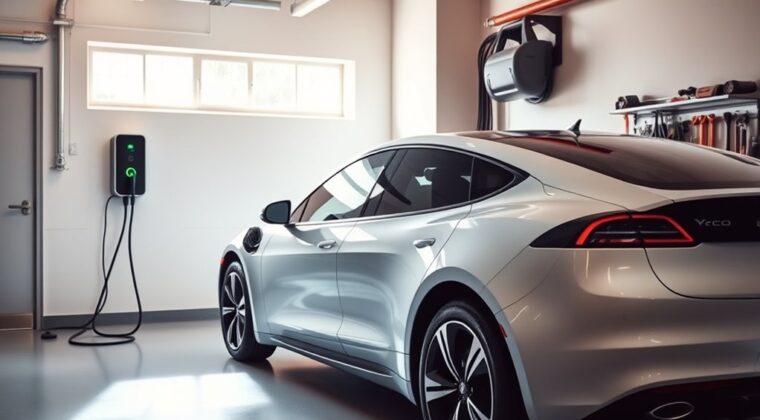
Charging your EV at home is usually the easiest way to keep the battery ready for daily driving. The safest setup starts with the right charging level, a home electrical check, certified equipment, and a qualified electrician if you need a 240-volt Level 2 charger.
For many drivers, a standard Level 1 cord can cover short daily trips. If you drive farther, own a larger-battery EV, or want faster overnight charging, a Level 2 charger is usually the better long-term choice.
Quick Answer
To charge your EV at home safely, use the charging cord or wall charger approved for your vehicle, plug into a dedicated circuit, and hire a qualified electrician for Level 2 installation. Schedule charging during off-peak hours when available, keep cables undamaged, and follow your vehicle’s battery-limit settings.
Key Takeaways
- Level 1 charging uses a standard 120-volt outlet and is best for short daily driving or plug-in hybrids.
- Level 2 charging uses 240 volts and usually needs a dedicated circuit, permit, and professional installation.
- Choose safety-certified equipment, such as an ENERGY STAR-certified EV charger, and match the connector to your vehicle.
- Off-peak charging and smart scheduling can reduce costs if your utility offers time-of-use rates.
- Federal individual charger credits for qualified main-home property applied only through June 30, 2026, but state, local, and utility incentives may still be available.
At a Glance
| Time Required | Level 1 setup can be immediate if a dedicated outlet is already available. Level 2 installation often takes a home assessment, permit, installation, and inspection. |
| Difficulty | Easy for Level 1 charging; moderate to advanced for Level 2 because electrical work should be handled by a qualified electrician. |
| Tools Needed | Vehicle-approved charging cord or EVSE, dedicated circuit, compatible connector or adapter, and licensed electrical tools for professional installation. |
| Cost | Level 1 may cost little if your outlet is suitable. Level 2 cost depends on charger price, wiring distance, permits, panel capacity, outdoor rating, and possible panel upgrades. |
Understanding the Benefits of Home EV Charging
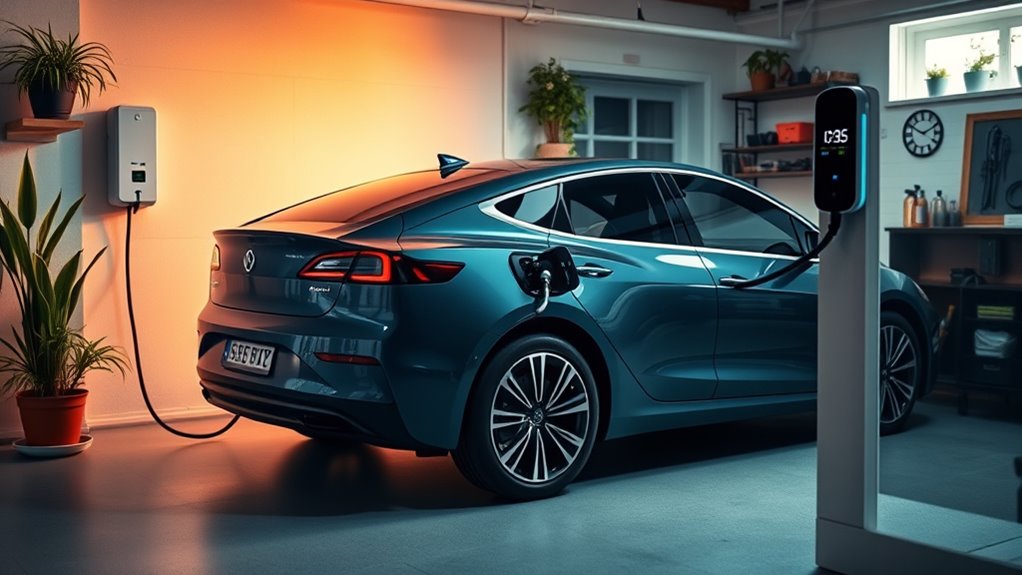
Home charging works well because your car is parked for hours anyway. According to the U.S. Department of Energy Alternative Fuels Data Center, most EV and plug-in hybrid drivers charge overnight at home using Level 1 or Level 2 equipment.
The biggest benefits are convenience, predictable range, and lower routine charging costs. Instead of making a separate stop at a public station, you can plug in after your last trip and wake up with enough charge for the next day.
For many EV owners, the best charging station is the one at home: it lets the car recharge while you sleep, work, or relax.
Level 2 charging is faster than a standard wall outlet. ENERGY STAR lists Level 1 charging at about 2 to 5 miles of range per hour and Level 2 charging at about 10 to 20 miles of range per hour, with some higher-current Level 2 setups charging faster depending on the charger and vehicle.
Home charging can also reduce fuel costs if your utility offers time-of-use rates. These plans often make electricity cheaper at night or during low-demand hours. A smart charger or your EV’s built-in charging schedule can help you automatically start charging during those lower-rate windows.
Level 1 vs. Level 2 Home EV Charging
Before you buy equipment, decide whether Level 1 or Level 2 fits your driving pattern. The right choice depends on your daily mileage, battery size, parking setup, and whether you can add a dedicated 240-volt circuit.
| Charging Level | Power Source | Best For | Typical Range Added |
| Level 1 | 120-volt household outlet on a suitable dedicated circuit | Short commutes, plug-in hybrids, backup charging, renters with limited options | About 2 to 5 miles per hour |
| Level 2 | 240-volt dedicated circuit | Full EVs, longer commutes, larger batteries, faster overnight charging | About 10 to 20 miles per hour, with faster rates possible on some higher-current setups |
Note: The charger does not decide the full charging speed by itself. The circuit size, charger amperage, vehicle onboard charger, battery temperature, and vehicle charge settings all affect how fast your EV charges.
Essential Equipment for Safe Home Charging
Safe home EV charging starts with equipment that is rated for the job. Use the charging cord supplied or approved by your vehicle manufacturer, or choose a safety-certified EV charger from a reputable brand.
The ENERGY STAR EV charger guide explains that certified chargers are tested for safety by a nationally recognized testing laboratory. That matters because not every charger sold online or in stores is properly safety certified.
Necessary Charging Equipment
For a basic home setup, you may need:
- A vehicle-approved Level 1 cord or a Level 2 EVSE.
- A dedicated outlet or hardwired connection sized for the charger.
- A connector that matches your vehicle, such as J1772, NACS, or a manufacturer-approved adapter.
- Outdoor-rated equipment if the charger will be exposed to weather.
- A smart charger or vehicle app if you want scheduling, energy tracking, or utility program participation.
If you install Level 2 charging, do not guess at circuit size. A qualified electrician should check your electrical panel, service capacity, grounding, wire run, breaker size, local code requirements, and whether the charger should be hardwired or plug-in.
Warning: Do not use a damaged cable, loose outlet, undersized extension cord, unlisted adapter, or overloaded circuit for EV charging. Stop charging and call an electrician if you see heat damage, burning smells, frequent breaker trips, melted plastic, or sparking.
Safety Considerations During Installation
EV charging equipment is treated as a continuous electrical load. The AFDC notes that charging installations must follow local and state codes, may require permits, and should be handled with the applicable National Electrical Code guidance, including Article 625.
| Consideration | Action Required |
| Charging Equipment | Use safety-certified equipment rated for your installation location. |
| Electrical Capacity | Have a qualified electrician confirm panel capacity, circuit sizing, and load requirements. |
| Permits and Inspection | Follow local permitting rules and schedule inspection where required. |
| Outdoor Installation | Use outdoor-rated EVSE and mount it where the cable can reach without stretching or crossing walkways. |
How to Get Started With Home Charging
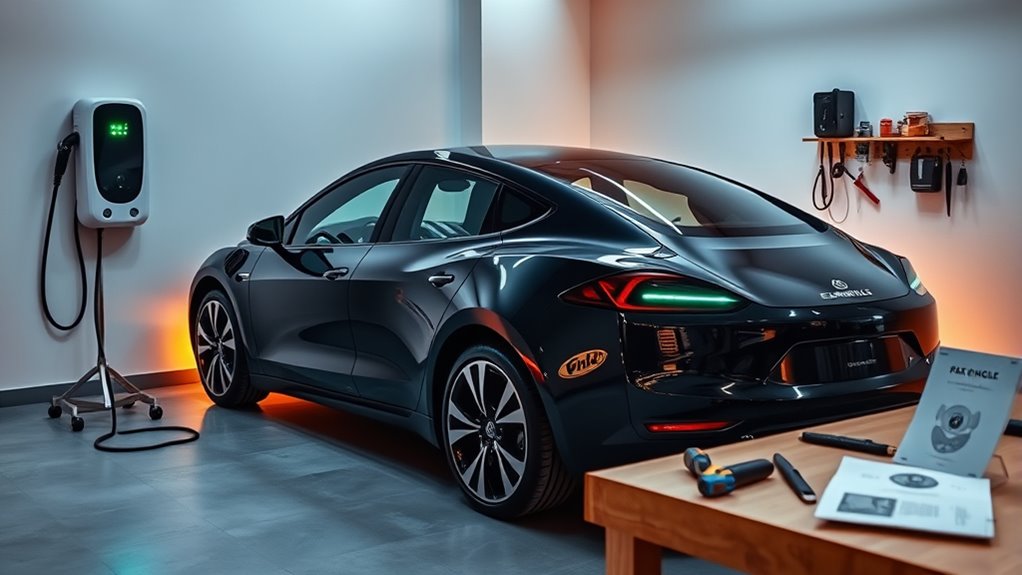
Start with your real driving needs. Check how many miles you drive on a normal day, how often you take longer trips, and how many hours your car is parked at home. Then compare that with your vehicle’s charging rate and battery size.
For many drivers with short commutes, Level 1 charging may be enough. For a full battery-electric vehicle, a long commute, or shared household EVs, Level 2 charging is usually more convenient.
Pre-Install Checklist
- Read your EV owner’s manual for charging limits, connector type, and recommended equipment.
- Measure the distance from your parking spot to the electrical panel.
- Decide where the charger will mount so the cable reaches the charge port without tension.
- Ask your utility about time-of-use rates, charger rebates, and managed charging programs.
- Confirm whether your city or county requires a permit or inspection.
- Choose indoor or outdoor-rated equipment based on where the charger will be installed.
Pro Tip: Before you buy a charger, take photos of your electrical panel, parking location, and proposed charger wall. These photos help electricians quote the job more accurately.
Install Your EV Charger in Simple Steps
Installing a home EV charger is easier when you treat it like a short project instead of a one-click purchase. The charger, circuit, panel, permits, and vehicle settings all need to work together.
Choose the Right Charger
Choose a charger based on your vehicle and home, not just the highest advertised amperage. A 48-amp or 50-amp-capable charger will not help if your vehicle cannot accept that much AC power or your electrical panel cannot support the circuit.
Look for these features:
- Safety certification from a recognized testing lab.
- Connector compatibility with your EV.
- Indoor or outdoor rating that matches the installation location.
- Cable length that reaches comfortably without being stretched.
- Smart scheduling if your utility offers off-peak rates.
- Load-management features if your home has limited electrical capacity.
Hardwired vs. Plug-In Chargers
A hardwired charger is connected directly to the electrical circuit. It can look cleaner, may be preferred outdoors, and is often used for higher-amperage Level 2 charging. A plug-in charger uses a 240-volt receptacle, which can make replacement easier, but the receptacle and plug must still be correctly rated and installed.
Your electrician can tell you which option fits local code, your charger’s rating, and your installation location.
Hire a Qualified Electrician
For Level 2 charging, hire a qualified electrician before the charger is installed. The electrician should confirm your service capacity, calculate load, install the correct circuit, use proper conductor sizing, follow local code, and handle permits where required.
Ask these questions before approving the work:
- Does my panel have enough capacity for this charger?
- Will this installation require a permit and inspection?
- Is the charger being installed indoors or outdoors?
- Is the charger hardwired or plug-in?
- What amperage will the charger be set to?
- Will my utility need to approve a rate plan or separate meter?
Tips for Monitoring and Managing Your Home Charging Sessions
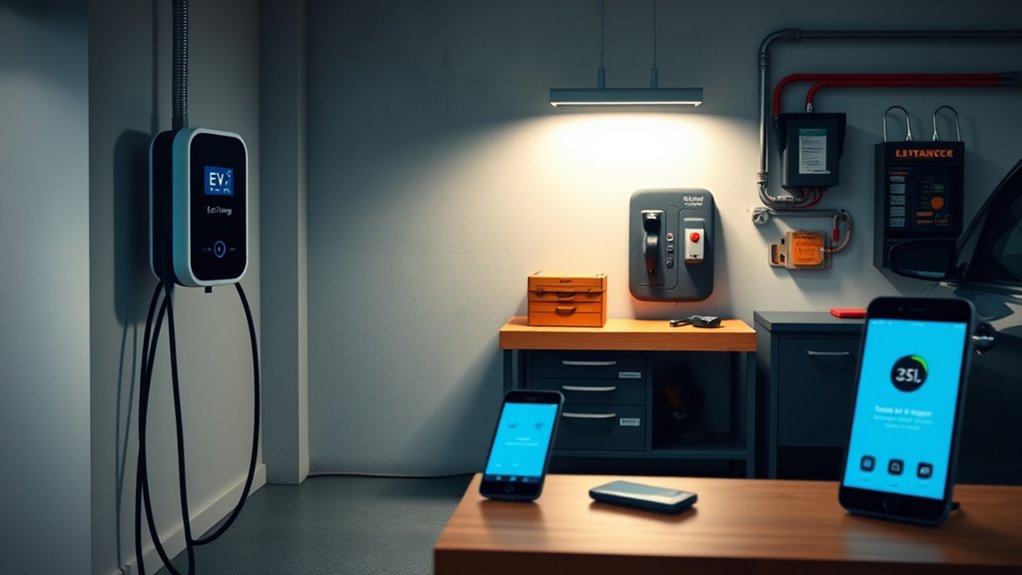
Once your setup is installed, the next step is managing charging in a way that fits your schedule and protects the battery.
- Use your vehicle display or app to check charge status, charging speed, and estimated completion time.
- Set a charging schedule if your utility offers lower off-peak rates.
- Set a daily charge limit if your vehicle recommends one for regular use.
- Charge to 100% when you need maximum range for a trip, then drive soon after charging finishes.
- Inspect cables and connectors regularly for cracks, heat damage, corrosion, or loose fit.
The common “80% rule” is a helpful daily habit for many lithium-ion EV batteries, but it is not universal. Some vehicles and battery chemistries have different recommendations. Use your EV’s owner manual or in-car battery settings as the final guide.
Note: Your EV may slow charging as the battery gets close to full. This is normal and helps manage battery temperature and battery health.
What to Do When Your Charging Isn’t Working?
If your EV is not charging, start with the simple checks before assuming the charger has failed.
- Check the plug connection. Unplug and reconnect the cable fully. Make sure the connector is seated and locked.
- Check the vehicle settings. A charge limit, delayed schedule, or departure-time setting may be stopping the session.
- Check the charger lights or app. Look for fault codes, network errors, or paused charging messages.
- Check the breaker or GFCI protection. If a breaker tripped, reset it once. If it trips again, stop and call an electrician.
- Inspect the cable and connector. Do not use the charger if you see melting, cracking, exposed wires, corrosion, or burn marks.
- Try another charging location if safe. This can help separate a vehicle issue from a home charger issue.
- Call the right professional. Contact the charger maker for equipment faults, the vehicle maker for vehicle charging errors, or an electrician for electrical issues.
Warning: Repeated breaker trips, hot outlets, buzzing sounds, burning smells, or melted connectors are not normal. Stop using the charger until a qualified electrician checks the circuit.
Safety Tips for Charging Your EV at Home
Home EV charging is designed to be safe when the equipment is certified, installed correctly, and used as intended. Build these habits into your routine:
- Use equipment approved for EV charging, not household extension cords or light-duty adapters.
- Keep the charging cable off sharp edges, standing water, and high-traffic walkways.
- Do not force a connector that does not fit your vehicle.
- Close the charger holster or cap when not in use.
- Keep children from playing with the charging cable or connector.
- Use outdoor-rated equipment for outdoor charging.
- Keep your charger software updated if it has smart or networked features.
- Have the charger inspected if you notice heat, noise, discoloration, or intermittent faults.
Charging in rain is generally safe with properly rated equipment, but the charger, outlet, and installation must be designed for that environment. Do not use a damaged cable or improvised outdoor setup.
Exploring Incentives for Home EV Charger Installation
Incentives can reduce the cost of home EV charging, but they change by date and location. Check your utility, city, county, state energy office, and charger manufacturer before installation because many programs require approval, enrollment, or specific equipment before work begins.
The federal individual Alternative Fuel Vehicle Refueling Property Credit applied to qualified EV charging equipment placed in service at a main home from January 1, 2023, through June 30, 2026, with a 30% credit up to $1,000 per item, subject to eligibility rules. For new residential installations after June 30, 2026, do not assume the federal individual credit applies.
State, local, and utility programs may still offer:
- Charger rebates.
- Panel upgrade incentives.
- Time-of-use electricity rates.
- Managed charging bill credits.
- Discounts for ENERGY STAR-certified chargers.
Before you buy a charger, ask your utility whether the model must be on an approved equipment list. Some programs require a connected smart charger so the utility can verify charging time or participate in demand-response events.
Frequently Asked Questions
What is the best way to charge my EV at home?
The best setup is a dedicated home charging circuit with equipment approved for your vehicle. Use Level 1 if your daily mileage is low and the outlet is suitable. Choose Level 2 if you need faster overnight charging, and have it installed by a qualified electrician.
What drains an EV battery the most?
High speeds, hard acceleration, steep climbs, cold weather, cabin heat, air conditioning, low tire pressure, and extra cargo can reduce range. Preconditioning the cabin while plugged in, driving smoothly, and keeping tires properly inflated can help you use less energy.
Are electric cars safe for pacemakers?
Most people with pacemakers or ICDs can use modern vehicles normally, but medical-device guidance is personal. Follow your cardiologist’s and device manufacturer’s instructions, avoid leaning your chest against active charging equipment, and ask your clinician if you have concerns about electromagnetic interference.
What is the 80/20 rule for EV charging?
The 80/20 rule means keeping the battery roughly between 20% and 80% for routine use when your vehicle supports that setting. It can help reduce battery stress, but it is not a strict rule for every EV. Use your owner’s manual and charge to 100% when you need the extra range.
Can I charge an EV from a regular wall outlet?
Yes, many EVs can charge from a regular 120-volt outlet using the manufacturer-approved Level 1 cord. The outlet should be in good condition and on a suitable dedicated circuit. Charging will be slow, so it works best for short daily driving or backup charging.
Is it safe to charge an EV outside?
Yes, outdoor EV charging can be safe when the charger, outlet, circuit, and installation are rated for outdoor use. Do not use indoor-only equipment outside, and stop charging if the cable, connector, or outlet looks damaged.
Conclusion
Charging your EV at home is simple when the setup matches your vehicle, home, and driving routine. Use Level 1 for light daily needs, choose Level 2 for faster overnight charging, and let a qualified electrician handle any 240-volt installation.
The best home charging setup is not just fast. It is safe, code-compliant, easy to monitor, and scheduled around your electricity rates when possible. Check incentives before installation, inspect your equipment regularly, and follow your vehicle’s battery guidance so your EV stays ready without extra stress.
Sources
- U.S. Department of Energy Alternative Fuels Data Center: Charging Electric Vehicles at Home — home charging levels, installation, permits, NEC guidance, and electricity cost basics.
- ENERGY STAR: Electric Vehicle Chargers — Level 1 and Level 2 charging rates, safety certification, smart charging, and utility program guidance.
- IRS: Alternative Fuel Vehicle Refueling Property Credit — federal charger credit eligibility, dates, and claim rules.
- FuelEconomy.gov — EPA/DOE vehicle labels, EV range, charge-time information, and model comparison tools.