
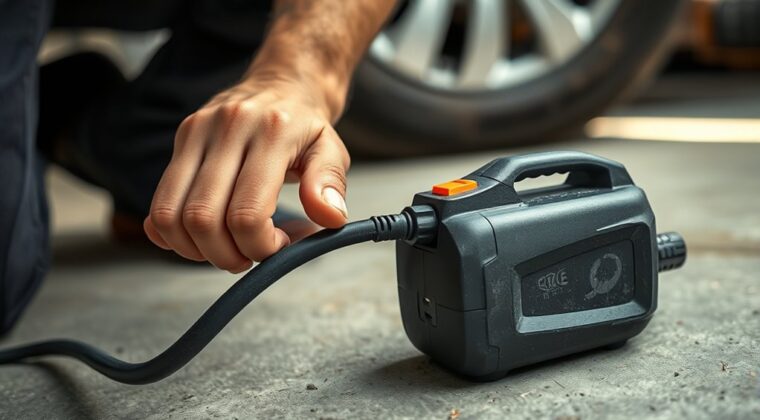
Before you use a tire inflator, unplug it and inspect the power cord for frays, cuts, kinks, cracks, burns, or exposed wire. Check both ends for clean, snug connections, bent prongs, corrosion, or melted plastic. Gently flex the cord near plugs and bends to spot loose wiring or intermittent faults. If you find damage, stop using it, and test continuity with a multimeter. A few more details can help you catch hidden hazards.
Key Takeaways
- Unplug the inflator and inspect the cord for frays, cuts, cracks, or exposed wires.
- Check both ends for secure, clean connections without corrosion, looseness, or residue.
- Look for burn marks, discoloration, stiffness, kinks, or crushed sections indicating damage.
- Use a multimeter to test continuity; a stable reading suggests the conductors are intact.
- Stop using the inflator immediately if damage appears, and repair or replace the cord.
Inspect a Tire Inflator Cord Safely
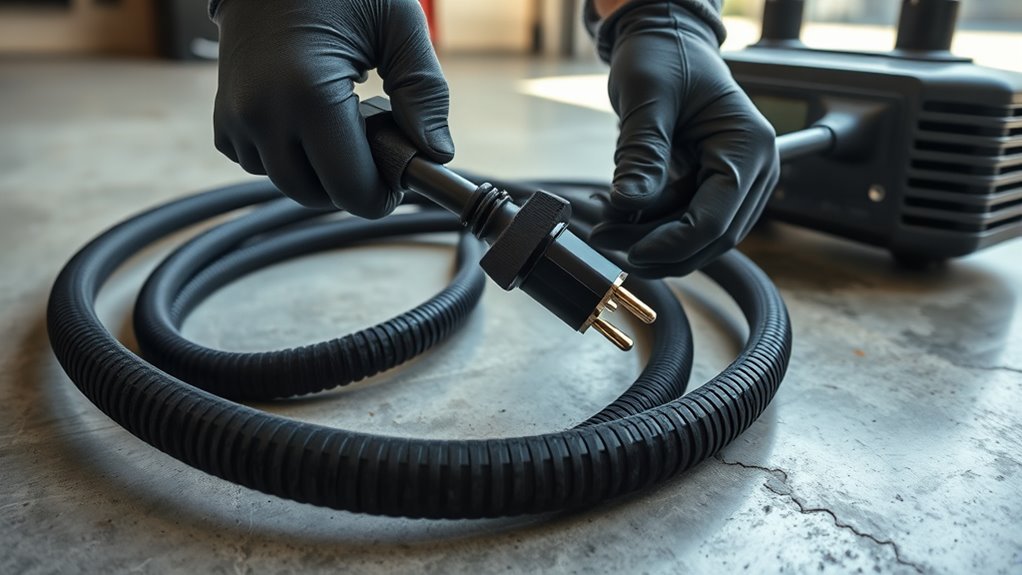
Start by visually inspecting the tire inflator power cord for fraying, cuts, or exposed wires that could create an electrical hazard.
Then inspect both ends of the cord and confirm the connections are secure, clean, and free from corrosion. If you see looseness or residue, address it before use so you don’t invite electrical hazards.
Next, use a multimeter to check continuity through the cord; a stable reading shows the conductors aren’t broken and the power cord can deliver current safely.
Verify the cord is rated for the inflator’s voltage and amperage requirements, because an underrated cord can overheat and fail under load.
After use, store properly by coiling it loosely and avoiding tight bends or kinks that can weaken insulation and conductors over time.
When you inspect with care, you protect your equipment, your mobility, and your right to work without avoidable electrical risk.
Signs of Power Cord Damage
Look closely for visible frays or cuts in the insulation, since exposed wiring can create a shock hazard. You should inspect the power cord from end to end for damage, and treat any frays as a serious safety issue.
Check for kinks or twists that suggest internal wear, because hidden breaks can interrupt electrical connectivity. Scan the surface for burn marks or discoloration; these signs often point to overheating and possible failure.
Check for kinks or twists that suggest internal wear, and watch for burn marks or discoloration.
Next, examine the cord body for stiffness, cracking, or crushed sections that may limit flexibility and indicate stress. If you see corrosion on any metal contact, note it as a warning that conductivity may be compromised.
Then test the inflator briefly. If it doesn’t start, the cord may be faulty. Don’t force it back into service. A damaged power cord can fail without warning, so protect your freedom by replacing unsafe parts promptly and keeping the tool reliable.
Check the Plug and Connections
After checking the cord itself for wear, inspect the plug and every connection point for damage or looseness. You should inspect the power cord plug for frayed leads, melted plastic, or bent prongs, since these defects can create electrical hazards.
Confirm that the connections between the power cord and the inflator are secure and show no corrosion. If you see exposed wires, stop using the unit until you replace or repair it.
Fit the plug into the outlet snugly; it shouldn’t wobble or slip, because a poor seat can interrupt power. Keep the plug and connectors clean by wiping them with a dry cloth to remove dust and debris. That simple care helps maintain ideal conductivity and supports reliable operation.
When you check each contact carefully, you protect your equipment, your workspace, and your autonomy from avoidable failure.
Check for Loose Wiring
Check the cord closely for loose wiring by inspecting the full length of the insulation for frayed or exposed conductors, since damaged wiring can cause shorts or fires.
You should trace the power cord with your eyes and fingers, looking for frayed wiring, kinks, or soft spots that signal wear. Gently tug near the secure plug and at each bend to expose loose connections that may break contact under load.
Watch the insulation for discoloration, blistering, or melting, because heat marks point to electrical hazards. If the plug shifts in the outlet or the inflator loses power, treat that as intermittent power, not normal behavior.
Keep your focus on safety and functionality: a cord that conducts cleanly supports reliable use and protects your right to work without avoidable risk.
If you detect damage or unstable wiring, replace power cord promptly.
What to Do When the Cord Is Damaged
When you find frayed wires, cuts, or exposed insulation on the cord, assess the damage immediately and stop using the inflator.
Unplug it at once to reduce the risk of shock or further deterioration.
For minor frays, you can apply electrical tape as a temporary measure, but you’ll need to repair or replace the cord according to the manufacturer’s guidelines.
Assessing Cord Damage
If you spot any sign of damage on the power cord, stop using the tire inflator right away and inspect it closely for fraying, cracks, exposed wires, stiffness, or corrosion at the plug connections.
Look for wear along the entire cord, then bend it gently at several points; if it resists flexing or feels broken inside, treat that as damage.
Use a multimeter to verify continuity, because an open circuit means the wiring can’t deliver power safely.
Check that the connections stay secure and show no heat discoloration or rust.
Any defect increases risks of shock, overheating, and malfunction, so don’t trust a compromised cord.
To protect your freedom to work safely and independently, replace the power cord immediately when you detect any fault.
Replacing or Repairing Cord
Once you’ve confirmed damage, stop using the inflator and deal with the cord right away: minor fraying or exposed conductors may be covered only as a temporary measure with electrical tape, but that isn’t a long-term fix, so replacement is the safer choice.
Inspect the power cord for any visible damage and treat it as a safety hazard. If you decide to repair, limit it to minor wear and only when the cord remains structurally sound.
For a lasting fix, replace it with a compatible cord that matches the inflator’s voltage and amperage ratings. Follow the manufacturer’s instructions for detachable cords, and verify secure connections before use.
Recheck the cord regularly for wear to prevent malfunctions and reduce electrical risk.
Keep Your Tire Inflator Cord in Good Shape
Your tire inflator cord deserves a quick inspection before every use. Check the power cord for visible wear, fraying, cuts, or crushing that could trigger shorts or erratic operation.
Look closely at the connectors and clean connectors only with a dry, nonabrasive cloth; corrosion can break the secure connection you need for reliable inflation.
Don’t pull the cord tight, twist it, or force sharp bends, because internal conductors can fail long before the jacket shows damage.
Watch for overheating indicators such as discoloration, soft spots, or melted insulation; these signs demand immediate removal from service.
After use, store properly by loosely coiling the cord and keeping it away from heat, oil, and abrasion.
This simple maintenance routine helps prevent damage, preserves peak functionality, and keeps your equipment ready when you need freedom on the road.
Frequently Asked Questions
What Are the Safety Precautions for Using a Tire Air Compressor?
You should follow tire safety by checking the power cord, proper grounding, and compressor maintenance before each use.
Inspect for fraying, kinks, and overheating risks, and avoid damaged extension cords.
Read the user manual for voltage limits and inspection frequency.
Keep the unit dry, away from heat, and never bypass electrical hazards safeguards.
If you smell burning or hear faults, stop at once and follow emergency procedures.
Why Is My Portable Tire Inflator Not Working?
Your portable tire inflator usually isn’t working because of power loss, a damaged cord, a blown fuse, or a weak battery.
For tire inflator troubleshooting, inspect the cord for cuts, then use electrical safety tips.
Check common inflator issues like loose plugs, verify pressure gauge accuracy, and follow a fuse replacement guide.
Apply inflator maintenance tips, battery check methods, and confirm inflator compatibility concerns, especially during usage in cold.
What Equipment Is Necessary for an OSHA Compliant Truck Tire Inflation Device?
You need a heavy-duty hose, pressure regulator, gauge, automatic shut-off, and safety guards to meet Tire inflator standards under OSHA regulations.
For truck tires, choose inflation device types rated for 80–120 PSI.
Keep up Equipment maintenance, including Power cord inspection, and verify Safety features before use.
Follow Compliance guidelines, provide Usage training, and manage Risk management to protect Workplace safety.
Don’t cut corners; freedom starts with safe, reliable work.
How to Work a Portable Tire Inflator?
You power up the portable tire inflator, choose its power source options, set the target PSI, and attach the hose firmly.
Check compatible tire sizes, then watch the pressure gauge importance as you inflate.
Compare inflation speed comparison and note noise level considerations.
Use tire inflator features and user friendly designs for control.
Follow proper usage tips, respect inflator maintenance tips, and appreciate portability advantages while keeping your work precise and cautious.
Conclusion
When you inspect your tire inflator cord, you’re really checking the road between safety and failure. A frayed jacket, a loose plug, or exposed wiring can act like a warning flare, signaling hidden risk before the tool ever starts. If you spot damage, stop using it and replace or repair it properly. By keeping the cord intact, you keep power flowing cleanly, like a sealed circuit, and help your inflator work safely when you need it.