
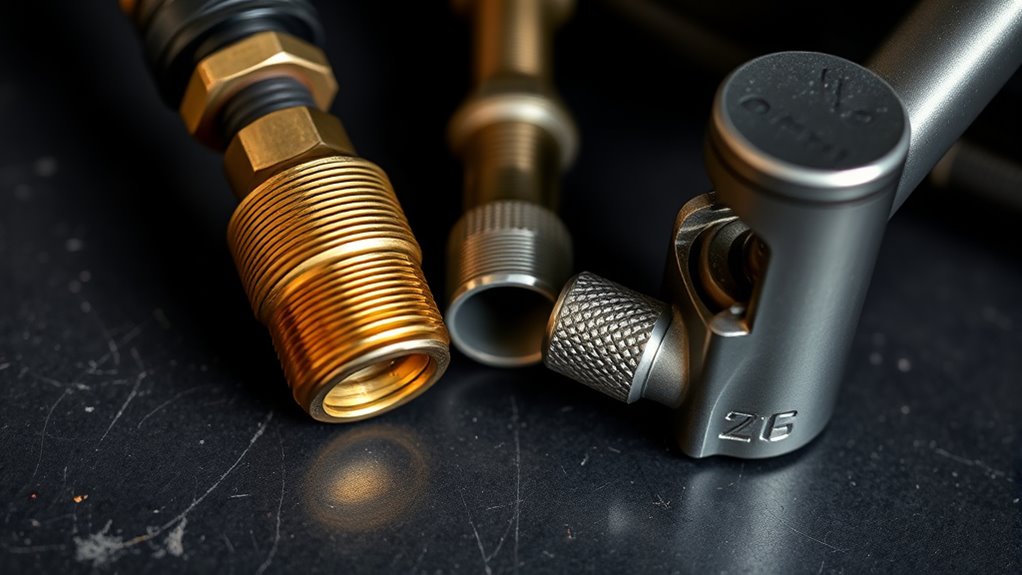
A screw-on tire inflator chuck threads onto the valve stem, giving you the tightest seal and the most accurate inflation, especially at higher PSI. A lever-lock chuck clamps on faster and lets you work hands-free, but it can leak slightly if the fit isn’t perfect. If you need maximum precision, choose screw-on. If you want speed and easy attachment, choose lever-lock. The details behind seal quality, materials, and maintenance matter more than you might think.
Key Takeaways
- Screw-on chucks thread onto the valve for a direct, secure connection.
- Lever-lock chucks clamp quickly with a lever, making attachment and removal faster.
- Screw-on chucks usually seal better, reducing air leaks and improving inflation accuracy.
- Lever-lock chucks are more convenient for hands-free use and tight spaces.
- Screw-on chucks suit high-PSI precision; lever-lock chucks suit speed and convenience.
What’s the Difference Between Screw-On and Lever-Lock Chucks?
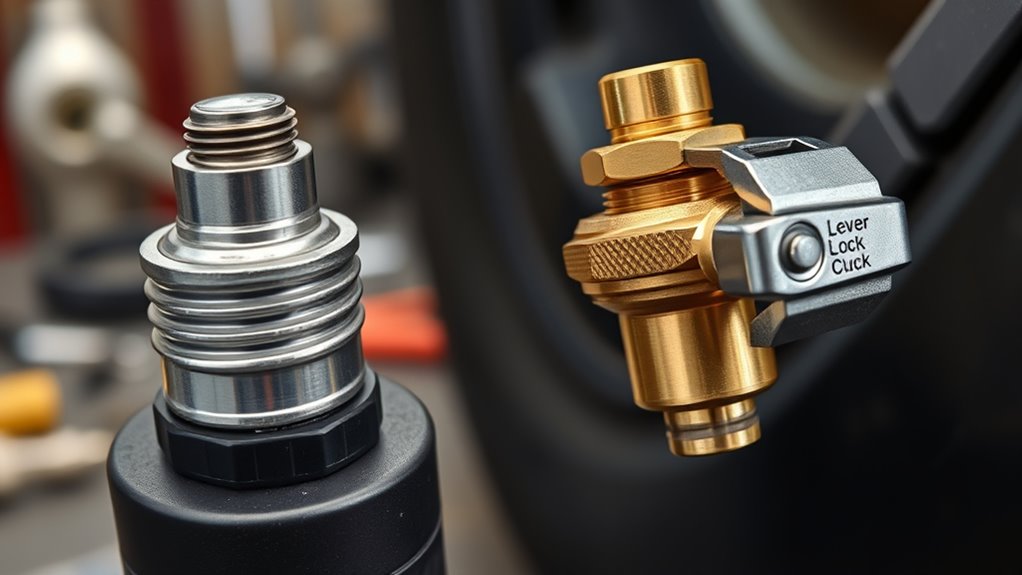
Screw-on and lever-lock tire inflator chucks differ mainly in how they connect to the valve stem and control airflow.
With Screw-on chucks, you thread the chuck onto the stem by hand, creating a direct, continuous path for air. That setup gives you simple operation, but you must keep the chuck engaged to maintain pressure.
Lever-lock chucks use a lever mechanism that clamps onto the stem, so you get a hands-free connection once you lock it in place. Their valve opens only when engaged, which supports air flow control and helps prevent unwanted loss when you’re not actively inflating.
In practice, lever-lock chucks attach and release faster, especially in tight spaces, so you can move with less hassle and more autonomy. They also tend to seal more securely, improving leak prevention.
Screw-on chucks still fit certain jobs well, but lever-lock chucks usually offer broader versatility.
Why Chuck Choice Affects Inflation Accuracy
Chuck design affects how much air stays in the system while you inflate, and that directly changes your final tire pressure. When you use screw-on chucks, you usually get a tighter connection, so less air escapes and inflation accuracy stays high. That means you can hit your target tire pressure with fewer corrections.
Lever-lock chucks work faster, but if you don’t secure them perfectly, small leaks can skew the reading and leave you guessing. For you, that difference matters. A few PSI off can affect handling, fuel economy, and tire wear.
Screw-on chucks also tend to keep airflow steadier, so the gauge reflects the real pressure more consistently. Lever-lock chucks still have value when speed matters, but speed can cost precision. If you want reliable results and more control over your equipment, choose the chuck that protects inflation accuracy during the whole fill, not just at the start.
How Screw-On Chucks Create a Seal
You thread the screw-on chuck onto the valve stem, and that engagement locks the chuck in place.
As you tighten it, the rubber O-ring compresses against the valve and creates air-tight contact pressure. That seal helps minimize leaks and supports reliable inflation at higher pressures.
Threaded Valve Engagement
A threaded valve engagement creates the seal in a screw-on tire inflator chuck by tightly mating the chuck to the valve stem, which helps prevent air leakage during inflation. You twist the chuck until you get a secure fit, and the threads hold it in place with minimal effort.
- threaded valve engagement locks onto the stem
- the connection reduces air leaks
- a rubber gasket supports the airtight seal
- manual twisting improves stability under pressure
This simple mechanism gives you a reliable connection for higher PSI work without detachment.
It also works with Schrader and Presta valves, so you can move between setups without extra gear. Use it when you want control, consistency, and a practical seal that keeps your inflation process efficient and free.
Air-Tight Contact Pressure
Because screw-on tire inflator chucks use threaded contact, they press evenly against the valve stem and create a stable air-tight seal during inflation. You get adjustable pressure at the tire valve, so the chuck stays firm without a spring-based locking mechanism.
| Step | Effect | Result |
|---|---|---|
| Align | Threads meet squarely | Better seal |
| Tighten | Pressure increases | Less leakage |
| Hold | Contact stays stable | Steady inflation |
| Inspect | Check wear | Reliable fit |
This air-tight contact lets you control inflation with precision. If you install it carefully, you reduce pressure loss and keep the seal consistent. Clean the threads and check for wear, and the chuck will keep doing its job.
How Lever-Lock Chucks Work
Lever-lock chucks clamp onto the valve stem with a mechanical lever that tightens the grip and holds the chuck in place during inflation. You flip the lever, and the chuck’s jaws engage the stem, so you don’t need to keep squeezing it by hand. This lever-lock design supports hands-free operation, letting you monitor pressure and control airflow with less effort.
- Multiple gripping points improve seal stability
- Better valve depression promotes ideal airflow
- Quick-release mechanism speeds detachment
- Fits Schrader and other common tire valves
Because the chuck stays secured, you can focus on accurate inflation rather than fighting slippage. The lever compresses internal components against the valve, creating consistent contact pressure across the opening.
When you’re done, you release the lever and the chuck disengages fast. That quick-release mechanism matters when you want efficient, precise tire service without unnecessary downtime.
When a Screw-On Chuck Is the Better Choice
When you need the most secure seal possible, a screw-on chuck is often the better choice because it threads onto the valve stem and resists air leakage during inflation. You get a secure seal that supports precise inflation, especially when pressure matters and margin for error doesn’t.
Because screw-on chucks lock directly to the stem, they stay stable under higher loads and won’t slip as easily during demanding fills. That stability helps you keep airflow controlled, which lets you set pressure with confidence instead of chasing fluctuations.
You’ll also benefit in confined spaces, where the chuck’s threaded attachment needs less force to hold firm.
Another advantage is compatibility: screw-on chucks work with different valve types, including Schrader and Presta, so you can move between setups without changing your approach.
If you want reliable control, this design gives you the freedom to inflate on your terms.
When a Lever-Lock Chuck Saves Time
You’ll save time with a lever-lock chuck when you need fast valve attachment and detachment, since the lever clamps on in one motion.
It also lets you inflate hands-free, so you don’t waste time holding the chuck against the valve stem.
In tight spaces or awkward angles, that quicker access makes setup and removal more efficient than a screw-on chuck.
Faster Valve Attachment
A lever-lock tire inflator chuck can save noticeable time when you’re moving from one valve to the next because it clamps on and releases with a simple one-hand motion.
Compared with screw-on chucks, a lever-lock design cuts wasted twisting, so you keep your workflow moving. Its hands-free operation lets you seat the chuck fast, then move on without juggling the hose.
During the inflation process, the locking jaw grips the valve stem firmly, limiting leaks and maintaining steady airflow.
- Quick engagement on each valve
- Fast one-hand release
- Secure grip on valve stems
- Rapid changeover for multiple tires
Hands-Free Inflation
Once the lever-lock chuck is clamped onto the valve stem, you can leave it in place and let the tire inflate without holding the hose steady.
That hands-free tire setup frees your grip and cuts fatigue when you’re filling multiple tires or handling larger vehicles.
The lever-lock chuck maintains a secure connection, which helps prevent leaks and supports efficient airflow through the valve. As a result, you get faster, more consistent inflation with less interruption.
You can also release the chuck with one hand, so you move from one tire or tool to the next without wasting motion.
Many models add ergonomic shaping for better control, making the process cleaner, quicker, and more independent.
Better Tight-Space Access
In cramped wheel wells and crowded undercarriages, a lever-lock tire inflator chuck can save real time because it clamps on securely without requiring you to hold it in place. That gives you better tight-space access when the valve stem sits behind suspension parts or brake hardware.
- You attach the lever-lock fast, even at awkward angles.
- The compact body reduces interference with nearby components.
- The secure grip cuts leaks and slips during the inflation process.
- Quick release helps you detach cleanly, without wrestling.
Because the chuck stays put, you can move freely and work with precision. On vehicles with limited clearance, that leverage turns a frustrating task into a controlled, efficient one.
Which Flow Type Matches Your Setup?
Which flow type fits your setup depends on how your inflator and valve system are designed to work.
You’ll usually pair open flow with screw-on chucks, because they keep air moving continuously once you twist them down and seal tightly. That makes them strong for high-pressure work where you want steady delivery and less leakage.
Closed flow suits lever-lock chucks, since they only pass air when the chuck presses firmly against the stem. You get quick, hands-free inflation and a locked connection that resists accidental release.
Closed flow works best with lever-lock chucks, delivering quick, hands-free inflation and a secure, press-to-seal connection.
If you value speed and control, closed flow can free you from constant threading. If you need a more universal seal and broader valve compatibility, open flow gives you that flexibility.
Choose the flow that matches your task, your valve type, and the amount of air you need to keep moving.
How to Match a Chuck to Your Compressor
To match a chuck to your compressor, start by checking whether you’re using a tanked or tankless unit, because that choice affects flow behavior and chuck compatibility.
Then verify the connection type on your compressor so the chuck threads seal correctly.
- Tanked compressor: use closed-flow support.
- Tankless compressor: use open-flow support.
- Match BSP or NPT threads exactly.
- Confirm the chuck’s PSI rating fits your compressor output.
After that, choose the chuck style that suits your work. A screw-on chuck can give you a tighter seal, while a lever-lock chuck lets you connect fast and keep your hands free.
Pick the one that keeps you in control without fighting the tool. When the fit is right, your compressor delivers air cleanly, with fewer leaks and less wasted effort.
For the best result, check specs before you buy, not after.
What Chuck Materials Last the Longest?
When you compare brass vs. steel, brass resists corrosion and wear well, so it often lasts longer in harsh service.
Stainless steel gives you stronger rust-proof protection and high structural integrity, which helps the chuck hold up over time.
Avoid cheap alloys and plastic, since they wear faster, lose sealing quality, and reduce longevity.
Brass vs. Steel
Brass and steel each bring different lifespan advantages to a tire inflator chuck. You’ll choose brass when you want lighter handling, strong durability and corrosion resistance, and fewer replacements in regular tire inflation.
Steel suits you when strength matters more, especially if you run high pressure or harsh industrial cycles.
- brass: lighter, easier to maneuver
- steel: higher strength under load
- brass: less frequent replacement
- steel: better wear resistance
If you maintain either material well, both can last.
Still, brass often frees you from rust-related downtime, while stainless steel gives you rugged service where abuse is common.
Pick the chuck that matches your workload, and you’ll extend service life without sacrificing control.
Corrosion Resistance
Material choice also shapes how well a tire inflator chuck stands up to moisture, road grime, and compressed air exposure.
For corrosion resistance, brass is a proven option because it resists rust and handles wet conditions well. Stainless steel goes further: it pairs high strength with rust-proof performance, so you get durability in demanding, high-pressure use.
Zinc-plated steel gives you moderate protection, but it won’t match brass or stainless steel in harsh environments. Aluminum also resists corrosion and stays light, yet it can’t deliver the same durability under load.
If you want your chuck to stay reliable, clean it regularly and add protective coatings when needed. That simple care helps you preserve performance and keep your setup working on your terms.
Wear And Longevity
For the longest service life, high-quality brass and stainless steel chucks are usually the best picks, since both resist wear far better than cheaper alloys or plastic parts.
You’ll get strong wear resistance from brass, while stainless steel adds rust protection, boosting longevity in harsh conditions.
- Brass handles repeated clamping well
- Stainless steel fights corrosion and abrasion
- Durable seals protect the sealing mechanism
- Maintenance impact stays low when you clean and replace worn O-rings
If you run high-pressure systems, choose reinforced models built for repeated loading.
You can extend service life by keeping debris out and checking seals regularly. That small effort preserves performance, cuts leaks, and keeps your setup free from premature failure.
How to Keep Your Chuck Leak-Free
A leak-free chuck starts with basic maintenance: clean the nozzle after each use so dirt and debris don’t interfere with the seal, and inspect the seals, springs, and O-rings regularly for wear or damage.
Keep the locking chuck closed when you’re not inflating, and store the tool dry to block rust and corrosion that can weaken fittings.
Before you connect, seat the chuck firmly on the valve stem and verify a tight fit; any gap can disturb air flow and skew pressure readings.
If you see cracked seals, tired springs, or flattened O-rings, replace them immediately to restore an airtight connection.
During use, don’t twist or force the chuck against the valve, because that can break the seal and waste air.
Frequently Asked Questions
Which Locking Air Chuck Is the Best?
You’ll usually get the best overall results from a lever-lock air chuck, because it gives you faster inflation speed, strong valve grip, and easier one-hand use.
If you want maximum air pressure retention for tire maintenance, a screw-on chuck can still win.
Your user preference matters most: choose lever-lock for speed and convenience, or screw-on for security and precision.
In practice, the best chuck is the one you can operate confidently.
What Is the Best Tire Inflator Air Chuck?
You’ll usually get the best tire inflator air chuck by testing a lever-lock brass or steel model, since it often beats a screw-on design for speed and seal.
Check inflator features like jaw grip and PSI rating; the theory that tighter always means better isn’t always true.
Match chuck materials to your use, respect user preferences, and follow maintenance tips like cleaning valves and checking for leaks regularly.
What Are the Common Problems With Air Chucks?
You’ll often face air leaks, weak seals, and worn O-rings that cause Air pressure issues and wasted inflation.
You may also hit Compatibility concerns between chuck types and valve stems, especially Schrader and Presta.
Durability factors matter too, since cheap plastic or alloy parts wear fast and fail under load.
Poor engagement can frustrate you, so User comfort drops when the chuck slips or won’t hold pressure.
What Are the Different Types of Air Chucks?
You’ll find several air chuck types: open-flow, closed-flow, lock-on, dual-head, and heavy-duty.
Open-flow chucks suit hand gauges and tankless compressors; closed-flow chucks work best with hose lines and valve stems.
Lock-on chucks free your hands during inflation. Dual-head chucks help you reach paired valves, while heavy-duty models handle high pressure.
Check chuck materials, inflation techniques, and chuck compatibility to match your system and work more efficiently.
Conclusion
Choosing the right chuck helps you inflate faster and more accurately. In fact, even a small air leak can cost you several PSI, which affects tire performance and wear. If you want the tightest seal and minimal loss, a screw-on chuck is usually the better fit. If you need speed and easy on/off use, a lever-lock chuck works well. Match the chuck to your compressor, and you’ll keep your setup efficient and leak-free.

