
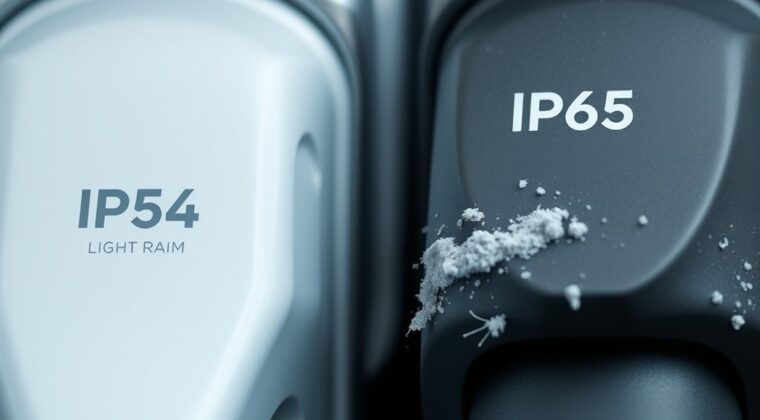
When comparing IP54 and IP65 EV charger ratings, you’ll notice key differences in dust and water resistance. IP54 offers limited protection, resisting only splashes, while IP65 is completely dust-tight and can handle powerful water jets. For sheltered areas, IP54 might suffice, but if you’re outdoors or in harsh conditions, IP65 is a smarter choice. The long-term reliability and lower maintenance costs of IP65 chargers make them a better investment. Discover more about choosing the right charger for your needs.
What Are IP Ratings and Why Do They Matter for EV Chargers?
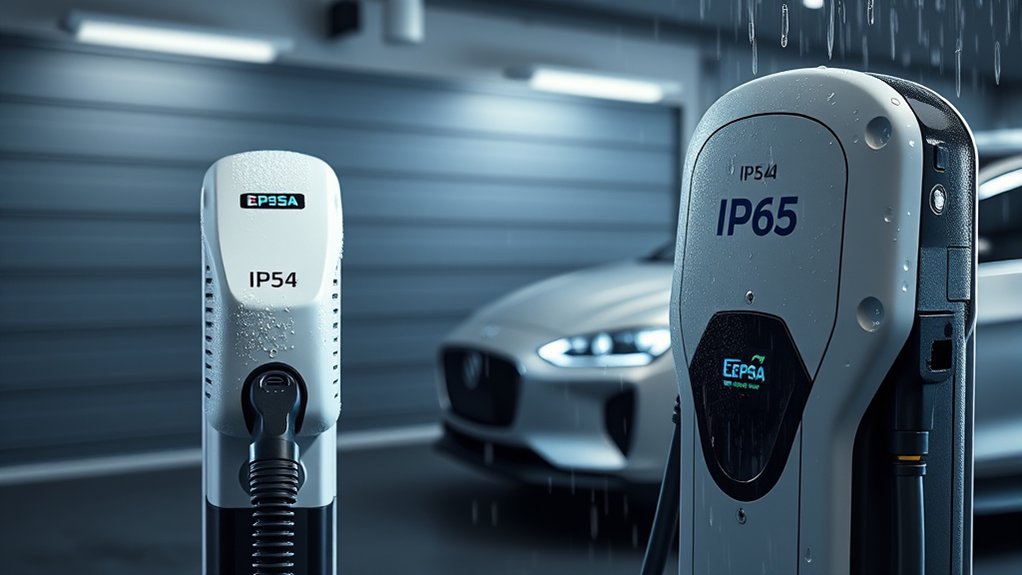
When you’re choosing an EV charger, understanding IP ratings is essential, as they indicate how well a device can resist dust and moisture.
These Ingress Protection ratings consist of two numerical values: the first measures solid particle protection, while the second focuses on liquid resistance.
For outdoor use, an IP54 rating means your charger is dust-protected and can withstand splashes of water, making it suitable for mild environmental conditions.
However, if you expect harsher weather, you’ll want an IP65 rating, which guarantees complete dust protection and can handle water jets from any direction.
This higher level of protection not only prevents moisture infiltration but also boosts the longevity of your charging equipment.
Comparing IP54 and IP65 Ratings: What You Need to Know
When comparing IP54 and IP65 ratings, you’ll notice significant differences in dust and water protection.
IP54 offers limited dust ingress protection and resists water splashes, making it suitable for moderate conditions.
In contrast, IP65 is completely dust-tight and can handle powerful water jets, making it ideal for harsher environments.
Protection Against Dust Ingress
To guarantee your EV charger performs well in various environments, understanding the differences between IP54 and IP65 ratings is vital.
IP54 offers limited dust ingress protection, allowing some particles to enter, while IP65 is completely dust-tight, making sure no dust can penetrate the enclosure.
This distinction is significant for charging infrastructure, especially in outdoor conditions.
IP54 suits moderate environments, but if you face harsher elements, IP65 is your best bet for long-term reliability.
Choosing an IP65-rated charger enhances performance, making it a smart consumer choice for those in dust-prone areas.
Ultimately, selecting the right protection levels guarantees your charger thrives against environmental factors, giving you peace of mind in your electric vehicle journey.
Water Resistance Comparison
Understanding the water resistance levels of IP54 and IP65 chargers is essential for ensuring your EV charger performs effectively in various weather conditions.
| Rating | Water Resistance Features |
|---|---|
| IP54 | Limited dust ingress; protects against water splashes, suitable for light outdoor use. |
| IP65 | Completely dust-tight; withstands water jets, ideal for heavy rain and harsher environments. |
IP54 chargers are adequate for moderate moisture, but IP65 is vital for heavy rain exposure. Choosing an IP65-rated charger minimizes risks of electrical failures and corrosion, enhancing longevity. While IP65 chargers may have a higher installation cost, their long-term reliability often makes them the more economical choice compared to IP54 models.
Ideal Usage Scenarios
Choosing the right EV charger involves considering your specific environment and usage needs.
If you’re looking for a charger for residential use in a sheltered area with minimal rainfall, an IP54 rating offers adequate protection against dust ingress and water splashes.
However, if you need outdoor EV chargers exposed to severe weather, an IP65 rating is essential. This rating provides complete dust-tightness and protection against water jets, guaranteeing long-term reliability.
Opting for an IP65-rated charger can also reduce maintenance costs, as it guards against moisture-related failures.
In ideal usage scenarios, choose IP54 for mild conditions and IP65 for harsher environments to secure your charger performs consistently, regardless of the weather.
What You Need to Know About Dust and Water Resistance
When selecting an EV charger, knowing the differences in dust and water resistance ratings can make a significant impact on your investment. Here’s what you need to evaluate:
- Dust Resistance: IP54 offers limited protection against dust, while IP65 is completely dust-tight, ensuring your charger stays clean and functional.
- Water Resistance: IP54 protects against splashes, but IP65 withstands water jets from any angle, making it ideal for harsh weather.
- Environmental Suitability: If you’re in a moderate area, IP54 might suffice, but for heavy rain or snow, IP65 is the smarter choice.
Investing in an IP65-rated charger typically means better longevity and reliability, reducing maintenance concerns.
For application recommendations, choose IP54 for home installations under carports, and opt for IP65 for public charging stations or areas exposed to the elements.
This knowledge empowers you to select the right outdoor charger for your needs.
Best Use Cases for IP54 EV Chargers
For homeowners looking for a practical EV charging solution, IP54 chargers offer a range of benefits tailored to specific environments.
These chargers excel in home installations under carports or covered areas, providing effective dust protection and resistance to light rain. Their design guarantees safety against splashes from any direction, making them ideal for semi-enclosed environments.
In residential neighborhoods with moderate weather conditions, IP54 chargers minimize maintenance needs while delivering reliable performance. They’re a budget-friendly choice, often costing less than higher-rated options, making them accessible for many homeowners.
Additionally, IP54 chargers work well in urban settings where exposure to dust and moisture is limited, assuring you can charge your EV without worry.
While they aren’t meant for extreme weather, their capabilities make them a sensible option for day-to-day use in suitable conditions.
Why Choose IP65 for Outdoor Charging Stations?
Opting for an IP65-rated EV charger for outdoor charging stations guarantees you’re equipped to handle the toughest weather conditions.
Here’s why choosing IP65 is a smart investment:
- Enhanced Protection: IP65 chargers are dust-tight and resistant to water jets from any direction, ensuring reliable operation in heavy rain or snow.
- Longevity: Their robust sealing considerably reduces moisture-induced failures and corrosion, often leading to lifespans exceeding 10 years.
- Cost-Effectiveness: Investing in IP65-rated chargers minimizes long-term maintenance costs linked to water damage, providing better value over time.
How IP Ratings Affect Charger Longevity
When it comes to charger longevity, IP ratings play an essential role in protecting against environmental elements.
IP65 chargers offer superior dust and water resistance, reducing maintenance costs and enhancing durability.
Protection Against Elements
Choosing the right IP rating for your EV charger greatly impacts its longevity and performance in various environments. Understanding the differences between IP54 and IP65 can guide your decision, especially regarding protection against elements.
- IP54: Offers limited dust protection and withstands light water splashes. Ideal for home use with moderate rain exposure.
- IP65: Completely dust-tight and protects against high-pressure water jets. Perfect for harsh outdoor conditions, enhancing durability.
- Moisture Infiltration: IP65’s robust sealing considerably reduces risks of electrical shorts and component corrosion, boosting operational reliability.
Investing in an IP65 charger is wise if you live in areas with heavy rainfall or snow, ensuring a longer lifespan and reduced maintenance needs.
Impact on Maintenance Costs
While both IP54 and IP65 chargers serve their purpose, the difference in maintenance costs can be significant.
IP54-rated EV chargers may face higher maintenance costs due to moisture ingress, leading to electrical shorts and component degradation. In contrast, IP65 chargers offer robust protection against water jets and dust, greatly reducing the risk of failures and associated expenses.
Research shows that IP65-rated chargers can extend product lifespan by over 10 years, minimizing the need for frequent repairs. This reduced risk of moisture-induced corrosion translates to fewer service calls, making them a more cost-effective long-term investment.
Cost Comparison: IP54 vs. IP65 EV Chargers
Understanding the cost differences between IP54 and IP65 EV chargers can greatly impact your decision-making process. While IP54 chargers are more budget-friendly with a lower upfront cost, investing in IP65 models offers significant long-term benefits.
Consider these key points:
- Long-Term Savings: IP65 chargers have enhanced durability, reducing maintenance costs as they resist environmental elements better than IP54 models.
- Lifespan: IP65 chargers typically last over 10 years, while IP54 chargers might need replacement sooner in harsh conditions.
- Insurance Premiums: Installing an IP65 charger often results in lower insurance premiums due to decreased risks of damage and liability.
Common Misconceptions About IP Ratings
Many people hold misconceptions about IP ratings that can lead to poor decision-making when selecting EV chargers. For instance, some think that a higher IP rating always means better performance. However, your choice should depend on specific environmental factors.
While IP54 offers decent dust resistance and can handle light splashes, IP65 is essential in areas prone to heavy rain or snow.
IP54 provides basic protection, but for regions with heavy rain or snow, IP65 is crucial for optimal performance.
Another common error is believing IP ratings only matter for outdoor use; even indoor installations can benefit from appropriate ratings to guard against dust and accidental splashes.
Additionally, many assume that higher IP ratings come with significant cost implications. In reality, investing in an IP65 charger can save you maintenance costs over time due to its superior water resistance and durability.
Finally, don’t confuse IP ratings with other standards like NEMA, which measure different protection levels. Understanding these nuances empowers you to make informed choices.
How to Install IP54 and IP65 Chargers Properly
When you’re installing IP54 and IP65 chargers, proper placement is vital to guarantee peak performance and longevity. Follow these key steps for effective installation:
1. Choose the Right Location: For IP54 chargers, find sheltered spots to limit exposure to rain and dust.
IP65 chargers, however, can handle high-pressure water jets, so position them accordingly.
2. Secure Mounting: Always mount your chargers based on the manufacturer guidelines.
Confirm they’re attached to sturdy surfaces to withstand environmental factors.
3. Seal Electrical Connections: Make sure all electrical connections are watertight and properly sealed to prevent water ingress that could lead to malfunctions.
Regular maintenance checks are essential for both types, though IP65 chargers may need less frequent inspections due to their enhanced dust resistance and protection against water.
Frequently Asked Questions
What Is Better, IP 54 or IP 65?
IP65’s benefits outweigh IP54’s advantages, especially in harsh environmental conditions. You’ll enjoy better charging efficiency, weather resistance, and product longevity. Consider installation requirements, cost comparison, and maintenance tips when making your choice.
What IP Rating for Outdoor EV Charger?
For outdoor installation, choose an IP65 rating. It provides superior weather resistance, dust protection, and guarantees electrical safety. This boosts charging efficiency, enhances product longevity, and reduces maintenance. Check customer reviews for insights!
Is IP65 Enough for Heavy Rain?
Yes, IP65’s weather resistance guarantees excellent protection against heavy rain and water ingress. For ideal user experience, consider installation tips, electrical safety, and maintenance requirements to enhance charging efficiency and environmental durability while maximizing your investment.
What Stops Someone From Unplugging Your Electric Car?
To stop someone from unplugging your electric car, utilize charging security features like cable locks, user authentication, smart chargers, alarm systems, and surveillance cameras. Community awareness and location tracking further enhance theft prevention and unplugging deterrents.
Conclusion
In choosing between IP54 and IP65 EV chargers, it’s essential to align your needs with the environment where you’ll use them. If you often charge outdoors in wet conditions, IP65 is your go-to. However, for less demanding indoor scenarios, IP54 can be a cost-effective choice. Remember, investing in the right IP rating not only boosts safety but also enhances the longevity of your charger. Your decision today can lead to hassle-free charging tomorrow!