Choosing between Level 1 and Level 2 EV charging comes down to your daily mileage, parking time, electrical setup, and budget. Level 1 charging uses a standard 120-volt household outlet and works best for light daily driving. Level 2 charging uses 240-volt residential service or 208-volt commercial service and is the better fit when you need faster, more reliable overnight charging.
Quick Answer
Use Level 1 charging if you drive short distances, can plug in overnight, and already have a safe dedicated outlet near your parking spot. Choose Level 2 charging if you drive more than about 30 to 40 miles a day, own a larger battery EV, share charging with another EV, or want dependable overnight charging.
Key Takeaways
- Level 1 charging uses a 120-volt outlet and typically adds about 3 to 5 miles of range per hour, depending on the vehicle and conditions.
- Level 2 charging uses 240-volt residential power or 208-volt commercial power and commonly adds about 10 to 25 miles of range per hour, with higher rates possible when the vehicle and charger support them.
- Level 1 is cheapest to start with, but Level 2 is more practical for long commutes, larger batteries, and multi-EV homes.
- Level 2 installation should be checked by a qualified electrician because panel capacity, permits, circuit sizing, and local electrical codes matter.
At a Glance
| Best for Level 1 | Short commutes, plug-in hybrids, backup charging, and drivers who can charge overnight. |
| Best for Level 2 | Daily EV use, larger batteries, longer commutes, multiple EVs, and faster overnight charging. |
| Power source | Level 1 uses 120 V AC. Level 2 uses 240 V at most homes or 208 V at many commercial sites. |
| Typical speed | Level 1 is usually about 3 to 5 miles per hour. Level 2 is often about 10 to 25 miles per hour, depending on amperage and vehicle efficiency. |
| Installation | Level 1 may need no new equipment if the outlet is safe and dedicated. Level 2 often needs a dedicated circuit, permits, and electrician installation. |
| Cost | Level 1 has the lowest upfront cost. Level 2 costs more, especially if the panel, wiring, or permit work is complex. |
How Does a Level 1 EV Charger Work for Everyday Drivers?
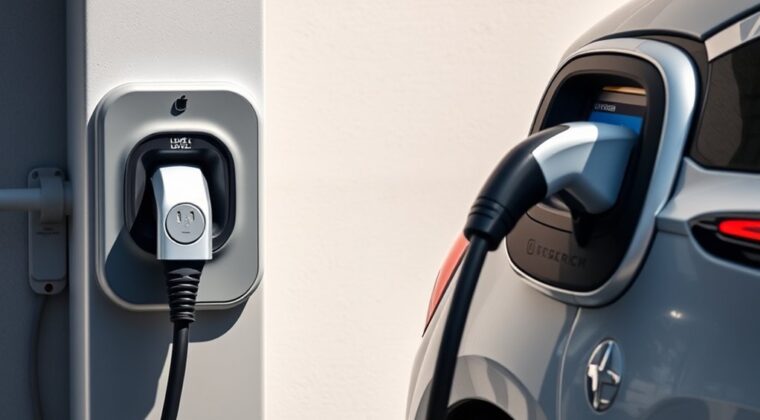
A Level 1 EV charger uses a standard 120-volt household outlet. Most new electric vehicles and plug-in hybrids include a portable charging cord, so many drivers can start with Level 1 charging without buying a wall-mounted charger.
Level 1 charging is slow. The U.S. Department of Energy’s Alternative Fuels Data Center estimates about 5 miles of range per hour for Level 1 charging, based on about 1.9 kW of charging power. In real use, your result may be closer to 3 to 5 miles per hour because vehicle efficiency, battery temperature, state of charge, and household voltage all affect the result.
That slow speed is not always a problem. If you drive 20 to 30 miles per day and your vehicle sits plugged in for 10 to 12 hours overnight, Level 1 may replace your daily use without any extra equipment.
Level 1 is especially practical for plug-in hybrids because their batteries are smaller than full battery-electric vehicles. A plug-in hybrid may recharge overnight on Level 1, while a fully electric vehicle with a large battery can take more than a day if it is deeply depleted.
Note: A standard outlet is not automatically a safe charging outlet. The outlet should be in good condition, properly grounded, and preferably on a dedicated branch circuit.
What Is a Level 2 EV Charger and How Does It Work?
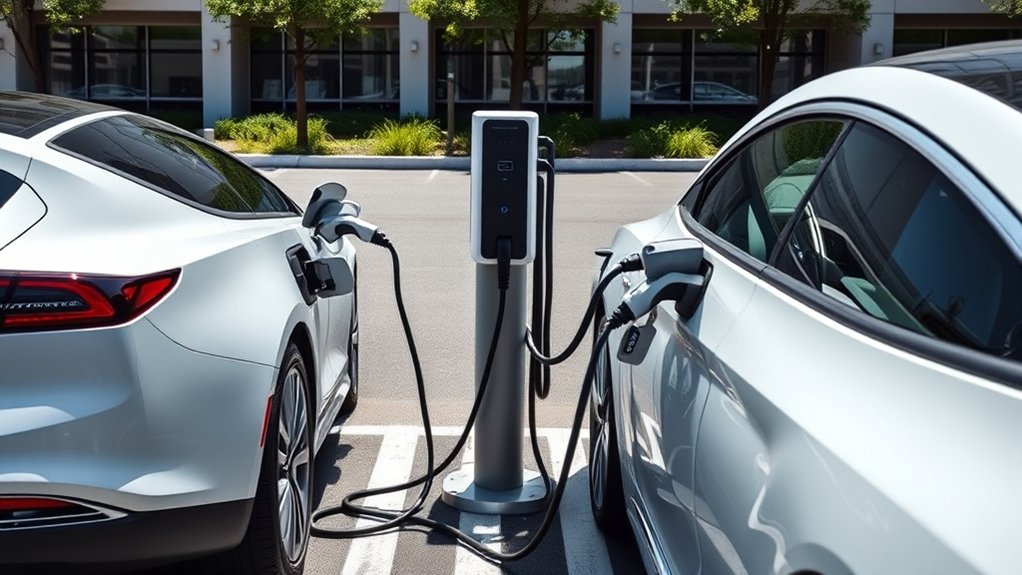
A Level 2 EV charger uses higher-voltage AC power than Level 1. At home, that usually means 240-volt service. In many commercial locations, Level 2 equipment may use 208-volt service.
Level 2 is much faster because it can deliver more power. The Department of Energy lists Level 2 equipment from about 2.9 kW to 19.2 kW, with many residential Level 2 chargers operating around 7.2 kW. That can make the difference between slowly recovering a few miles overnight and waking up to a battery that is ready for a full day of driving.
Most Level 1 and Level 2 charging in North America uses an AC connector such as J1772, while Tesla-style J3400/NACS connectors are now part of the changing connector landscape. Adapter support depends on your vehicle and charging equipment, so check your owner’s manual before buying hardware.
Key Features of Level 2
- Runs on 240 V residential power or 208 V commercial power.
- Often adds about 10 to 25 miles of range per hour in home use, with higher speeds possible on high-power equipment.
- Can recharge many battery-electric vehicles overnight.
- Can support smart scheduling, energy tracking, load management, and access controls.
- Usually requires a dedicated circuit and may require permits or panel upgrades.
Installation Requirements Explained
Unlike a Level 1 cord that may plug into an existing outlet, a Level 2 charger often needs electrical work. A qualified electrician should confirm your panel capacity, wiring path, circuit size, breaker setup, outlet or hardwired connection, and local permit requirements.
The AFDC home charging guidance notes that charging equipment installations must comply with local and state codes and that appropriate permits may be required. It also points homeowners to the National Electrical Code Article 625 for EV charging equipment.
Warning: Do not rely on a worn outlet, loose plug, undersized circuit, or household extension cord for regular EV charging. If the plug, outlet, breaker, or cord gets hot, stop charging and have the circuit inspected.
Charging Speed Comparison
Level 1 charging is best measured in patience. If your EV adds about 4 miles of range per hour and you plug in for 10 hours, you may recover about 40 miles of range. That is enough for many commuters, but not enough for drivers who regularly drain a large battery.
Level 2 charging is best measured in convenience. A 32-amp, 240-volt home charger can deliver about 7.7 kW before charging losses. Many vehicles will gain around 20 to 30 miles of range per hour at that power level, though the exact number depends on the vehicle’s efficiency and onboard charger limit.
Level 1 vs Level 2 Charging Times
Charging time depends on five things: battery size, how empty the battery is, charger power, the vehicle’s onboard AC charging limit, and charging losses. That is why one driver may be happy with Level 1 while another needs Level 2 right away.
- Plug-in hybrid with a small battery: Level 1 may recharge it overnight. Level 2 may finish in only a few hours.
- EV used for short local trips: Level 1 may keep up if the car sits plugged in every night.
- EV used for long daily commuting: Level 2 is usually the safer choice because it can replace more miles while you sleep.
- Large-battery EV after a road trip: Level 1 can take a very long time from a low state of charge. Level 2 is much more practical for recovery charging.
For most home shoppers, the real question is not “Which charger is fastest?” It is “Which charger can replace my normal daily driving before I need the car again?”
Why Choose a Level 2 Charger Over Level 1?
Choose a Level 2 charger when charging speed affects your routine. If you drive more than about 30 to 40 miles per day, get home late, leave early, or share one charging location with another EV, Level 2 can prevent the slow buildup of range anxiety at home.
Faster Charging Speeds
Level 2 charging can add several times more range per hour than Level 1. That extra speed matters after a long commute, cold-weather range loss, weekend travel, or back-to-back driving days.
Level 2 also gives you more flexibility. You can charge during off-peak utility hours, stop charging before the battery reaches 100% if your automaker recommends that for daily use, and still have enough range for the next day.
Greater Daily Convenience
Level 2 charging turns home charging into a simple habit: park, plug in, and wake up ready. You do not have to micromanage every mile if your charger can replace a normal day’s driving in a few hours.
This convenience is strongest for households with two EVs, drivers with unpredictable schedules, and owners of larger battery-electric SUVs and trucks.
Home Value and Buyer Appeal
A properly installed Level 2 charger may make a home more appealing to EV buyers, especially in neighborhoods where EV ownership is common. Still, it should not be treated as a guaranteed resale-price upgrade. The value depends on your market, parking setup, panel capacity, and whether the installation is clean, permitted, and easy to use.
Cost and Installation: Level 1 vs Level 2
Level 1 has the lowest upfront cost if you already have a safe outlet near your parking space. The charging cord may come with the vehicle, and no wall charger may be needed.
Level 2 costs more because you may need the charging unit, a dedicated circuit, conduit or wiring, a breaker, permits, inspection, and sometimes an electrical panel upgrade. The AFDC notes that residential Level 2 charger equipment costs can vary and that installation costs depend heavily on wiring distance, labor, permitting, site conditions, and electrical upgrades.
Before installing Level 2, ask these questions:
- Does my electrical panel have enough spare capacity?
- Will the charger be hardwired or plug-in?
- Is the charger rated for indoor or outdoor use where I plan to mount it?
- Does my city or county require a permit?
- Does my utility offer time-of-use rates or EV charging incentives?
- Is the equipment safety-certified by a nationally recognized testing laboratory?
Pro Tip: If your utility offers lower overnight rates, a smart Level 2 charger can schedule charging when electricity is cheaper and pause charging when you do not need more range.
When Should You Choose Level 1 or Level 2 Charging?
The right charger depends on your actual use, not just the size of your battery. Start with your daily miles and the number of hours your vehicle stays parked at home.
Choose Level 1 If
- You drive short distances most days.
- You own a plug-in hybrid or a smaller-battery EV.
- You can plug in every night for 10 hours or more.
- You rent and cannot install a 240-volt circuit.
- You want the lowest upfront cost.
- You use public or workplace charging for occasional larger top-ups.
Choose Level 2 If
- You drive more than about 30 to 40 miles most days.
- You often return home with a low battery.
- You own a larger battery-electric vehicle.
- You need one charger to serve multiple EVs.
- You want to charge mostly during off-peak hours.
- You plan to keep an EV long term and want a more convenient home setup.
Safety Checks Before You Plug In
EV charging is a continuous electrical load, which means the circuit may carry current for many hours. That makes safe wiring more important than it would be for a small appliance used for a few minutes.
For Level 1, use a grounded outlet that is in good physical condition. Avoid outlets that feel loose, show burn marks, trip breakers, or share a circuit with heavy loads. For Level 2, use a licensed or qualified electrical contractor who understands EV charging requirements and local codes.
For either level, follow the vehicle owner’s manual and charger manual. Use outdoor-rated equipment outdoors. Keep the connector off standing water, avoid crushing the cord, and do not use damaged equipment.
Smart Charging, Weather, and Future-Proofing
Modern Level 2 chargers may include timers, energy reports, app controls, utility demand-response support, and load management. These features do not make the charger faster by themselves, but they can make charging cheaper, safer, and easier to manage.
Weather also affects the charging experience. Cold weather can reduce EV efficiency and range because the battery and cabin need heat. FuelEconomy.gov notes that EV range can drop sharply in cold conditions, especially when cabin heat is used. Charging while parked in a garage and preconditioning the cabin while plugged in can help preserve driving range.
Future-proofing does not always mean buying the most powerful charger available. It means choosing safe, certified equipment that matches your panel capacity, vehicle acceptance rate, parking layout, connector needs, and future household plans.
Frequently Asked Questions
Can I use a Level 1 charger with a vehicle that supports Level 2 charging?
Yes. A vehicle that supports Level 2 AC charging can usually use Level 1 charging too, as long as you have the correct cord or adapter for the vehicle. It will simply charge much more slowly on Level 1.
Are there safety concerns with Level 1 charging?
Yes. Level 1 charging is simple, but it still runs for many hours. Use a grounded outlet in good condition, avoid regular extension cords, and stop charging if the outlet, plug, breaker, or cord gets hot. Have an electrician inspect the circuit if you are unsure.
How does weather affect Level 1 and Level 2 charging?
Cold weather can reduce driving range and may slow charging because the battery may need warming. Level 2 helps because it can replace range faster, but it does not remove all cold-weather effects. Preconditioning the cabin while plugged in can help save battery energy for driving.
Can I install a Level 2 charger at home easily?
Sometimes, but it depends on your electrical panel, wiring route, charger amperage, parking location, and local permit rules. A qualified electrician should confirm whether your home can support the charger safely before installation.
Is Level 2 cheaper to use than Level 1?
The electricity rate is usually the same unless your utility offers special time-of-use pricing. Level 2 may help you charge during cheaper off-peak hours, and some certified chargers use less standby energy, but your total cost depends on your utility rate and driving needs.
What are the environmental impacts of Level 1 vs Level 2 charging?
The charging level does not decide the environmental impact by itself. Emissions depend mostly on how your electricity is generated, how efficiently your vehicle uses energy, and when you charge. EVs have no tailpipe emissions, but electricity-generation emissions vary by location and energy source.
Conclusion: Which Charger Is Right for You?
If you drive short distances and can plug in for long stretches, Level 1 charging may be enough. It is simple, low-cost, and useful for plug-in hybrids, backup charging, and light daily driving.
If you depend on your EV every day, drive longer distances, own a larger battery vehicle, or want one charger to support more than one EV, Level 2 charging is usually the better long-term choice. It costs more to install, but it gives you faster recovery, better scheduling options, and a much easier daily charging routine.
The best choice is the one that replaces your normal daily miles safely before you need the car again. Check your driving habits first, then match the charger to your home, budget, and electrical capacity.
Sources
- U.S. Department of Energy Alternative Fuels Data Center: Electric Vehicle Charging Stations — charging levels, voltage, connector context, and miles-per-hour estimates.
- U.S. Department of Energy Alternative Fuels Data Center: Charging Electric Vehicles at Home — home charging, dedicated circuits, permitting, and NEC guidance.
- U.S. Department of Energy Alternative Fuels Data Center: Procurement and Installation for EV Charging Infrastructure — equipment cost factors, installation considerations, safety certification, and ENERGY STAR standby-efficiency note.
- FuelEconomy.gov: All-Electric Vehicles — EV efficiency, tailpipe emissions, and electricity-source emissions context.
- FuelEconomy.gov: Fuel Economy in Cold Weather — cold-weather effects on EV efficiency and range.