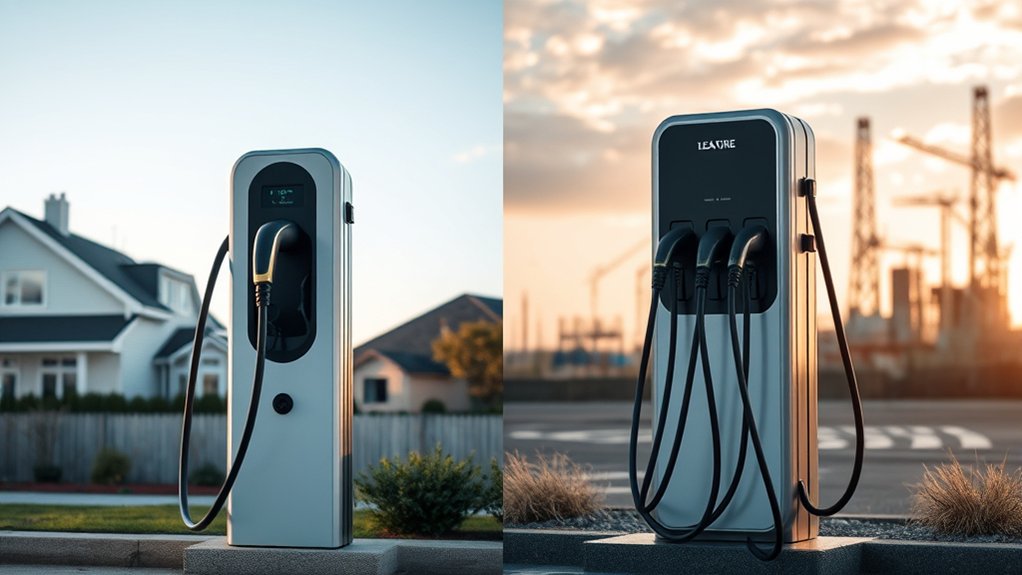
Choosing between single-phase and three-phase EV charging is really a question of power supply, vehicle limits, and how quickly you need to recharge. A single-phase charger is often enough for overnight home charging, while a three-phase charger can make sense if your property already has three-phase power, your EV can accept higher AC charging rates, or you need to charge more than one vehicle.
Quick Answer
Single-phase EV charging is usually the practical choice for one EV and overnight home use. Three-phase charging is better when you need faster AC charging, have a compatible vehicle, already have three-phase electrical service, or plan to charge multiple EVs from the same property.
Key Takeaways
- A common 230 V, 32 A single-phase wallbox delivers about 7.4 kW, which is enough for many drivers who charge overnight.
- A common 400 V, 32 A three-phase wallbox can deliver about 22 kW, but only vehicles with a matching onboard AC charger can use that full rate.
- Charging time depends on battery size, state of charge, charger output, electrical service, and the vehicle’s onboard charger limit.
- Three-phase is not automatically “better.” It is useful when you need higher AC power, better load sharing, or support for multiple EVs.
- Always have a qualified electrician check panel capacity, local code requirements, permits, circuit sizing, and outdoor equipment ratings before installation.
At a Glance
| Time Required | 10 to 20 minutes to compare your needs; longer for an electrician’s site assessment. |
| Difficulty | Easy for choosing a charger; professional-only for electrical installation. |
| Tools Needed | Vehicle charging spec, electrical panel rating, utility bill, parking layout, and electrician assessment. |
| Cost | Varies by charger, wiring distance, permits, panel capacity, and whether a service upgrade or load management is needed. |
Understanding Single-Phase vs. Three-Phase Charging
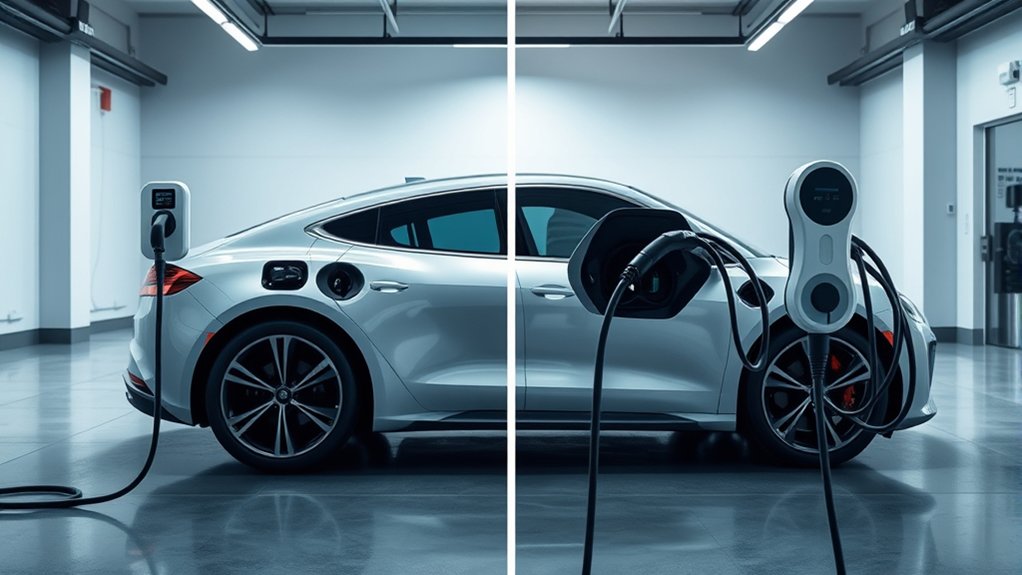
Single-phase and three-phase charging describe how AC power reaches the charger, also called EVSE. The EVSE supplies AC power to the car, and the car’s onboard charger converts that AC power to DC power for the battery.
In many 230 V markets, a common single-phase home charger runs at up to 32 amps and delivers about 7.4 kW. That is usually enough for a daily driver because the car can sit plugged in overnight.
Three-phase charging uses three live phases instead of one. In many 400 V three-phase markets, a 32 amp wallbox can deliver about 22 kW. That can cut charging time sharply, but only if your EV’s onboard AC charger can accept that much power.
North America is different. Home Level 2 charging usually uses 240 V residential service, while commercial Level 2 often uses 208 V service. The U.S. Department of Energy’s Alternative Fuels Data Center lists AC Level 2 equipment as ranging from 2.9 to 19.2 kW, with many residential units around 7.2 kW.
Note: Do not choose a charger by the wallbox rating alone. The final charging speed is capped by the lowest limit in the chain: electrical supply, circuit rating, charger setting, cable rating, and the vehicle’s onboard AC charger.
Comparing Charging Speed and Efficiency
The easiest way to estimate AC charging time is:
Battery energy needed in kWh ÷ usable charging power in kW = rough charging time in hours.
For example, a fully depleted 60 kWh battery on a 7.4 kW single-phase charger would take about 8 hours before allowing for charging losses and battery-management behavior. On a 22 kW three-phase charger, the same simple calculation is about 3 hours.
Real life is less perfect. Your EV may not arrive empty, may not need a full charge, and may slow charging near the top of the battery. A 22 kW wallbox also does not guarantee 22 kW charging. If your EV has an 11 kW onboard AC charger, it will usually pull about 11 kW even when plugged into a 22 kW unit.
| Example AC Setup | Typical Power | Best For |
|---|---|---|
| Single-phase home wallbox in many 230 V markets | Up to about 7.4 kW at 32 A | One EV, overnight charging, normal daily driving |
| North American residential Level 2 | Often 7.2 to 11.5 kW, depending on circuit and EVSE | Home charging where 240 V service is available |
| Three-phase AC wallbox in many 400 V markets | Often up to about 22 kW at 32 A | Fast home or workplace AC charging if the EV supports it |
Three-phase charging can also spread demand more evenly across phases, which helps with load balance on suitable electrical systems. That does not mean it always uses less energy overall. It mainly gives you access to higher AC power where the supply and vehicle support it.
Check Your Vehicle’s Onboard AC Charger First
Your EV has an onboard AC charger with its own maximum rating. This is the part many buyers miss. A 22 kW wallbox cannot force a 7.4 kW or 11 kW onboard charger to accept 22 kW.
Tesla makes the same point in its Gen 3 Wall Connector manual, which states that actual charging rate depends on Wall Connector output and the vehicle’s onboard charger. The same idea applies to other EV brands.
- If your EV accepts only 7.4 kW AC: a 22 kW three-phase wallbox will not make that car charge at 22 kW.
- If your EV accepts 11 kW AC: three-phase can help, but a 22 kW charger will still be capped around the vehicle’s 11 kW limit.
- If your EV accepts 22 kW AC: a three-phase 22 kW setup can provide a real speed advantage if your property can support it.
Pro Tip: Before paying extra for three-phase hardware, check your EV manual or manufacturer spec sheet for “maximum AC charging power.” That number matters more than the charger’s advertised maximum.
Installing Your Charger: Key Considerations
Before installing any EV charger, check whether your home or building can safely support the added electrical load. The Alternative Fuels Data Center’s home charging guidance notes that electricians can determine whether a home has enough electrical capacity, and that Level 2 charging may require added circuits.
Warning: EV charger installation is electrical work. Use a qualified electrician, follow local codes, get required permits, and use equipment rated for the installation location. Do not rely on adapters, extension cords, or undersized circuits.
Here are the main installation questions to answer:
- Do you have single-phase or three-phase service? Many homes have only single-phase service, while three-phase is more common in commercial buildings and some regions outside North America.
- How much spare panel capacity is available? EV charging is a continuous load, so the circuit must be sized correctly.
- Where will the charger be mounted? Long cable runs, outdoor locations, trenching, and wall type can affect cost.
- Does your charger need load management? Load management can reduce the need for a panel or service upgrade by controlling charging current.
- Will you charge more than one EV? Multiple vehicles can make three-phase service or smart load sharing more valuable.
For a single vehicle, a single-phase charger may be the simplest and most cost-effective choice. For two or more EVs, a three-phase setup or a smart load-sharing system can prevent one charger from using too much available capacity.
Costs of Single-Phase vs. Three-Phase Charging: What to Expect
Single-phase chargers often cost less to install because the electrical work is usually simpler. If your home already has enough capacity and the charger is close to the electrical panel, installation can be straightforward.
Three-phase charging can cost more if your building does not already have three-phase service, if the panel needs upgrades, or if the installer must run heavier cable over a long distance. The charger hardware itself may not be the biggest cost. Labor, permits, cable length, protective devices, trenching, and service upgrades often matter more.
Do not compare only the price tag on the charger. Compare the complete project:
- Charger hardware
- Electrical panel capacity
- Breaker and protective devices
- Cable length and routing
- Indoor or outdoor rating
- Permit and inspection fees
- Load-management hardware or software
- Utility or service upgrade costs, if needed
Some utilities offer time-of-use rates or EV charging incentives. AFDC notes that actual residential charging cost depends on the equipment installed, the time of day, and how long the charger is used.
How to Choose Between Single-Phase and Three-Phase Charging
Use this simple decision path:
- Check your EV’s maximum AC charging rate. If it only accepts 7.4 kW, three-phase may not add speed for that vehicle.
- Check your electrical supply. If your property has only single-phase service, upgrading to three-phase may be expensive or unavailable.
- Look at your daily mileage. If overnight charging easily replaces your daily driving, single-phase is usually enough.
- Consider future vehicles. If you expect a larger EV battery, a second EV, or workplace-style charging, three-phase or load sharing may be worth planning for.
- Ask an electrician about load management. A smart charger may solve the problem without a major service upgrade.
Choose single-phase if you want a practical home setup for one EV, charge mostly overnight, and do not need rapid AC top-ups. Choose three-phase if your property supports it, your vehicle can use the extra AC power, and faster charging or multiple vehicles justify the added installation work.
Single-Phase vs. Three-Phase EV Charging Comparison
| Factor | Single-Phase Charging | Three-Phase Charging |
|---|---|---|
| Typical use | Home charging for one EV | Faster AC charging, workplaces, multi-EV homes, and buildings with three-phase service |
| Common power example | About 7.4 kW in many 230 V, 32 A markets; varies by region and circuit | About 11 kW or 22 kW in many 400 V three-phase markets |
| Installation | Usually simpler where single-phase service and spare panel capacity are available | Requires three-phase supply and may need more planning, wiring, and approvals |
| Vehicle limit | Works well with EVs that accept lower AC charging rates | Only faster if the EV’s onboard charger supports higher three-phase AC charging |
| Best choice when | You drive normal daily mileage and charge overnight | You need faster turnaround, own multiple EVs, or already have three-phase power |
Frequently Asked Questions
What is the difference between 1-phase and 3-phase EV charging?
Single-phase EV charging uses one AC phase and is common for home charging. Three-phase EV charging uses three AC phases, which can deliver more power where the property and vehicle support it. The practical difference is charging speed, installation requirements, and how well the setup supports high-demand or multi-vehicle charging.
Is single-phase enough for EV charging?
Yes, single-phase is enough for many EV owners. If you charge overnight and your daily driving is moderate, a 7 kW to 7.4 kW class charger can replace a large amount of range while the car is parked. Three-phase becomes more useful when you need faster AC charging, have multiple EVs, or own a vehicle with a higher AC charging limit.
Is a Tesla charger single-phase or three-phase?
It depends on the Tesla charger model and market. The North American Gen 3 Tesla Wall Connector is a 200 to 240 V AC single-phase unit with output settings up to 48 amps. In some Type 2 markets, Tesla charging equipment and vehicles may use three-phase AC where the electrical supply and vehicle support it. Always check the manual for your exact charger and region.
Is 240 V 1-phase or 3-phase?
In North American homes, 240 V is usually single-phase split-phase service. In commercial settings, EV charging may use 208 V three-phase or other three-phase supplies. In many European-style systems, single-phase is around 230 V and three-phase line-to-line voltage is around 400 V. The voltage alone does not always tell you the phase type.
Will a 22 kW charger damage an EV that only accepts 7.4 kW?
No, a properly installed and compatible EV charger should communicate with the vehicle and supply only the current the vehicle can accept. The car’s onboard charger will cap the AC charging rate. The key is using approved equipment, correct wiring, and a code-compliant installation.
Is three-phase EV charging worth it at home?
Three-phase is worth it if your property already has three-phase supply, your EV can use higher AC charging power, or you need to charge multiple EVs. If you have one EV, drive normal daily mileage, and charge overnight, single-phase is often the better-value choice.
Conclusion
For most single-EV households, single-phase EV charging is the sensible starting point because it is simpler, easier to install, and usually fast enough overnight. Three-phase charging is the stronger option when your electrical supply already supports it, your vehicle can use the higher AC rate, and faster charging or multiple EVs make the extra setup worthwhile.
The best choice is not the biggest number printed on the charger. Match the charger to your vehicle’s onboard AC limit, your daily driving, your panel capacity, and your future charging plans. Then have a qualified electrician confirm the safest and most code-compliant installation path.
Sources
- U.S. Department of Energy Alternative Fuels Data Center: Electric Vehicle Charging Stations — charging levels, Level 2 power range, charging-time factors, connector context, and public charging terminology.
- U.S. Department of Energy Alternative Fuels Data Center: Charging Electric Vehicles at Home — home charging, electrical capacity checks, safety-certified equipment, permits, and electricity cost considerations.
- Tesla Gen 3 Wall Connector Manual — Tesla Wall Connector output settings, single-phase North American specification, and onboard charger limitation note.
- SAE J3068 Standard — three-phase-capable conductive charging standard for applicable North American EV power transfer systems.