
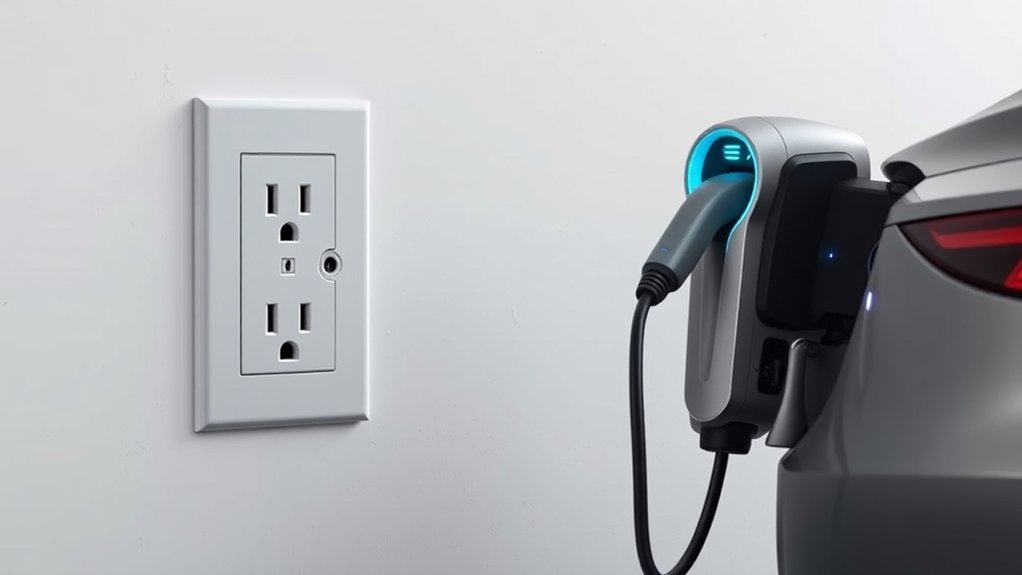
Charging an electric vehicle from a standard wall outlet can work, but it is the slowest home charging option. A dedicated Level 2 EV charger is faster, safer for regular high-load charging, and more convenient for most full-battery EV owners. The right choice depends on your daily mileage, vehicle battery size, electrical panel capacity, and whether you rent or own your home.
Quick Answer
A standard 120V wall outlet is best for short daily drives, plug-in hybrids, or occasional charging because it usually adds about 2-5 miles of range per hour. A Level 2 EV charger uses 240V power and can add about 10-25+ miles per hour, making it the better choice for regular EV use.
Key Takeaways
- A standard wall outlet, also called Level 1 charging, is simple and low-cost but very slow.
- A Level 2 EV charger usually requires a 240V circuit, but it can recharge many EVs overnight.
- Charging cost depends on kilowatt-hours used and your electricity rate, not just the outlet type.
- A Level 2 charger should be installed or checked by a licensed electrician, especially if a new circuit, permit, or panel upgrade is needed.
- Federal charger-credit rules changed after June 30, 2026, so check current IRS, state, and utility programs before budgeting around rebates.
At a Glance
| Time Required | Level 1 may need 20+ hours for many full EVs. Level 2 often handles daily charging overnight. |
| Difficulty | Level 1 is easy if the outlet is dedicated and in good condition. Level 2 is moderate to advanced because it may require electrical work. |
| Tools Needed | Level 1 cordset for basic charging. For Level 2, use safety-certified EVSE and a licensed electrician for circuit, panel, permit, or hardwired work. |
| Cost | Level 1 has little or no setup cost if the outlet is safe. Level 2 costs vary by charger, wiring distance, panel capacity, permits, and labor. |
Understanding the Basics: Wall Outlets vs. EV Chargers
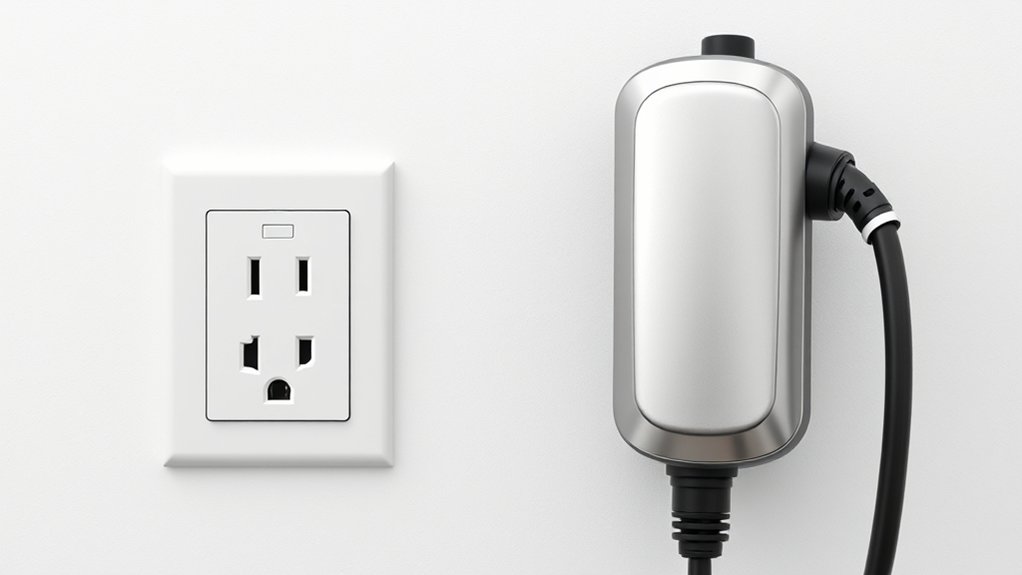
A standard wall outlet and a dedicated EV charger both send electricity to your vehicle, but they do it at very different speeds and with different safety expectations.
A standard household outlet is usually a 120V outlet. When you use the portable cordset that came with many EVs, this is called Level 1 charging. According to the U.S. Department of Energy’s Alternative Fuels Data Center, Level 1 charging uses a 120V AC plug and can add roughly 5 miles of range per hour under a 1.9 kW assumption. ENERGY STAR gives a practical range of about 2-5 miles per hour, depending on conditions and vehicle efficiency.
A dedicated home EV charger is usually Level 2 charging. It uses 240V power in a typical residential setup and can charge much faster. The DOE notes that Level 2 equipment is commonly installed at homes because it can charge a typical EV battery overnight.
The biggest practical difference is simple: a wall outlet is convenient because it may already exist, while a Level 2 EV charger is convenient because it reduces waiting time.
Warning: Do not rely on extension cords, damaged outlets, loose plugs, or overloaded shared circuits for EV charging. EV charging is a long continuous electrical load, so have a licensed electrician inspect the outlet or install the correct circuit when you are unsure.
How Charging Speed Differs Between Wall Outlets and EV Chargers
Charging speed depends on voltage, amperage, charger output, your vehicle’s onboard charger, battery size, state of charge, temperature, and vehicle efficiency. That is why one EV may add range faster than another even when both are plugged into the same type of charger.
| Charging Type | Typical Power Source | Typical Range Added | Best For |
|---|---|---|---|
| Level 1 | 120V household outlet | About 2-5 miles per hour | Plug-in hybrids, short commutes, occasional charging, renters with safe outlet access |
| Level 2 | 240V residential circuit or 208V commercial service | About 10-25+ miles per hour, depending on charger and vehicle | Full EVs, long commutes, multiple EV households, overnight charging |
| DC fast charging | Public high-power charging equipment | Often 100-200+ miles in about 30 minutes, vehicle permitting | Road trips and quick public top-ups, not typical residential charging |
Charging Speed Comparison
If you drive 20 miles per day, Level 1 charging may recover your daily use overnight. If you drive 60 miles per day, a normal wall outlet may struggle to catch up unless the vehicle stays plugged in for long periods.
Level 2 charging is more forgiving. Because it adds range faster, you can plug in after work and usually start the next morning with enough charge for daily driving. This is why many full-EV owners install Level 2 charging at home, especially when they have longer commutes or larger battery packs.
Why Full-Charge Time Varies
A “full charge” is not a fixed number of hours. A small plug-in hybrid battery, a half-full compact EV, and a nearly empty long-range electric SUV all need different amounts of energy. Your car’s onboard charger also limits how much AC power it can accept, so a high-powered wall unit will not always charge every vehicle at the charger’s maximum rating.
A better way to compare chargers is not “hours to full” but “can this setup replace the miles I normally drive before I need the car again?”
Outlet Types Explained
A normal 120V outlet is the slowest option. It is useful when you only need a small daily top-up, but it should still be on a safe, properly grounded circuit that can handle long charging sessions.
A 240V outlet or hardwired circuit can support Level 2 charging, but the outlet by itself is not the same as the EV charger. The EVSE, or electric vehicle supply equipment, communicates with the vehicle and controls power delivery. A plug-in Level 2 charger may use a compatible 240V receptacle, while a hardwired unit connects directly to the circuit.
Most non-Tesla EVs in North America have used J1772 for AC Level 1 and Level 2 charging, while Tesla vehicles and newer North American charging standards involve J3400, also known as NACS. Many vehicles can use adapters, but you should always match the charger, vehicle inlet, and manufacturer guidance before buying equipment.
Cost Comparison: Standard Outlet vs. EV Charger
The cost of charging is not based on whether the electricity comes through a wall outlet or a Level 2 charger. It is based on how many kilowatt-hours your EV uses and your local electricity rate.
Simple formula: charging cost = kWh added × electricity price per kWh.
For example, if your EV needs 30 kWh and your electricity rate is $0.16 per kWh, the energy cost is about $4.80. A Level 2 charger does not make the same 30 kWh free or more expensive by itself. It mainly delivers that energy faster. However, a smart Level 2 charger may help you schedule charging during cheaper off-peak hours if your utility offers time-of-use rates.
| Charging Method | Upfront Cost | Energy Cost | Main Tradeoff |
|---|---|---|---|
| Standard 120V outlet | Low if a safe dedicated outlet is already available; higher if electrical repairs are needed | Based on kWh used and your utility rate | Slow charging and possible circuit strain if the outlet is old, shared, or damaged |
| Level 2 EV charger | Varies by charger, circuit length, panel capacity, permits, and labor | Based on kWh used and your utility rate; smart scheduling may reduce cost on time-of-use plans | Higher setup cost but much faster daily charging |
Note: As of July 8, 2026, the federal Alternative Fuel Vehicle Refueling Property Credit for individuals applied to qualifying property placed in service at a main home from January 1, 2023, through June 30, 2026, subject to location rules. Check current IRS guidance, state programs, and utility rebates before counting on any incentive.
Evaluating Charging Options: Flexibility vs. Convenience
A standard outlet gives you flexibility. You can use the portable cordset at home, at a relative’s house, or in another safe location with a compatible outlet. For renters, it may be the only option that does not require landlord approval or electrical changes.
The tradeoff is time. Level 1 charging works best when your daily driving is low and your car sits parked for long stretches. It is often enough for plug-in hybrids because their batteries are smaller.
A Level 2 charger gives you convenience. You get faster recovery after a long drive, easier overnight charging, and more margin when plans change. This matters if you drive a full EV, share one charger between multiple vehicles, or cannot leave the car plugged in for 20+ hours.
Choose a Wall Outlet If
- You drive short distances most days.
- You own a plug-in hybrid or an EV with a small battery.
- You can park near a safe, grounded, dedicated outlet.
- You rent and cannot install a 240V circuit.
- You mainly need emergency or occasional home charging.
Choose a Level 2 EV Charger If
- You drive more than 30-40 miles most days.
- You own a full EV with a larger battery.
- You want reliable overnight charging.
- Your household has more than one EV.
- You want smart scheduling, energy tracking, or outdoor-rated charging equipment.
Safety: Comparing Wall Outlets and EV Chargers
EV charging is a continuous electrical load, which means the circuit may carry high current for several hours. That makes outlet condition, circuit rating, wiring quality, grounding, and charger certification important.
A standard 120V outlet can be safe when it is in good condition, properly grounded, and used within the vehicle cordset’s instructions. It becomes risky when the outlet is loose, cracked, shared with other heavy loads, connected through an extension cord, or installed on old wiring that was not meant for long EV charging sessions.
A Level 2 EV charger can be safer for routine charging because it is designed for the job, but only when installed correctly. The DOE’s home charging guidance recommends safety-certified charging equipment and notes that installations must follow local and state codes, permits, and National Electrical Code requirements.
ENERGY STAR-certified chargers are also tested by a nationally recognized testing laboratory. ENERGY STAR notes that certified EV chargers can reduce standby energy use while offering safety, convenience, and smart technology features.
Pro Tip: Before buying a Level 2 charger, ask the electrician to check your panel capacity, parking distance from the panel, breaker size, wiring route, permit requirements, and whether a hardwired or plug-in unit makes more sense.
Installation Requirements for Charging Solutions
Level 1 charging usually needs no new equipment if you already have a safe outlet near your parking spot. Still, “no installation” does not mean “no inspection.” If the outlet gets warm, the plug feels loose, the breaker trips, or the wiring is old, stop using it and have it checked.
Level 2 charging usually requires a 240V circuit. Depending on your home, that may involve a new breaker, new wiring, conduit, a 240V receptacle, a hardwired charger, load calculation, permit, or panel upgrade.
Hardwired vs. Plug-In Level 2 Chargers
| Option | Pros | Cons |
|---|---|---|
| Hardwired charger | Clean installation, fewer plug-wear issues, often preferred outdoors, can support higher-output setups when properly installed | Less portable and usually requires an electrician to remove or replace |
| Plug-in charger | Easier to move or replace, useful for some renters or future vehicle changes | Requires the correct receptacle and circuit; repeated plugging and unplugging can wear the outlet |
If the charger will be outdoors, choose equipment rated for outdoor use. Outdoor home charging can be safe, including in rain, when the equipment is designed and installed for that location.
Long-Term Value: Investing in an EV Charger
A Level 2 EV charger does not guarantee a higher resale price, but it can add practical value for the right household. The main benefit is daily convenience: your EV is more likely to be ready when you need it, even after a longer drive.
Cost Savings Over Time
The charger itself does not change how many kWh your vehicle needs, but a smart Level 2 charger can help you control when charging happens. If your utility offers cheaper overnight electricity, scheduled charging may lower your fuel cost compared with charging during peak periods.
ENERGY STAR-certified chargers can also reduce standby energy use. That matters because EV chargers spend much of their time plugged in but not actively charging.
Increased Home Appeal
For buyers who already own an EV or plan to buy one, a professionally installed Level 2 charger can make a home feel more move-in ready. The appeal is strongest in areas with high EV adoption, long commutes, expensive public charging, or limited public charger access.
Avoid treating an EV charger as a guaranteed property-value increase. Its real value depends on your market, installation quality, electrical capacity, and whether future buyers care about EV readiness.
Choosing the Right EV Charger for Your Lifestyle
Start with your real driving pattern, not the biggest charger you can buy. Look at how many miles you drive on a normal day, how often you take long trips, how long the car sits parked overnight, and whether you can charge at work or public stations.
Then check your vehicle’s charging limits. Some EVs cannot use the full output of a high-amperage Level 2 charger because the onboard AC charger sets the maximum rate. Buying more charger than your car can accept may not make charging faster.
Also consider charger features:
- Amperage settings: Adjustable output can help match your circuit and vehicle.
- Smart scheduling: Useful for off-peak rates and energy tracking.
- Cable length: Make sure it reaches your charge port without stretching across a walkway.
- Indoor or outdoor rating: Use outdoor-rated equipment when exposed to weather.
- Connector compatibility: Confirm whether your vehicle uses J1772, J3400/NACS, or an adapter.
- Safety certification: Look for equipment tested by a nationally recognized testing laboratory.
If you are unsure, the most practical path is to get an electrician’s quote before buying the charger. The lowest-priced charger is not always the cheapest installed setup if it requires a difficult wiring route or panel upgrade.
Frequently Asked Questions
What is the difference between an EV-rated outlet and a regular outlet?
A regular outlet is a general household receptacle. An EV-rated or properly installed charging receptacle is selected and installed for a continuous EV charging load. Still, the outlet alone is not the charger. The EVSE controls safe power delivery between the circuit and the vehicle.
Can you charge an EV with a normal outlet?
Yes. Most EVs can charge from a normal 120V outlet with a compatible Level 1 cordset. Expect slow charging, usually about 2-5 miles of range per hour. Use only a safe, grounded outlet in good condition, and avoid extension cords.
Can you charge an EV from a standard wall socket every day?
You can if your daily mileage is low and the outlet is safe for long charging sessions. Daily Level 1 charging is common for plug-in hybrids and short commutes. For a full EV with a large battery or long commute, Level 2 charging is usually more practical.
What is the difference between a 240V outlet and an EV charger?
A 240V outlet is the power connection. The EV charger, more accurately called EVSE, is the equipment that communicates with the vehicle and controls charging. A plug-in Level 2 charger may use a 240V outlet, while a hardwired charger connects directly to the circuit.
Is Level 2 charging worth it at home?
Level 2 charging is worth it if Level 1 cannot replace your daily miles, if you drive a full EV, or if you want reliable overnight charging. It may not be necessary for a plug-in hybrid, a short commute, or a rental situation where installation is not allowed.
Does a Level 2 charger cost more to use than a wall outlet?
Not for the same amount of energy. Your charging cost comes from kWh used multiplied by your electricity rate. A Level 2 charger usually delivers those kWh faster. If it lets you charge during cheaper off-peak hours, it may lower your total cost.
Conclusion
A standard wall outlet is the simplest way to charge an EV, but it is best for light use, short commutes, plug-in hybrids, and backup charging. A Level 2 EV charger is the stronger choice when you need faster, more predictable home charging for a full EV or a longer daily drive.
Before upgrading, check your daily mileage, vehicle charging limit, panel capacity, parking setup, charger connector, local permit rules, and current incentive options. The safest and most useful charging setup is the one that matches your vehicle and your home’s electrical system, not just the one with the highest advertised output.
Sources
- U.S. Department of Energy Alternative Fuels Data Center: Electric Vehicle Charging Stations — backs up Level 1, Level 2, DC fast charging, range-per-hour, connector, and power-output details.
- U.S. Department of Energy Alternative Fuels Data Center: Charging Electric Vehicles at Home — backs up home charging, installation, electrician, permits, safety-certified equipment, and NEC guidance.
- ENERGY STAR: Electric Vehicle Chargers — backs up Level 1 and Level 2 buying guidance, daily-mile considerations, charging-rate ranges, safety certification, and standby energy savings.
- IRS: Alternative Fuel Vehicle Refueling Property Credit — backs up federal 30C eligibility rules, dates, main-home requirement, eligible census tracts, and credit limits.