
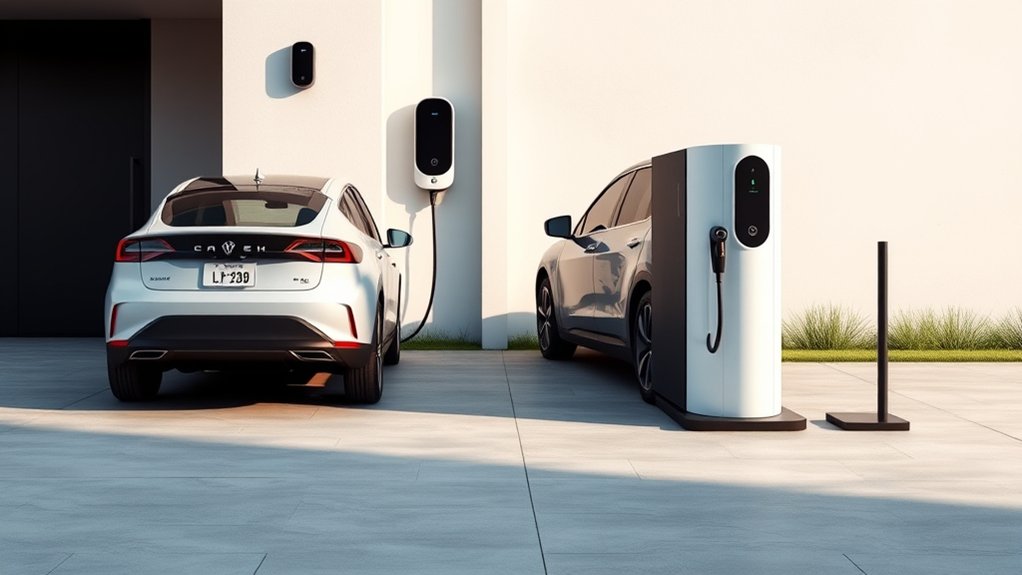
Choosing between a tethered and untethered EV charger comes down to how you park, how many vehicles you charge, and how much cable handling you want each day. A tethered charger keeps the cable attached to the wall unit for fast plug-in charging. An untethered charger has a socket only, so you use a separate charging cable when needed.
Quick Answer
Choose a tethered EV charger if you charge the same car at home most days and want the quickest plug-and-go setup. Choose an untethered EV charger if you want a tidier wall unit, need different cable lengths, share the charger, or may change to a vehicle with different cable needs later.
Key Takeaways
- Tethered chargers are more convenient because the charging cable is always attached and ready to use.
- Untethered chargers are more flexible because you can choose, replace, or store the cable separately.
- Charging speed is not decided by tethered vs. untethered design alone. It depends on charger power, your vehicle’s onboard charger, cable rating, and electrical supply.
- In the UK and Europe, Type 2 is the normal AC charging connector for modern EV charging, but older imported or older-generation vehicles may need different cable planning.
- Professional installation matters. A home EV charger is a fixed electrical load and should be installed and tested by a competent installer.
What Is a Tethered EV Charger?
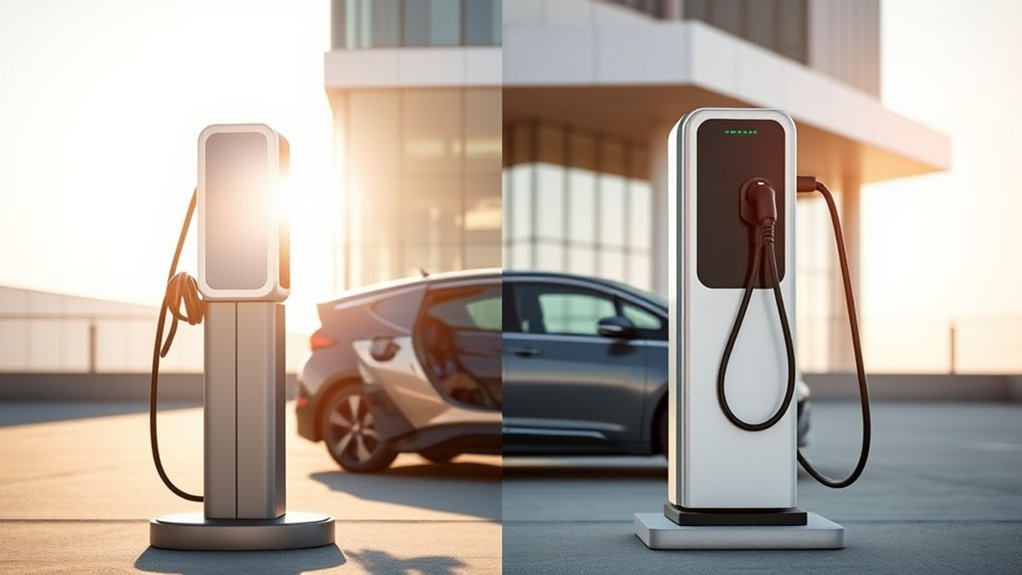
A tethered EV charger has a permanently attached charging cable. You park, pick up the connector, plug it into the car, and start the session. This makes it feel similar to using a fuel pump because the cable is already there.
Most tethered home chargers sold for the UK and European market use a Type 2 AC connector, which is the common connector for modern EVs in this region. Many tethered units come with a cable around 5 m to 7.5 m long, although the exact length depends on the model.
The main benefit is daily convenience. You do not need to get a cable out of the boot, unlock it, connect both ends, and pack it away again. For a single-car household where the vehicle parks in the same position every night, tethered is often the easiest choice.
Pro Tip: Before buying a tethered charger, measure the route from the wall unit to the car’s charge port, not just the straight-line distance. Allow extra length for reversing in, parking slightly off-centre, and reaching around the vehicle.
What Is an Untethered EV Charger?
An untethered EV charger has a socket on the wall unit but no permanently attached cable. You plug your own charging cable into the charger, then into the vehicle.
This setup takes a little more effort each time you charge, but it gives you more control. You can choose a shorter cable for a neat driveway, a longer cable for awkward parking, or a replacement cable if your old one becomes damaged. It also leaves the charger looking cleaner when not in use because no cable hangs from the unit.
Untethered chargers are useful for multi-car households, shared parking spaces, and homes where guests may charge different vehicles. In the UK and Europe, the wall unit will usually use a Type 2 socket, so the key is choosing a cable that matches the charger socket, your vehicle inlet, and the charger’s power rating.
Key Features Explained
The key feature of an untethered charger is the detachable cable. This gives you more options if you change vehicles, need a different cable length, or want to store the cable indoors during bad weather.
Untethered units can also be less visually intrusive. With the cable removed, the charger is just a compact wall box. This is helpful on front-facing driveways, shared walls, or places where you want the installation to look as tidy as possible.
Advantages Over Tethered Options
- Cleaner appearance: The cable can be stored away when not in use.
- Easier cable replacement: A damaged cable can be replaced without replacing the charger.
- More cable-length options: You can use a length that fits your parking layout.
- Better for shared use: Different users can bring a suitable cable for their vehicle.
- Future flexibility: If your charging needs change, the wall unit may still remain useful.
Ideal Use Cases
An untethered charger is ideal if you have more than one EV, expect to change cars soon, use a shared driveway, or want the neatest possible installation. It can also suit drivers who already carry a Type 2 charging cable for public socketed chargers and do not mind connecting the cable at home.
Tethered vs. Untethered EV Chargers: Key Differences
The simplest difference is cable attachment, but the real decision involves daily use, cable storage, repair cost, appearance, and who will use the charger.
| Feature | Tethered Charger | Untethered Charger |
| Cable | Fixed to the charger | Separate cable required |
| Daily convenience | Fastest and easiest | Takes extra handling |
| Appearance | Cable is always visible unless neatly stored | Cleaner look when cable is removed |
| Cable damage | May need charger service or cable replacement by installer | Cable can usually be replaced separately |
| Best for | One main EV, same parking spot, frequent home charging | Shared use, changing vehicles, tidy installations |
Benefits and Drawbacks of Tethered Chargers
Tethered chargers are popular because they make home charging simple. The cable is always there, so you are more likely to plug in consistently and less likely to leave your charging cable in the boot after a public charging session.
Benefits
- Quick plug-in: No need to unpack a separate cable.
- Good for routine charging: Ideal when the same EV parks in the same place each night.
- Less cable theft risk at home: The cable is fixed to the unit rather than loosely stored outside.
- Less boot clutter: Your portable cable can stay in the car for public charging or emergencies.
Drawbacks
- Fixed cable length: If the cable is too short, you may need to change parking habits or move the charger.
- Visible cable: It can look messy if the cable is not wound neatly.
- Less flexible for future vehicles: A major connector or parking change can make the setup less convenient.
- Repair may be more involved: A damaged fixed cable may need professional service.
Benefits and Drawbacks of Untethered Chargers
Untethered chargers trade speed of use for flexibility. They are not as effortless as a tethered charger, but they can be a better long-term fit when more than one person or vehicle may use the charging point.
Benefits
- Flexible cable choice: Choose the right length and rating for your charger and vehicle.
- Cleaner look: Remove the cable when the charger is not in use.
- Simple cable replacement: Replace a worn cable without replacing the whole charger.
- Better for multi-car homes: Different vehicles can use suitable cables.
- Useful for shared driveways: The charger can remain neat and cable-free between sessions.
Drawbacks
- Extra handling: You must connect and disconnect both ends of the cable.
- Storage needed: The cable should be stored safely and kept clean.
- Possible extra purchase: Some buyers need to buy a suitable cable separately.
- More chance of forgetting the cable: If your cable moves between home and public charging, it can be left behind.
Which Charger Should You Choose?
Choose a tethered EV charger if you want the easiest daily routine. It works best when you own one main EV, park close to the charger, and do most charging at home.
Choose an untethered EV charger if you value flexibility. It works best if you have more than one EV, expect to change vehicles, prefer a clean-looking wall unit, or need different cable lengths for different parking positions.
Ask yourself these five questions before buying:
- Where is the car’s charge port? Front, rear, left, and right charge-port positions all affect cable reach.
- Will you reverse in or drive in? Your parking direction can make a fixed cable feel perfect or too short.
- How many EVs will use it? One regular EV favours tethered; multiple vehicles may favour untethered.
- Do you care about appearance? Untethered usually looks neater when not in use.
- Will guests or future cars use it? Untethered gives more long-term cable flexibility.
Does Tethered or Untethered Affect Charging Speed?
The tethered or untethered design does not automatically make a charger faster. Charging speed depends on the charger’s power rating, your home electrical supply, the vehicle’s onboard AC charging limit, and the cable’s current rating.
For example, a 7 kW home charger will not charge a car at 22 kW just because the cable supports it. The whole chain must support the higher rate: electrical supply, charger, cable, and vehicle. For many UK homes, single-phase 7 kW charging is common, while 22 kW charging usually needs a three-phase supply and a vehicle that can accept 22 kW AC.
Costs, Grants, and Future-Proofing
Do not choose only by the advertised charger price. A tethered unit may cost more because the cable is included, while an untethered unit may look cheaper until you add a suitable cable. Installation complexity, cable routing, consumer-unit work, earthing arrangements, and load management can also change the final cost.
In the UK, eligible renters and flat owners may be able to get help through the EV chargepoint grant, which can cover 75% of the cost of buying and installing a socket, up to a maximum of £500. Eligibility rules can change, so check the current GOV.UK guidance before booking installation.
Also check that the charger you buy meets current smart-charging requirements where they apply. GOV.UK guidance on electric vehicle smart charge point regulations explains that private domestic and workplace charge points sold in Great Britain must meet smart-functionality and device-level requirements, including off-peak default charging, randomised delay, safety provisions, and security requirements.
Note: A future-proof charger is not just about cable type. Look for smart scheduling, load management, app support that you will actually use, a good warranty, installer support, and compatibility with your energy tariff.
What to Know About Installing Your EV Charger
EV charger installation is not just mounting a box on a wall. The installer needs to check your electrical capacity, parking layout, cable route, earthing setup, weather exposure, Wi-Fi or signal strength, and whether the charger can be positioned safely.
Installation Site Assessment
Start with where the vehicle parks most often. The charger should be close enough for the cable to reach without stretching, dragging across sharp edges, or crossing a main walking route.
For tethered chargers, cable length is especially important because you cannot swap it easily. For untethered chargers, think about where the loose cable will be stored, especially if the charger is outdoors.
Professional Installation Services
Use a competent EV charger installer or qualified electrician. In England, Approved Document P covers electrical safety in dwellings and explains requirements around design, installation, inspection, testing, and notification of electrical work.
A professional installer can assess whether your consumer unit, supply, protective devices, and cable route are suitable. They can also advise on load management if your home has other high-demand equipment, such as an electric shower, heat pump, or induction hob.
Cable Management Solutions
Good cable management keeps the area safer and makes charging easier. For tethered chargers, use the charger’s built-in cable holster or a suitable wall hook so the cable does not lie on the ground. For untethered chargers, store the cable in a clean, dry place or use a weather-resistant cable bag.
- Keep cables away from sharp edges, standing water, and vehicle tyres.
- Do not stretch the cable tight across a driveway.
- Do not route a cable across a public pavement unless your local rules allow a safe, approved method.
- Inspect plugs, sockets, and cable insulation regularly.
- Replace damaged cables instead of taping or patching them.
Warning: Never improvise EV charging with unsuitable extension leads, damaged cables, or unsafe cable routes. EV charging is a long-duration electrical load, so poor installation or cable management can create overheating, shock, or trip hazards.
Safety and Maintenance Checks
Once your charger is installed, treat the cable and connector as safety-critical equipment. You do not need to overthink it, but a quick visual check can prevent problems.
- Before charging: Check the connector is clean, dry, and not cracked.
- During charging: Stop using the charger if you notice burning smells, unusual heat, error messages, or repeated trips.
- After charging: Wind or store the cable without tight kinks.
- Seasonally: Check outdoor cable storage, wall fixings, drainage, and weather seals.
- After damage: Have the charger or cable inspected before using it again.
Frequently Asked Questions
Which is best, a tethered or untethered EV charger?
A tethered charger is best for daily convenience if you charge the same EV in the same parking spot. An untethered charger is best if you want a neater look, need cable flexibility, share the charger, or may change vehicles later.
What is the 80/20 rule for EV charging?
The 80/20 rule usually means keeping the battery between about 20% and 80% for routine daily use, instead of regularly charging to 100% or running it very low. It is general battery-care guidance, not a fixed law. Always follow your vehicle manual because battery chemistry and manufacturer advice vary.
Can you leave a cable in an untethered EV charger?
You can usually leave a cable connected during a charging session, but it is better to unplug and store it after use unless the charger, cable, and location are designed for long-term outdoor cable storage. This reduces weather exposure, dirt buildup, trip hazards, and theft risk.
What are the benefits of an untethered EV charger?
The main benefits are flexibility, cleaner appearance, easier cable replacement, and better shared use. You can choose the cable length and rating that suits your car and parking layout, then store the cable away when the charger is not being used.
Do tethered chargers charge faster than untethered chargers?
No. A tethered cable does not automatically charge faster. Speed depends on the charger’s kW rating, your home supply, the vehicle’s onboard AC charger limit, and whether the cable is rated for the current being used.
Is a tethered charger safer than an untethered charger?
Both can be safe when correctly installed and used with a suitable cable. Tethered chargers reduce loose-cable handling, while untethered chargers let you replace a worn cable easily. The bigger safety factors are professional installation, cable condition, correct ratings, and safe cable routing.
Conclusion
The best EV charger is the one that fits your daily routine. A tethered charger is usually the better pick if you want simple, fast, everyday home charging for one main vehicle. An untethered charger is often better if you want a neater installation, cable flexibility, shared access, or easier cable replacement later.
Before you decide, check your vehicle connector, cable length needs, parking position, charger power rating, smart-charging features, grant eligibility, and installation requirements. Getting those details right matters more than choosing the neatest-looking charger on the shelf.
Sources
- EUR-Lex: Regulation (EU) 2023/1804 — Type 2 and Combo 2 interoperability requirements for publicly accessible recharging points.
- GOV.UK: Electric vehicle chargepoint grant for renters or flat owners — current UK grant support for eligible home chargepoint installation.
- GOV.UK: Regulations for electric vehicle smart charge points — smart functionality, off-peak default charging, randomised delay, safety, and security requirements.
- GOV.UK: Electrical safety, Approved Document P — electrical safety guidance for dwellings in England.
- AP / Edmunds: Wintertime driving with an electric vehicle — practical EV charging guidance, including the common 80% charging recommendation and exceptions.