
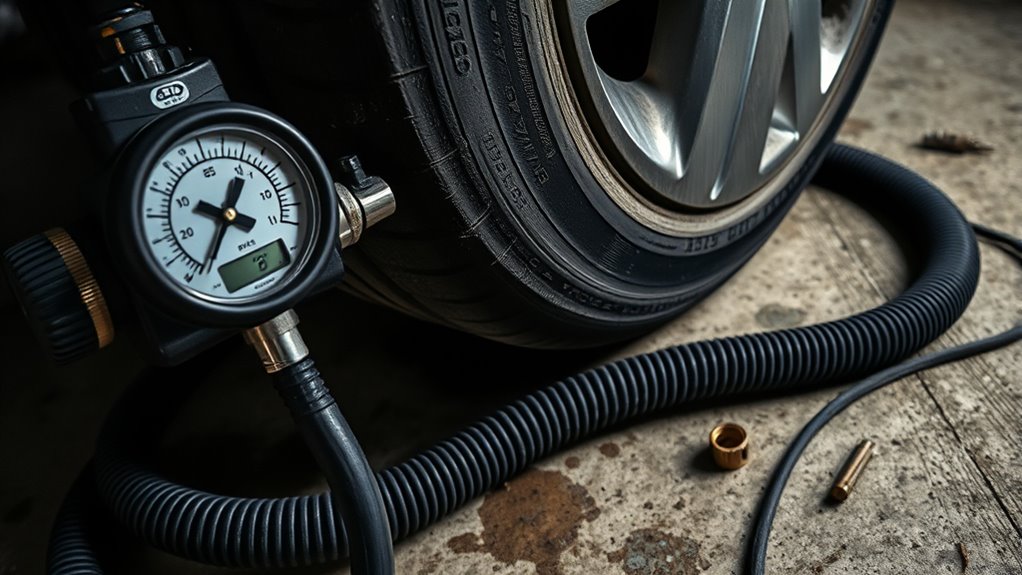
If your tire inflator pressure rises too quickly, check for a bad gauge, kinked hose, clogged path, or dirty valve stem before assuming the tire is full. Verify the door-jamb PSI with a cold-tire reading, then set the compressor to the correct target. If auto shutoff cuts off early, raise it slightly and test again with a reliable gauge. If readings stay erratic, the inflator may need replacement, and the next steps get more specific.
Key Takeaways
- Check the pressure gauge for calibration errors or erratic readings that can cause premature shut-off.
- Inspect the hose, fittings, and valve stem for kinks, leaks, dirt, or damage restricting airflow.
- Verify the tire’s recommended PSI from the door jamb sticker or owner’s manual before inflating.
- Set the compressor’s auto shutoff slightly above the target PSI and test with a reliable gauge.
- Replace the inflator if it overheats, stops early, or cannot reach the correct PSI consistently.
Why Your Tire Inflator Rises Too Fast
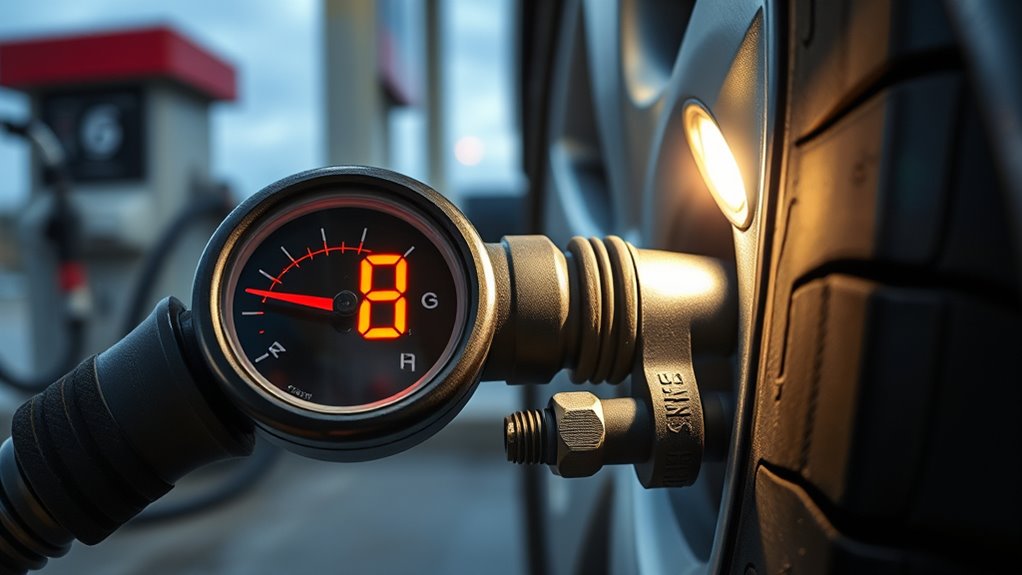
If your tire inflator’s pressure climbs too fast, the issue is often a mix of inaccurate sensing and restricted airflow. A faulty pressure gauge can read high, so the tire inflator hits its automated shut-off early and leaves you guessing.
When you inflate your tires, a weak compressor or clogged path can cause insufficient airflow, making the displayed PSI jump as the unit strains. A dirty or damaged valve stem can also choke flow and trigger abrupt spikes.
If you set air pumps above the manufacturer’s PSI, you may create fluctuating pressure and overinflated tires. Heat protection can distort readings too, then cut power before the calibrated tire reaches target.
Use pressure management that you trust, because freedom on the road starts with control. Check output stability, confirm the set point, and avoid forcing the system to chase bad data.
Keep your tire inflator in range, and you’ll keep pressure rise predictable and safe.
Check the Gauge, Hose, and Valve Stem
Start by checking the gauge, hose, and valve stem, because a bad reading or airflow restriction can make your tire inflator behave unpredictably.
First, verify the gauge has proper calibration; if it’s off, you’ll chase false pressure readings and risk potential overinflation.
Next, inspect the hose for kinks, leaks, abrasion, or loose fittings. Any damage can choke airflow and make inflation jumpy.
Then examine the valve stem for dirt, debris, or a worn core. Even small blockages can create erratic readings and slow air transfer.
When you connect the inflator, make sure you get a reliable connection at the valve stem; if the chuck isn’t seated firmly, air loss can hide the true pressure.
Listen for hissing while you inflate, since escaping air often points to a bad seal or damaged stem.
Fix these faults before you continue, and you’ll get steadier, safer inflation with less waste and more control.
Check the PSI Your Tires Actually Need
Before you inflate, check the PSI your tires actually need on the driver’s door jamb sticker or in the owner’s manual. That spec tells you the correct pressure for your load and vehicle, not the number on the sidewall. Use a digital gauge to check tire pressure when the tires are cold, then set your portable air compressor to match the recommended tire PSI. Passenger cars usually run 30–35 PSI, while SUVs and trucks may need more. Temperature swings can cause pressure loss of 1–2 PSI per 10°F, so recheck often. Under-inflation cuts tire life and can reduce fuel efficiency.
| Vehicle | Typical PSI | Action |
|---|---|---|
| Car | 30–35 | Adjust your tire |
| SUV | Higher | Check tire pressure |
| Truck | Higher | Verify load |
| Any | Spec label | Stay properly inflated |
Hold the line on tire pressure, and your tires stay properly inflated, efficient, and ready for the road.
Adjust the Auto Shutoff Setting
When your inflator shuts off too early, raise the auto shutoff PSI a bit so it can compensate for the pressure drop that happens as the unit stops running.
On many tire inflator models, you can adjust the auto shutoff setting to add a small PSI limit above your target tire pressure. That extra headroom helps the inflation finish at the true pressure you want, instead of stopping short and leaving the tires underfilled.
Check your user manual first, because each unit uses a different method and menu. After you adjust it, test the inflator on one tire and compare the result with a reliable gauge.
If the gauge shows the target is still missed, fine-tune the setting again. This simple control keeps you in charge, reduces premature wear from underinflation, and helps your tire inflator deliver accurate, repeatable inflation without guesswork.
When Your Inflator Needs Replacement
If your tire inflator keeps jumping past the target PSI, overheating, or failing to hold pressure after multiple attempts, the problem may be internal rather than user error.
Check the pressure gauge first: if it reads fast or erratically, the gauge may be malfunctioning. If the compressor shuts off early, struggles to reach set PSI, or needs repeated restarts, its internal components may be failing.
A worn motor can also cut airflow and weaken inflation rates, which reduces performance and wastes your time.
When you notice persistent overheating, pressure loss, or a steady drop in output compared with earlier use, maintenance won’t fix it. Replace the tire inflator if these symptoms keep returning.
Compare its behavior with the manufacturer’s guidelines for normal operation and lifespan. If it consistently underperforms, investing in a higher-quality model protects your freedom to drive with confidence, instead of relying on a tool that can’t deliver reliable pressure.
Frequently Asked Questions
Is It Normal for PSI to Go up and Down?
Yes, it’s normal for psi to go up and down.
You’ll see tire pressure fluctuations from temperature effects, seasonal changes, and driving heat, so normal psi variations happen.
Check measuring accuracy, compressor settings, and your pressure guidelines before adding air.
Use tire maintenance tips like checking cold tires and watching environmental factors.
If changes seem extreme, don’t ignore safety concerns.
What Do I Do if My Tire Pressure Is Too High?
You should deflate it now—like releasing a spring. Check your target PSI, then use emergency deflation steps at the valve stem in small bursts.
Verify pressure gauge accuracy, review temperature effects, and run inflator safety checks. Use pressure maintenance techniques, monitor tire wear patterns, and note tire health indicators.
If readings stay odd, inspect tire deflation causes and inflator calibration methods. Keep practicing pressure monitoring tips for control and freedom.
Will TPMS Go off if Tires Are Overinflated?
Not usually. Your TPMS warnings mainly track low tire pressure, so overinflation effects can slip by unless your vehicle’s monitoring systems include a high-pressure limit.
You should verify tire maintenance with a gauge, account for temperature influence, and check pressure calibration after inflation.
Overfilled tires increase safety concerns and hurt driving impact, so use proper inflation techniques and manual checks instead of relying only on sensors.
What Happens if You Over Inflate a Tire by 2 PSI?
A little pressure goes a long way. If you overinflate by 2 psi, you’ll slightly reduce Tire performance, sharpen Safety concerns, and worsen Tread wear in the center.
You may also lose Handling stability, hurt Fuel efficiency, and shorten Tire lifespan. Air temperature can shift readings, so use Pressure monitoring.
Check Inflation techniques, follow Maintenance tips, and don’t ignore small changes. Stay free from guesswork; verify pressures cold, not hot.
Conclusion
If your tire inflator pressure rises too quickly, start with the basics: check the gauge, hose, and valve stem for leaks or misreads. Then verify the PSI your tires actually need, since an incorrect target can make the reading seem unstable. Adjust the auto shutoff if it’s set too high or too low. Still seeing erratic pressure? Isn’t it time to replace the inflator before it gives you a false reading?

