
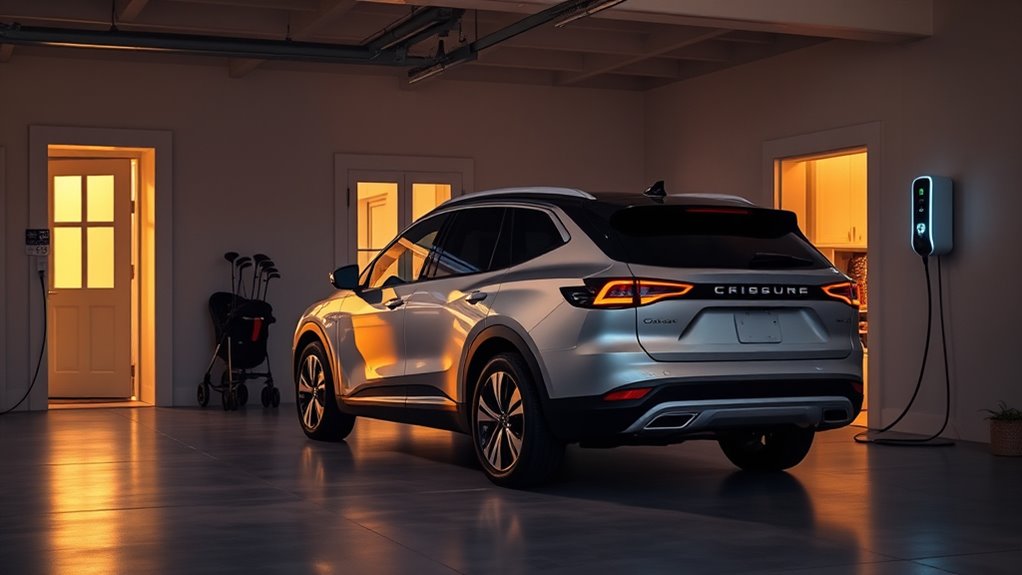
Level 2 charging makes the most sense if you drive more than about 40 miles a day, want your EV ready every morning, share home charging with another EV, or can use cheaper off-peak electricity rates. A 240V Level 2 setup is much faster than a 120V Level 1 cord, but it only pays off when your mileage, schedule, home wiring, and installation cost make the upgrade worthwhile.
Quick Answer
Level 2 charging is worth it if Level 1 cannot replace your daily miles overnight, you need faster turnaround between trips, or your household charges more than one EV. If you drive lightly, rent, or would need major electrical upgrades, Level 1 may still be the smarter short-term choice.
Key Takeaways
- Choose Level 2 if you drive more than about 40 miles a day or need dependable overnight charging.
- Typical Level 2 charging adds about 10 to 20 miles of range per hour, while higher-output 40A to 80A setups can add more if your EV supports them.
- Installation usually requires a dedicated 240V circuit, correct breaker and wire sizing, permits where required, and a licensed electrician.
- Smart scheduling can help you charge during off-peak hours and may reduce monthly electricity costs.
- Skip Level 2 for now if Level 1 already covers your routine, you live in temporary housing, or the panel upgrade cost is too high.
When Level 2 Charging Makes the Most Sense
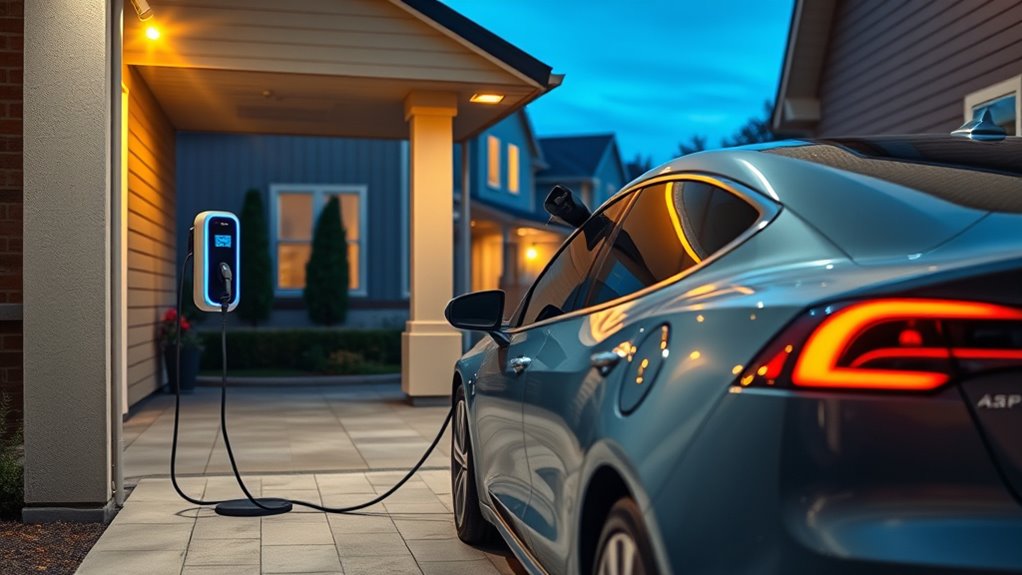
Level 2 charging makes the most sense when you need a reliable overnight recharge and Level 1 is too slow for your daily driving. If you drive more than about 40 miles a day, a 240V charger gives you a much better chance of waking up to the range you need.
Level 2 charging is best for daily EV drivers who need overnight recovery, faster turnaround, or shared charging for more than one vehicle.
The exact speed depends on the charger output, your EV’s onboard charger, battery size, and driving efficiency. ENERGY STAR lists Level 1 charging at about 2 to 5 miles of range per hour and typical Level 2 charging at about 10 to 20 miles per hour, with faster charging possible from higher-output 50A setups.
Level 2 is also practical if your utility offers time-of-use rates. With a smart charger, you can schedule charging when electricity is cheaper instead of plugging in during peak evening demand.
Pro Tip: Check your utility’s EV rate plan before you buy the charger. A lower overnight rate can matter more than the charger brand when you calculate long-term charging cost.
How Level 2 Charging Compares to Level 1
Level 1 charging uses a standard 120V household outlet. It is simple, cheap, and often enough for plug-in hybrids or drivers who cover only a short commute. Level 2 charging uses 240V power, like many electric dryers or ranges, and is built for faster home charging.
| Charging option | Best for | Typical result |
|---|---|---|
| Level 1, 120V | Low-mileage drivers, plug-in hybrids, renters | Slow overnight recovery, usually 2 to 5 miles per hour |
| Level 2, 240V | Daily EV drivers, longer commutes, multi-EV homes | Much faster home charging, often enough for a full overnight recovery |
| Public DC fast charging | Road trips and occasional quick top-ups | Fastest charging, but usually costs more and is not a home setup |
If your EV sits parked for 10 to 12 hours each night and you only drive 20 to 30 miles a day, Level 1 may be enough. If you often come home low, need to leave again in a few hours, or want to recover 100 to 200 miles overnight, Level 2 is the more practical setup.
Why Daily Drivers Benefit Most From Level 2
Daily drivers benefit most because Level 2 charging matches the way most EVs are used: drive during the day, plug in at night, leave with enough range in the morning. The more consistent your mileage, the easier it is to justify the upgrade.
| Use case | Benefit | Result |
|---|---|---|
| More than 40 miles per day | Faster replenishment | Less risk of waking up short on range |
| Multi-EV home | Higher charging throughput | Less waiting between vehicles |
| Off-peak rate plan | Scheduled low-cost charging | Lower charging cost than peak-hour charging |
| Busy family schedule | Faster turnaround | More flexibility for errands, school runs, and second trips |
For many EV owners, the value is not just speed. It is knowing the car can recover from normal daily use without planning your evening around a slow outlet.
Charger Amps and Real-World Miles Per Hour
Charging speed is easier to understand when you look at charger output. A charger’s power in kilowatts is the main driver, but your EV must also be able to accept that power through its onboard AC charger.
| Charger output | Approx. power | Estimated range added per hour |
|---|---|---|
| Level 1, 12A at 120V | About 1.4 kW | About 2 to 5 miles |
| Level 2, 16A at 240V | About 3.8 kW | About 10 to 15 miles |
| Level 2, 32A at 240V | About 7.7 kW | About 20 to 30 miles |
| Level 2, 40A to 48A at 240V | About 9.6 to 11.5 kW | About 25 to 45 miles |
| High-output Level 2, up to 80A | Up to 19.2 kW | Can reach 50 to 60+ miles if the EV supports it |
A simple estimate is: charger kW multiplied by your EV’s miles per kWh. For example, a 7.7 kW charger and an EV that averages 3.5 miles per kWh can add about 27 miles of range in one hour before charging losses and tapering.
Note: A powerful wall charger will not force your EV to charge faster than the vehicle allows. Check your owner’s manual or charging screen for the maximum AC charging rate.
When a Level 2 Charger Pays for Itself
A Level 2 charger pays off fastest when it replaces expensive public charging, lets you use cheaper off-peak electricity, or prevents daily inconvenience from slow Level 1 charging. If Level 1 already covers your commute, the payback is mostly convenience rather than direct energy savings.
Use this simple payback formula:
Net installation cost ÷ monthly savings = estimated payback period
For example, if your installed cost after rebates is $1,200 and you save $40 per month by charging at home during off-peak hours instead of using public charging, the simple payback is about 30 months. If you are only replacing Level 1 home charging with Level 2 home charging at the same electric rate, the energy savings may be small, but the time savings can still be worth it.
Costs can vary from a modest outlet or hardwired install near the panel to a much higher project that needs long wiring runs, a panel upgrade, trenching, or service work. Get at least one licensed electrician quote before you buy the charger.
How Level 2 Charging Fits Multi-EV Homes
In a multi-EV home, Level 2 charging can support shared overnight charging from a dedicated 240V circuit. It becomes even more useful when drivers have different schedules, different battery sizes, or different commute lengths.
The key is not always installing the highest-amp charger. In many homes, the better choice is a smart charger or dual-charger setup that can share available power safely.
Shared Overnight Charging
Shared overnight charging works best when each vehicle has a predictable schedule. One EV may only need a short top-up, while another may need several hours of charging after a longer commute.
| Benefit | Impact |
|---|---|
| Off-peak scheduling | Lowers charging cost when utility rates drop overnight |
| Shared access | Helps two EVs use one charging location more efficiently |
| Overnight replenishment | Keeps daily drivers ready without public charging stops |
| Higher output | Adds more usable range in the same parked window |
Faster Turnaround Times
When your household needs more than overnight replenishment, Level 2 charging gives you faster turnaround between trips. That matters if one person comes home from work and another needs the same vehicle later, or if a weekend trip leaves the battery low before Monday morning.
- You can recover more range in a short parked window.
- You can support two EVs with different charging needs.
- You can schedule sessions to avoid peak electric rates.
- You can reduce reliance on public charging for routine driving.
Smart Load Management
Smart load management controls how much power each EV gets so your home does not exceed safe electrical limits. This can be built into a smart charger, a dual-port charger, a panel energy management system, or a utility-approved load control device.
Smart charging also helps if your utility offers demand response programs or time-of-use pricing. Some ENERGY STAR certified chargers support remote monitoring, control, and utility programs that reward charging at better times for the grid.
What Level 2 Installation Requires
Level 2 charging usually requires a dedicated 240V circuit, correct breaker and wire sizing, and a charger location that fits your parking setup. A licensed electrician should confirm your panel capacity, local code requirements, and whether a permit is needed.
Warning: Do not install a Level 2 charger, replace breakers, use improvised adapters, or share a high-load circuit unless a qualified electrician confirms the setup is safe and code-compliant.
Electrical Requirements
Before installation, confirm these items:
- Panel capacity: Your electrical panel must have enough available load capacity for the charger.
- Dedicated circuit: Most Level 2 chargers need their own 240V branch circuit.
- Charger output: Match the charger amperage to your EV and the circuit, not just to the fastest advertised number.
- Permits and inspection: Many local jurisdictions require a permit for new 240V EV charging circuits.
- Indoor or outdoor rating: Outdoor chargers need proper weather rating and mounting.
- Cable reach: The cord should reach the charge port without stretching across walkways or creating a trip hazard.
If your home’s wiring is older, the electrician may recommend upgrades before you connect a Level 2 charger. That may raise the upfront cost, but it protects the charger, the vehicle, and your home electrical system.
Installation Costs
Installation can cost a few hundred dollars when the panel is nearby and has capacity, or several thousand dollars when the job requires a panel upgrade, long conduit run, trenching, drywall repair, or service work. The charger itself is separate unless your quote includes both hardware and labor.
Ask the electrician to break the quote into charger hardware, labor, permit, materials, panel work, and any optional upgrades. That makes it easier to compare bids and decide whether a lower-amperage charger would meet your needs for less money.
Hardwired vs. Plug-In Level 2 Chargers
A hardwired charger connects directly to the circuit. A plug-in charger uses a 240V receptacle, often a NEMA 14-50 or NEMA 14-30 depending on the circuit. Both can work well, but they fit different situations.
| Setup | Best for | Watch-outs |
|---|---|---|
| Hardwired | Permanent home installs, outdoor mounting, higher-output charging | Less portable and must be installed by a qualified electrician |
| Plug-in | Drivers who may move, want easier charger replacement, or already have the right outlet | Outlet must be correctly rated, grounded, in good condition, and on the right circuit |
If the charger will be used every day, do not treat the receptacle as an afterthought. A worn, loose, low-quality, or incorrectly installed outlet can overheat under repeated high-load charging.
Choosing the Right Connector and Smart Features
Before you buy, check your EV’s charge port. Many North American non-Tesla EVs use J1772 for AC Level 2 charging, while Tesla vehicles and a growing number of newer EVs use the North American Charging System, standardized as SAE J3400. Some drivers can use an adapter, but the cleanest setup is a charger or cable that matches your vehicle.
Smart features are useful if you want:
- Charging schedules for off-peak utility rates.
- Energy-use reports by day, month, or session.
- Remote start and stop from an app.
- Notifications if charging stops unexpectedly.
- Load sharing for more than one EV.
- Utility demand response compatibility where offered.
Also look for safety certification. ENERGY STAR notes that certified chargers are tested for safety by a nationally recognized testing laboratory and use less standby energy than non-certified models.
How Much Level 2 Charging Costs
Your total Level 2 cost has two parts: installation cost and electricity cost. Installation is paid upfront. Electricity cost depends on how many miles you drive, your EV efficiency, and your utility rate.
Use this formula:
Monthly miles ÷ EV efficiency in miles per kWh = monthly kWh used
Monthly kWh used × electricity rate = estimated monthly charging cost
Example: If you drive 1,200 miles per month and your EV averages 3.5 miles per kWh, you use about 343 kWh. At $0.15 per kWh, that is about $51 per month before taxes, fees, and charging losses. If your off-peak rate is lower, your cost may drop.
The federal Alternative Fuel Vehicle Refueling Property Credit for individuals applied to qualifying main-home charging property placed in service from January 1, 2023, through June 30, 2026, according to the IRS. For new personal installations after that date, check current state, local, and utility rebates before assuming a federal credit is available.
Using a Dryer Outlet for Level 2 Charging
If you already have a properly wired 240V dryer outlet, you may be able to use it for Level 2 charging. But “has a plug that fits” is not enough. The outlet must be correctly grounded, correctly rated, in good condition, and on a circuit that can safely support EV charging.
| Plug type | Typical circuit | EV charging note |
|---|---|---|
| NEMA 14-30 | 30A dryer circuit | Can support moderate Level 2 charging if the EVSE is set correctly |
| NEMA 14-50 | 50A circuit | Common for plug-in Level 2 chargers when installed correctly |
| Older 3-prong dryer outlets | Varies | Needs electrician review; do not use unsafe adapters or ungrounded setups |
Warning: Do not run a dryer and EV charger on the same circuit unless you have an approved load-sharing device or transfer setup installed for that purpose. Never use extension cords or cheap adapters for EV charging.
A licensed electrician should confirm the receptacle, breaker, wire size, grounding, and local code compliance before you rely on a dryer outlet for regular EV charging.
When to Skip Level 2 for Now
Level 2 charging is not always the right first step. You can skip it for now if your daily driving stays low and Level 1 can replace your miles while the car is parked overnight.
- Your daily driving is modest. If you drive under 30 to 40 miles a day and park for long periods, Level 1 may be enough.
- You drive a plug-in hybrid. Smaller battery packs often recover overnight on Level 1.
- You rent or plan to move soon. A permanent charger may not be worth the cost unless your landlord approves it or the charger is portable.
- Your panel needs major upgrades. If the electrical work is expensive, a lower-amp charger, public charging, workplace charging, or Level 1 may be better for now.
- You rarely charge at home. If you mostly charge at work or have reliable public charging nearby, the home upgrade may not pay off.
For many drivers, Level 1 is not a failure. It is a low-cost solution that works when your mileage and schedule are modest.
Frequently Asked Questions
How much does a Level 2 charger increase your electric bill?
It depends on miles driven, EV efficiency, and your electricity rate. Divide your monthly miles by your EV’s miles per kWh, then multiply by your electric rate. A driver using 343 kWh per month at $0.15 per kWh would spend about $51 before taxes, fees, and charging losses.
What drains an EV battery the most?
High speed, rapid acceleration, cold weather, cabin heating, heavy loads, steep terrain, and underinflated tires can reduce range. Climate control and highway driving are often bigger range drains than normal city driving with regenerative braking.
Does Level 2 charging shorten battery life?
Normal Level 2 AC charging does not usually harm a modern EV battery when you follow the vehicle maker’s guidance. Battery wear is affected more by heat, long periods at very high state of charge, deep discharges, and frequent DC fast charging. For daily use, many owners set a charge limit around 70% to 90% unless they need full range.
What stops someone from unplugging your electric car?
Many EVs lock the connector while the car is locked or actively charging. Some chargers also use app access, RFID cards, cable locks, alerts, or security cameras. At home, charger placement inside a garage or near a camera adds another layer of protection.
Do you need a 50-amp circuit for Level 2 charging?
No. A 50A circuit is common, but many EV owners do well with a lower-output 16A, 24A, or 32A Level 2 charger. The right size depends on your daily miles, parked time, panel capacity, and vehicle’s maximum AC charging rate.
Is it safe to charge an EV from a dryer outlet?
It can be safe only if the outlet, breaker, wire, grounding, and charger settings are correct. Have an electrician inspect the circuit first. Do not use loose outlets, extension cords, undersized adapters, or a shared dryer circuit without approved load management.
Conclusion
Level 2 charging makes the most sense when your EV is a daily driver, your household has more than one electric vehicle, or you need faster turnaround than Level 1 can provide. It is especially useful if you can schedule charging during off-peak rates and your electrical panel can support the installation without major upgrades.
If your driving is light, your housing is temporary, or Level 1 already covers your routine, you can wait. The best home charging setup is not always the fastest one. It is the one that fits your mileage, budget, electrical capacity, and daily schedule safely.
Sources
- ENERGY STAR: Electric Vehicle Chargers — supports Level 1 vs. Level 2 charging rates, 240V charger guidance, ENERGY STAR safety testing, standby savings, and smart charger features.
- IRS: Alternative Fuel Vehicle Refueling Property Credit — supports federal EV charger credit timing, eligibility, and credit limits.
- FuelEconomy.gov — supports checking EV efficiency, range, and energy-cost estimates by vehicle model.
- SAE J3400: North American Charging System — supports NACS/J3400 connector standard context.