
You rely on a 120V charger when you need convenient, portable charging from a standard household outlet. Choosing the right Level 1 unit helps you top up overnight, avoid unnecessary installation costs, and keep a reliable backup for travel or emergencies. This guide helps you pick a charger that matches your vehicle, circuit capacity, connector type, and lifestyle so you spend less time worrying about range and more time on the road.
Affiliate disclosure: This roundup is reader-supported. When you click through Amazon links, we may earn a referral commission on qualifying purchases at no extra cost to you.
Quick Verdict
Pick the Lectron ETL if you want the simplest 120V J1772 charger for everyday overnight top-ups. Choose the Lectron App or Lectron 15A WiFi if app scheduling matters, and choose one of the Lectron Tesla models if your EV uses a NACS/Tesla connector.
Use the dual-voltage SEGUMA, Romaa, or VEVOR models only if you want 120V charging now plus the option to use a proper 240V outlet later. They are more flexible, but they require more attention to adapters, amperage settings, and circuit limits.
Top Picks
|
Category |
Product |
Best For |
|---|---|---|
|
🏆 Best Overall |
Simple J1772 Level 1 charging |
|
|
⭐ Best App Control |
Scheduling 120V sessions |
|
|
🎯 Best J1772 Wi-Fi |
15A J1772 charging with app control |
|
|
🔰 Best for Tesla |
NACS 12A 120V charging |
|
|
🏅 Best Tesla 15A |
Higher-current NACS Level 1 charging |
|
|
🔧 Most Versatile |
Dual-voltage NACS travel use |
|
|
💡 Best Features |
Dual-voltage J1772 flexibility |
|
|
💰 Best Budget |
Long-cable dual-voltage value |
|
|
🔋 Best Simple |
No-frills Level 1 J1772 charging |
How We Chose
You want a charger that is safe, compatible, and realistic for a household outlet. We prioritized true 120V Level 1 use, clear connector fit, amperage that matches common circuits, cable length, portability, safety-minded features, and simple buying decisions.
We also separated pure Level 1 models from dual-voltage models. A dual-voltage charger can be useful, but it should not distract from the main 120V buyer intent unless it clearly supports standard-outlet charging.
Before You Buy
- Match the connector: Choose J1772 for most non-Tesla EVs and plug-in hybrids, or NACS for Tesla and newer NACS-equipped vehicles.
- Check the circuit: A charger listed at 15A may need a stronger, properly wired circuit than a 12A charger.
- Avoid weak outlets: Do not use loose, damaged, overheated, or ungrounded receptacles for continuous EV charging.
- Use Level 1 honestly: A 120V charger is best for short commutes, overnight top-ups, and backup use, not rapid refills.
You get a compact Level 1 charger built for standard household outlets and J1772-equipped EVs or plug-in hybrids. Its 16 foot cable gives you more placement flexibility than very short factory cords, and the portable form makes it easy to keep as a backup charger for home, travel, or emergencies.
This is the safest fit for most readers who came for a true 120V charger. It does not promise fast Level 2 speeds, but it keeps charging simple when you only need overnight top-ups.
Why You’ll Like It
It gives you a dedicated portable EVSE instead of relying on uncertain public charging or installing a wall station for light daily driving.
Who Should Buy This
J1772 EV owners who want a straightforward 120V charger with certification-focused positioning and no app setup.
Who Should Avoid This
Skip it if you drive a Tesla or NACS-only vehicle without an adapter, or if your daily mileage requires faster Level 2 charging.
Charging Power and Safety Note
At 120V and up to 15A, it sits in the normal Level 1 range. Confirm that the outlet and circuit can support continuous charging before using the highest current setting.
Key Benefits
- Portable, easy to stow, and useful for travel
- Wide J1772 compatibility with many non-Tesla EVs and plug-in hybrids
- Safety-minded positioning with ETL certification in the product name
- 16 ft cable helps with common driveway and garage layouts
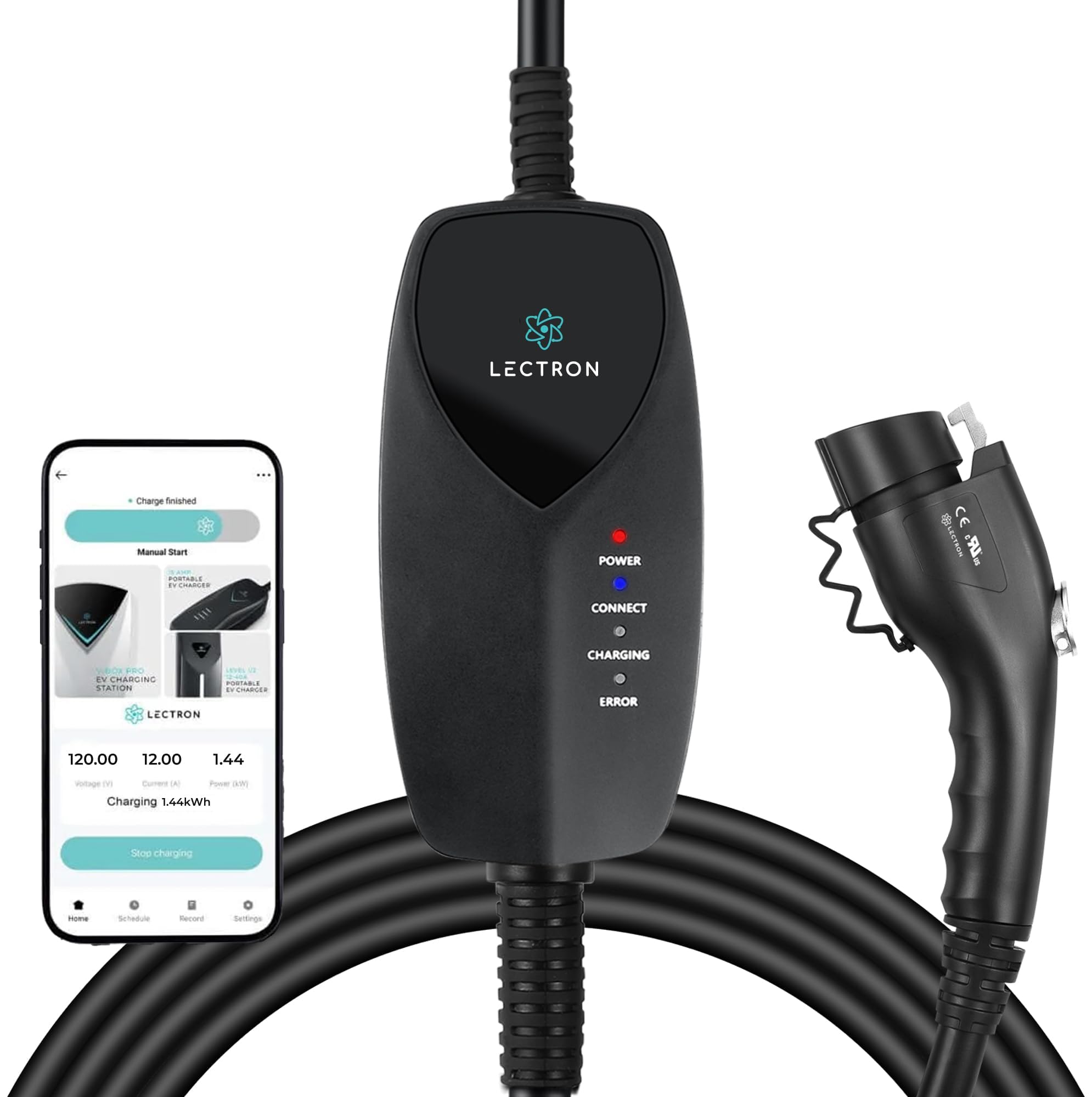
You get a 12A Level 1 charger that plugs into a standard NEMA 5-15 outlet and adds app control for scheduling and monitoring. That matters if you want to delay charging until off-peak hours or avoid guessing whether a session is running.
The 16 foot cable and carrying case make it easy to keep in the trunk. It charges slower than 15A options, but the lower current can be a practical match for common household circuits.
Why You’ll Like It
It helps you manage charging windows from a phone while keeping the outlet requirement simple.
Who Should Buy This
Drivers who want 120V charging with app scheduling and a travel case.
Who Should Avoid This
Skip it if you prefer a no-app charger or want the fastest Level 1 current available from a suitable 20A circuit.
Charging Power and Safety Note
At 120V and 12A, it delivers roughly 1.44 kW before normal charging losses, making it better for overnight top-ups than quick recovery.
Key Benefits
- App scheduling and remote monitoring for timed charging
- Portable design with a carrying case for travel
- 16 ft cable gives useful parking flexibility
- NEMA 5-15 plug fits common household outlets
You get a portable Level 1 EVSE with a J1772 connector, 120V input, and app-enabled controls. It is a stronger fit than the 12A app model if your outlet and circuit can safely support the higher current.
The 16 foot cable keeps setup flexible for garages, driveways, and travel stops. Use it when you want scheduled charging without moving up to a 240V wall unit.
Why You’ll Like It
It combines standard-outlet convenience with basic smart-control features, so you can time charging around your routine.
Who Should Buy This
J1772 drivers who want a 15A Level 1 charger with Wi-Fi and scheduling features.
Who Should Avoid This
Skip it if your available outlet is old, loose, shared with heavy loads, or not rated for continuous charging at the selected current.
Charging Power and Safety Note
At 120V and 15A, it can provide up to about 1.8 kW before losses. For continuous EV charging, circuit condition matters as much as the charger spec.
Key Benefits
- App scheduling and remote monitoring for convenient control
- Portable, compact design that is easy to pack for travel
- 16 ft cable offers flexible parking options
- Plug-in setup for standard NEMA 5-15 outlets
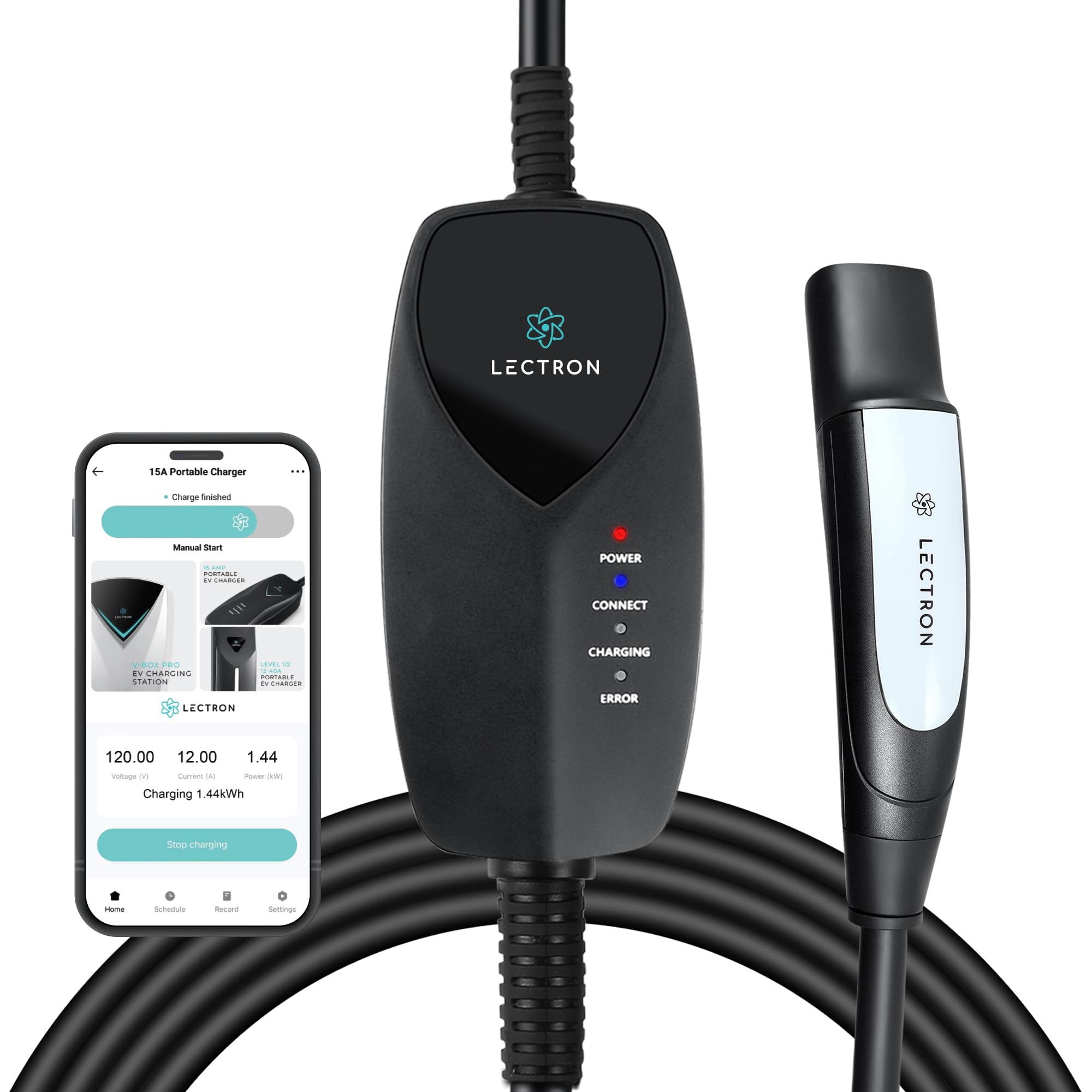
You get a 120V Level 1 charger with a native NACS connector, so Tesla and compatible NACS drivers can avoid a separate J1772 adapter. The 12A current is modest, but that can be a safer match for common 15A household circuits.
The app support helps with scheduling, while the portable size makes this a useful backup for trips, rentals, and overnight charging.
Why You’ll Like It
It removes the adapter step for NACS charging from a household outlet and gives you a compact backup option.
Who Should Buy This
Tesla or NACS-equipped EV owners who want a simple 120V travel charger with app control.
Who Should Avoid This
Skip it if you own a J1772-only vehicle or need faster recovery after long daily drives.
Charging Power and Safety Note
At 120V and 12A, it is built for slow, steady charging, not fast daily refills.
Key Benefits
- Native NACS compatibility for Tesla and NACS-equipped EVs
- Wi-Fi and app control for scheduling and remote monitoring
- Portable design suited for travel and overnight top-ups
- 16 ft cable offers flexibility when parking
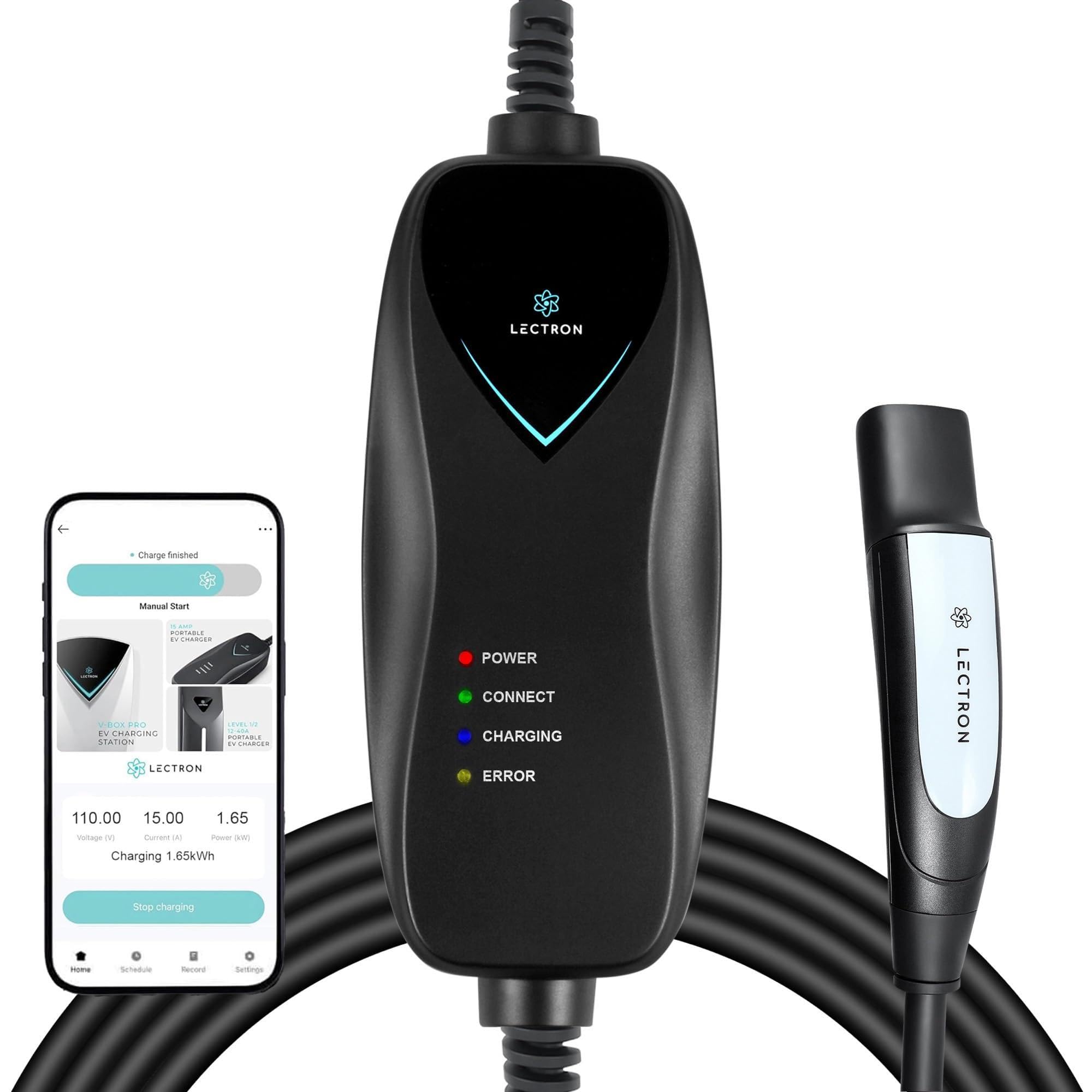
You get a 15A Level 1 Tesla/NACS charger for drivers who want the strongest 120V option in this lineup without changing to a 240V setup. The 16 foot cord and portable body make it easy to keep at home or pack as a backup.
Because it draws more current than 12A models, confirm your outlet condition and circuit capacity before using it for long sessions.
Why You’ll Like It
It gives NACS drivers a portable 120V charger that does not require a J1772 adapter.
Who Should Buy This
Tesla and NACS drivers who want a 120V charger with app control and a higher listed current.
Who Should Avoid This
Skip it if you only have an older 15A outlet, a shared circuit, or any outlet that gets warm during charging.
Charging Power and Safety Note
At 120V and 15A, it can draw more than 12A chargers. That extra current may help slightly, but the circuit must be suitable for continuous load.
Key Benefits
- Native NACS connector for Tesla compatibility without adapters
- Wi-Fi and app control for scheduling and monitoring
- Portable form that is easy to store and carry
- 16 ft cable offers flexible parking options
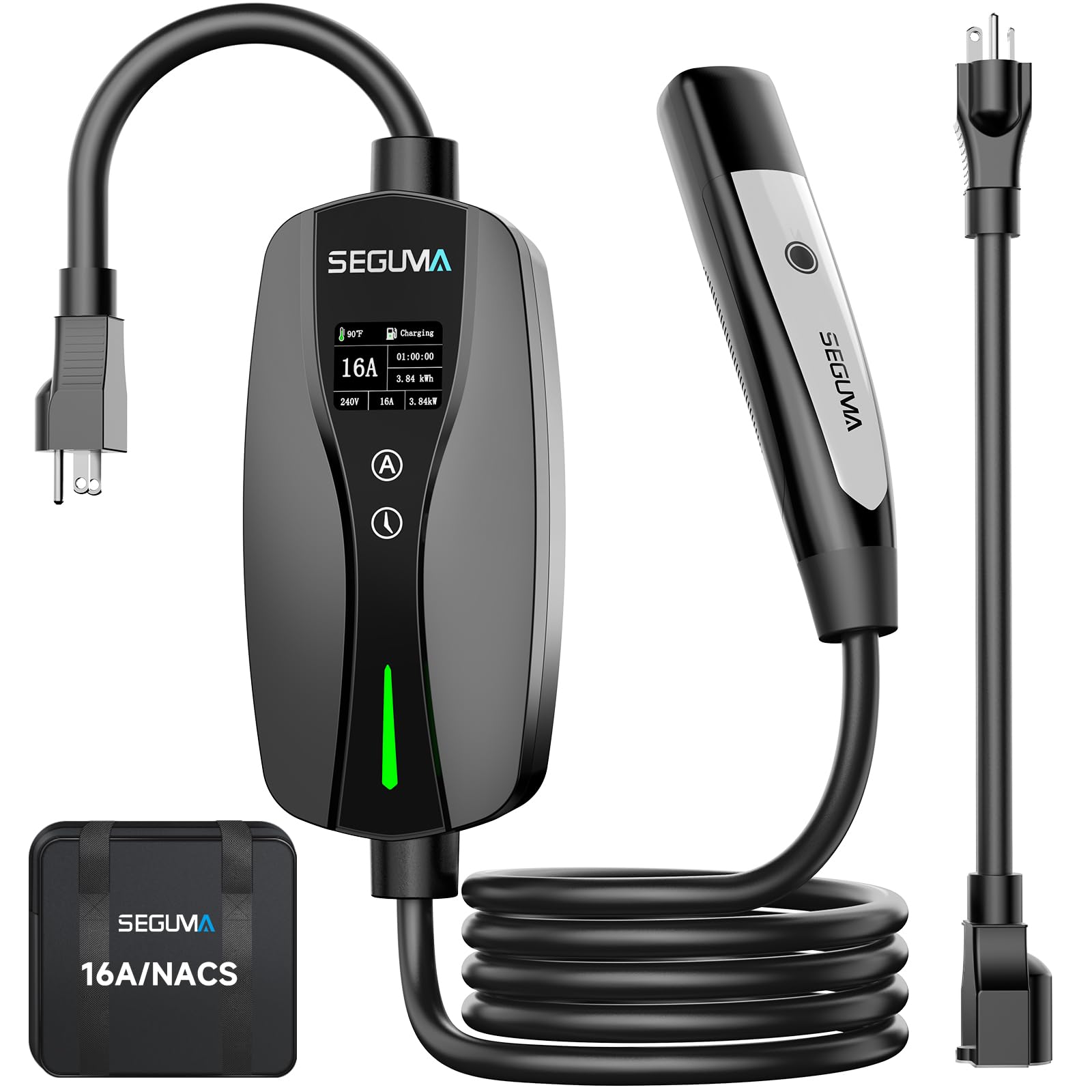
You get a dual-voltage portable charger that can work as a 120V Level 1 option or step up to 240V when the right outlet is available. The adjustable 6A to 16A range helps you match different circuit limits instead of forcing one draw level everywhere.
This pick stays in the guide because it supports 120V use, but it is best for buyers who also want a 240V upgrade path.
Why You’ll Like It
It replaces separate Level 1 and lower-power Level 2 travel chargers for NACS vehicles.
Who Should Buy This
NACS drivers who travel, use different outlets, or want one portable charger for both Level 1 and lower-power Level 2 situations.
Who Should Avoid This
Skip it if you only need a simple J1772 120V cord or do not want to manage adapters and current settings.
Charging Power and Safety Note
Its 120V mode is for slow charging, while 240V mode can shorten charge times when paired with the correct outlet and breaker.
Key Benefits
- Dual 120V/240V support for flexible charging scenarios
- Adjustable amperage from 6A to 16A to match circuit limits
- Long 25 ft cable for flexible parking positions
- Native NACS port and adapters increase use-case flexibility
- Portable design with clear status indicators
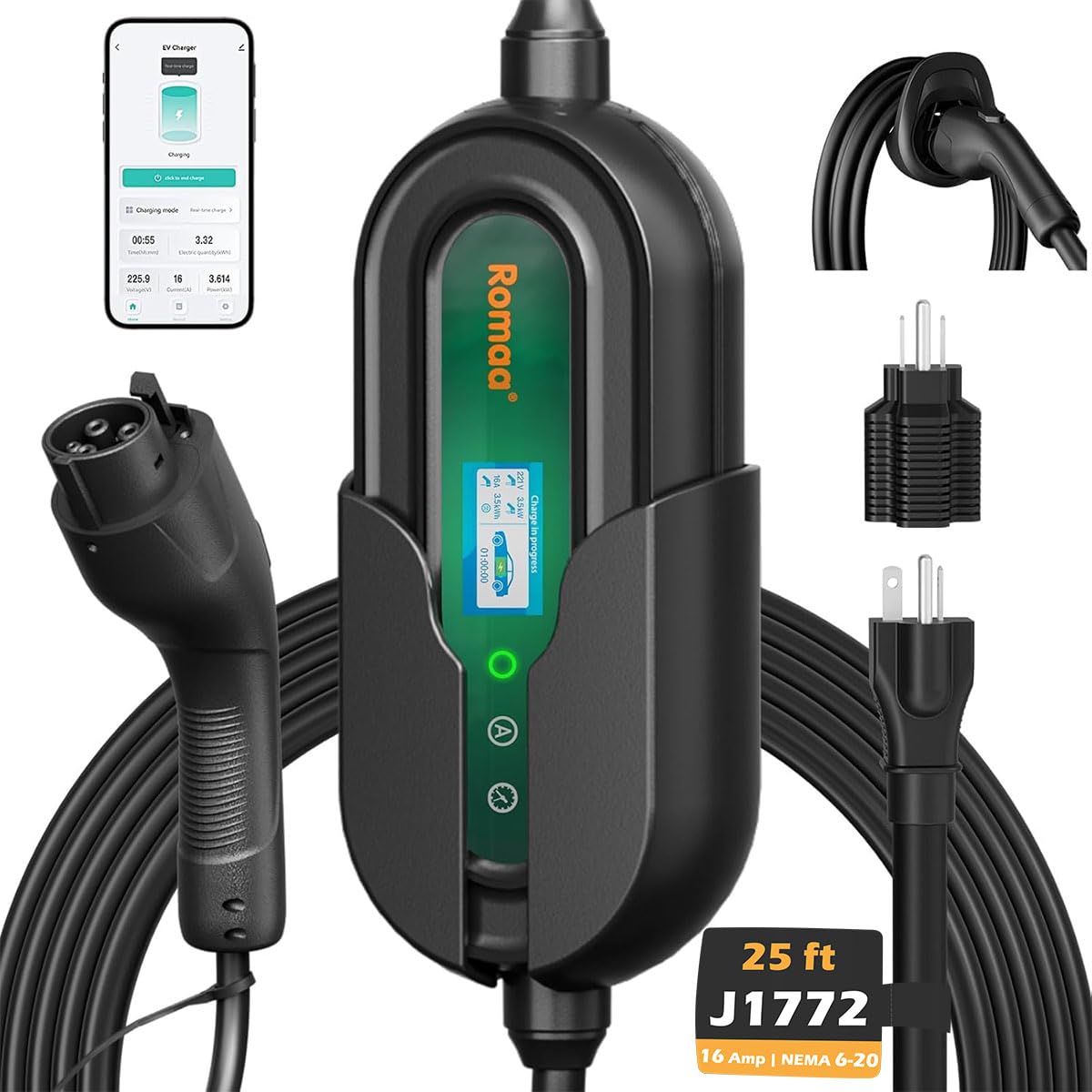
You get a J1772 portable EVSE that supports both 120V and 240V use, plus adjustable current and scheduling features. That makes it a flexible choice if you want a 120V charger now and may use a suitable 240V outlet later.
The 25 foot cable helps when the outlet and charge port are not close. Keep the current setting matched to the circuit, especially on older household wiring.
Why You’ll Like It
It helps drivers adapt to different outlets without buying separate Level 1 and Level 2 portable units.
Who Should Buy This
J1772 drivers who want adjustable current, scheduling, and a long cable in one portable charger.
Who Should Avoid This
Skip it if you want the simplest possible 120V cord with no settings to manage.
Charging Power and Safety Note
On 120V, use it as a slow Level 1 charger. On 240V and a suitable circuit, it can charge faster than a standard household outlet.
Key Benefits
- Dual 120V/240V support for flexible charging scenarios
- Adjustable 8A to 16A current to match circuit limits
- Scheduling, delay timer, and automatic shutoff style controls
- Long 25 ft cable for easier parking alignment
You get a practical dual-voltage portable charger with a very long 28 foot cable. The included NEMA 5-15 adapter keeps it relevant for 120V charging, while the 240V option gives you room to upgrade if you have the right outlet.
This is a value-minded choice, so inspect the included accessories and plug fit before relying on it as your only charger.
Why You’ll Like It
It gives you one portable charger for varied parking layouts, long outlet distances, and occasional faster charging from a proper 240V circuit.
Who Should Buy This
Budget-focused J1772 drivers who want maximum cable reach and both 120V and 240V flexibility.
Who Should Avoid This
Skip it if you want app control, premium fit and finish, or a charger focused only on Level 1 simplicity.
Charging Power and Safety Note
In 120V mode it is a slow overnight charger. The higher-power 240V mode requires the correct outlet, breaker, and safe adapter setup.
Key Benefits
- Dual 120V/240V capability for flexible charging scenarios
- Long 28 ft cable reduces awkward parking alignment
- Includes NEMA 6-20P and 5-15 adapter support in the product listing
- Portable design with basic accessories for on-the-go use
You get a straightforward 120V Level 1 charger with a J1772 connector, 15A listed output, and a 20 foot cable. It focuses on basic plug-in charging instead of app controls or dual-voltage accessories.
That simplicity makes it a good backup or nightly charger for light daily driving. As with any 15A Level 1 EVSE, confirm the outlet and circuit are in good condition before long sessions.
Why You’ll Like It
It gives you a compact, weather-minded backup charger for home, garage, driveway, or travel use.
Who Should Buy This
Drivers who want a simple J1772 Level 1 charger with extra cable length.
Who Should Avoid This
Skip it if you want smart scheduling, NACS support, or a 240V upgrade path.
Charging Power and Safety Note
At 120V and 15A, it belongs in the Level 1 category and is best for overnight charging.
Key Benefits
- Plug-in Level 1 charging for standard outlets
- Weatherproof positioning for garage or outdoor-adjacent use
- 20 ft cable eases parking alignment
- Built-in protection features listed for safer charging
FAQ
Do I Need A 120V Charger?
A 120V charger is useful if you want a simple, portable way to top up from a standard household outlet. Treat it as a steady overnight solution or a travel backup rather than a daily fast charger. If your commute is short or you can leave the car plugged in overnight, a Level 1 unit may meet your needs.
If you regularly drive long distances, return home with a low battery, or need quick turnarounds, consider a Level 2 setup in addition to a portable 120V charger.
Is A 120V Charger Safe To Use?
Yes, when the charger, outlet, wiring, and breaker are suitable for continuous EV charging. Use a properly grounded outlet, avoid extension cords, inspect the plug and cable, and stop using the setup if the outlet or plug feels hot. Certifications and built-in protections help, but they do not replace a safe circuit.
Should I Choose 12A Or 15A?
Choose 12A if you want a more conservative draw for a common household outlet. Choose 15A only when your outlet, wiring, and breaker can safely support the charger’s continuous load. When unsure, ask a licensed electrician to inspect the circuit before long charging sessions.
Should I Buy J1772 Or NACS?
Buy J1772 if your vehicle has the standard J1772 AC port or uses a J1772 adapter. Buy NACS if you drive a Tesla or another NACS-equipped EV and want to avoid adapters. Connector fit is one of the most important checks before you buy.
What Should I Look For When Buying?
Focus on connector type, input voltage, current, cable length, safety certifications, portability, and whether you need app scheduling. For travel, a carrying case and longer cable can matter more than smart features. For daily home use, outlet quality and circuit capacity should come first.
Wrapping Up
If you need a reliable everyday 120V charger, pick a unit that matches your car’s inlet and the circuit you plan to use. The Lectron ETL is the cleanest fit for most J1772 owners, while the Lectron Tesla options make more sense for NACS/Tesla drivers.
Choose a dual-voltage or adjustable unit only if you plan to use 240V later or need one charger for different outlet types. For tight budgets, VEVOR offers long-cable flexibility, while Morec keeps things simple for no-frills Level 1 charging.
Always confirm outlet condition, breaker limits, and connector fit before charging.
Full Comparison
| Product Name | Image | Input Voltage | Output Current | Special Highlights | Amazon |
|---|---|---|---|---|---|
| Lectron Level 1 EV Charger |
 |
110-120 Volts | 15 Amps |
|
Check Details |
| Lectron Portable Level 1 J1772 EV Charger |
 |
120 Volts | 12 Amps |
|
Check Details |
| Lectron Level 1 J1772 Charger (WiFi Version) |
 |
120 Volts | 15 Amps |
|
Check Details |
| Lectron Level 1 Tesla Charger (WiFi) with App Control |
 |
120 Volts | 12 Amps |
|
Check Details |
| Lectron Level 1 Tesla Charger (WiFi Version) |
 |
120 Volts | 15 Amps |
|
Check Details |
| SEGUMA Level 1 & 2 Tesla Portable Charger Adjustable |
 |
120-240 Volts | Adjustable 6A-16A |
|
Check Details |
| Level 1 and Level 2 Portable EV Charger J1772 16 Amp |
 |
120-240 Volts | 8A-16A |
|
Check Details |
| VEVOR Level 1+2 Portable EV Charger |
 |
120-240 Volts | 16 Amps |
|
Check Details |
| Morec 15A EV Charger Level 1 |
 |
100-120 Volts | 15 Amps |
|
Check Details |