
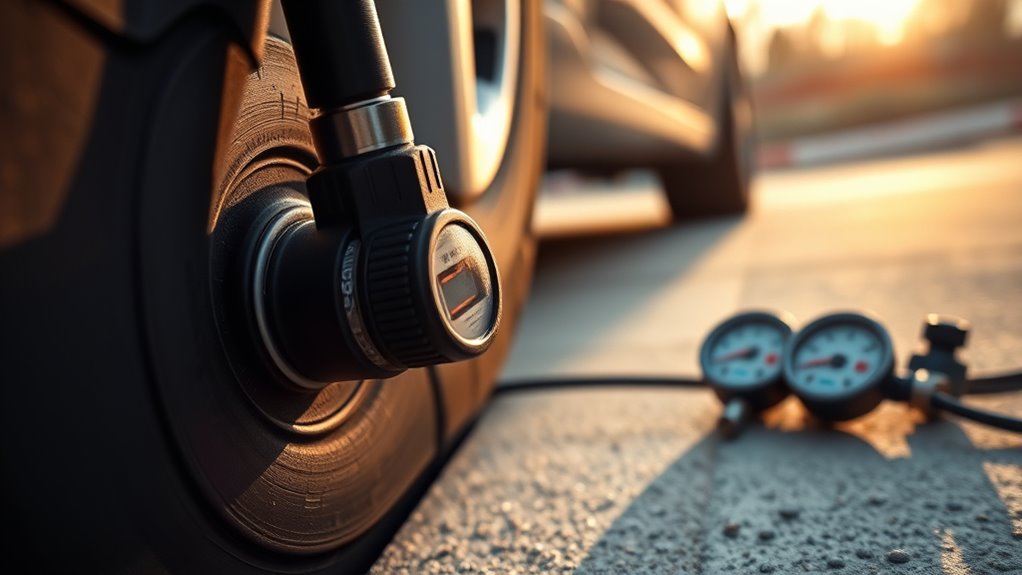
A tire inflator gauge reads higher while you’re pumping because the hose, gauge chamber, and tire are all pressurizing together, so the number reflects the whole system, not just the tire. Heat from pumping can also raise pressure a bit, and narrow tires show bigger swings because they have less air volume. Once you stop, the pressure usually settles lower. Use a cold tire and a separate digital gauge for the most accurate check, and more details follow.
Key Takeaways
- Inflator gauges read the whole pump system, so hose air temporarily raises the displayed pressure while pumping.
- The hose and gauge chamber share air with the tire, creating brief pressure spikes until everything equalizes.
- Narrow tires show bigger spikes because their smaller air volume is affected more by the hose volume.
- Pumping warms the air, and heat expansion can increase pressure by about 1–2 psi per 10°F.
- Accuracy improves when you stop pumping, let pressure stabilize, and recheck with a separate gauge on cold tires.
Why an Inflator Gauge Reads High While Pumping
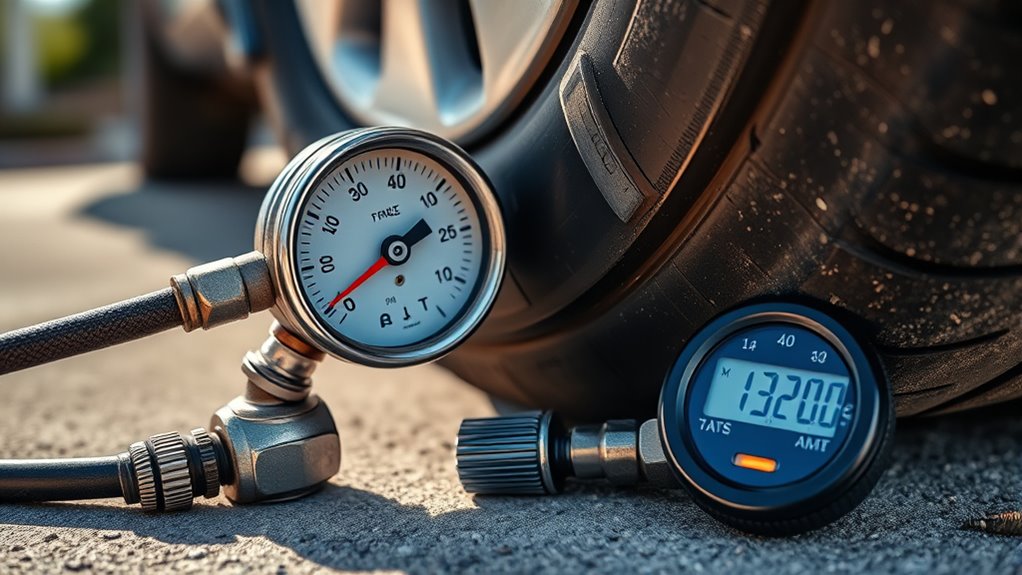
When you attach an inflator gauge while pumping, the hose and gauge chamber briefly share air with the tire, which can make the system pressure read higher than the tire’s true static pressure. That’s why your tire pressure gauge can show a spike while you’re still adding air.
The tire loses a little air to fill the hose, then the gauge reports the combined pressure in the tire, hose, and chamber. In a narrow tire with low volume, that added hose volume has a bigger effect, so the rise looks more dramatic.
A poor seal can leak air and make the reading jump around, too. Most Bourdon-tube inflators also carry built-in tolerance, often ±2–5%, so a small offset isn’t unusual.
If you want accurate, self-directed inflation, pause pumping, let the system settle, and compare with a separate tire pressure gauge.
How Heat Raises Tire Pressure
As you drive, tire heat builds and the air inside expands, so pressure rises with temperature. You’ll usually see about 1 to 2 psi increase for every 10°F increase, and harder driving can push that higher.
Check pressure when the tires are cold, because heat from driving or inflation can give you a misleading reading.
Tire Heat Buildup
Heat buildup can raise tire pressure quickly because compressing air inside the tire generates heat, and that added temperature increases internal pressure. When you inflate, your tire pressure gauges may show a higher reading than the final cold target.
- Expect about 1 psi per 10°F.
- Pumping adds heat inside the casing.
- Driving builds more heat and pressure.
- Warm tires can hide true inflation status.
- Check pressure when tires are cold.
You stay in control when you treat heat as a measurable factor, not a mystery. If you verify pressure after driving, you can overinflate and lose grip, comfort, and efficiency.
Use tire pressure gauges before motion, then adjust to spec. That simple discipline gives you safer handling, better wear, and more freedom from preventable tire trouble.
Pressure Rises With Temperature
Tire pressure rises as temperature climbs because air expands when it warms, and that expansion pushes the gauge reading upward. You’re seeing the ideal gas law in action: as the air inside your tire heats, pressure inside increases, often by 1 psi for every 10°F.
During pumping, that can add 1–2 psi and make a mechanical gauge look higher than the cold value. Don’t trust a hot reading as your baseline; check tires when they’re cold, before driving or after enough rest.
If you inflate to the hot number, you can overfill the tire, reduce grip, and stress the casing. Accurate pressure protects performance and safety, and it gives you control over your vehicle instead of letting heat decide.
Why Pressure Drops After You Stop Pumping
When you stop pumping, the pressure often drops because the air that had filled the inflator hose and gauge chamber flows back into the tire, reducing the temporary boost you saw while inflating.
When pumping stops, the hose air returns to the tire, and the gauge settles a bit lower.
That’s why the gauge reads a little lower after the pump stops: it’s settling toward the tire’s true internal pressure. In narrow road tires, you’ll notice this more because the tire contains less air, so the connected hose steals a bigger share of the system pressure.
Small discrepancies of 1–2 psi can happen, and many users accept that as normal. To stay in control, let the reading stabilize, then recheck and adjust if needed.
- Stop pumping and wait a moment.
- Watch the pressure settle.
- Expect a small drop.
- Recheck for accuracy.
- Fine-tune to spec.
How Hose Volume Affects Low-Pressure Tires
At low pressures, the hose and gauge chamber can temporarily inflate the reading because some of the tire’s air moves into that extra volume during pumping. You’re not seeing magic; you’re seeing a combined system pressure. | Factor | Effect |
| — | — |
|---|---|
| Hose volume | Raises reading while pumping |
| Gauge chamber | Stores compressed air briefly |
| Low psi tires | Show larger error from the same hose |
| 20–40 psi range | Demands tighter accuracy |
| Settling time | Restores true pressure |
When you pump a low-pressure tire, air flows from the tire into the hose and gauge until equilibrium forms. That shared volume makes the gauge read higher than the tire alone. At 20–40 psi, even a small hose can skew your result enough to matter. To stay free from false confidence, stop pumping, let the tire settle, then verify with a separate gauge. This gives you a truer number and keeps your setup precise, practical, and under your control.
Why Road Tires Show Bigger Swings
Road tires show bigger swings because their narrow casing holds less air, so even a small transfer into the hose can shift the reading noticeably.
You’ll often see a brief spike as the gauge and hose equalize, and a 1–2 psi change looks large in a small-volume tire.
That’s why you should check pressure consistently and adjust after the reading stabilizes.
Hose Volume Effect
Because narrow road tires contain far less air than MTB tires, the extra volume in the hose and gauge chamber can noticeably skew the pressure you see during inflation. This hose volume effect means your gauge reads the combined system pressure, not just the tire, so the number can climb before the tire fully stabilizes.
- Hose air adds temporary load to the reading.
- Mechanical gauges rarely compensate for this.
- Road tires show stronger swings than MTB tires.
- The hose fills, then the reading settles.
- You need stable readings for true setup freedom.
To measure accurately, pause after pumping and let the pressure equalize. Then recheck the gauge. That simple habit cuts error and gives you the clean, reliable pressure you want.
Narrow Tire Pressure Swings
When you inflate a narrow road tire, its small air volume makes every pump stroke and hose fill more noticeable, so the gauge can swing more sharply before the pressure settles.
That’s why you’ll see narrow tire pressure swings that look bigger than on wider tires. As the pump connects, air moves into the hose and gauge chamber, briefly pulling pressure from the tire and then rebounding as you add more air.
Because the tire holds less air, those changes show up fast. A Bourdon-tube gauge can also misread low pressures, especially below 30 psi, so the display may jump more than the actual tire pressure.
You can expect wider tires to smooth these effects because their larger volume absorbs the disturbance better.
How Seal Leaks Throw Off the Reading
Seal leaks can skew tire inflator gauge readings by letting outside air enter the gauge system, which pushes the indicated pressure higher than the tire’s actual pressure.
When you inflate, poorly sealed connections can mix ambient air with tire air, so you see an inflated reading before the tire truly reaches target pressure.
- Check seal leaks at the chuck, hose, and valve stem.
- Clean grit and moisture from sealing surfaces.
- Replace cracked O-rings and worn gaskets promptly.
- Watch for unstable numbers during pumping; they signal leaks.
- Maintain seals regularly to keep readings accurate and dependable.
If a seal leaks, air can also escape, and the gauge can’t hold a steady pressure long enough to measure correctly.
That instability makes your reading unreliable and can lead you to overinflate or stop too soon.
You deserve tools that tell the truth, so inspect seals often and keep the interface tight, clean, and free of damage.
How Built-In Inflator Gauges Work
Built-in inflator gauges read pressure inside the whole pump system, not just the tire, so the hose air becomes part of the measurement during inflation. When you connect the chuck, air from the tire fills the gauge and hose, so the system briefly shares one pressure.
That’s why built-in inflator gauges can show a higher number while you’re pumping: they’re sensing the combined pressure of tire and line, not the tire alone. Most use a Bourdon-tube mechanism, which flexes under pressure and moves a needle with practical but limited accuracy, usually within ±2–5%.
In narrow road tires, hose volume has a larger effect because the tire holds less air. You can use the gauge for fast, convenient control, but don’t treat it as the final word.
After inflation, check pressure again with a separate gauge and make small adjustments. That’s how you reclaim precise, independent pressure control.
Why Cold and Hot Readings Differ
Cold and hot tire readings differ because air pressure changes with temperature: as tires heat up during driving, the air inside expands, and pressure can rise by about 1 psi for every 10°F increase. You’ll see the tire gauge’s reading climb because the air isn’t static; it responds to heat, load, and speed.
- Cold pressure reflects the tire after at least three hours parked.
- Hot pressure runs higher after driving warms the carcass.
- Temperature swings can shift readings by 1–2 psi.
- Ambient heat or cold changes the air’s volume.
- A gauge without thermal compensation can mislead you.
If you check pressure after a drive, expect a higher number and don’t treat it as your baseline. The tire gauge’s temporary spike during pumping also comes from air moving through the hose and stabilizing.
For freedom from guesswork, compare readings under the same thermal conditions each time.
How to Check Tire Pressure More Accurately
To get a more accurate tire pressure reading, start with cold tires—wait at least three hours after driving so heat doesn’t inflate the number.
Check pressure before sun warms the sidewall, and use a reliable digital gauge or a quality 0-30 psi analog gauge for typical passenger tires.
Press the chuck squarely onto the valve stem, read the value immediately, and note any repeatable offset.
If you’re setting pressure, inflate slightly above the target, then bleed air in small bursts until you hit the spec. Recheck after each adjustment.
Calibrate your gauge against a known standard on a regular schedule so drift doesn’t distort your numbers.
Also watch ambient temperature: a 1-2 psi swing is normal across weather changes, so verify readings in similar conditions when possible.
Consistent technique gives you control, keeps your tires within spec, and lets you reject guesswork.
When to Use a Separate Digital Gauge
Use a separate digital gauge after you inflate the tire, because the inflator’s reading can be skewed by heat buildup and air compression during the fill. You’ll get a truer pressure value once the tire stabilizes. A digital gauge gives you precision, so you can catch errors the inflator’s gauge may hide and keep your setup aligned with manufacturer specs.
Inflate slightly above target, then bleed down in small steps until the digital gauge confirms the correct PSI. That method reduces guesswork and gives you control.
- Check pressure after a brief cooldown.
- Compare the inflator and digital gauge readings.
- Adjust in small increments.
- Verify the final PSI against the placard.
- Track drift in your inflator over time.
When you use a digital gauge regularly, you protect performance, improve safety, and stay free from unreliable readings.
Frequently Asked Questions
Why Is My Tire Pressure Gauge Reading High?
Your tire pressure gauge reads high because it’s influenced by Gauge Calibration, hose air, and valve backpressure while you’re pumping.
You’re seeing combined pressure in the tire, hose, and gauge chamber, not just tire pressure. Narrow tires make this effect stronger.
If the gauge’s ±2–5% tolerance or a poor seal adds error, readings climb.
Check with a trusted gauge, pause inflation, and allow 1–2 psi variation.
What Is the Accuracy of Tire Inflators With Gauges?
You’ll usually get ±2–5% accuracy from tire inflators with gauges, so your reading may drift a few psi.
Like a compass in a storm, the needle points near truth, not exact truth.
You should treat Gauge Calibration as essential, especially if you need reliable results at low or high pressures.
Check your inflator against a known standard, and don’t trust a bumped, vibrating, or temperature-shifted gauge.
Will It Ruin Tires if You Inflate Them to 40 PSI Instead of 35 PSI When the Recommended PSI Is 35?
Yes, 40 psi instead of 35 psi won’t ruin your tires immediately, but you’re overinflating them, and that can hurt Tire Safety.
You’ll likely get less traction, faster center tread wear, and a harsher ride. Your tires may also absorb less impact and become more vulnerable to road damage or blowouts, especially in heat.
To protect performance and longevity, you should reset pressure to the manufacturer’s spec.
What Is the Best PSI for a Tire Inflator?
You should use a tire inflator gauge that matches your tire’s Optimal Inflation range, usually 30–35 psi for most passenger vehicles.
Check your door placard, then set the gauge to that value when the tires are cold.
If you drive off-road, you may need 10–12 psi.
Choose a gauge that reads slightly above your target so you can verify pressure accurately and maintain safe, efficient, independent mobility.
Conclusion
When you pump, your inflator gauge can seem like a watchtower in a storm, reading higher as heat, hose air, and motion crowd the tire’s “village.” That doesn’t always mean you’ve overfilled it. Once you stop, pressure settles back toward its true level. To keep your tires honest, check them cold, use a separate digital gauge when accuracy matters, and trust steady readings over the rush of pumping.

