
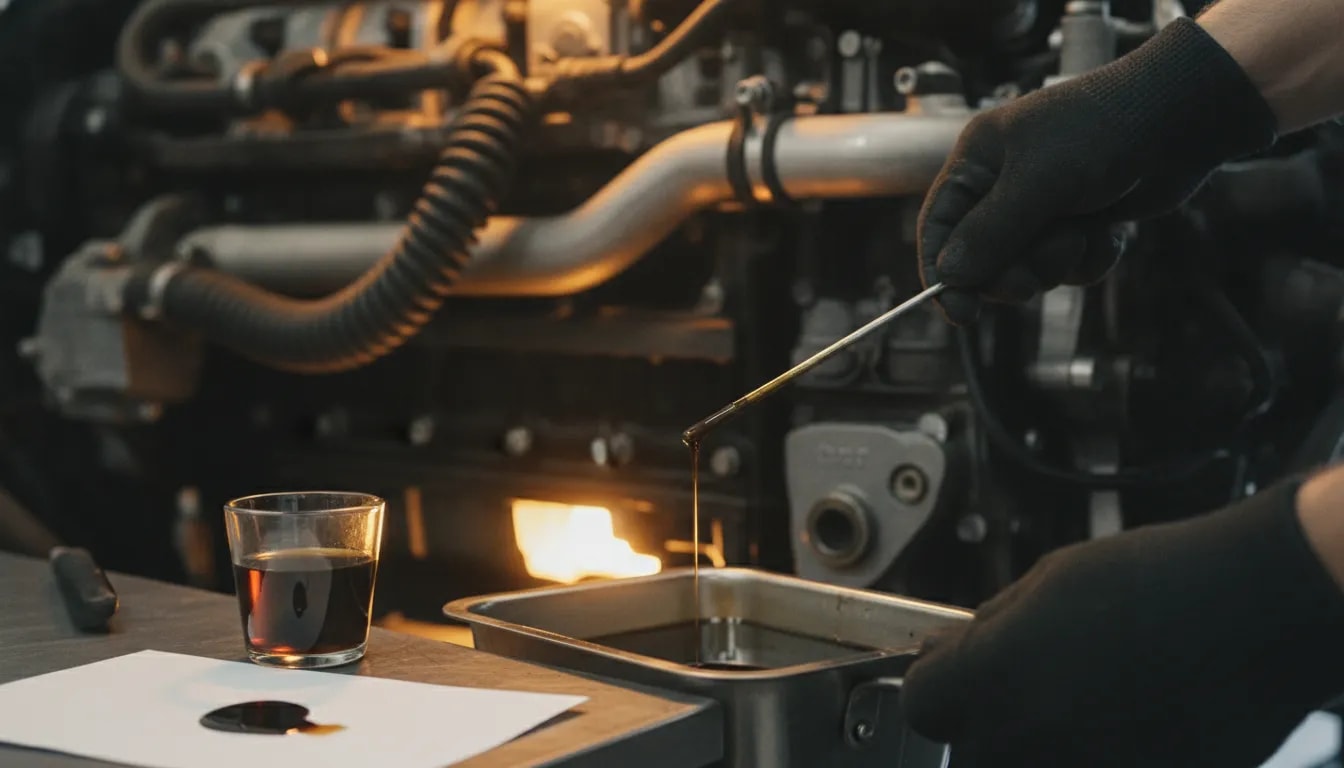
Before removing the drain plug, do two things: warm the engine oil and inspect the used oil. Warm oil flows more readily than cold oil, while a quick dipstick check can reveal warning signs of fuel dilution, coolant contamination, or abnormal wear.
These checks make a diesel oil change more useful than a simple drain and refill. They apply broadly to diesel cars and trucks, including Cummins, Duramax, and Power Stroke engines, but your vehicle’s service instructions should always determine the exact oil specification, checking procedure, and refill requirements.
The goal is not to make every trace of old oil disappear or guarantee an engine’s lifespan. It is to drain effectively, notice changes, and investigate contamination before fresh oil hides the evidence.
Key Takeaways
- Warm diesel oil flows more readily, but avoid draining oil that is dangerously hot.
- Check oil level, appearance, consistency, and odor before removing the drain plug.
- Black diesel oil is common; milkiness, fuel odor, sludge, and visible metal warrant investigation.
- An oil change does not repair the underlying source of contamination or internal wear.
Table of Contents
- A Practical Diesel Oil Change Checklist
- Should You Change Diesel Oil Warm or Cold?
- What to Check on the Dipstick Before Draining
- Warning Signs to Look for in the Drained Oil
- What to Do If the Oil Looks Abnormal
- Common Diesel Oil Change Mistakes
- The Bottom Line
A Practical Diesel Oil Change Checklist
Use this routine at each service, alongside the manufacturer’s oil change instructions:
- Prepare your supplies. Have the correct replacement oil and filter, tools, drain pan, gloves, and clean rags ready.
- Warm the oil. Allow the engine to warm before draining, rather than starting with oil that has sat cold for hours.
- Shut the engine off and allow an appropriate settling or cooling period. Follow the vehicle’s instructions for checking the oil level and avoid working around dangerously hot oil or components.
- Inspect the dipstick. Check the oil’s level, appearance, consistency, and any unusually strong fuel or burned odor.
- Inspect the oil as it drains. Look for sludge, visible metallic debris, water droplets, or an unusual emulsion.
- Investigate anything abnormal. An oil change alone does not repair the source of contamination.
- Complete the service. Replace the filter and refill according to the vehicle’s specified procedure.
The dipstick inspection takes only a few minutes. Warming the oil adds preparation time, but it also creates an opportunity to check the engine’s condition before discarding useful evidence.
Should You Change Diesel Oil Warm or Cold?
Warm oil is generally preferable for draining because it is less viscous and flows more readily. Cold oil moves more slowly and can take longer to leave the sump and accessible passages.
Diesel engine oil carries soot from combustion along with other contaminants, including wear particles, moisture, fuel, and combustion byproducts. The oil’s additive system helps manage these contaminants, and circulating the oil before draining helps mix the used oil.
Warming does not remove contamination by itself. It helps the contaminated oil flow out during the service. It also does not mean every internal passage will drain completely. Some residual oil remains, so avoid treating a warm oil change as a complete internal cleaning.
How long should you warm the engine?
A practical starting point is roughly 10 to 15 minutes of engine operation before the oil change. If the vehicle has just been driven, a cooling period of roughly 5 to 10 minutes may make the work more manageable while keeping the oil warm.
These are preparation guidelines, not universal temperature guarantees. Do not assume a fixed idle time has produced a particular oil temperature, or that a short cooling period makes every hot component safe to touch. The useful target is oil that flows readily without exposing you to unnecessary burn risk.
Wear gloves, keep clean rags nearby, and position the drain pan before loosening the plug. Warm oil can exit quickly, so be ready for the initial stream.
What to Check on the Dipstick Before Draining
Inspect four things: level, color, consistency, and odor. Compare the results with previous checks whenever possible. A change in the oil level or appearance can be more informative than a single observation.
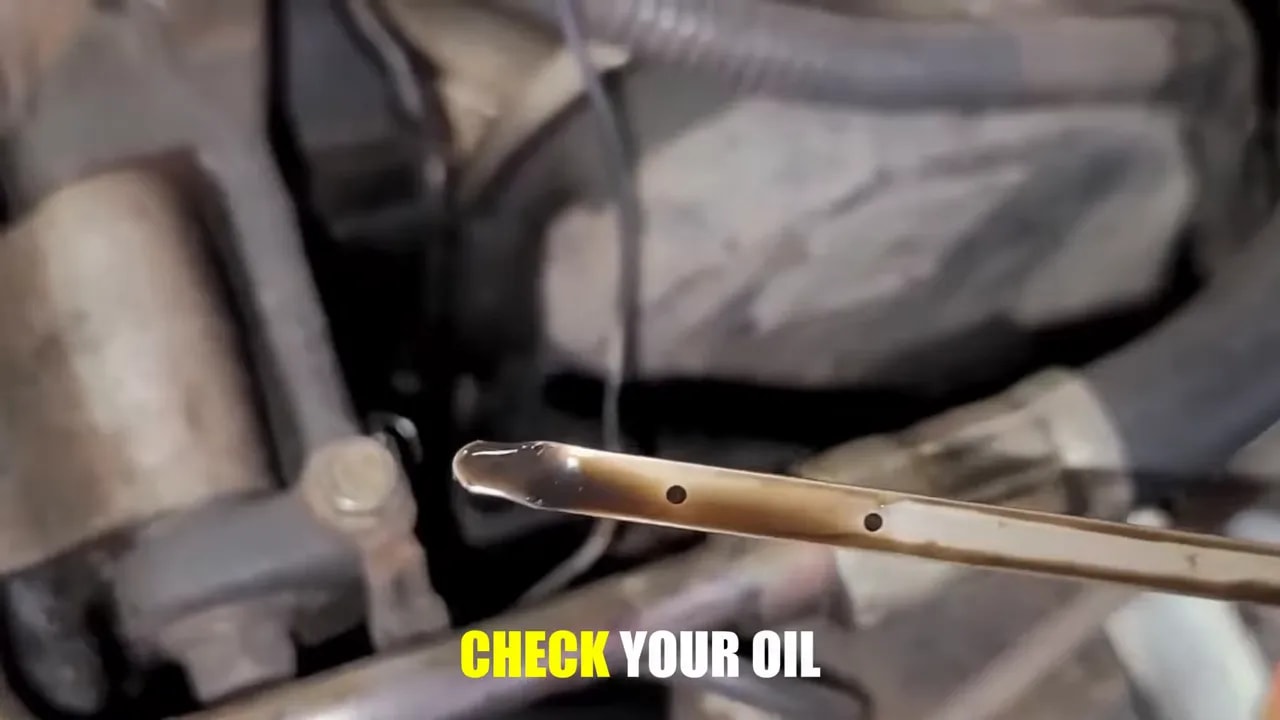
Dark brown or black oil: usually expected
Used diesel oil commonly becomes dark brown or black because it carries soot particles. Black oil alone is not evidence of engine failure and does not, by itself, establish that an oil change is overdue.
However, normal color does not prove that the oil is healthy. Continue checking its level, consistency, and odor rather than stopping at the color.
Milky oil: investigate possible coolant contamination
Oil with a creamy or milky brown appearance can indicate coolant or water contamination. Possible coolant-related causes include a leaking head gasket, cracked cylinder head, or cracked block.
Milky oil deserves prompt investigation. Coolant contamination can contribute to sludge and bearing damage. Replacing the oil without addressing the leak leaves the underlying problem in place.
A strong diesel smell: suspect fuel dilution
An unusually strong diesel-fuel odor is a warning sign that fuel may be entering the crankcase. Possible contributors include leaking injectors, failed injector seals, and repeated short-trip operation.
Fuel dilution can thin the oil and reduce its ability to protect loaded components. Smell is a screening clue, not a measurement: it cannot tell you the percentage of fuel present or the oil’s remaining viscosity.
A rising oil level: a warning, not a diagnosis
If the dipstick reading is higher than it was previously, investigate the change. A rising level combined with a strong fuel odor is particularly concerning for fuel dilution.
Do not conclude that fuel dilution is certain from a higher reading alone. Confirm the level using the vehicle’s prescribed checking procedure and have the cause assessed rather than simply draining the excess and continuing as normal.
A falling oil level: assess consumption
A significant drop between checks can point to oil consumption. Some consumption may occur in high-mileage engines, but excessive consumption can be associated with worn piston rings, valve seals, or turbocharger seals.
The important observation is the trend. Repeatedly adding oil without investigating an increasing rate of consumption can overlook a developing problem.
Metallic glitter or foam: do not dismiss it
Visible metallic sparkle can indicate wear debris. Excessive glitter or obvious flakes are more concerning than microscopic wear particles that cannot be assessed by eye.
Persistent froth or foam also warrants investigation. Possible contributors include an unsuitable oil, fuel dilution, or excessive blow-by. Appearance alone does not identify which cause is responsible.
Warning Signs to Look for in the Drained Oil
The dipstick shows only a small amount of oil. Continue inspecting during draining, when you can observe the flow and the larger volume collected in the pan.
| Observation | What it may indicate | Why it matters |
|---|---|---|
| Chunks, globs, or unusually thick deposits | Sludge associated with extended service intervals, unsuitable or poor-quality oil, excessive idling, or coolant contamination | Sludge can obstruct oil passages. |
| Visible metallic flakes | Significant internal wear involving bearings, gears, or other components | Fresh oil does not repair the source of the debris. |
| An unusually burned odor | Possible overheating associated with sustained high loads or cooling-system problems | Overheating can degrade the oil’s protective performance. |
| Water droplets or an emulsion | Moisture or coolant contamination, potentially associated with leaks or repeated trips that never fully warm the engine | The source needs investigation rather than another routine refill. |
Warm oil should generally drain readily. An obviously lumpy or contaminated stream is worth noting, but flow alone cannot establish oil condition or identify a failed component.

Be especially cautious with visible flakes. Although engines produce wear particles during use, that does not make obvious glitter or fragments harmless. A visual inspection cannot reliably determine where the metal came from or how severe the wear is.
What to Do If the Oil Looks Abnormal
Treat abnormal oil as a reason for diagnosis, not as proof of one specific failure. Several problems can produce similar signs, and a dipstick inspection cannot quantify contamination.
- Describe the combination of symptoms. For example, a rising level plus fuel odor is more informative than reporting only that the oil looks thin.
- Keep the observations specific. Note whether you found milkiness, foam, sludge, metallic flakes, or water droplets.
- Seek prompt assessment. Suspected coolant contamination, substantial fuel dilution, or visible metal should not be treated as ordinary oil aging.
- Address the cause. New oil can become contaminated again if an injector leak, coolant leak, or wear problem remains unresolved.
Consider a diesel owner who notices both a slightly elevated oil level and a strong fuel odor before service. Those two clues can lead a mechanic to investigate the injectors and seals. A failed seal may be repairable before continued dilution damages bearings, but the inspection itself does not establish the diagnosis or guarantee a particular repair cost.
This is the real value of checking used oil: identifying a reason to investigate while there may still be time to limit further damage.
Common Diesel Oil Change Mistakes
Assuming cold draining automatically damages the engine
Warm draining is a useful maintenance practice, but a cold oil change does not automatically mean the engine has been damaged. The practical concern is slower drainage and a missed opportunity to improve the service routine.
Working with oil that is too hot
Warm and dangerously hot are not the same thing. Allow appropriate cooling after driving, and remember that nearby engine and exhaust components may remain hot.
Using black oil as the only condition check
Black diesel oil is common. Focus on unusual consistency, contamination, odor, and level changes rather than treating darkness alone as a fault.
Diagnosing contamination by appearance alone
Milkiness, fuel odor, and metallic debris are useful warning signs, but they do not establish contamination percentages or pinpoint a failed part. Use them to guide further investigation.
Choosing replacement oil by viscosity alone
The replacement oil and filter need to suit the engine. Follow the manufacturer’s required specifications, not just a familiar viscosity grade. The American Petroleum Institute’s engine oil category reference provides supporting context on oil service classifications.
Expecting preparation to fix existing damage
Warming and inspecting the oil support good maintenance. They cannot reverse worn bearings, repair a coolant leak, or guarantee hundreds of thousands of miles of engine life.
The Bottom Line
Make every diesel oil change both a service and a condition check. Prepare warm oil for draining, inspect the dipstick, and examine the oil as it comes out.
Normal dark oil is expected. Milky oil, a strong fuel odor, an unexplained level change, sludge, or visible metal deserves attention. The most important step is acting on those findings rather than assuming a fresh fill has solved the problem.