
The most costly diesel tire mistakes often start with a seemingly sensible shortcut: buying the same tire size, using the pressure printed on the sidewall, or leaving tire checks until the next service.
For a diesel car, SUV, or pickup, tire size is only part of the specification. Load index, any required extra-load rating, inflation pressure, and maintenance all matter. Getting these wrong can cause premature wear, excessive heat, poor ride quality, and an increased risk of tire failure.
The safest approach is to work from your vehicle’s requirements, not assumptions about diesel engines. Confirm the correct tires, use the prescribed cold pressures for your load, and make tire inspection part of routine maintenance.
Key Takeaways
- Replacement tires must meet the required load index and any specified XL or reinforced rating.
- Use prescribed cold tire pressures, not the maximum PSI printed on the sidewall.
- High-torque diesels benefit from regular wear inspections and rotation according to manufacturer instructions.
- Review loaded-pressure guidance before towing and confirm wheel-fastener torque after tire service.
Table of Contents
- Why Weight and Torque Matter for Diesel Tires
- Before Buying Tires: Check More Than the Size
- Setting Tire Pressure: Separate the Recommendation From the Limit
- Before Towing or Carrying Cargo: Recheck the Loading Instructions
- Managing Wear: Inspect First, Then Rotate as Specified
- After Tire Service: Confirm Wheel-Fastener Torque
- A Simple Diesel Tire Maintenance Schedule
Why Weight and Torque Matter for Diesel Tires
Diesel vehicles can place substantial demands on their tires through engine weight, strong torque delivery, and, for some pickups and SUVs, towing or heavy cargo. The exact demands depend on the model, drivetrain, and how the vehicle is used.
Front-wheel-drive diesels deserve particular attention. Their front tires transmit engine torque while also handling steering and much of the braking. This combination can make the front tires wear faster than the rears.
However, diesel fuel alone does not determine the correct tire or pressure. Your vehicle manufacturer’s specification is the starting point. There is no single diesel tire pressure, universal engine-weight allowance, or extra-load requirement that applies to every model.
Before Buying Tires: Check More Than the Size
Two tires marked 205/55 R16 may fit the same wheel but have different load capacities. Choosing replacements solely by size can therefore leave you with tires that do not meet the vehicle’s requirements.
Understand the tire load index
The load index is a number on the tire sidewall that identifies its rated carrying capacity under specified conditions. It is separate from the tire’s dimensions.
| Load index | Rated load per tire |
|---|---|
| 91 | 615 kg |
| 94 | 670 kg |
Replacing a load-index 94 tire with a load-index 91 tire reduces rated capacity by 55 kg per tire. Across four tires, that is a nominal reduction of 220 kg, but that total should not be treated as a vehicle payload calculation. Each tire still needs to support the load at its position.
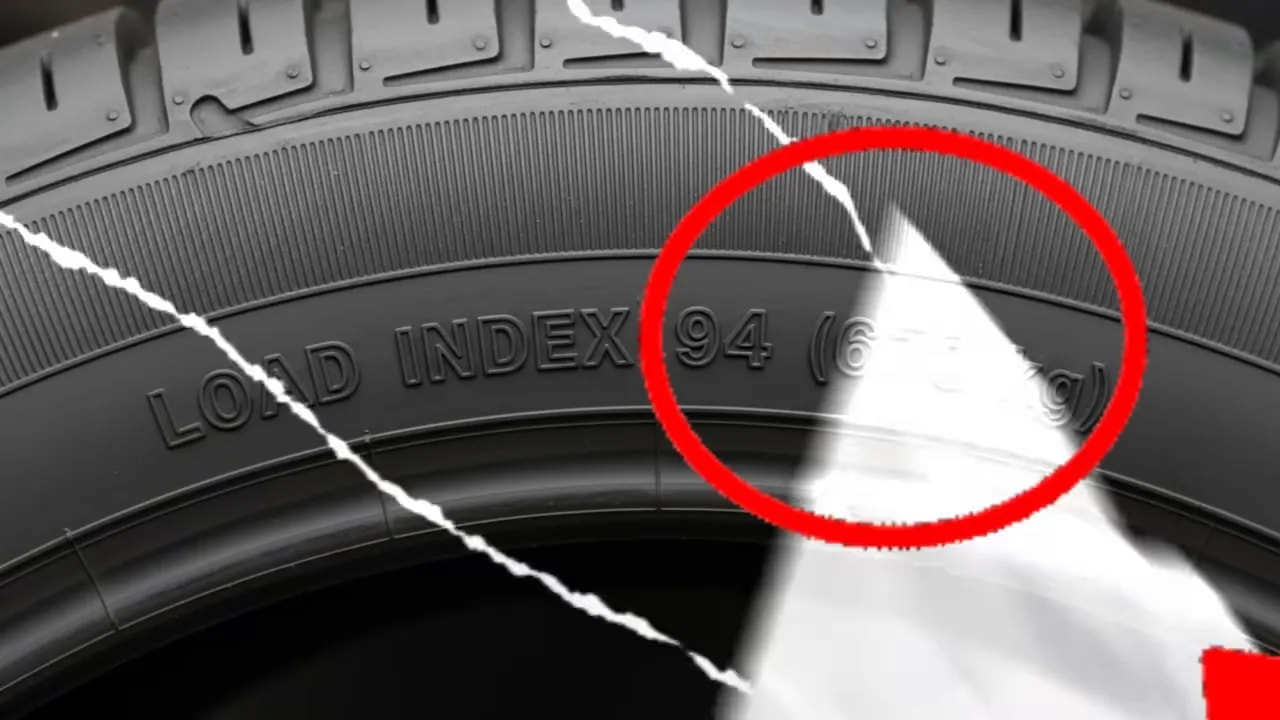
Use the owner’s manual and manufacturer tire specification to establish the minimum required load index. The tire placard may also provide relevant information. Do not replace a required load index with a lower one just because the tire size matches.
A higher load index does not remove the need to check the rest of the tire specification or inflate it correctly.
Preserve an XL or reinforced requirement
Some diesel cars, including a number of European models, require extra-load tires. These may be marked XL, Extra Load, or Reinforced.
Extra-load tires have construction that allows additional carrying capacity at the appropriate inflation pressure. A standard-load tire of the same size is not automatically an equivalent replacement.
Check both the existing sidewall markings and the vehicle’s documented requirements. If the manufacturer specifies XL or reinforced tires, keep that requirement when buying replacements.
Do not assume every diesel needs XL tires, or that every XL tire should use the same pressure. The required inflation depends on the vehicle and the particular tire specification.
A replacement-tire checklist
- Size: Confirm the replacement size is approved for the vehicle.
- Load index: Meet or exceed the manufacturer’s minimum requirement.
- Construction: Retain XL or reinforced construction when specified.
- Pressure: Confirm the cold inflation recommendation for the chosen specification.
- Use: Tell the installer if the vehicle regularly tows or carries heavy loads.
Setting Tire Pressure: Separate the Recommendation From the Limit
Two opposite mistakes cause trouble: running too little pressure for the load and inflating tires to their sidewall maximum unnecessarily.
Start with the vehicle’s cold-pressure recommendation
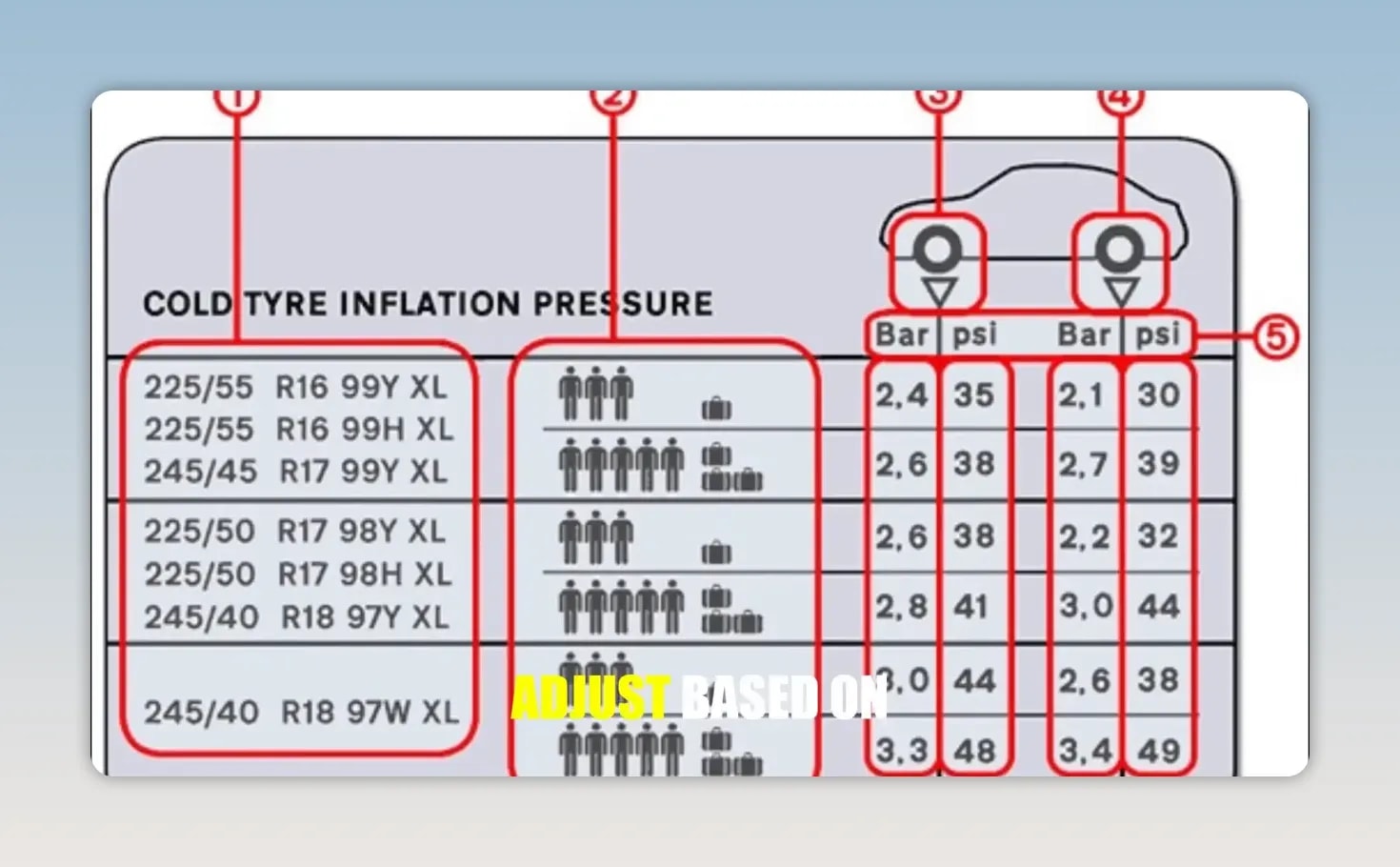
For the approved tire specification, use the cold pressures listed on the vehicle’s tire placard or in the owner’s manual. Check the front and rear requirements separately, along with any instructions for heavier loading.
Tire pressure and carrying capacity are linked. Underinflation reduces the tire’s ability to support its intended load and can increase flexing and heat buildup. A suitable load index does not compensate for insufficient pressure.
If you change tire size or move to a different load category, ask a qualified tire professional to confirm the appropriate inflation using the relevant tire manufacturer’s load-and-inflation information. A different brand or model does not, by itself, mean the vehicle’s recommended pressure must change.
Do not use sidewall maximum PSI as the default
The maximum pressure marking on a tire is not a recommendation to use that pressure on every vehicle. Some truck tires carry high pressure markings, but the correct operating pressure depends on the application.
Unnecessarily high pressure can produce a harsh ride, contribute to uneven wear, affect traction, and increase vulnerability to road impacts. More air is not automatically safer.
Equally, do not lower pressure simply because a truck is unloaded. Use the manufacturer’s approved recommendations or obtain tire-specific guidance for a changed setup.
Check pressure monthly, with the tires cold
Make a cold-pressure check a monthly habit. Regular attention is particularly useful on vehicles that carry heavy loads or have demanding tire duties.
- Find the correct pressure for your tire specification and loading condition.
- Measure each tire with a pressure gauge while it is cold.
- Compare front and rear readings with their respective recommendations.
- Adjust to the prescribed values rather than the sidewall maximum.
For additional guidance on pressure checks, sidewall markings, and tire maintenance, consult the NHTSA tire safety guide.
Before Towing or Carrying Cargo: Recheck the Loading Instructions
A pressure setting suitable for ordinary use may not be the right setting for a heavily loaded journey. This matters for diesel pickups and SUVs, but it also applies to diesel cars carrying substantial luggage or towing a trailer.
Before adding a significant load:
- Check the owner’s manual for loaded or towing pressure instructions.
- Identify any separate front and rear pressure requirements.
- Set the prescribed pressures while the tires are cold.
- If the tire setup has changed, confirm that its load capacity and inflation requirements are appropriate.
Do not guess a towing pressure or assume the maximum sidewall PSI is the correct answer. Where load-based tire guidance is needed, use the applicable manufacturer information rather than a simple calculation based on total vehicle weight divided by four.
Managing Wear: Inspect First, Then Rotate as Specified
Waiting until the front tires are badly worn before considering rotation can shorten the useful life of the set. On a high-torque front-wheel-drive diesel, the difference between front and rear wear may develop quickly.
Use mileage as a reminder, not the only trigger
A commonly cited rotation range is 5,000 to 8,000 miles. For a high-torque diesel, a check around 5,000 miles is a useful reminder to assess wear and review the vehicle’s rotation instructions.
Follow the interval and rotation procedure specified for your vehicle and tires. Inspect sooner if you notice uneven wear, and pay closer attention when towing or hauling regularly.
Rotation helps distribute wear across the set. It should not be used as a substitute for investigating an abnormal wear pattern.
What tire wear can tell you
| Observation | What to review |
|---|---|
| Front tires wear much faster than the rears | Rotation history and the demands on the front tires, particularly on front-wheel-drive models. |
| Center tread wears faster | Inflation pressure, including whether the tires were unnecessarily set to their maximum PSI. |
| Uneven wear or wheel wobble after service | Have the wheel installation and tire condition checked promptly. |
Wear patterns are clues, not definitive diagnoses. If the wear looks unusual, have it assessed rather than simply changing pressure or rotating the tires.
After Tire Service: Confirm Wheel-Fastener Torque
Tire installation and rotation are not complete without correct wheel fastening. Lug nuts or wheel bolts must be tightened to the specified torque for the vehicle and wheel installation.
Do not use a generic torque value. The correct figure is vehicle-specific. A torque wrench is the appropriate tool for checking that specification.
A follow-up torque check after 50 to 100 miles is commonly advised following wheel removal. Confirm the exact requirement with the installer and the vehicle or wheel manufacturer.
Settling at the wheel-to-hub interface can affect clamping after installation. Loose fasteners can cause wobble and, in severe cases, wheel separation. However, noticeable looseness or wobble should not be dismissed as normal settling.
If a new wobble develops after tire service, have it checked promptly rather than waiting for the scheduled follow-up.
A Simple Diesel Tire Maintenance Schedule
The most useful routine connects tire checks to the moments when mistakes tend to occur.
- Before buying: Verify size, load index, and any XL or reinforced requirement.
- Every month: Check cold pressure and inspect for uneven wear.
- Before a loaded journey: Review towing or heavy-load inflation instructions.
- Around rotation time: Compare front and rear wear and follow the approved procedure.
- After wheel removal: Confirm torque and arrange any required follow-up check.
The key is not to treat diesel tires as a separate category with one universal rule. Match the tires to the vehicle, match the pressure to the approved specification and load, and check the installation after service. These habits address the major avoidable mistakes without relying on guesswork.