
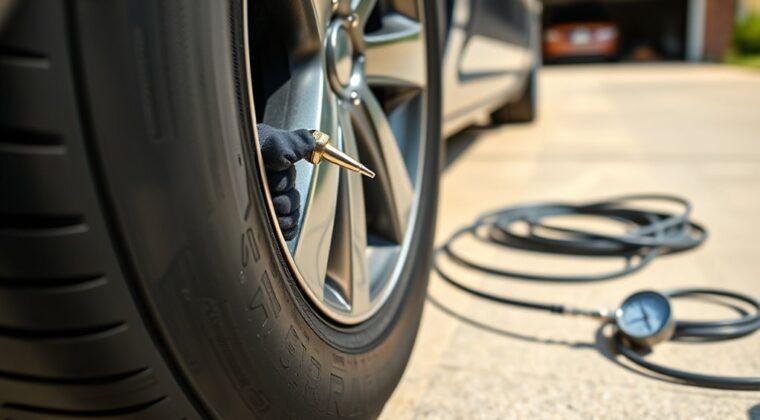
Park on a flat surface, secure the vehicle, and remove the valve cap. Use a tire gauge or valve stem tool to press the valve pin in short bursts, then recheck PSI after each release. Deflate only when the tire is above the manufacturer’s recommended pressure, usually by 2–3 PSI at a time. Stop at the placard value and reinstall the cap. With a few more details, you can avoid the common mistakes that cause damage.
Key Takeaways
- Park on a flat surface, secure the vehicle, and check the tire when it is cold.
- Remove the valve cap and use a tire gauge or valve tool to press the valve pin gently.
- Release air in short bursts of 2–3 PSI, checking pressure after each burst.
- Compare readings to the vehicle placard or owner’s manual, usually around 32–35 PSI cold.
- Stop once at the recommended pressure and reinstall the valve cap securely.
How to Release Air From an Overinflated Tire
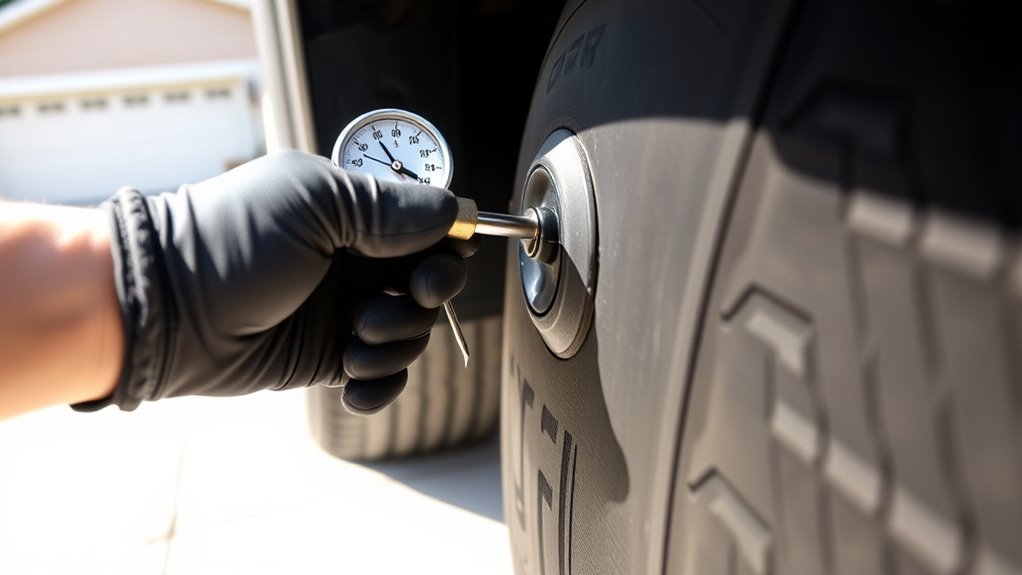
Before you let air out of an overinflated tire, park the vehicle on a flat, stable surface and make sure it’s secure.
Twist off the valve cap gently to expose the valve stem. To release air, press the valve core pin with a tire pressure gauge or a small tool; you’ll hear air escape in short bursts.
Twist off the valve cap gently, then press the valve core pin to release air in short bursts.
Keep your hand steady and let the tire vent gradually so you don’t drop below the recommended pressure. After each burst, check the pressure again with the gauge. This lets you correct the tire with precision and protects your freedom to drive safely.
Stop when the tire reaches the recommended pressure and feels properly inflated for service. Then tighten the valve cap securely to shield the valve stem from dirt, moisture, and debris.
Work deliberately, verify each reading, and avoid overcorrection.
What You Need Before Deflating a Tire
Start with the right tools: a tire pressure gauge to check PSI accurately, a valve stem tool or flathead screwdriver to release air in a controlled way, and an air compressor or pump in case you need to add air back.
Park on a flat surface, set the parking brake, and keep the vehicle stable before you touch the tire pressure. Remove the valve cap so you can access the valve stem cleanly, then keep it nearby for reinstalling after deflation.
Your pressure gauge lets you monitor PSI as you work, so you don’t over-deflate and lose control. Use the valve tool to press the core pin briefly and let air escape in small bursts.
If you release too much, use the air pump to restore the correct level. Protect the valve stem from dirt, debris, and damage, and finish by replacing the cap securely.
How to Check Tire Pressure Correctly
Choose a reliable tire pressure gauge, and check that it’s rated for the PSI range you need.
Measure tire pressure when the tires are cold, remove the valve cap, and press the gauge straight onto the valve stem to get an accurate reading.
Compare the PSI to the vehicle placard or owner’s manual, and if it’s high, release air in short bursts while rechecking often.
Choosing the Right Gauge
A reliable tire pressure gauge is essential for checking pressure accurately and releasing air safely; look for one that reads in PSI, fits snugly on the valve stem, and gives a cold-tire reading in the 32–35 PSI range for most vehicles. Pick a tire pressure gauge with a clear PSI scale. Digital models often give more accurate readings and are easier to read in low light. | Type | Strength | Use |
| — | — | — |
|---|---|---|
| Digital | clear display | precise checks |
| Analog | simple design | basic use |
| With release valve | controlled deflation | overinflated tire relief |
A built-in release valve lets you vent air gradually without losing control. Calibrate your gauge per the maker’s instructions so inaccurate readings don’t hide risk. When you free excess pressure, keep the valve stem sealed and steady.
Reading PSI Correctly
Once you’ve got a reliable gauge, read PSI with the tires cold, since driving can raise pressure by 1–3 PSI and give you a false high reading.
Seat the gauge squarely on the tire valve, or valve stem, so you don’t release air or skew the tire pressure reading.
Compare the result to the manufacturer-recommended PSI on the door placard or in the owner’s manual; most vehicles sit near 32–35 PSI when cold.
If your reading is above spec, let out air in short bursts, then recheck. If it’s low, add air and measure again.
Accurate tire pressure protects safety, improves fuel economy, and prevents uneven wear.
You’re not guessing here—you’re taking control with a precise, repeatable check that keeps your vehicle ready for the road.
How Much Air to Let Out
Let out air in small, controlled amounts—no more than 2 to 3 PSI at a time—to keep the tire within a safe operating range. You want the freedom of accurate tire pressure without risking damage. Check the placard for correct tire pressure, usually 32-35 PSI when cold. Use a tire pressure gauge before and after each release. If you let some air out, do it in short bursts of 1-2 seconds. That control helps you avoid overshooting and having to release too much air.
| Action | Safety effect |
|---|---|
| Measure PSI | Establishes baseline |
| Release 2-3 PSI | Preserves control |
| Recheck gauge | Confirms adjustment |
| Stop at spec | Maintains performance |
| Verify again cold | Accounts for temperature |
Aim for the manufacturer’s minimum safe pressure, not lower. After adjustment, test again to confirm the reading. Precision keeps the wheel liberated from excess pressure while staying road-ready.
When to Deflate Tires
You should deflate tires when pressure exceeds the vehicle manufacturer’s recommended PSI, which you’ll usually find on the driver’s door placard, because overinflation can reduce handling stability and increase blowout risk.
You may also lower pressure for off-road traction, often to about 15–20 PSI on sand or mud, and in winter you can reduce it by 1–2 PSI to improve grip on snow and ice.
If the tire feels bouncy or unstable, check pressure immediately and release air only in small increments until it’s within the safe target range.
Off-Road Traction Needs
When you’re driving off-road, lowering tire pressure can improve traction and control on soft or slippery surfaces like sand, mud, snow, or loose gravel. You can deflate tires slightly for better grip and a wider footprint. For off-road driving, start by letting air out in small increments; 2-3 PSI below the manufacturer’s recommended amount often improves stability, while 15-20 PSI less can help in deep sand or mud.
| Condition | Action |
|---|---|
| Sand | Deflate tires |
| Mud | Lower tire pressure |
| Loose gravel | Reduce PSI |
| Rough trail | Check handling |
| Pavement return | Reinflate fully |
Always monitor tire pressure, avoid excessive deflation, and keep control. Lower pressure can also soften bumps, helping you move freely over rough ground. Reinflate to the recommended amount before pavement for safe handling.
Snow And Ice Grip
On snow and ice, dropping tire pressure by just 1–2 PSI can improve traction by widening the tire’s contact patch and helping the tread bite more effectively.
You can let air out only slightly when roads are snowy or icy and you need more control. Lower tire pressure increases the footprint, which can reduce slipping and support steadier vehicle control on packed snow, glare ice, and uneven surfaces.
Keep the change small, and always stay above the manufacturer’s minimum recommendation to avoid tire damage.
Check tire pressure often in cold weather, because temperatures can drop it about 1 PSI for every 10°F decrease.
Slightly reduced pressure also helps absorb bumps, improving ride comfort and grip without sacrificing safety or your freedom to move.
Correcting Overinflation Safely
Check tire pressure regularly with a gauge to keep it within the recommended cold range, typically 32–35 PSI for most vehicles, because overinflation can reduce traction, create a harsher ride, and increase blowout risk.
If your tire pressure is above the sidewall maximum, you should deflate overinflated tires immediately. Press the gauge or tool onto the valve stem and gently release air in short bursts. Pause after each burst, then recheck PSI so you don’t drop below the maker’s limit.
This controlled method keeps handling stable and protects tire maintenance. When you reach the correct tire pressure, remove the tool and replace the valve stem cap at once.
Safe deflation gives you better control, preserves freedom on the road, and lowers the chance of damage.
Mistakes to Avoid When Deflating Tires
To avoid damage and unsafe pressure loss, release air in short bursts and recheck the PSI after each one. You keep control of tire pressure when you work with a tire gauge and watch air pressure closely.
Don’t remove the valve core completely; that can dump air too fast and may force a replacement. If you press the valve pin, do it gently so you don’t scar the valve stem or trigger uncontrolled release. Never over-deflate, because low PSI can cause tire damage and reduce safe handling.
Don’t remove the valve core completely; gentle pressure protects the stem and prevents dangerous over-deflation.
- Check PSI after every burst, not after several.
- Use the gauge frequently; pressure can drop fast.
- Stop above the minimum safe level.
You’re freeing excess pressure, not surrendering the tire’s structure. Small, measured steps protect performance and keep you in command.
When you avoid these mistakes, you release air cleanly, preserve the tire, and move toward precise, independent pressure control.
Frequently Asked Questions
How to Release Air From a Tire if Overfilled?
You can release air by parking safely, checking tire pressure, then pressing the valve core in short bursts until you hit the recommended PSI.
Use safety measures: don’t overdo it, and recheck often. These inflation tips prevent common mistakes that shorten tire longevity.
Keep up routine maintenance practices, replace the cap, and avoid guessing. You’ll keep control, protect the tire, and drive with confidence and freedom.
What Should I Do if I Accidentally Overfilled My Tires?
Check your tire pressure first; a 2-psi error can affect handling.
If you’ve overfilled your tires, you should release air in short bursts, then recheck with a gauge.
Follow safety precautions: remove the cap, press the valve briefly, and avoid common mistakes like overdeflating.
Good tire maintenance means matching the recommended PSI.
Use precise inflation tips, stay calm, and restore balanced pressure so you can drive freely and safely.
What Do I Do if My PSI Is Too High?
Release air until your tire pressure matches the placard PSI, using safe measurements and a pressure gauge.
Remove the valve cap, press the valve stem briefly, and watch the reading. Check often so you don’t drop too low.
Good tire maintenance keeps handling stable and wear even.
If you overshoot, add air back with these inflation tips. You’re in control, and precision keeps your ride safe and free.
Will It Ruin Tires if You Inflate Them to 40 PSI Instead of 35 PSI When the Recommended PSI Is 35?
Yes, 40 psi instead of 35 psi can stress your tires and raise safety risks.
You’re increasing tire pressure beyond spec, so heat and air expansion can worsen the overinflation. That may cause uneven wear, reduce traction, and hurt handling performance.
It won’t always ruin a tire immediately, but it can shorten its life and lower fuel efficiency.
Check the placard, release air to spec, and keep monitoring it.
Conclusion
By now, you can safely release air from an overinflated tire by checking pressure with a reliable gauge, letting out small amounts, and rechecking often. You’ll avoid the old-timey mistake of guessing and keep the tire within the manufacturer’s recommended range. Always work on a cool tire, use the valve stem carefully, and stop once you reach the correct pressure. A precise approach protects handling, tread life, and overall vehicle safety.