
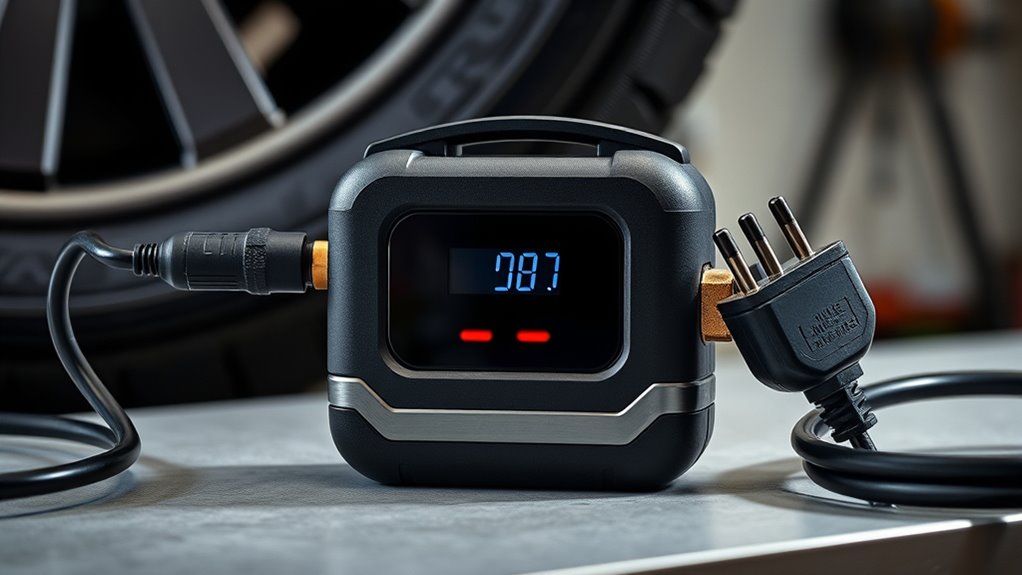
A dual-power tire inflator can run from two power sources, but the exact pairing varies by model. In this guide, “dual power” means a rechargeable battery plus a 12V vehicle connection. The battery gives you cordless convenience, while the 12V lead provides a backup when the battery is low. Features such as a digital gauge, preset pressure, and auto shut-off can make tire top-offs easier, but inflation speed, duty cycle, and vehicle compatibility matter more than a headline maximum-PSI number.
Key Takeaways
- Some dual-power inflators use a rechargeable battery plus 12V vehicle power; others use 12V DC plus household AC, so confirm the actual power sources before buying.
- Battery mode is best for cordless convenience, while 12V mode is useful as a backup for longer jobs or when the battery is low.
- Do not assume 12V mode is always faster; inflation speed depends on the compressor design, airflow, tire size, starting pressure, and power system.
- Preset pressure and auto shut-off are useful, but you should still verify final pressure with the vehicle’s recommended cold tire pressure.
- For most buyers, tire-size compatibility, published inflation time, duty cycle, hose and cord reach, and power requirements matter more than a 150-PSI marketing claim.
What Is a Dual-Power Tire Inflator?
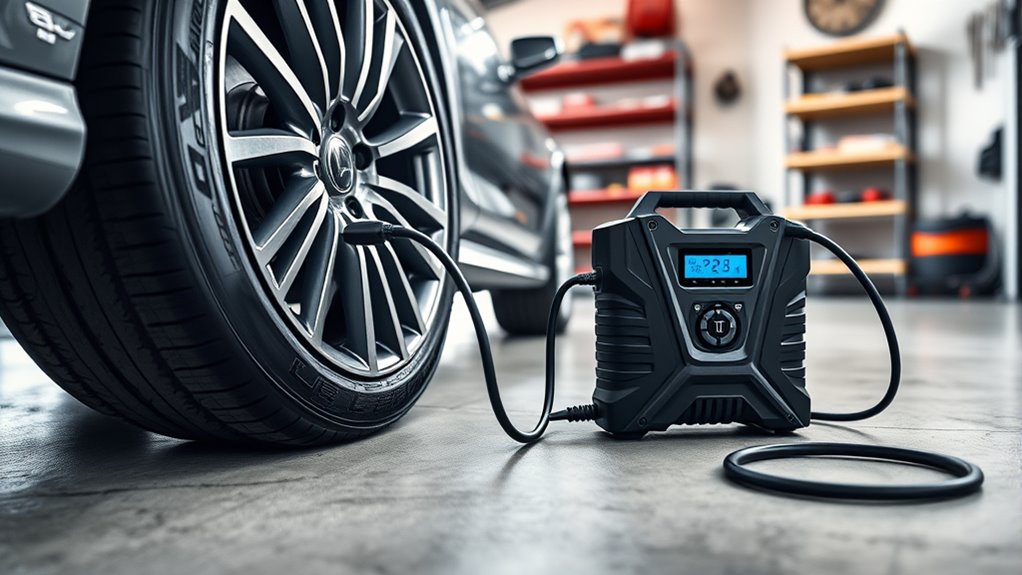
A dual-power tire inflator is a portable compressor that can operate from two power sources. In battery-plus-12V designs, the rechargeable battery lets you work without a cord, while the 12V vehicle connection gives you another way to power the compressor if the battery is depleted.
The term is not standardized. Some manufacturers use “dual power” for 12V DC plus household AC rather than battery plus 12V. Always check the product specification instead of assuming every dual-power model includes a rechargeable battery.
Many portable inflators also include a digital pressure gauge, selectable pressure units, preset pressure, and an auto shut-off feature. These features can reduce guesswork, but the exact pressure range, display units, accuracy, and supported tire sizes vary by model.
How Dual-Power Tire Inflators Work
The compressor motor draws electricity from the selected power source and drives a small pump that forces air through the hose and into the tire. On a battery-plus-12V model, you either install or activate the rechargeable battery or connect the 12V lead to the vehicle as directed by the manufacturer.
If the inflator has preset-pressure control, you enter the target pressure on the display before starting. The built-in pressure sensor monitors pressure while the compressor runs, and the unit stops when it reaches the set value.
Auto shut-off is a convenience feature, not a reason to ignore tire-pressure guidance. After inflation, compare the reading with the vehicle manufacturer’s recommended cold tire pressure. NHTSA advises using the pressure on the vehicle placard or in the owner’s manual rather than the maximum pressure molded on the tire sidewall.
NHTSA tire-pressure guidance also recommends checking pressure when the tires are cold for the most accurate reading.
Battery Vs 12V Power
Battery and 12V operation solve different problems. The battery removes the cord and makes the inflator easier to carry around the vehicle. The 12V connection is useful when the rechargeable pack is low or when you want to avoid relying on stored battery charge.
| Power mode | Main advantage | Main limitation | Best use |
|---|---|---|---|
| Rechargeable battery | Cordless portability | Runtime is limited by battery capacity and state of charge | Quick top-offs and roadside use |
| 12V vehicle power | Does not depend on the inflator’s battery charge | Requires a suitable 12V connection and enough cord reach | Backup power and longer inflation sessions within the unit’s duty cycle |
Do not assume the 12V mode will always inflate faster. Some products use the same compressor output in both modes, while others may perform differently depending on voltage, current limits, and internal design. A manufacturer’s published inflation-time test is more useful than a general battery-versus-12V claim.
How to Use a Dual-Power Inflator Safely
- Check the vehicle placard first. Find the recommended cold tire pressure on the driver-side door area or in the owner’s manual.
- Choose the correct power source. Use the battery or 12V connection exactly as the inflator manual describes. Check the required outlet voltage and current rating before plugging it in.
- Connect the hose securely. Attach the chuck or connector firmly to the valve stem so air does not leak during inflation.
- Set the target pressure. If the unit has a preset function, enter the vehicle manufacturer’s recommended pressure rather than the maximum PSI shown on the tire sidewall.
- Inflate and monitor the unit. Let the compressor stop automatically if it has auto shut-off, but stay nearby and watch for unusual heat, noise, or vibration.
- Respect the duty cycle. Portable compressors can become hot. Follow the manufacturer’s maximum run time and required cooldown period.
- Verify the final pressure. Recheck the tire after disconnecting the hose, especially if a little air escapes while removing the connector.
Some 12V inflators require the vehicle engine to be running during use, while others have different instructions. Follow the specific manual for your model so you do not overload an accessory outlet or unnecessarily drain the vehicle battery.
When a Dual-Power Inflator Is Worth It
A battery-plus-12V inflator is worth considering if you want cordless convenience without depending on battery power alone. It is especially useful for drivers who keep an inflator in the vehicle, use it for routine pressure checks, or want a backup power option on longer trips.
| Feature | Why It Matters |
|---|---|
| Two power sources | Gives you a second way to run the inflator |
| Digital pressure display | Makes it easier to set and monitor target pressure |
| Auto shut-off | Stops the compressor at the preset pressure on supported models |
| Published tire-size rating | Helps show whether the compressor is suitable for your vehicle |
A dual-power design is less important if you already own a reliable corded inflator and only use it at home. It also may not be enough for large truck or RV tires unless the manufacturer specifically rates the compressor for those tire sizes.
What to Check Before You Buy
Start by confirming what “dual power” actually means on the model you are considering. If you want battery-plus-12V operation, make sure the product includes or supports both a rechargeable battery pack and a 12V vehicle lead.
- Vehicle and tire compatibility: Check the manufacturer’s recommended tire size or vehicle class. A high maximum-PSI number does not automatically mean the compressor can move enough air for large tires.
- Inflation speed: Look for a published test that states the tire size, starting pressure, target pressure, and time. That is more useful than vague “fast inflation” wording.
- Duty cycle and cooldown: Check how long the compressor may run continuously and how long it must cool before the next session.
- 12V power requirements: Verify the required voltage, amperage, plug type, and fuse requirements against your vehicle’s outlet.
- Battery information: Capacity in Ah or Wh can help compare battery packs, but runtime also depends on motor load, tire size, temperature, and battery condition.
- Hose and cable reach: Make sure the hose and 12V cable can reach every tire on your vehicle without pulling on the connectors.
- Gauge and controls: A readable display, preset pressure, and auto shut-off are helpful. Common units include PSI, bar, and kPa, but the available units vary by model.
- Storage and accessories: A case, built-in cord storage, valve adapters, and a work light can make the inflator easier to keep in the vehicle.
Do not buy only on the basis of a “150 PSI” or “160 PSI” headline. For vehicle tires, airflow, heat management, compatibility, and real inflation time usually tell you more about practical performance.
Frequently Asked Questions
Which Dual Power Tire Inflator Is the Best?
There is no single best model for every driver. The right choice depends on your tire size, how often you use the inflator, whether you need battery-plus-12V or AC-plus-12V power, and how much continuous runtime you need.
Compare manufacturer-published inflation times, duty cycle, tire-size limits, hose and cable length, warranty, and power requirements. If you drive a truck or RV, choose a model specifically rated for those larger tires rather than relying on maximum PSI alone.
Does 2 Psi Make a Difference in Tire Pressure?
Yes, a 2 PSI difference can matter, especially when the tire is already below the vehicle manufacturer’s recommended cold pressure. The correct target is the pressure listed on the vehicle placard or in the owner’s manual.
Check pressure when the tires are cold, then adjust to the recommended value. Avoid using the maximum pressure molded on the tire sidewall as your normal target.
Can a Dual-Power Inflator Handle Truck or RV Tires?
Some can, but many compact models are intended for passenger cars, motorcycles, bicycles, and smaller SUV tires. A maximum pressure rating alone does not confirm that the inflator has enough airflow or duty cycle for large-volume truck or RV tires.
Check the manufacturer’s tire-size rating, airflow specification, continuous run time, and published fill-time examples before using a compact inflator on a larger vehicle.
Is 150 PSI Necessary for a Tire Inflator?
Not necessarily. Your inflator only needs enough pressure capacity for the tires and equipment you plan to inflate, and normal vehicle tire pressure should follow the vehicle placard.
For practical use, a realistic inflation-time test, adequate airflow, suitable duty cycle, and correct vehicle compatibility are often more important than choosing the highest maximum-PSI number.
Conclusion
A dual-power tire inflator is most useful when you want two ways to keep the compressor running. With a battery-plus-12V model, you get cordless convenience for quick jobs and a vehicle-powered backup when the battery is low.
Before buying, confirm the exact power-source combination, tire-size compatibility, inflation speed, duty cycle, cable reach, and 12V electrical requirements. Use the vehicle manufacturer’s recommended cold tire pressure, and treat maximum PSI as only one specification—not the main measure of real-world performance.