
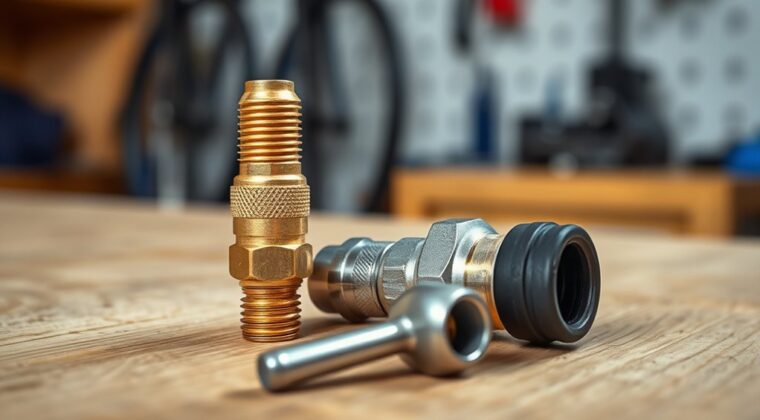
Presta and Schrader valves aren’t interchangeable, so you need the right tire inflator. Presta valves are narrower, use smaller rim holes, and need a pump head or adapter that seals onto the threaded stem; they’re common on high-pressure bike tires. Schrader valves are wider, like car valves, and work with most standard pumps and compressors. Presta gives finer pressure control, while Schrader is faster to attach. If you keep going, you’ll see how to match each valve exactly.
Key Takeaways
- Presta valves are narrower and need smaller rim holes, while Schrader valves are wider and fit standard openings.
- Presta valves often require a compatible pump head or adapter; Schrader valves work with most standard inflators.
- Presta valves handle higher tire pressures, making them common on performance bikes; Schrader valves suit lower-pressure applications.
- Presta inflation requires unscrewing the valve top first; Schrader inflation is direct with a spring-loaded valve pin.
- Both valve types need regular checks for leaks, dirt, and damage to prevent air loss and inflation problems.
Presta Vs Schrader: Key Differences
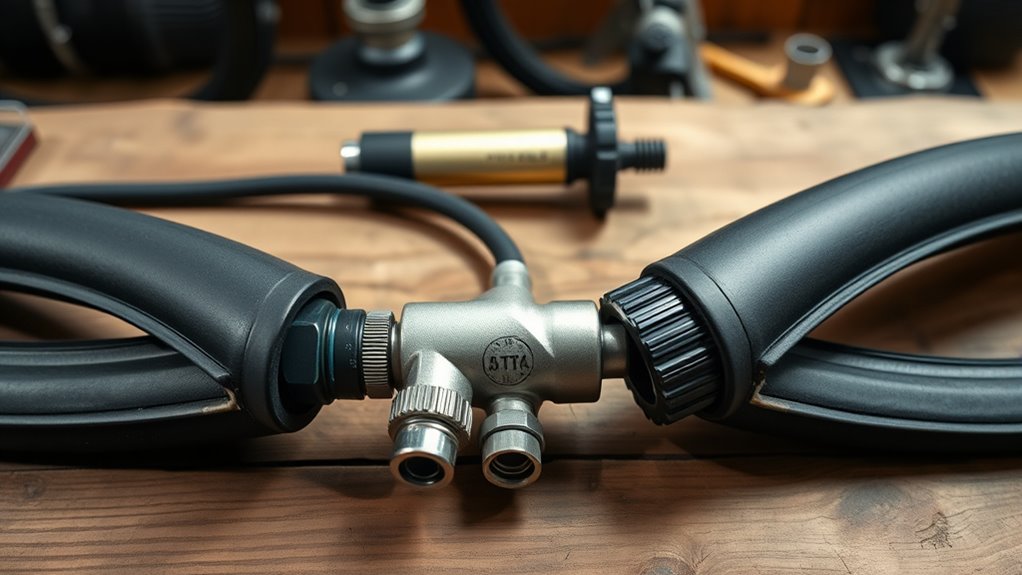
Presta and Schrader valves differ most in size, pressure handling, and compatibility. You’ll notice Presta valves are 6 mm wide and taller, while Schrader valves measure 8 mm and fit more common openings.
That slimmer Presta profile lets you use a smaller rim hole, which helps preserve structural integrity in a bike inner tube under high air pressure. Presta valves also support up to 125 psi, so you can run them on road and other high-performance bikes with better air retention.
Presta’s slimmer profile uses a smaller rim hole, preserving strength and handling higher pressure with better air retention.
Schrader valves work at lower pressures, around 2–3 bars, but they’re easier to inflate with a standard pump or at gas stations, giving you broader compatibility.
Presta’s removable core adds service flexibility, while Schrader’s simpler design trades that feature for universality.
If you want lightweight, efficient performance and tighter control over air pressure, Presta gives you more precision; if you want easy access, Schrader gives you reach.
How Presta Valves Work
To open a Presta valve, you unscrew the small nut at the top, which unseats the internal mechanism and lets air pass.
You then attach the pump and inflate through the narrow metal stem, which is built to handle high pressures with minimal rim intrusion.
When you tighten the nut again, you seal the valve for pressure retention, and the removable core lets you service it or add sealant when needed.
Opening the Presta Valve
When you open a Presta valve, you unscrew the small knurled nut at the top to let air flow in or out of the tire.
You then see the Presta valve’s valve core, a removable component that supports maintenance without replacing the whole assembly. Its tapered design reduces rim hole size, which helps preserve structural integrity in lightweight rims.
Because the valve is built for higher air pressures, it suits performance bikes that need precise control.
To operate it cleanly, use a compatible pump head and align it straight; an angled connection can bend the stem and weaken performance.
You’re not locked into waste or excess here—just a compact, efficient mechanism that gives you control, durability, and freedom with every precise adjustment.
Inflating With Presta
Inflating a Presta valve starts with loosening the small valve nut, which opens the passage so air can enter; that extra step makes it slower than a Schrader, but it also gives you tighter control.
You then attach your pump and inflate with steady strokes, watching air pressure closely because Presta valves handle higher pressures, often up to 125 psi.
Their narrow body needs a smaller rim hole, so you protect rim integrity while fitting road bikes and other performance wheels.
If your setup uses tubeless systems, the removable valve core lets you add tire sealant quickly.
The valve’s design matches the differences you need: light weight, precise control, and reliable sealing under load.
Once you disconnect the pump, retighten the valve nut to prepare for use.
Sealing and Pressure Retention
Because Presta valves use a locking mechanism, they create a tight seal that helps trap air and reduce leakage over time. You’ll notice that this sealing supports pressure retention, so your tire keeps stable air pressure after you use a tire inflator.
Unlike Schrader valves, Presta valves rely on the valve core and internal pressure to stay closed under load. Their removable valve core lets you service the system without sacrificing performance.
- You get higher performance because the valve handles up to 125 psi.
- Smaller rim holes preserve structural integrity in lightweight wheels.
- You maintain consistent inflation because tire pressure reinforces the seal.
For liberated riders, Presta valves offer precise control, efficient sealing, and reliable pressure retention in demanding conditions.
How Schrader Valves Work
A Schrader valve uses a spring-loaded pin at its center to regulate airflow: when you press the pin down, air can enter or leave the tire, and when you release it, the spring closes the valve again.
You work with Schrader valves by removing the cap and attaching the pump directly, so tire inflation stays fast and controlled. Because the valve body is wider and shorter than a Presta valve, it needs a larger hole in the rim, about 8 mm, and that geometry supports robust air flow.
You can also use gas station compressors, which gives you flexible access to inflation wherever you are. The threaded outer wall lets you secure a cap with easy attachment, and it helps prevent dirt from entering the valve core.
In practice, you don’t need to unscrew any internal parts; you simply connect, inflate, and release. That simplicity gives you direct control and practical freedom.
Which Valve Fits Your Bike?
Which valve fits your bike depends on your rim, riding style, and pressure needs. You should match valve compatibility to rim hole size before you buy a tire inflator or bike pump.
- Presta valves suit higher-end bikes, road setups, and narrow rims. Their smaller rim hole size preserves rim strength, and they handle higher air pressure for performance inner tubes.
- Schrader valves fit many budget bikes and commuter wheels. Their wider body needs a larger rim hole, and you can attach a bike pump directly without unscrewing the stem.
- If you want easier sealant service, choose a valve with a removable core; that advantage usually points to Presta valves.
You can’t swap Presta valves and Schrader valves freely without an adapter, because the rim and valve standards differ.
Which Valve Inflates Better?
Presta valves generally inflate better if your priority is higher pressure and secure air retention, while Schrader valves win on simplicity and speed. You get a more controlled inflation process with Presta valves, especially on high-performance bikes, because their valve design supports tire pressure up to about 125 psi and improves air retention. Schrader valves inflate faster: you attach the pump directly, but their typical 30–50 psi range limits performance.
| Valve type | Inflation profile |
|---|---|
| Presta valves | Higher pressure, tighter seal |
| Schrader valves | Faster, simpler access |
| Presta valves | Removable core helps tubeless setups |
| Schrader valves | Less adaptable, wider hole |
You also protect rim integrity with Presta valves, since their narrower stem needs a smaller rim hole. If you want liberation through precision, choose the valve that matches your pressure demands and maintenance goals.
How To Match A Pump To Presta Or Schrader
After choosing between Presta and Schrader for inflation performance, you need a pump that matches the valve cleanly and seals without leakage.
Start by checking the type of pump and its specs; most modern models are compatible with presta and Schrader valves, but you shouldn’t assume. Confirm the check valve or head setting before you attach the pump.
Check the pump type and specs first; don’t assume compatibility before attaching it to the valve.
- For Presta valves, unscrew the nut, then press the head onto the valve until it locks.
- For Schrader valves, pump onto the valve directly; the wider core seats more easily.
- If your pump is twin, use the correct port. If it’s swappable, reverse the internal parts; if adjustable, let it adapt automatically.
You want a firm seal so air into the tire, not out around the rim.
Test the connection by feeling for play and listening for hissing. Match valve types deliberately, and you’ll gain control without dependence on guesswork.
How To Inflate And Deflate Each Valve
To inflate a Presta valve, you first unscrew the valve nut to open the core, then fit the pump head securely and add air. Once you’ve reached the target pressure, screw the nut back down to close it.
You’ll use a specialized pump head or adapter more often with a Presta valve, especially in the cycling industry, where higher pressures matter. To deflate, unscrew the valve nut and let air escape in a controlled way.
With a Schrader valve, you remove the cap, press the pump head straight onto the stem, and inflate directly. Its spring-loaded pin makes attachment fast and works with most car tire inflators.
To deflate, you press the inner pin until the tire pressure drops to your target. Schrader setups usually suit lower pressures, so you should match your method to your load, riding style, and desired tire pressure without unnecessary force or wasted motion.
Common Valve Problems And Fixes
Even a well-set-up valve can cause trouble if it’s bent, dirty, loose, or worn, so you should inspect both Presta and Schrader systems regularly for leaks and mechanical damage.
With Presta valves, keep the pump straight; an angled connection can bend the stem and trigger air loss. If you lose the removable core, restore function by replacing the core or using a core removal tool during maintenance.
- Presta valves: check alignment, core tightness, and seal integrity before inflation.
- Schrader valves: if dirt blocks the spring pin, clean the valve gently; stubborn debris can cause leaks.
- Damaged hardware: when Schrader valves show shell damage or persistent air loss, replace the valve.
You’ll protect tire pressure and minimize valve problems by checking tightness and wear often.
That routine keeps your system efficient, reliable, and free from avoidable mechanical friction.
Frequently Asked Questions
What Are the Key Differences Between Schrader and Presta Valve Stems?
You’ll see key differences in valve types, size, and sealing mechanisms: Schrader stems are wider, spring-loaded, and common on car-style cycling equipment, while Presta stems are slimmer, threaded, and need you to unscrew the tip before inflation.
For tire maintenance, Presta handles higher inflation pressure and better air retention on narrow rims.
Valve compatibility affects your pump choice, valve materials, performance differences, and user preferences.
Can I Inflate a Presta Valve With a Schrader Pump?
Yes, you can, but you’ll need a Presta-to-Schrader adapter for proper Presta valve compatibility.
Schrader pump usage works best when you match the wider opening, so check valve adapter options before inflating bike tires. You’ll preserve Presta valve benefits while avoiding leaks, unlike standard Schrader valve features.
Follow tire pressure tips, practice valve maintenance advice, and compare cycling accessories comparison choices. These inflation techniques explored keep your setup efficient and autonomous.
How Do I Tell if My Presta Valve Has a Removable Core?
Look for a tiny knurled nut beneath the Presta head; if you see one, you’ve likely got a removable core. Use core removal tools to unscrew it gently and verify.
That check supports valve maintenance tips, inflation techniques, and DIY valve repairs while avoiding valve compatibility issues.
In any cycling accessories guide, compare valve types comparison, follow air pressure recommendations, and monitor common valve problems as tire maintenance essentials.
What Are the Disadvantages of Presta Valves?
You may find a Presta valve less convenient because it demands careful valve maintenance, narrower inflation tools, and stricter valve compatibility.
You’ll spend more time adjusting tire pressure, and careless handling can cause air leakage or bend the stem. You may need valve adapters for many pumps, which adds friction for racing bicycles and mountain bikes.
Still, your user preference should guide you toward the setup that maximizes autonomy and reliability.
Conclusion
In the presta-vs-Schraeder theater, you’d think the “better” valve would be the one with the fanciest pedigree. It isn’t. You need the one that matches your rim, pump, and patience. Presta gives you finer pressure control; Schrader gives you broader compatibility and easier inflation. So don’t chase status. Match the valve correctly, inflate it properly, and stop treating tire hardware like a moral identity test. The air, unsurprisingly, doesn’t care.