
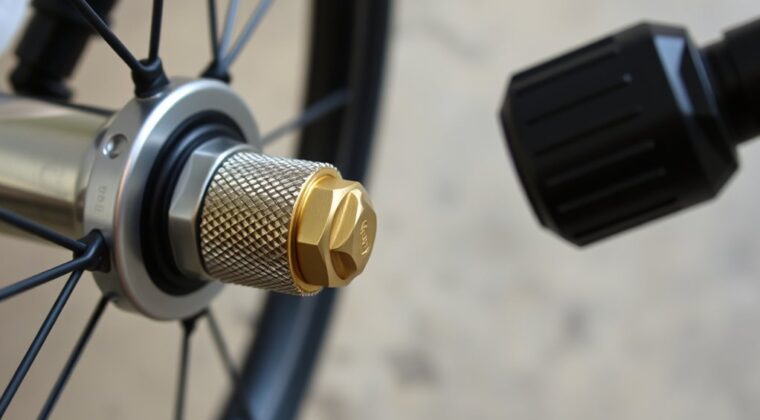
A Presta valve adapter screws onto your tube’s threaded Presta stem and turns it into a Schrader-sized connection, so you can use a standard tire inflator. Its rubber O-ring helps seal the joint and reduce air loss while you pump. Before attaching it, you’ll need to unscrew the Presta locknut. Brass adapters usually last longer than aluminum. With the right adapter, inflation is quick, simple, and far less frustrating, and there’s more to know.
Key Takeaways
- A Presta valve adapter screws onto a Presta valve and lets a Schrader-style tire inflator fit properly.
- It converts the narrow Presta opening to the wider Schrader standard for easier pumping.
- A built-in rubber O-ring helps create an airtight seal and reduce air loss during inflation.
- You must unscrew the Presta valve’s lock nut before attaching the adapter and inflator.
- Brass adapters are usually more durable, and lightweight models are best for portable repair kits.
What a Presta Valve Adapter Does
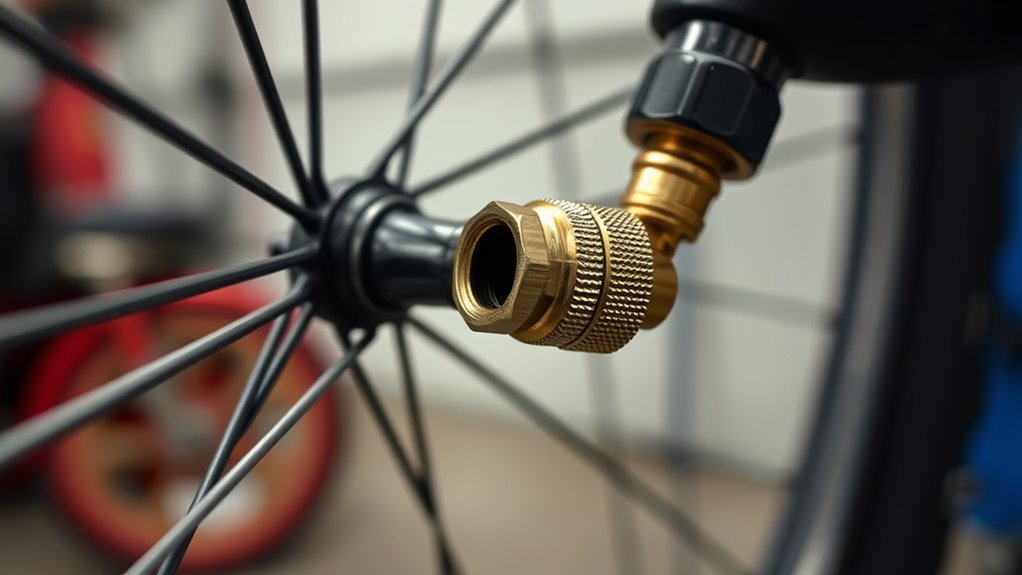
A Presta valve adapter screws onto a threaded Presta valve and enlarges it to match the Schrader standard, so you can use a regular pump without fuss.
You get a simple bridge between valve types, and that means tire inflation stays practical when your gear and the pump don’t match. Presta valve adapters let you connect to a Schrader pump at home, at the roadside, or at a gas station, where standard fittings are common.
The adapter’s rubber O-ring helps maintain an airtight seal, so you don’t waste air while you inflate. Because it weighs under 10 grams, you can carry one easily and stay ready for emergency repairs.
A rubber O-ring ensures an airtight seal, while the adapter’s light weight makes it easy to carry anywhere.
For riders who want easy inflation and fewer delays, this small tool removes the frustration of mismatched equipment. It gives you control, saves time, and keeps your ride moving without unnecessary dependence on specialized pumps or awkward workarounds.
How a Presta Valve Adapter Works
You screw the Presta adapter onto the threaded valve stem, and it converts the smaller Presta opening to the wider Schrader fit your pump can engage.
The built-in O-ring creates an airtight seal, so you don’t lose pressure during inflation.
Once it’s on, you connect your pump and inflate just as you’d a Schrader valve.
Presta To Schrader Fit
When you screw a Presta valve adapter onto the threaded valve stem, it increases the valve’s diameter so a Schrader pump head can attach and inflate the tire.
This simple conversion lets you use standard gas station pumps, shop inflators, or home compressors without hunting for special gear.
A good Presta valve adapter uses durable materials like brass or lightweight alloy, so it holds up to repeated tire maintenance and resists corrosion.
The adapter’s fit reduces inflation issues for commuters, e-bike users, and anyone riding far from bike shops.
You get a practical bridge between valve standards, so you can keep rolling with fewer delays.
Choose a quality adapter, keep it with your repair kit, and stay ready for flats wherever the road takes you.
Airtight Seal Basics
The adapter’s real job is sealing as much as fitting: it screws onto the threaded Presta stem, enlarges the connection to Schrader size, and the rubber O-ring keeps air from escaping during inflation. You get an airtight seal, so your tire pressure rises without wasting pump strokes or letting air leaks steal performance.
| Part | Function |
|---|---|
| Presta valve | Narrow threaded stem |
| adapter | Expands pump compatibility |
| rubber O-ring | Blocks leakage |
| seal | Holds pressure |
| Tire pressure | Stays stable |
Check the O-ring for wear, because a damaged ring breaks the seal fast. Most adapters stay light, so you can carry one without burden. Used well, this small tool gives you control and keeps your ride free.
Adapter Use Steps
Start by loosening the Presta valve lock nut so the adapter can seat properly on the stem, then briefly depress the valve core to bleed off any trapped air. You’re now ready to use Presta valves with standard air pumps.
- Screw the adapter onto the valve until the O-ring seats firmly.
- Confirm the adapter allows an airtight seal, then connect your inflator.
- Inflate in controlled bursts, watching pressure and checking for leaks.
- Remove the adapter carefully, then re-secure the lock nut.
Keep the adapter clean and inspect the O-ring for wear; a damaged seal can waste air and limit performance.
With this simple process, you gain free, practical control over your tire setup and can inflate without fighting incompatible hardware.
How Presta and Schrader Valves Differ
Presta valves are slim and high-pressure, while Schrader valves are wider and built for broader, lower-to-medium-pressure use.
You’ll often find Presta on performance bikes, e-bikes, and many mountain bikes, and Schrader on cars and standard bikes.
Your pump setup matters too: Presta needs a matching head or adapter, but Schrader works with most standard inflators.
Valve Shape Differences
Although both valve types serve the same purpose, Presta and Schrader valves are built very differently: Presta valves are slim, use a small locknut that you unscrew before inflation, and are common on high-pressure road and mountain bikes.
On the other hand, Schrader valves are wider, use a spring-loaded pin, and resemble the valves you’ll find on cars and standard bicycles. You’ll notice the narrower body of Presta valves lets your wheel keep a smaller rim hole, while Schrader valves need more space.
If your tire pumps don’t match, a valve cap won’t help; you’ll need the right pump heads or a brass adapter.
- Check the valve shape first.
- Unscrew the Presta locknut.
- Match your pump heads.
- Use a brass adapter only when needed.
Pressure And Use
When you compare pressure and everyday use, the difference is clear: Presta valves are built for high-pressure tires, often above 100 PSI, while Schrader valves suit lower to medium pressures common on cars and standard bikes.
| Valve | Use |
|---|---|
| Presta valve | Performance tires, narrow rims |
| Schrader | Cars, commuter bikes |
| Tool | tire inflator, pressure gauge, air compressor |
| Fix | adapter for a standard pump head |
You’ll usually unscrew the Presta locknut before inflation, then let the tire inflator seat on the valve. Schrader gives you faster access with a common pump head. Because 45% of city riders hit mismatch problems, a small adapter can free you from wasted stops and keep pressure control precise.
Pump Compatibility Basics
Pump fit starts with the valve itself: Presta valves are narrow, high-pressure designs for performance bikes, while Schrader valves are wider and use a spring-loaded pin like a car tire. In pump compatibility basics, you’ll see why your setup matters.
- Presta valves need you to unscrew the locknut before you inflate.
- Schrader valves usually accept standard heads, even gas-station pumps.
- If your pump won’t seal on Presta, an adapter can make adapter work fast and reliable.
- As e-bikes grow, these cycling accessories help you move freely between inflation points.
You get higher-pressure control with Presta valves, but Schrader valves offer broader convenience.
Pick the right interface, and you keep your ride self-sufficient.
How to Attach a Presta Valve Adapter
Before you attach the Presta valve adapter, unscrew the valve’s lock nut and briefly depress the valve core to release a small amount of air, which helps clear debris and improves the fit. Then align the Presta valve adapter with the stem and screw securely by hand. You should feel the rubber O-ring compress as it forms an airtight seal. If the fit feels rough, stop and realign before you inflate tire.
| Step | Action | Result |
|---|---|---|
| 1 | Unscrew lock nut | Free valve opening |
| 2 | Depress valve core | Clear debris |
| 3 | Screw adapter on | Secure connection |
| 4 | Check O-ring | Airtight seal |
After inflation, remove the adapter carefully to protect both parts. Keep the valve core clean, and inspect and clean O-ring regularly so the adapter stays ready for your next ride.
When You Need a Presta Valve Adapter
You need a Presta valve adapter whenever you want to inflate a Presta tire with a Schrader pump or standard air source. It lets you move between valve systems fast, so you can inflate a tire without hunting for specialty gear.
Use it when:
- You’re dealing with a flat tire and only common air is available.
- You’re at a gas station, shop, or roadside stop with a Schrader pump.
- You ride high-performance bikes, e-bikes, or e-scooters with valve mismatch risk.
- You want fewer inflation issues and a reliable backup for urban riding.
The Presta valve adapter’s rubber O-ring helps create an airtight seal, which cuts air leaks during inflation. That seal matters when you need fast, controlled pressure and no wasted effort.
The Presta valve adapter’s rubber O-ring creates an airtight seal, reducing leaks for fast, controlled inflation.
In practice, the adapter reduces valve-related inflation issues to under 10%, giving you a simple, practical way to stay rolling and self-sufficient.
Brass vs. Aluminum Presta Adapters
Brass Presta adapters are the better choice if you want durability, corrosion resistance, and a more dependable seal over time. You’ll get stronger threading, steadier performance, and a tighter airtight seal, especially if you inflate often or ride in wet conditions.
Brass adapters usually include a rubber O-ring, which helps keep air where it belongs. Aluminum adapters are lighter, often under 10 grams, and they’re cheaper, but their softer threads can wear faster and reduce reliability.
Both options convert Presta valves to Schrader compatibility, so the real tradeoff is weight and cost versus durability and long-term function. If you ride regularly and need gear that won’t ask you to compromise, brass gives you better control and fewer replacements.
Aluminum works for occasional use, but brass adapters better match demanding riders who want solid performance without friction, leaks, or avoidable downtime.
Common Presta Valve Adapter Problems
Even a well-made Presta valve adapter can run into a few common issues during use. When you connect your tire inflator, watch for air leakage from worn O-rings; a bad seal wastes pressure and slows inflation.
- Compatibility issues: Some adapters don’t grip every Presta valve stem securely, so check for wobble before you pump.
- Improper attachment: If you don’t unscrew the lock nut first, the adapter can’t open the valve core correctly, and inflation won’t start.
- Thread damage: Softer metal threads, especially on cheaper aluminum units, can strip under repeated use and become unusable.
- Extra mass: Most are lightweight models, but heavier versions add bulk to your kit if you care about freedom and speed.
You can avoid most problems by handling the adapter carefully, sealing it firmly, and inspecting wear before each ride.
How to Choose the Right Presta Adapter
When choosing a Presta valve adapter, focus first on material quality: brass models usually outlast lightweight alloys, which can strip with repeated use. You want durable materials because your inflation setup should work every time, not fail when you’re far from help.
Check for a rubber O-ring to keep an airtight seal; without it, you’ll lose pressure and waste effort. Pick standardized adapters that fit most Presta valves, but skip bargain copies that cut corners on machining.
Look for a rubber O-ring and standardized fit to prevent leaks and keep inflation efficient.
The weight of the adapter matters too: quality units often stay under 10 grams, so you can carry one without adding bulk. For reliability, choose trusted brands such as Wyatt Bikes, Serfas, or MSW.
A well-made Presta valve adapter gives you freedom from leaks, frustration, and unnecessary roadside delays, letting you inflate fast and ride on with confidence.
Frequently Asked Questions
How Does a Presta Valve Adapter Work?
You screw the adapter onto your Presta valve, and it widens the stem so you can use a Schrader pump.
That’s Presta valve mechanics in action, giving you Adapter compatibility with gas station inflators and other tools.
The O-ring seals air, so your Inflation techniques stay efficient and your Air pressure builds cleanly.
Check the adapter for wear during Valve maintenance to protect Tire safety and keep you moving freely.
How to Use a Presta Pump Adapter?
Unscrew the Presta lock nut, tap the core to bleed pressure, then thread on the adapter.
Think of it as a bridge between presta valve types and your pump.
Check pump compatibility issues, seat the O-ring, and inflate with steady pressure.
Avoid common mistakes like over-tightening or skipping cleaning.
For tire inflation tips and maintenance advice, inspect the seal regularly.
Compare purchasing options to keep your setup free and reliable.
How to Inflate a Presta Valve With an Air Compressor?
You can inflate a Presta valve with an air compressor by using a Presta-to-Schrader adapter, then locking the nozzle on and filling to pressure.
Know your presta valve basics and tire inflator types so you avoid common issues like leaks.
Check the adapter benefits, keep the O-ring sealed, and follow safe inflation techniques.
For maintenance tips, remove the adapter after inflation and retighten the valve core and lock nut.
How to Fill Bike Tire With Presta Valve Adapter?
You fill a bike tire with a Presta valve adapter by loosening the Presta valve lock nut, briefly opening the core, then threading the adapter on snugly.
Check valve compatibility, attach your inflator type, and watch the pressure gauge as you inflate to the target PSI.
Remove the adapter, close the valve, and retighten the nut.
This tire maintenance step keeps your ride efficient; follow cycling tips and stay ready.
Conclusion
In the end, a Presta valve adapter just makes your inflator fit where it otherwise wouldn’t, and that small coincidence can save you time on the roadside or in the garage. You thread it on, connect the pump, and inflate with confidence. If you choose the right adapter, check for leaks, and keep it clean, you’ll avoid most problems. Simple tools often solve the most annoying tasks, and this one does exactly that.
