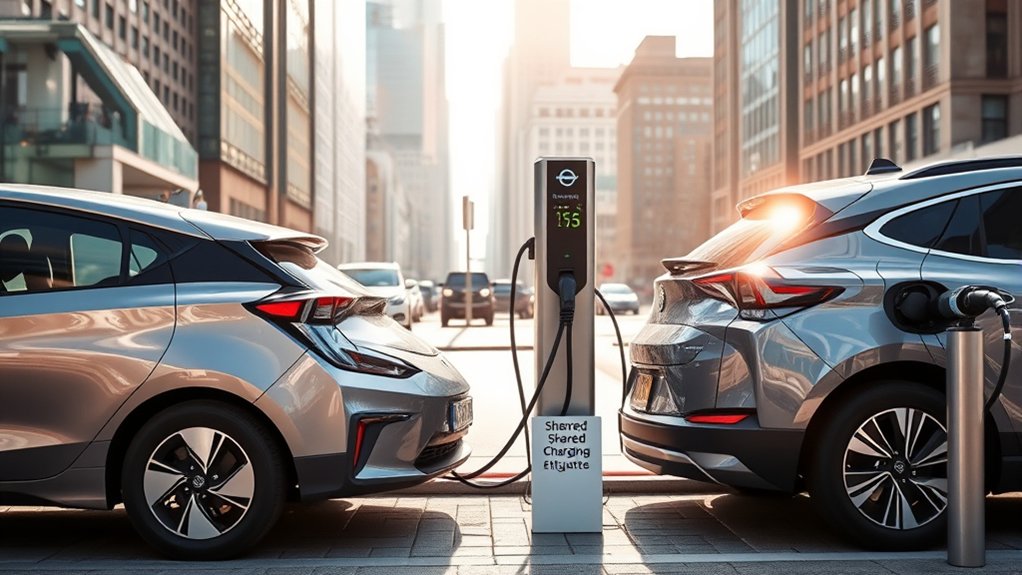
Good EV charging etiquette keeps public chargers moving, reduces wait times, and helps every driver get the range they need. Before you plug in, check your battery level, connector type, payment method, and nearby charger options. While charging, monitor your session, respect the queue, and move your vehicle as soon as you have enough range or charging is complete.
Quick Answer
The best EV charging etiquette is simple: use the right charger, park only while actively charging, monitor your session, unplug when you have enough range, and move your car promptly. At busy DC fast chargers, stopping around 80% is often courteous if others are waiting and you can safely reach your next stop.
Key Takeaways
- Public charging spots are for active charging, not regular parking.
- Check your connector, app access, payment method, and station status before you arrive.
- Monitor your charge level and return before the session finishes to avoid blocking others.
- At busy DC fast chargers, unplug around 80% when you have enough range and other drivers are waiting.
- Never unplug another vehicle unless posted rules allow it or the driver clearly left permission.
At a Glance
| Time Required | 1–3 minutes to check the app, plug in, and set alerts; charging time varies by charger and vehicle. |
| Difficulty | Easy, as long as you check connector type, payment, and station rules first. |
| Tools Needed | Vehicle app, charging network app or card, payment method, and the correct adapter if your EV needs one. |
| Cost | Varies by station, network, power level, location, and possible idle or parking fees. |
Assess Your EV’s Charging Needs Before You Arrive
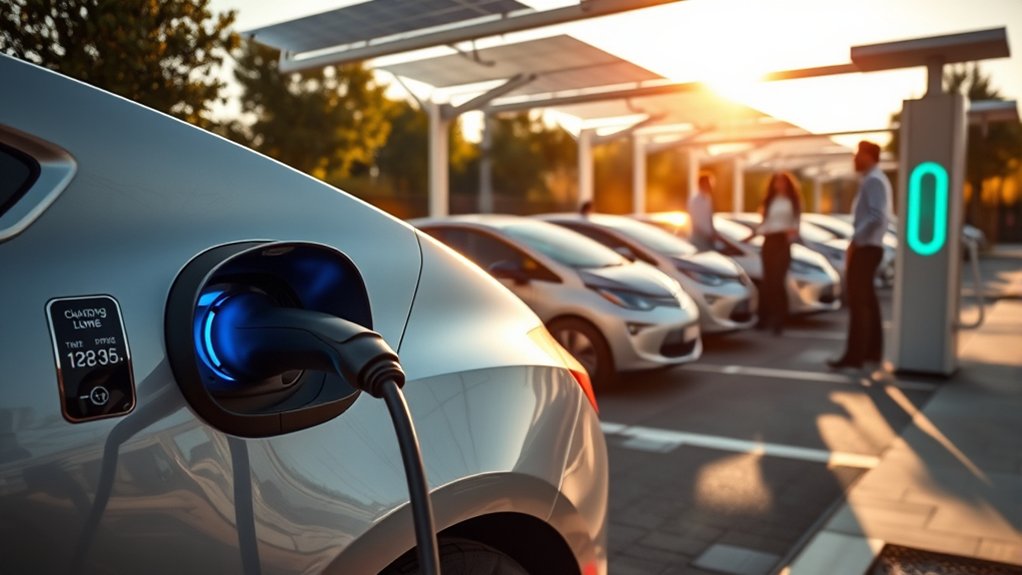
Before you pull into a public charger, decide how much range you actually need. A short top-up may be enough if you only need to reach home, work, or the next planned stop. A full charge may make sense before a remote drive, but it is rarely necessary at a busy fast charger.
The U.S. Department of Energy’s Alternative Fuels Data Center notes that many EV owners do most of their charging at home, while public and workplace chargers supplement residential charging. Use that same mindset when possible: charge at home or work first, and save high-demand public stations for travel, errands, or situations where you truly need them.
- Check your battery percentage before you leave.
- Know the range you need to reach your next reliable charger.
- Use public DC fast charging for road trips and urgent top-ups, not long parking sessions.
- Choose Level 2 charging when you will be parked for a longer stay, such as at a hotel, workplace, or shopping center.
- Have a backup charger in mind in case the first station is full, blocked, or out of service.
Note: The 80% rule is not a law and not the right limit for every EV or every trip. It is a practical courtesy at busy DC fast chargers because many EVs charge more slowly at higher battery levels. Follow your owner’s manual when battery-care guidance differs.
Know Your Connector, Charging Speed, and Payment Method
You cannot use every public charging station just because you drive an EV. You need the right connector, enough charging speed for your plan, and a way to start and pay for the session. The AFDC charging-stations guide explains that charging time depends on several factors, including state of charge, battery capacity, vehicle charging limits, charger output, and electrical service.
| Charging Option | Best Use | Etiquette Tip |
|---|---|---|
| Level 1 | Slow charging from a standard outlet, usually at home or private locations. | Do not rely on shared public outlets unless the property clearly allows EV charging. |
| Level 2 | Workplaces, hotels, apartments, parking garages, and longer stops. | Move when finished, especially if signs show a time limit. |
| DC Fast Charging | Road trips, quick top-ups, and high-turnover public charging. | Leave once you have enough range, especially near 80% when others are waiting. |
Connector type matters too. Common public charging connector systems include J1772 for many Level 1 and Level 2 stations, and CCS, CHAdeMO, or J3400/NACS for DC fast charging. Some vehicles need an adapter, and some stations require a network account, app, RFID card, credit card, or Plug & Charge setup.
Pro Tip: Before a road trip, open each charging app you plan to use, confirm your payment method, and test your login. Doing this in your driveway is easier than doing it at a crowded charger with 8% battery left.
Monitor Your Charge Level During Charging
Once you plug in, keep an eye on the charging session. Most EVs show charging progress on the dashboard, the vehicle app, the charging network app, and sometimes the charger screen. Use those tools so you do not accidentally block the stall after your session is done.
Check Charging Progress Regularly
Charging is not a “plug in and disappear for hours” task at a busy public station. Check your session as it runs, especially if you are using a DC fast charger. Return before the session finishes, unplug safely, and move your vehicle to a regular parking space if you still need to shop, eat, or rest.
| Action | Why It Matters | Reminder |
|---|---|---|
| Check charging status | Keeps you aware of progress and problems. | Watch both the vehicle and charger app. |
| Set a return alert | Helps you avoid idle fees and blocking others. | Set one alert before your target percentage. |
| Move when done | Frees the charger for the next driver. | A charging stall is not a regular parking spot. |
Use Smartphone Apps Efficiently
Charging apps can show availability, charging speed, session cost, plug type, charger status, and user feedback. Some apps also send notifications when your vehicle reaches a target percentage or when charging stops. These alerts are useful, but they do not replace your responsibility to return on time.
- Set a target-charge alert before you walk away.
- Check whether the charger is still delivering power.
- Watch for station errors, session stops, or slow charging.
- Review any posted idle fee or time-limit warnings.
- Report broken chargers in the app when the network allows it.
Unplug and Go: How to Wrap Up Charging
When your EV reaches the level you need, end the session, return the connector neatly, and move your vehicle. This is the core of public EV charging etiquette. Even if the station does not charge an idle fee, leaving a finished vehicle plugged in blocks the next driver.