
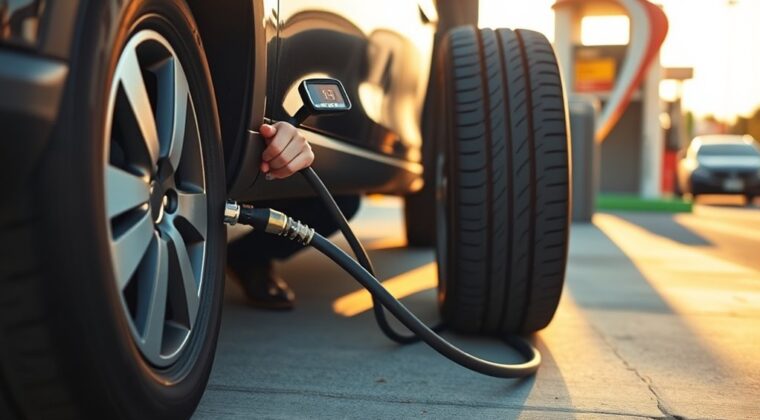
Before your road trip, check each tire with a gauge while the tires are cold, then compare the readings to the PSI listed on the driver’s door jamb sticker. If a tire is low, add air in small bursts with a station hose or portable pump, and recheck it after each adjustment. Don’t forget the spare tire, since it should be ready too. A few simple steps now can help you drive safer and go farther.
Key Takeaways
- Check the driver’s door jamb sticker for the correct PSI, or consult the owner’s manual if it’s missing.
- Measure tire pressure when the tires are cold for accurate readings before adding air.
- Use a reliable gauge and inflate each tire in small increments to the recommended PSI.
- Recheck pressure after inflating to confirm accuracy and avoid overinflation.
- Don’t forget the spare tire, and use a portable compressor if you need air on the go.
Check Tire Pressure Before a Road Trip
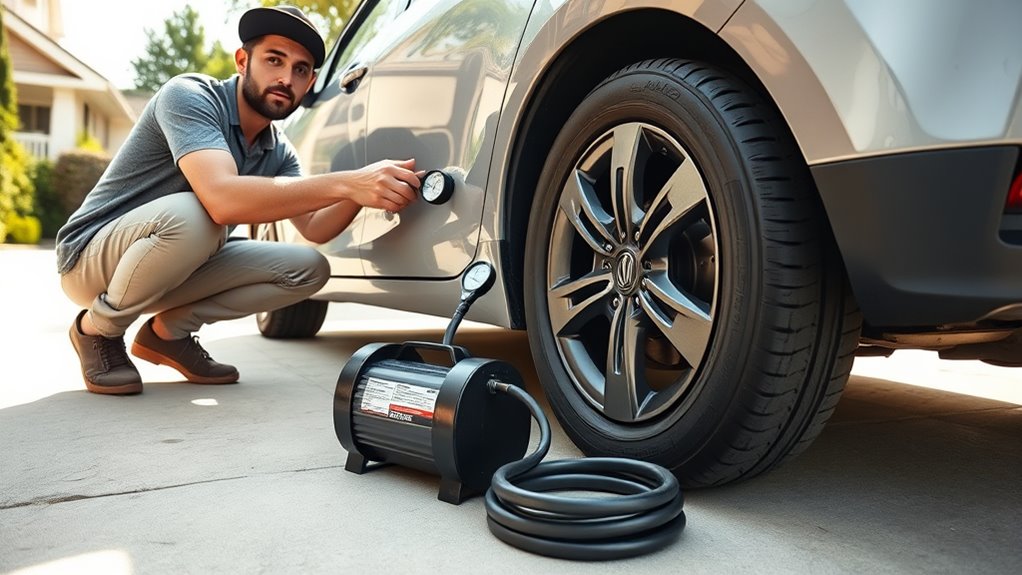
Before you head out on a road trip, check each tire’s pressure with a reliable gauge when the tires are cold, ideally before driving or after the vehicle has rested for 2–3 hours.
Use a tire pressure gauge to check tire pressure at least once a month and before long trips, since tires lose air over time and with temperature drops.
Compare each reading with the manufacturer’s recommended PSI listed on the driver’s door jamb or in your manual. If a tire reads low, add portable air in short bursts, then recheck so you don’t overinflate.
Keep your tires properly inflated to support safer handling, better efficiency, and fewer roadside problems.
Don’t skip the spare tire; it can lose air too, and you’ll want it ready if trouble hits.
A quick inspection puts you in control and helps you travel with more freedom.
Find the Correct PSI for Your Tires
Check the sticker inside your driver’s side door jamb first, since it usually lists the manufacturer’s recommended PSI for your tires.
If you can’t find it there, use your owner’s manual to confirm the correct pressure.
Inflate to that PSI when the tires are cold so you get an accurate reading.
Check Door Jamb Sticker
Your vehicle’s correct tire pressure is usually listed on the sticker inside the driver’s door jamb or fuel filler flap, and it shows the recommended PSI for the front and rear tires.
Before tire inflation, check the door jamb sticker so you follow the manufacturers recommended PSI for your exact make and model. This number tells you the PSI recommended for safe, efficient driving, while the tire sidewall only shows the maximum pressure.
When you check the tire pressure against this label, you protect your tires from underinflation and overinflation. That simple check supports even tread wear, steadier handling, and better fuel economy.
Don’t guess or copy another vehicle’s setting; use the sticker as your guide. This quick step keeps you informed, prepared, and in control on the road.
Use Owner’s Manual
Once you’ve checked the door jamb sticker, grab your owner’s manual for the full tire-pressure specs. You’ll find the recommended PSI for your tires, and often for the spare too.
The manual may list different tire pressure targets based on load, speed, or driving conditions, so don’t guess. Use owner’s manual guidance to compare each reading with the manufacturer’s numbers before you leave.
Then use a gauge to check every tire and adjust as needed. This step supports better fuel efficiency, steadier handling, and safer road-trip performance.
If the manual notes special sizes or a temporary spare, follow those instructions exactly. You can also confirm details during tire service, but your manual stays the most direct source.
Always check your tire pressure before departure.
Check Tire Pressure When Tires Are Cold
Before you set out, measure tire pressure when the tires are cold—ideally before driving or at least 2 to 3 hours after use—because heat from driving expands the air inside and can skew the reading.
Use the sticker inside the driver’s door jamb as your reference for the correct PSI, then check tire pressure with a gauge before any adjustment. Cold checks are more reliable in cold weather, when ambient changes can shift readings by 1 to 2 psi, and tires also lose about 1.45 psi each month.
That’s why you should check tire pressure regularly, not just before a trip. If you use portable air pumps, a cold reading helps you make a precise, informed adjustment and avoid guessing.
When you start with an accurate, cold measurement, you protect handling, reduce blowout risk, improve fuel efficiency, and keep your prep simple. It’s a small act of control that brings real peace of mind.
Inflate Tires to the Right PSI
Inflate the tires to the manufacturer’s recommended PSI, which you’ll find on the driver’s door jamb sticker or in the owner’s manual, because that pressure gives you the best balance of safety, traction, and tire life.
Use a reliable tire pressure gauge, add air in small steps, and recheck often so you don’t overshoot the target. Because tire pressure drops about 1.45 psi each month, you should inspect it monthly and before every road trip.
Cold tires give you the most accurate reading; heat from driving can raise pressure 1-2 psi and distort your result. Keep each tire within the specified range: too little pressure wastes fuel and wears the tread, while too much reduces grip and can damage the tire.
When you finish inflating, measure again to confirm every tire is right where it should be. That simple routine keeps your ride steady, efficient, and ready for the road trip ahead.
Check the Spare Tire PSI
Don’t forget the spare tire when you check pressures, since it can lose air naturally over time, too. To keep your vehicle reliable, check the spare tire psi at least once or twice a year, and always check it during monthly tire pressure checks. Use a pressure gauge, not guesswork, and compare the reading with the PSI listed on the driver’s door jamb sticker or in your user manual.
| Check point | What to do |
|---|---|
| Spare condition | Inspect it monthly |
| PSI target | Read the label |
| Pressure loss | Expect about 1.45 psi monthly |
| Safety risk | Avoid underinflation |
| Readiness | Keep it road-ready |
A low spare can fail when you need it most, and that can mean a blowout in a stressful moment. Even if you’ve just fitted new tires, don’t skip the spare. A quick check gives you freedom and confidence before the road opens up.
Inflate Tires With a Portable Pump
A portable tire inflation compressor lets you top off tires anywhere by plugging into your vehicle’s power socket, so you don’t have to hunt for a gas station. You can use portable air pumps reliable enough for routine maintenance and emergencies, especially before road trips.
First, connect the hose to the valve stem, then check the built-in gauge and add air in short bursts until you reach the manufacturer-recommended PSI. Don’t overinflate; accuracy matters for handling, wear, and safety.
Many portable tire compressors are lightweight, so you can keep one in your trunk without giving up space. LED lighting helps you work at night or in dim areas, which gives you more control when conditions aren’t ideal.
Regularly using a portable air pump helps you maintain proper pressure, improve fuel efficiency, and extend tire life by preventing underinflation.
Frequently Asked Questions
What Is the 4 PSI Rule on Tires?
The 4 PSI rule means your tire pressure can shift about 1–2 psi for every 10°F change, so a 40°F swing may change it 4 psi.
You should check pressure gauges during tire maintenance, especially with seasonal changes, to protect vehicle performance and road trip safety.
Use proper inflation techniques to stay near the maker’s range, because 4 psi too low or high can hurt grip, efficiency, and handling.
What Is the 5 PSI Rule?
It’s a tiny rule with a giant payoff: you add 5 PSI above the manufacturer’s recommended tire pressure when you carry extra weight.
You check pressure gauges, use smart inflation techniques, and follow safety tips to keep handling stable and fuel use efficient.
Avoid common mistakes like overinflating.
Then add it to your maintenance checklist, and reset tire pressure after the trip so you don’t trade freedom for wear.
What Is the 3 Tire Rule?
The 3 tire rule means you check all four tires and the spare whenever you inflate one tire.
You use tire pressure gauges, follow tire maintenance tips, and apply proper tire inflation techniques to match the manufacturer’s PSI.
Check tires cold during seasonal tire checks, watch tire wear indicators, and keep your emergency tire kits ready.
This habit boosts safety, improves efficiency, and helps you stay free on the road.
What Is the Recommended Tire Pressure for a Road Trip?
You should use the PSI listed on your vehicle’s driver-door jamb sticker or owner’s manual; that’s your road-ready standard.
Before you roll, check tire pressure when the tires are cold, then adjust with inflation tools.
Don’t follow the tire sidewall max unless your manufacturer says so.
Proper tire maintenance boosts road safety, protects fuel efficiency, and supports trip preparation, so you can drive free, steady, and unburdened.
Conclusion
Before you hit the road, give your tires the attention they deserve. A quick pressure check, a cold reading, and the right PSI can keep your trip running smoothly, like a well-tuned engine humming beneath the hood. Don’t forget the spare or your portable pump. These small steps can steer you away from trouble and toward safer miles ahead. When your tires are ready, you’re not just driving—you’re setting the stage for a better journey.