
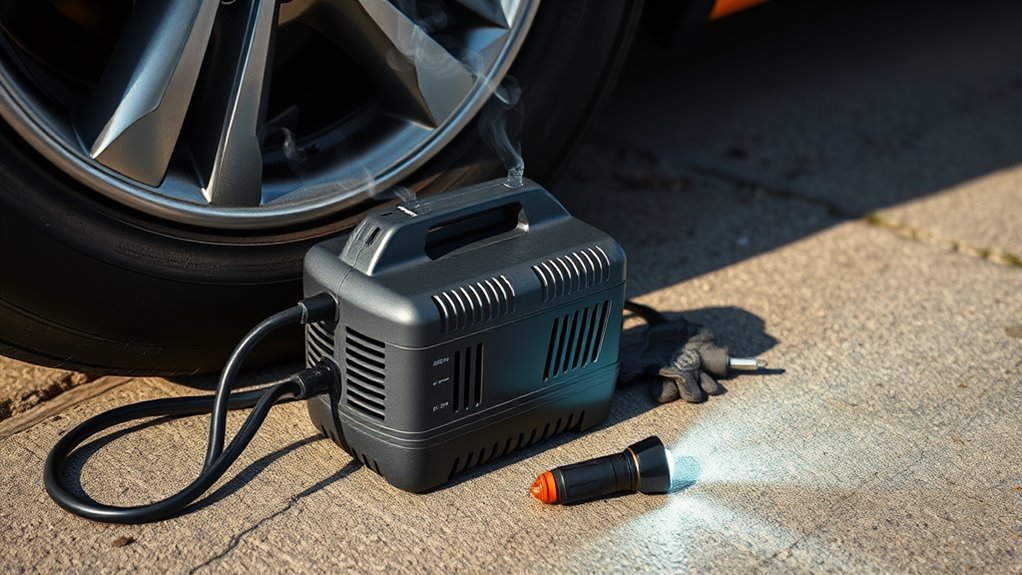
If your tire inflator smells like burning, stop using it right away. You’re likely seeing overheating from long runtime, clogged vents, poor ventilation, a worn chuck O-ring, or an electrical fault. Let it cool for at least 30 minutes, then inspect the housing, cord, plug, outlet, and intake vents for heat damage or debris. Check for weak inflation or pitch changes, which can signal motor strain, and there’s more to diagnose below.
Key Takeaways
- A burning smell usually means overheating, so stop using the tire inflator immediately.
- Let the inflator cool for at least 30 minutes before inspecting it.
- Check intake vents for dust, debris, or blockage that can restrict airflow.
- Inspect the brass chuck, O-ring, hose, and power cord for wear, leaks, or damage.
- If the smell persists or smoke appears, seek professional repair or replace the unit.
Why Does Your Tire Inflator Smell Like Burning?
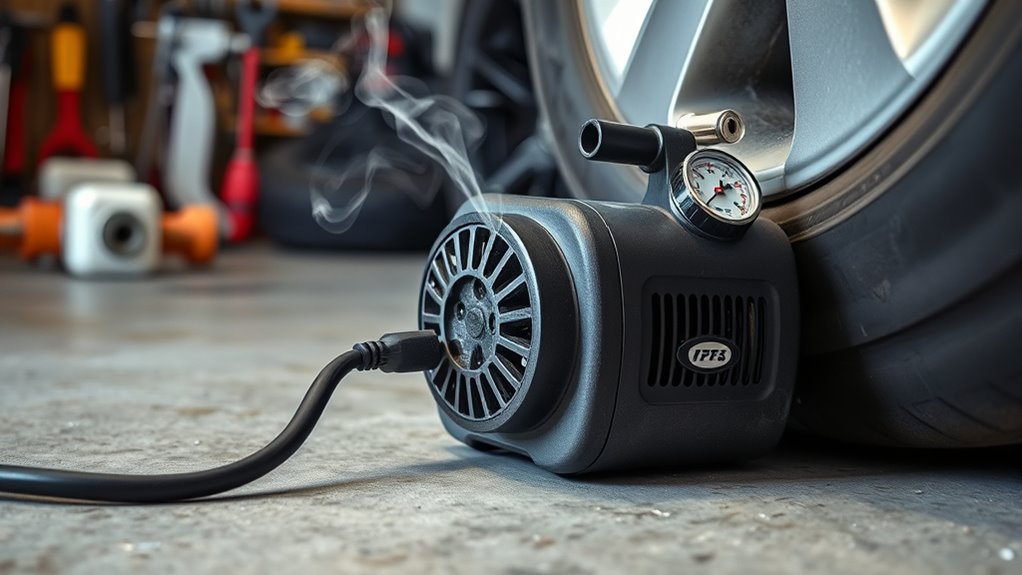
If your tire inflator smells like burning, it’s usually a sign that the unit is overheating. You should check the common causes first: prolonged continuous run time, clogged intake vents, and poor ventilation.
Most inflators need rest after 10–15 minutes, or the motor can build excessive heat and damage itself. Dust and abrasive particles can bypass filters and restrict airflow; that buildup accounts for many motor failures.
Inspect the brass inflation chuck, especially the O-ring. If it’s worn, damaged, or lubricated with the wrong product, friction and chemical breakdown can create a burning smell during operation.
Also, move the inflator away from external heat sources and use it in open air. You don’t need to accept avoidable failure; diagnose the source early, clean the unit, and restore safe, efficient performance.
When to Stop Using the Inflator
If you notice a burning smell, smoke, or an unusually hot housing, stop the inflator immediately.
Those warning signs usually indicate overheating, motor strain, or internal failure, and continued use can cause damage.
Let it cool completely, then inspect it before you run it again.
Warning Signs
A burning smell from your tire inflator is a stop-use warning, not a normal operating condition, and you should shut it off immediately to reduce the risk of overheating, motor failure, or fire.
If the burning smell persists after brief use, treat it as a fault signal: the motor may be straining, internal parts may be damaged, or lubricant may be breaking down. Don’t keep testing it.
Any smoke with the odor means the unit’s condition is critical and unsafe for continued operation. Train yourself to notice unusual smells during every inflation cycle; early detection helps you protect the tool, your vehicle, and your freedom from preventable failure.
If odor returns, the inflator needs inspection before you use it again.
Immediate Shutdown Steps
The moment you notice a burning smell, shut the inflator off immediately to prevent overheating, electrical damage, or fire. Don’t keep running it to “see if it clears”; that risks critical failure. Check the housing for smoke, hot spots, and a burning oil smell, then inspect intake vents for debris. Let the unit rest at least 30 minutes before any restart. If the odor returns, assume internal trouble and stop using it.
| Check | Action | Meaning |
|---|---|---|
| Smoke | Power off | Overheat event |
| Heat | Cool 30 min | Safe recovery |
| Debris | Clear vents | Reduce load |
| Odor stays | Seek help | Possible electrical problems |
If you still detect burning oil smell, follow the manufacturer’s guidance or get professional service.
Check for Dust and Overheating
Dust buildup in the inflator’s intake vents can restrict airflow, raise operating temperature, and trigger a burning smell, so inspect the vents first and clear them with compressed air.
This dust accumulation often causes overheating, especially when fine particles settle inside the motor path and reduce cooling efficiency. Keep the unit running in open air with plenty of clearance so heat can dissipate freely.
If you’ve been running the inflator for more than 10–15 minutes, stop and let it cool; continuous duty can push temperatures high enough to create hot, acrid odors.
Listen for changes in motor pitch while it runs. A strained or uneven sound usually signals thermal stress or internal friction, not smooth operation. Treat that shift as a diagnostic cue, not a nuisance.
Regular vent cleaning and disciplined run times help you keep control of the tool and prevent heat-driven failure.
Inspect the Cord, Plug, and Outlet
Start with the power path: inspect the cord for fraying, melting, or other visible damage, and check the plug for discoloration or burn marks that point to overheating or poor electrical contact.
When you inspect the cord, follow its full length and look for cuts, soft spots, or stiff sections that signal heat stress. Smell near the plug and housing; a burning plastic odor often means the connection has been running hot.
Next, test the outlet with another device to confirm it’s delivering stable power. If the second device fails, the problem isn’t the inflator.
Test the outlet with another device to confirm stable power; if it fails, the issue isn’t the inflator.
Also check for loose fit between the plug and outlet, since poor contact raises resistance and can create more heat. If you find any abnormality, stop using the unit immediately.
Don’t normalize damage or keep pushing through it. A qualified technician should evaluate the cord, plug, and outlet path before you restore service.
Check for Motor Strain
If the inflator runs for more than 10-15 minutes continuously, or if it’s working against excessive pressure, the motor can strain and produce a burning smell. You need to treat this as a diagnostic warning, not routine heat. Motor strain reduces output and can damage internal parts.
- Stop the unit and let it cool fully.
- Check the motor pitch; a rough whine, pulsing sound, or vibration signals overload.
- Improve airflow around the housing so heat can escape.
- Restart only under normal load and short duty cycles.
If the burning smell returns, the motor may be overheated or worn. Don’t keep pushing the tool; that only deepens the fault and steals reliability from your setup.
Inspect for any repeat noise or slow recovery after startup. If the problem persists despite cooling and ventilation, consult a qualified technician for a deeper internal check.
Look for Leaks in the Chuck and Hose
A unit that keeps running longer than expected often points to a leak in the chuck or hose rather than simple motor strain. Inspect the brass chuck for cracks, wear, and a tired O-ring; any defect can let air escape, force the motor to work harder, and trigger a burning odor. Check hose connections for looseness or damage. If the inflator runs past the expected fill time, treat that as a leak signal, not a nuisance.
| Check point | Diagnostic note |
|---|---|
| Brass chuck | Look for cracks or wear |
| O-ring | Replace if degraded |
| Hose connection | Tighten and inspect for damage |
| Inflation time | Longer runs suggest leaks |
Use low-pressure air to clear the chuck and hose, so debris doesn’t worsen sealing. If you find leaks, repair or replace the failed part and reclaim reliable, safe inflation.
Clean Vents and Restore Airflow
Clear the intake vents with compressed air to remove dust before it builds up and starts trapping heat. You need clean vents to keep airflow open and stop the motor from straining. If you ignore blockage, a burning smell can follow fast.
- Blow out the intake slots before each use, especially after dusty jobs.
- Inspect the vent openings for lint, grit, or packed debris.
- Check the cooling path and any heat exchangers for residue.
- Follow the manufacturer’s vent service interval to protect output.
When airflow drops, temperature rises and efficiency falls. Use short bursts of compressed air and keep the nozzle off the grill so you don’t drive debris deeper.
If the unit still runs hot after you clean vents, look for internal obstruction or damaged airflow parts. Restore ventilation early and you keep the inflator free, responsive, and less likely to broadcast a burning smell.
Battery Care for Cordless Tire Inflators
You should store the battery at 50-60% charge to preserve capacity and reduce long-term wear.
Keep it away from heat and excessive vibration, since both can accelerate damage and shorten runtime.
Inspect the contacts regularly for dust or debris, because clean terminals maintain stable connectivity and output.
Charge Storage Levels
To preserve battery capacity in a cordless tire inflator, store lithium-ion packs at roughly 50-60% charge instead of leaving them full or fully depleted. These charge storage levels reduce degradation and help you diagnose a unit that may smell like burning by separating battery stress from other faults.
- Keep packs near mid-charge before long storage.
- Avoid 0% and 100% states; both accelerate wear.
- Inspect terminals and leads for looseness or damage.
- Run the inflator periodically, then recharge per the manual.
You’ll extend service life and keep performance stable. If charge fades fast, treat it as a battery-health signal, not freedom to ignore maintenance.
Follow the manufacturer’s charging limits, and your inflator should stay ready, efficient, and less prone to failure.
Heat And Vibration
Heat and vibration are two of the fastest ways to shorten a cordless tire inflator’s battery life, so start by storing lithium-ion packs at about 50–60% charge and keeping them out of hot environments whenever possible.
During use, cap continuous runtime at 10–15 minutes to limit thermal rise and protect cell integrity. If your unit starts to Smells Like Burning, stop it immediately; that odor often signals excess friction and heat inside the motor or battery path.
Vibration also matters: repeated shock can micro-damage electrodes, cutting capacity over time. Keep battery terminals tight, seals intact, and the intake clear with low-pressure air so dust doesn’t drive temperatures higher.
You want a tool that runs clean, stays cool, and works free of avoidable stress.
Battery Inspection Routine
A battery that’s been stressed by heat or vibration needs a quick inspection before the next inflation cycle. You should perform battery inspection with a sharp eye: swelling, leaks, or warped casing signal failure, and persistent odors can confirm overheating.
- Check charge level; store lithium-ion packs at 50–60% to preserve capacity.
- Clean contacts with a dry cloth so voltage stays stable and heat doesn’t build.
- Keep the pack out of direct sunlight and hot vehicles; heat cuts lifespan fast.
- Follow the maker’s replacement interval, because worn cells can spike resistance and trigger thermal stress.
If you find damage, remove the battery from service immediately. Your inflator should work cleanly, safely, and without hidden drag.
Fix Overheating and Weak Inflation
If your inflator runs hot or seems weak, start by checking how long it’s been running and stop after 10–15 minutes to avoid overheating. Continuous use past that limit drives up motor temperature, reduces output, and can trigger burning smells.
Next, clear the intake vents with compressed air; fine dust restricts airflow and pushes the motor toward failure. Keep the unit in a well-ventilated area so heat can escape instead of building up around the housing.
Clear the intake vents with compressed air, and keep the inflator in a well-ventilated area to prevent heat buildup.
If inflation still feels weak, verify the pressure gauge correctly. Bleed the hose to atmospheric pressure before you read it, or you may overinflate and create excess heat. That extra load can make the system work harder than it should.
If burning smells persist, inspect the brass chuck O-rings for wear or damage. Leaks there waste pressure and force the inflator to run hotter. Replace bad seals, then retest.
Keep Your Tire Inflator Running Safely
Once your inflator is cooling properly, keep it safe by controlling wear points and storage conditions. You can prevent overheating, reduce burning smells, and keep the unit free from avoidable failure modes with a disciplined maintenance routine.
- Lubricate the brass chuck O-ring with silicone-based grease every 3 months. This cuts air leaks and preserves seal integrity.
- Limit continuous run time to 10–15 minutes. If the case gets hot, stop and let it cool before you push it harder.
- After dusty use, blow compressed air through the intake vents. Fine dust blocks airflow and drives motor wear.
- Store lithium-ion batteries at 50–60% charge, away from extreme temperatures and vibration. Before gauge checks, bleed the hose to atmospheric pressure so you don’t chase ghost readings.
This setup keeps your inflator accurate, durable, and ready for service.
Frequently Asked Questions
Why Does My Air Compressor Smell Like It’s Burning?
Your air compressor usually smells burning because it’s overheating, often from poor ventilation, dirty coolers, or running longer than its rated duty cycle.
You should also check compressor maintenance issues: degraded oil, clogged filters, a failing separator, or the wrong oil can all create heat and burnt odors.
If you ignore overheating issues, the machine can lose lubrication, seize, or damage internal parts fast.
Why Does My Tire Smell Like It’s Burning?
Your tire smells like it’s burning when heat, friction, or a brake fault cooks nearby rubber. Like a campfire turning sharp, that scent warns you fast.
Check tire maintenance first: underinflation, overloading, or misalignment can overheat the tread.
Common odor causes also include dragging brakes, hub failure, or a seized caliper.
Stop driving, inspect for damage, and get it checked before you lose freedom and control on the road.
Why Do I Smell Burning Rubber but Nothing Is Burning?
You smell burning rubber because heat, friction, or dust can mimic a fire without one.
Check tire maintenance and air pressure first: an underinflated tire or failing inflator can overwork components and overheat seals, hoses, or the motor.
Inspect vents, bearings, and wiring for debris or wear.
If the odor returns, stop using the device and replace damaged parts so you can move freely, safely, and without hidden mechanical drag.
What Does Compressor Burnout Smell Like?
It smells acrid, burnt, and electrical, like scorched rubber, hot oil, and melting insulation.
You’ll notice it during compressor maintenance checks when overheating issues push the unit past safe limits. You should inspect clogged filters, degraded oil, blocked cooling paths, and incompatible lubricants.
If the odor strengthens under load, shut it down fast. You deserve equipment that runs cleanly, not machinery that signals failure with toxic smoke and heat.
Conclusion
If your tire inflator smells like burning, stop using it right away and trace the fault before it worsens. Check for dust buildup, blocked vents, damaged cords, outlet issues, and motor strain. If you use a cordless unit, inspect the battery for heat or swelling. Fix airflow and loading problems first. A burning smell is a warning flare, not background noise, and ignoring it can turn a minor fault into a failed inflator.

