
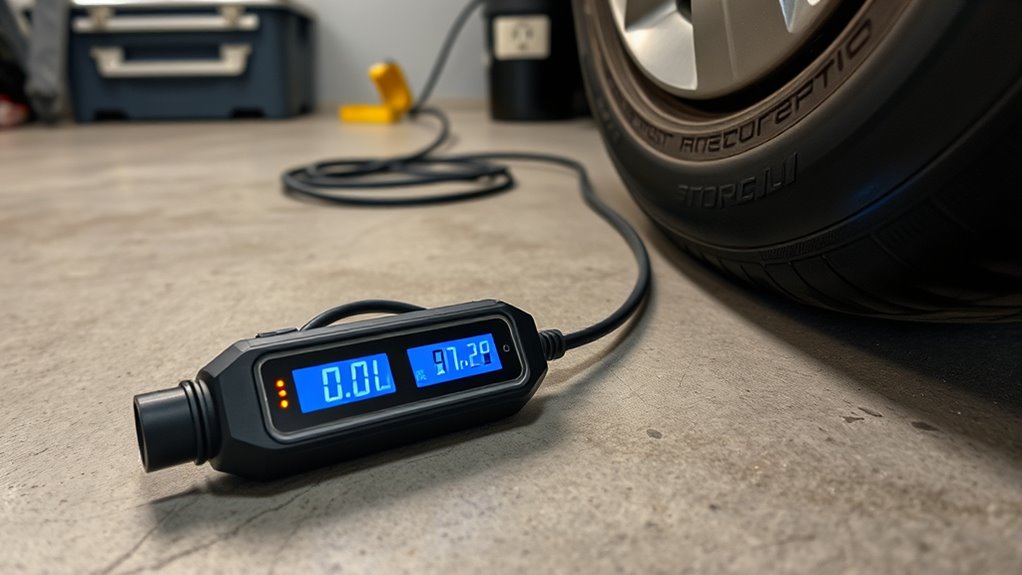
If your tire inflator beeps but won’t start, you likely have a power fault, poor seal, or thermal lockout. Check the 12V outlet, fuse, cord, and battery charge first. Reseat and clean all connections, then confirm the chuck locks tightly onto the valve stem and the hose isn’t kinked or leaking. Let the unit cool 10–15 minutes, reset it, and retry. If it still fails, the next steps can narrow down the exact fault.
Key Takeaways
- Check the power source first: a weak 12V outlet, dead battery, loose connection, or blown fuse can cause beeping without startup.
- Inspect the hose, nozzle, and valve seal for leaks, kinks, cracks, or poor connection that prevent airflow detection.
- Reset the inflator by powering it off, unplugging it, and waiting 10 minutes before trying again.
- Let the unit cool after heavy use, since overheating protection can lock it out and trigger beeps.
- Clean contacts, tighten fittings, and replace damaged hoses or batteries if the problem keeps returning.
Understand Why It Beeps and Stops
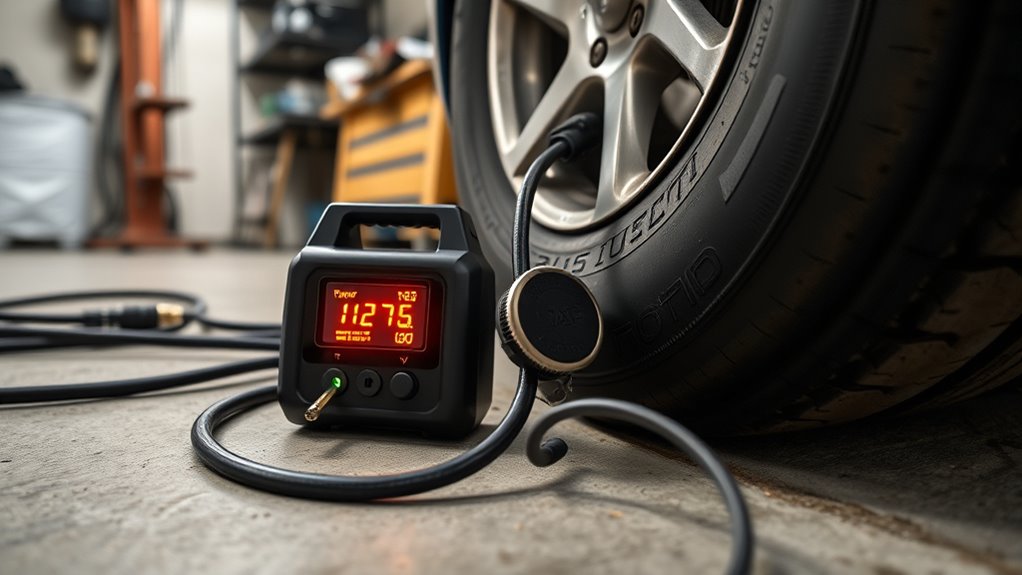
When your tire inflator beeps but won’t start, the most likely cause is a power or safety fault that’s stopping operation before the motor engages.
Your Tire Inflator is likely warning you about one of the common reasons: a weak power source, a bad connection, or a locked-out safety circuit. If the pressure sensor reads an error, the unit’ll beep and refuse to run until you clear the fault.
Overheating protection can do the same after heavy use, so let it cool and respect the duty cycle.
Also verify the valve connection; if the nozzle isn’t sealed on the tire valve, the inflator may not detect airflow and won’t start.
Check the hose for blockages, since restricted flow can trigger the same stop condition.
These signals aren’t random noise; they’re diagnostics. You can use them to isolate the fault quickly and restore operation without guesswork.
Check the Power Source and Fuse
First, verify the inflator’s power connection and make sure it’s fully seated in the vehicle’s 12V outlet.
Then inspect the plug fuse for damage or a blown element, since that can stop power from reaching the unit.
If it still won’t start, test the outlet with another device to confirm the source is supplying power.
Verify Power Connection
Start by confirming the inflator has a solid power supply: plug it into a known working 12V outlet or wall socket and check that the cord isn’t damaged, frayed, or loose at the connection points.
Your Tire Inflator needs a stable power source to wake up and run. Trace the power cord end to end, because an open break or weak plug can block startup even when the unit beeps.
On cordless models, verify the battery is fully charged before you test again. If the outlet works but the unit still won’t start, compare its behavior on another source to isolate the fault.
Use your manual to match model-specific diagnostics and restore control fast. A clean verify power connection keeps you moving without guesswork.
Inspect Plug Fuse
If the inflator beeps but won’t start, inspect the plug fuse for any visible damage, since a blown fuse can cut power before the motor engages.
Pull the Tire Inflator plug, examine the plug fuse, and compare it with the manufacturer rating. If you see discoloration, a broken filament, or heat damage, replace it immediately.
Make sure the power source is live and the plug seats firmly in the socket. Check the cord for wear and loose connections that can interrupt flow.
Use only a matching fuse so you restore proper power without stressing the circuit. A sound plug fuse keeps your gear ready and keeps you in control, free from avoidable breakdowns.
Test Alternate Outlet
Try a different outlet to rule out a bad power source, and check that the inflator’s plug or 12V adapter is fully seated at both ends.
If the inflator still beeps, test the alternate outlet with a multimeter and verify voltage output matches the unit’s rating.
Confirm the connections stay tight; loose fits can interrupt current and create startup issues.
Inspect the 12V adapter fuse for damage, because a blown fuse can block power entirely.
If you’re using a portable battery, make sure it’s charged and working; a weak battery can mimic outlet problems.
Move methodically: source, cord, fuse, battery.
That process helps you isolate issues fast and keep control of your repair without wasting time or money.
Fix Tire Inflator Battery Problems
A tire inflator that beeps but won’t start often has a battery issue, so check whether the battery is fully charged, because low charge levels can trigger warning beeps and prevent the compressor from activating.
If your Tire Inflator uses a cordless battery, recharge it fully; a depleted battery can block startup and mimic broader power issues.
If the unit still fails, the battery may be degraded and unable to hold charge, so replacement may be necessary.
Inspect the battery connections for corrosion, looseness, or damage, because poor contact can interrupt current flow and cause a malfunction.
Clean or tighten the terminals, then test again.
If the beeping continues after you’ve confirmed the battery and connections are sound, the charging system or internal electronics may be faulty.
At that point, you’re dealing with a deeper fault, not a user-level reset, and the inflator needs service or replacement.
Inspect the Hose, Nozzle, and Seal
Inspect the hose, nozzle, and seal for any faults that could stop airflow or trigger false readings. You should inspect the hose for cracks, pinholes, or kinks; even minor damage can choke flow and make the unit misbehave.
Check the nozzle at the tire valve and confirm it locks firmly onto the valve stem. If it slips, air escapes and inflation speed drops. Watch the tire valve pin: the chuck must depress it fully so air can enter.
Run your fingers along the hose and nozzle, then brush on soapy water to find leaks. Bubbles show where pressure’s getting free.
Also verify the seal is intact, seated flat, and not torn or hardened. A weak seal can fool the gauge, cut efficiency, and prevent the inflator from starting properly.
Clear any blockage in the nozzle or hose, then retest.
Reset the Sensor and Auto Shutoff
If the inflator beeps and won’t start, its pressure sensor may have triggered an automatic shutoff. On your Tire Inflator, that protection keeps you safe, but it can also block normal operation. To reset the sensor, use this sequence:
- Turn the unit off fully.
- Disconnect the power source.
- Wait about ten minutes, then reconnect.
- Verify the target PSI matches your tire spec.
Check the air hose and nozzle for blockage or leakage, since a faulty seal can make the pressure sensor read incorrectly.
Check the hose and nozzle for blockages or leaks; a faulty seal can confuse the pressure sensor.
If the beep returns, inspect the display settings and confirm the automatic shut-off didn’t trip from an over-ambitious setting.
Different models reset differently, so follow the user manual for your exact unit.
You’re not stuck; you’re troubleshooting a control system. When you reset the sensor cleanly and set the target PSI correctly, the inflator can return to service without guesswork.
Stop Overheating and Restart Safely
If you’ve run the inflator beyond its duty cycle, let it cool for at least 10 minutes before you try again.
Keep it in a well-ventilated area and make sure the intake vents aren’t blocked so heat can escape.
When it’s cool, restart it only after checking for excessive heat and confirming normal airflow.
Cooling Down Periods
When a portable tire inflator beeps and stops, overheating is often the cause, so let it cool for at least 10–15 minutes before trying again. Your Tire Inflator may hit thermal protection and trigger automatic shut-off during continuous operation. Respect the duty cycle and use cooling down periods to restore safe function.
- Stop inflation immediately.
- Unplug the unit and check its temperature.
- Wait 10–15 minutes, or longer after heavy use.
- Restart only when the housing feels normal.
If it beeps again, you’re exceeding its continuous operation limit. Follow the manufacturer’s spec and don’t force a restart; that protects performance and your freedom to move without equipment failure.
Ventilation And Airflow
Keep the inflator in a well-ventilated area, because restricted airflow can trap heat and trigger a safety shut-off.
Your Tire Inflator needs clear ventilation around the intake and exhaust so it can move air freely and stay within safe temperature range.
Inspect the vents before each use; dust, lint, and debris block airflow, raise internal heat, and shorten runtime.
Keep the housing clean with a dry brush or air duster.
Respect the manufacturer’s continuous use limits, usually 10-15 minutes, then let the unit cool.
If the case feels hot, stop and let it rest.
Repeated long runs without breaks strain the duty cycle and can cause overheating.
Good airflow gives you more reliable pressure, less downtime, and real control.
Safe Restart Steps
After prolonged use, let the tire inflator cool for at least 10 minutes before you try again. This stops overheating and protects the unit’s control board.
Keep the Tire Inflator in a well-ventilated area, then inspect the air intake vents for dust or blockage. If it still beeps but won’t start, disconnect it from power, wait briefly, and reconnect to reset the device.
Follow the manufacturer’s guidelines for continuous use, usually 10 to 15 minutes.
- Power down and cool.
- Clear the air intake vents.
- Disconnect, then reconnect.
- Restart only within limits.
You regain control by using disciplined resets, not force. If the fault repeats, stop and recheck airflow, duty cycle, and power supply before another attempt.
Repair or Replace Your Tire Inflator
If your tire inflator beeps but won’t start, first check for a power fault such as a dead battery, loose connector, or worn hose connection. For a Tire Inflator Not Working, inspect loose connections, then test the battery and controls. Clean contacts, tighten fittings, and retry. If the unit still fails, compare repair costs with a new unit.
| Check | Action | Decision |
|---|---|---|
| dead battery | Replace or recharge | Repair if cheap |
| loose connections | Reseat and test | Fix if stable |
| worn hoses | Inspect for leaks | Replace if damaged |
If repair costs exceed 50% of replacement, replace a Portable Tire inflator. Also consider the average lifespan; many units last only a few years with regular use. If your warranty is active, file a claim before paying for repairs. That route can restore function with less cost and keep your setup ready for independent, reliable inflation.
Frequently Asked Questions
How to Reset Portable Tire Inflator?
To reset your portable tire inflator, you should power it off, disconnect the power source, and wait 10 minutes.
Then check the user manual for model-specific resetting techniques, press any reset button, and confirm the unit’s cool.
Inspect for battery issues, hose blockages, or leaks.
Use these troubleshooting tips with safety precautions and sound maintenance practices so you regain reliable, independent control over your equipment without unnecessary delay.
What Are the Common Problems With Auto Air Tire Inflators?
Common inflator issues include weak power, bad connectors, overheating shutdowns, clogged hoses, and faulty pressure sensors, so you’ll need Tire inflator maintenance and careful Tire pressure monitoring.
Use Inflator troubleshooting tips to check cords, seals, and PSI readings.
Practice Air compressor care, follow Inflator safety precautions, and apply Seasonal usage advice for heat or cold.
When you inspect regularly, you keep your gear working and stay in control.
Why Won’t My Tire Inflator Turn On?
You’re likely dealing with battery issues, a weak power supply, or fuse failure.
Check the cord, battery contacts, and air hose for damage or loose fits, then verify the pressure gauge isn’t triggering a lockout.
If the unit’s hot, let it cool.
Follow the user manual for reset steps and duty-cycle limits.
These maintenance tips help you reclaim reliable operation without unnecessary dependence on faulty equipment.
What Are the Possible Reasons Why My Air Compressor Motor Isn’t Starting?
You’re likely facing a few motor issues: a tired power supply, a blown fuse, a faulty switch, or loose wiring.
Your unit may also trip thermal overload after extended use, then need time to cool.
Check for air leaks, debris, or internal damage that can jam the piston.
Circuit problems in the cord or outlet can stop startup too.
Test each link, and you’ll free the system fast.
Conclusion
When your tire inflator beeps and won’t start, you can trace the fault, test the power, and restore the seal. Check the fuse, charge or replace the battery, and inspect the hose and nozzle. Reset the sensor, let the unit cool, and restart safely. If it still beeps, won’t run, or won’t build pressure, you should repair it, replace it, or upgrade it. Diagnose it, fix it, and keep it ready.

