
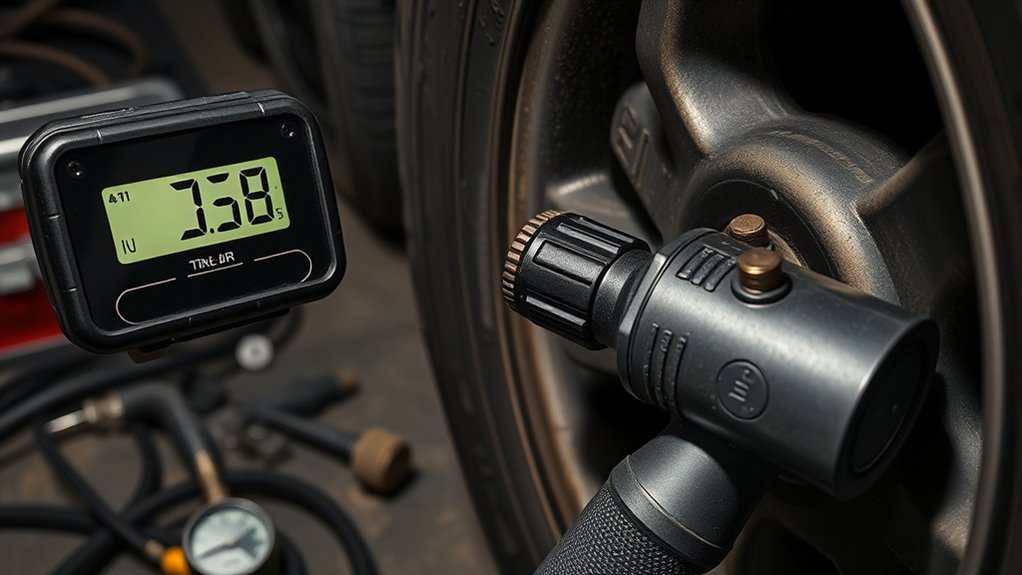
If your tire inflator can’t reach the preset PSI, first confirm the unit matches the target scale and the tire’s recommended pressure. Then check for leaks at the valve stem, chuck, hose, and fittings, and make sure the connection seals tightly. Weak power, a clogged filter, or a compact compressor may also limit airflow. Small inflators often struggle with larger tires, so let the pressure stabilize and you’ll spot the next likely fault.
Key Takeaways
- Verify the inflator’s unit setting matches the target PSI, BAR, or KPA, and confirm the tire’s recommended pressure.
- Check for air leaks at the valve, chuck, hose, and fittings using soapy water or a careful visual inspection.
- Make sure the power source is strong and the compressor is not undersized for the tire’s volume or required pressure.
- Inspect and clean the air filter, and replace worn or damaged hoses, gauges, or other faulty components.
- Recheck tire pressure after disconnecting the hose and let the tire stabilize before making final adjustments.
Why Your Tire Inflator Won’t Reach Target PSI?
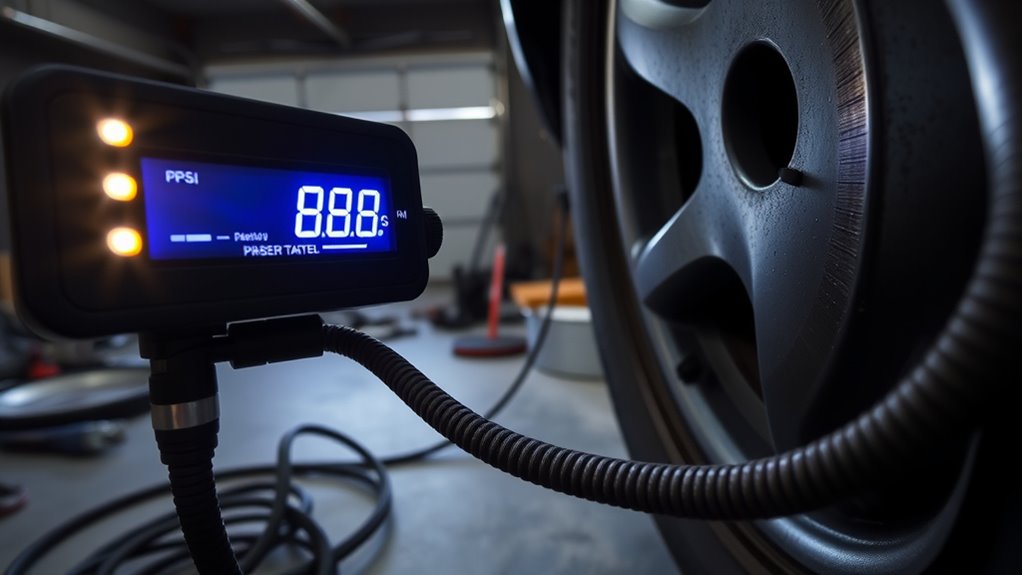
If your tire inflator won’t reach the target PSI, the problem usually comes down to one of a few measurable faults: the unit may be set to the wrong pressure units, the chuck may not be sealing fully on the valve stem, or air may be escaping while you measure.
You should check tire pressure with the tire cold, because heat from inflation can skew the pressure reading. Inspect the valve connection for leaks, then verify the PSI settings against the sidewall maximum pressure and your target.
If the inflator still stalls, look for insufficient airflow from clogged filters or a weak compressor, especially on larger tires. Compact models can run out of output before proper tire inflation is achieved.
Regular tire maintenance and calibration keep readings consistent and performance honest. When you need reliable results, the tire inflator is best when it delivers steady flow, accurate control, and a stable seal without wasting your effort.
Check the PSI Setting and Unit First
First, verify that your inflator’s unit matches the target scale—PSI, BAR, or KPA—so you’re reading the pressure correctly.
Then confirm the recommended tire pressure from the driver’s door placard or owner’s manual and set the inflator to that exact value.
If the unit or target is wrong, the inflator can stop early or overinflate the tire.
Verify PSI Units
Before you inflate a tire, verify that the inflator’s PSI setting matches your vehicle’s recommended pressure, which you can usually find on the door placard or in the owner’s manual. Next, verify PSI units on the tire inflator; air compressors often let you switch between PSI, BAR, and KPA, and the wrong unit skews your pressure gauge. Use this quick check:
| Check | Result |
|---|---|
| Unit matches PSI | Accurate readings |
| Preset equals recommended PSI | Correct pressure |
| Valve connection is sealed | No leak |
If the display and unit align, you reduce underinflation and overinflation risk. Inspect connection at the tire valve if the unit looks right but pressure stalls. Calibrate routinely so the inflator delivers accurate readings and you keep control of your vehicle’s freedom.
Confirm Target Pressure
Once the PSI unit is correct, confirm the inflator’s target pressure matches your vehicle manufacturer’s recommendation for that specific model. Set the confirm target pressure value precisely; an incorrect preset creates inflation issues and can accelerate tire wear.
Check the recommended tire PSI on the door placard or manual, then verify the digital gauge and pressure gauge reading agree after a brief pause.
- Compare the setpoint with inflator specifications and maximum PSI.
- Watch for air leaks at the hose, chuck, and fittings.
- Recheck the gauge as pressure stabilizes.
- Stop if the inflator can’t maintain proper inflation.
If the target exceeds capacity, the unit may stall before reaching the goal. You need accurate settings to get reliable, liberated mobility.
Fix Leaks at the Valve and Hose
If your tire inflator isn’t reaching the target PSI, inspect the valve stem and hose for leaks.
To fix leaks at the valve, check the valve stem for cracks, damaged threads, or a weak core; replace the core if it won’t hold pressure.
Next, verify the hose connection and secure fittings so air can’t escape under load.
Then inspect the hose along its length for wear, pinholes, or splits that can create air leaks and rob the tire inflator of output.
For a quick diagnosis, brush soapy water over the valve and hose joints; bubbles show air escaping at the fault point.
If the leak is minor, a quality tire sealant can serve as a temporary fix until you can replace the damaged part.
Don’t let a small defect control your inflation process; identify it, correct it, and restore full pressure.
Let Tire Pressure Stabilize After Inflating
After inflating the tire, let it sit for several minutes so the pressure can stabilize before you take a final PSI reading.
You need to let tire pressure stabilize because heat buildup and air expansion can create pressure fluctuations that distort checking tire pressure. When you inflate your tires, the gauge may briefly show a value above the PSI rating, then drop as the carcass cools and the valve equalizes.
Removing the hose can also cause minor air loss from the valve, so allow the pressure to stabilize before you judge the result.
- Wait a few minutes after inflation.
- Check pressure with a cold tire when possible.
- Re-read PSI after hose removal.
- Compare the final value to the tire’s PSI rating.
This process helps you avoid running underinflated or overinflated.
Follow professional advice: verify, wait, and confirm. That disciplined check supports safer handling, stronger control, and optimized tire performance.
Why Do Small Inflators Struggle With Larger Tires?
Small inflators often struggle with larger tires because they can’t move enough air fast enough to meet the tire’s volume demand. When you use compact inflators on larger tires, the bottleneck isn’t just pressure; it’s flow.
A higher PSI rating means little if the unit lacks motor power and sufficient CFM ratings. You’ll see longer inflation times because the compressor must work harder to replace the air lost into a bigger cavity. Higher airflow helps reduce inflation time, but many small units can’t sustain it.
Their internal parts may heat up during extended operation, forcing shutdown before the target PSI is reached. For freedom from that limit, choose a Heavy Duty Tire Inflator with dual motors and higher airflow helps reduce strain.
Those models deliver the air volume larger tires require, so you get faster, more reliable inflation without pushing the machine beyond its design.
Fix Clogged Filters and Weak Airflow
Check the air filter and hose first, because clogged filters can choke airflow and keep the inflator from building the pressure your tire needs. You can reclaim performance by removing dust, drying moisture, and clearing obstructions that narrow air intake.
Follow a maintenance schedule with regular cleaning or filter replacement so pressure changes stay responsive, not sluggish.
Keep a regular cleaning and filter replacement schedule so pressure changes stay responsive and reliable.
- Inspect the filter for debris.
- Check the hose for kinks or blockage.
- Replace worn parts before they restrict airflow.
- Test after each service to monitor efficiency.
When you keep the path open, the motor works less, runs cooler, and delivers more consistent output. That means fewer inflation delays and more accurate pressure readings at the gauge.
If the inflator still struggles, recheck the hose fittings and any hidden debris in the intake path. Clean airflow isn’t a luxury; it’s the condition that lets you inflate with control and precision, without letting a weak filter decide your limits.
Match Inflator Capacity to Tire Size
Even with clear filters and an open hose, an inflator can still fall short if its capacity is too low for the tire size. You need to compare tire volume against the tool’s maximum PSI and airflow rate before inflating tires. Compact portable tire inflators often post decent pressure, yet their lower CFM can’t move enough air for larger tires. That’s why heavy-duty inflators with Large Battery Capacity and dual motors deliver considerably more air volume and faster recovery.
| Check | What to verify |
|---|---|
| Tire size | Match tire volume to inflator rating |
| Output | Confirm airflow rate and maximum PSI |
| Tool class | Choose heavy-duty inflators for big tires |
If you drive larger vehicles, a Vortex S7 Heavy Duty or similar best tire inflator can keep pace without forcing the pump past its limits. Verify specs first; liberation starts with the right match, not brute effort.
Frequently Asked Questions
What Are the Common Problems With Auto Air Tire Inflators?
Common inflator issues include PSI calibration problems, power supply failures, hose leaks detection, gauge accuracy concerns, and connector compatibility checks.
You’ll also face overheating solutions when the unit runs too long, plus noise troubleshooting methods for motor strain.
Use inflator maintenance tips, verify settings, and compare portable inflator advantages against tire size.
If pressure won’t rise, inspect seals, cords, and fittings, then let the inflator cool before retesting.
My Tire Inflator Isn’t Working. What Can I Do to Fix It?
Check the power supply, battery issues, and power switch first.
Then inspect hose leaks, nozzle compatibility, and the pressure gauge for faults.
Follow troubleshooting steps in the user manual, and clean filters using maintenance tips.
If you notice overheating problems, let the unit cool, because heat lowers inflation speed.
Test another outlet, tighten fittings, and replace damaged parts.
You can restore reliable inflation and reclaim control over your maintenance.
Why Won’t My Air Compressor Build Past 30 PSI?
Your air compressor’s stuck like a boot in mud because you’ve got a pressure bottleneck.
Start air compressor troubleshooting: check low pressure causes, PSI gauge issues, tank leaks detection, and pressure regulator problems.
Then inspect hose blockages solutions, electric motor failures, compressor overheating signs, and airflow restrictions fixes.
You should clean filters, drain moisture, and verify power supply.
Strong compressor maintenance tips help you reclaim full pressure and function.
Why Is My Tire Inflator Not Inflating?
Your tire inflator isn’t inflating because you’re likely facing user errors, compressor settings mismatches, air leaks, or power issues.
Check tire pressure, hose connections, and gauge accuracy first, then inspect inflator types and portable options for compatibility with your tire size.
Clean filters and follow maintenance tips to restore airflow.
If the unit still stalls, it may lack the output needed for your target PSI.
Conclusion
If your tire inflator won’t reach preset PSI, you’re usually dealing with a setting error, air loss, delayed pressure stabilization, or insufficient compressor capacity. Small inflators often struggle because larger tires demand more volume than they can deliver efficiently. One useful statistic to add: a 1 PSI drop can reduce fuel economy by about 0.2% on average. Check leaks, filters, and unit settings, then match your inflator’s output to the tire’s actual demand.

