
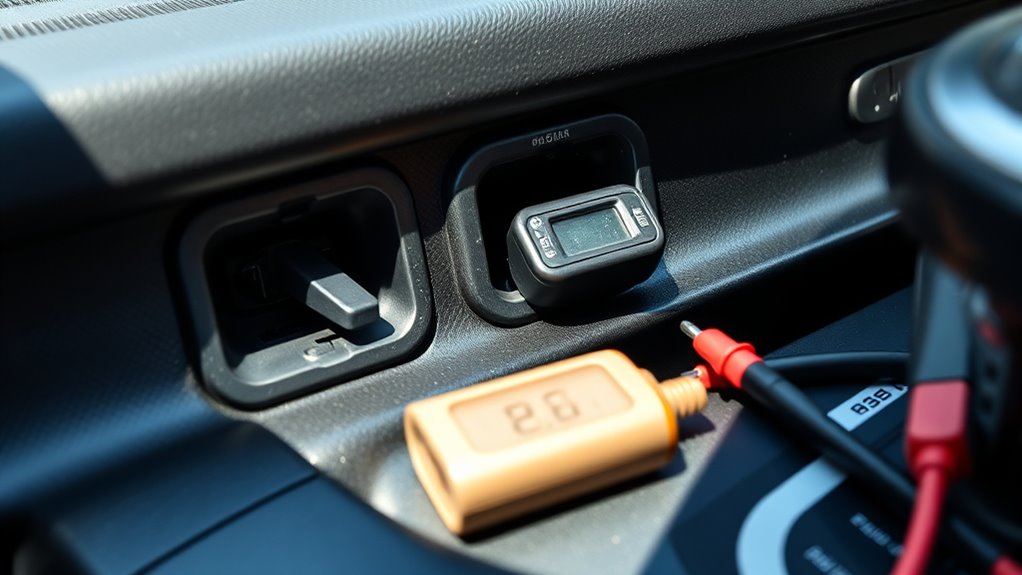
If your tire inflator trips the accessory socket, it’s likely drawing more current than the circuit can handle. Check the socket fuse rating first, usually 10A, and compare it with the inflator’s wattage. Test the startup current, since it can spike above the rated draw. Inspect the plug, cord, and socket for corrosion or damage. A weak battery can worsen voltage drop. Keep going, and you’ll see safer ways to power it.
Key Takeaways
- Check the accessory socket fuse rating; many are only 10A, which may be too low for a tire inflator.
- Compare the inflator’s current draw to the socket limit, since 150W units can pull about 12.5A at 12V.
- Try the inflator with the engine running, because low battery voltage can increase current draw and cause trips.
- Inspect the plug, cord, and socket for corrosion, bent contacts, or damage that could create poor connections.
- If it still trips, use a direct battery connection, a lower-draw inflator, or a battery-powered model.
Why Tire Inflators Trip the 12V Socket
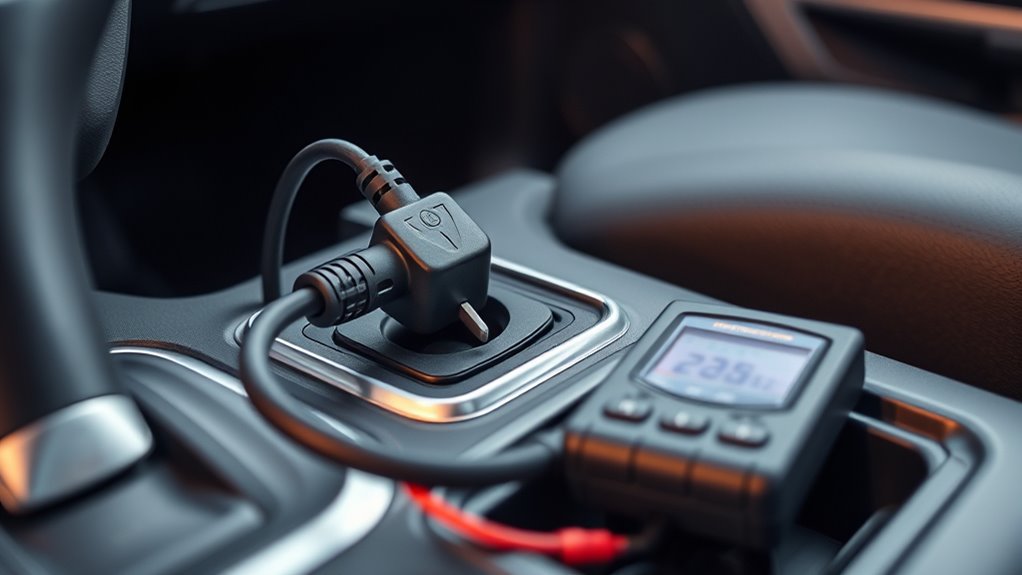
Tire inflators often trip a 12V accessory socket because they can draw more current than the circuit is designed to handle. When you plug a tire inflator into the accessory socket, its motor can demand a high amperage draw, especially under load.
A 150W unit can pull about 12.5A at 12V, which exceeds many 10A limits and can cause blown fuses or a tripped circuit. If your power source sags with the engine off, voltage drop can force the compressor to work harder and increase current demand.
Some models, like certain Husky units, hit this limit fast, while others, such as EPAuto, stay within spec. You’ll get better results by running the engine, using a direct battery connection, or choosing a portable tire inflator with its own battery.
That keeps the load off the socket and lets you inflate freely.
Check the Fuse Rating First
You should check your 12V accessory socket’s fuse rating first, since many newer vehicles use a 10A fuse.
Then compare that limit to your compressor’s power draw; a 150W inflator can pull about 12.5A at 12V and may overload the circuit.
If the fuse blows, replace it with the same rating and don’t use an inflator that exceeds the socket’s capacity.
Fuse Amperage Limits
Before plugging in a portable tire inflator, check the fuse rating for the cigarette lighter or accessory socket, because many newer vehicles use a 10A fuse that can be too small for high-draw compressors.
- Verify the fuse amperage before you connect any tire inflator.
- Compare the socket’s power supply to the unit’s rated amperage.
- Watch continuous draw limits; many sockets cap near 12A.
- Replace any blown fuse, then test again with a compatible high-draw device.
A 150W compressor can pull about 12.5A at 12V, so it may trip the accessory socket.
Pick inflators matched to your vehicle’s specs, not guesswork.
If your compressor keeps blowing fuses, the tool may have an internal fault or simply exceed the circuit’s limits.
Know the limits, choose freedom, and keep your tires ready.
Compressor Power Draw
After you confirm the socket’s fuse limit, check the compressor’s power draw so you don’t overload the circuit. A tire inflator that looks small can still pull too much power for a 10A fuse, especially through the cigarette lighter outlet.
A 150W air compressor can draw about 12.5A at 12V, and voltage drop when the engine’s off raises that demand. That extra load can blow fuses, overheat and shut the unit down, or stress the wiring under high heat.
Check the compressor’s label and specs before you plug in. Some models, like EPAuto units, stay within standard limits; others, like some Husky units, trip fuses often.
Match the inflator to your vehicle’s supply, and you’ll keep your tire work moving safely.
Test the Inflator’s Power Draw
Measure the inflator’s startup current with a multimeter at the socket, because inrush draw can spike above its running amperage.
Compare that reading to the fuse and accessory socket rating, since many 12V circuits are limited to 10A.
If the startup draw exceeds the circuit limit, you’ll need a lower-draw compressor or a different power source.
Measure Startup Current
Clip a multimeter set to amps in series with the inflator’s power supply and watch the startup draw, not just the rated continuous current.
To measure startup current, you need a clean read on the tire inflator’s real load. A 150W unit can spike near 12.5A at 12V, which may trigger fuse tripping in an accessory socket.
- Connect the meter in series.
- Start the inflator and note peak draw.
- Watch voltage drop with the vehicle engine off.
- Repeat with the engine running to monitor performance.
If you see continuous overcurrent, the socket’s limit may be too low for that momentary surge.
Don’t guess—measure startup current, compare behavior, and keep your setup liberated from weak power assumptions.
Compare Fuse Rating
Once you’ve checked startup current, compare that draw against the fuse protecting the accessory socket. Most newer cars use a 10A fuse, and that can’t always support a working tire inflator.
Check the compressor specifications first: a 150W unit can pull about 12.5A at 12V, which exceeds the fuse rating and can cause blown fuses. If your tire inflator trips the socket, test its power draw with a multimeter while it’s running.
That tells you whether the compressor is demanding more current than the circuit can supply. Some compressors, like certain Husky units, trip fuses often, while EPAuto and Tesla models may stay within limits.
Don’t guess—match the inflator’s load to the vehicle’s accessory socket before you keep plugging in.
Check the Plug, Cord, and Socket
Start by checking the inflator’s plug, cord, and socket for anything that could interrupt power flow. Check the plug for corrosion, bent contacts, or heat marks that weaken the electrical connection to the accessory socket.
Inspect the power cord for damaged cords, fraying, or breaks; these faults can trigger voltage drops, shorts, or a blown fuse. Clean the socket so dirt, oxidation, or debris doesn’t block contact and steal current.
- Inspect the plug ends closely.
- Trace the power cord for cuts.
- Test the accessory socket with a multimeter.
- Confirm the socket delivers voltage and the inflator stays within the circuit’s amp limit.
If the multimeter reads no power, suspect internal wiring or a blown fuse. Keep the setup lean: a solid connection lets you reclaim power, avoid trips, and keep the inflator working when you need it.
How Voltage Drop Stops Compressors
Even with a clean plug, cord, and socket, voltage drop can still stop a compressor from running. When your vehicle’s engine is off, the accessory socket sees lower voltage, so the compressor gets less power and may not pull enough current to start.
A 12V air compressor that draws 12.5A at 12V can behave harder on the circuit than it does at 14.2V, where it needs less current for the same output. If your battery is aging or weak, sag gets worse and the compressor can stall or trip overheating protection. You’ll see this more with high-draw inflators in sockets limited to about 12A.
Run the engine and you raise system voltage, which helps the compressor spin up and lowers fuse stress. In practice, watch the battery first, then the vehicle’s socket rating, because voltage drop is often the hidden reason your air tool quits before the tire fills.
Use Safer Power Options
If your tire inflator keeps tripping the accessory socket, choose a safer power setup instead of forcing the 12V outlet. You can stop chasing a Tire Inflator Not Working symptom by matching the tool to the circuit.
Try these options:
Try these options: choose a safer power setup, match the inflator to the circuit, and avoid tripping the accessory socket.
- Use a battery-powered tire inflator to bypass the vehicle’s 12V socket and avoid overloads.
- Pick a model with a lower amperage requirement; units like the EPAuto compressor often run without fuse trips.
- Keep the engine running when you use the 12V socket so voltage stays steady and power draw stays lower.
- Use a clamp extension to connect straight to the battery when you need more current without stressing the accessory fuse.
Also, practice regular maintenance. Check cords, clamps, and seals for wear, looseness, or damage.
Small faults can create performance issues that look like electrical failure. With the right setup, you keep control, protect the circuit, and inflate on your terms.
Repair or Replace the Inflator
When your tire inflator keeps tripping the accessory socket, inspect its amperage draw against the fuse rating and check for mechanical faults like a clogged hose or broken piston that can force the motor to pull too much current.
If you’ve already checked the fuses and still see the common problem, test the Tire Inflator pump for loose connections, voltage drop, and hose leaks. A weak seal or worn piston can make the unit overwork and trip the circuit.
If the inflator exceeds a 10A socket limit, don’t keep forcing it. Replace a Portable Tire model with one rated for your vehicle’s power supply, or choose air compressors that users report run cleanly without fuse trips.
For high-draw tools, use a direct battery connection with proper clamps. If you can’t verify the fault yourself, seek professional repair.
Regular inspection keeps your setup efficient, safe, and ready for action without sacrificing control.
Frequently Asked Questions
What Are the Common Problems With Car Tire Inflators?
You’ll often face power draw issues, compressor overheating, pressure gauge accuracy problems, and tire inflator leaks.
You may also see fuse failure signs when the socket can’t handle the load. Check cord length limitations and compatibility concerns before you start.
Frequent use impacts motor life, so you shouldn’t run it too long.
Inspect hoses, seals, and connectors, because poor airflow or loose fittings make the unit strain and underperform.
Why Is My 12V Accessory Socket Not Working?
Your 12V accessory socket isn’t working because a fuse likely blew, a connection loosened, or the socket suffered overload protection systems.
Check the fuse location guide, then inspect for accessory socket issues, corrosion, or damage.
Match inflator power requirements to the circuit rating, and use wiring troubleshooting tips for hidden faults.
A battery health check can rule out low voltage.
Try socket cleaning methods, and watch for voltage drop causes.
How to Reset Portable Tire Inflator?
Turn it off, unplug it, wait ten minutes, then reconnect it. Those reset methods solve many inflator troubleshooting issues.
Check voltage checks at the power supply, inspect the fuse, and try fuse replacement if needed. Confirm socket compatibility and make sure the cord, connectors, and battery aren’t damaged.
Let it cool for inflator maintenance, verify PSI settings, and use usage tips: fully charge cordless units before you run them.
How to Tell if a 12V Socket Is Bad?
Like a weak spark in a storm, you’ll know your 12V socket’s bad if devices won’t run or cut out.
Check for a bad connection, fuse issues, and voltage drop with a multimeter.
Look for socket corrosion, wiring damage, overheating components, compatibility problems, and grounding faults.
If other outlets work but this one doesn’t, the socket’s likely failed.
Inspect the plug fit and feel for heat while it’s under load.
Conclusion
So, if your tire inflator keeps tripping the accessory socket, the “simple” fix usually isn’t simple at all. You check the fuse, current draw, cord, plug, and socket, because a tiny compressor can expose bigger electrical problems fast. Ironically, the tool meant to save you from a flat may be the one that reveals a weak circuit. Use a proper power source, repair worn parts, or replace the inflator before it turns a quick top-off into a roadside diagnosis.

