
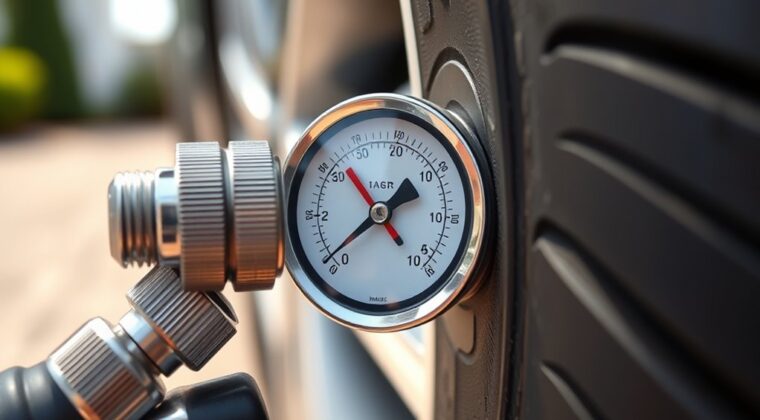
A tire inflator pressure gauge measures PSI by pressing tightly onto the valve stem and sealing a small chamber so tire air pressure can push back against a mechanical Bourdon tube or a digital sensor. You get the most accurate result when you test cold tires, use the correct reference pressure, and keep the gauge calibrated. Different gauge types trade off speed, durability, and readability, and the details behind those differences matter more than you might think.
Key Takeaways
- A tire inflator pressure gauge measures air force inside the tire and converts it into PSI.
- It seals against the valve stem to capture pressure; a poor seal can cause inaccurate readings.
- Mechanical gauges use a Bourdon tube, while digital gauges use sensors for faster, easier readings.
- Check tire PSI when tires are cold and compare readings with the vehicle’s recommended pressure.
- Regular calibration, cleaning, and battery checks help keep gauge readings accurate and reliable.
How Does a Tire Pressure Gauge Work?
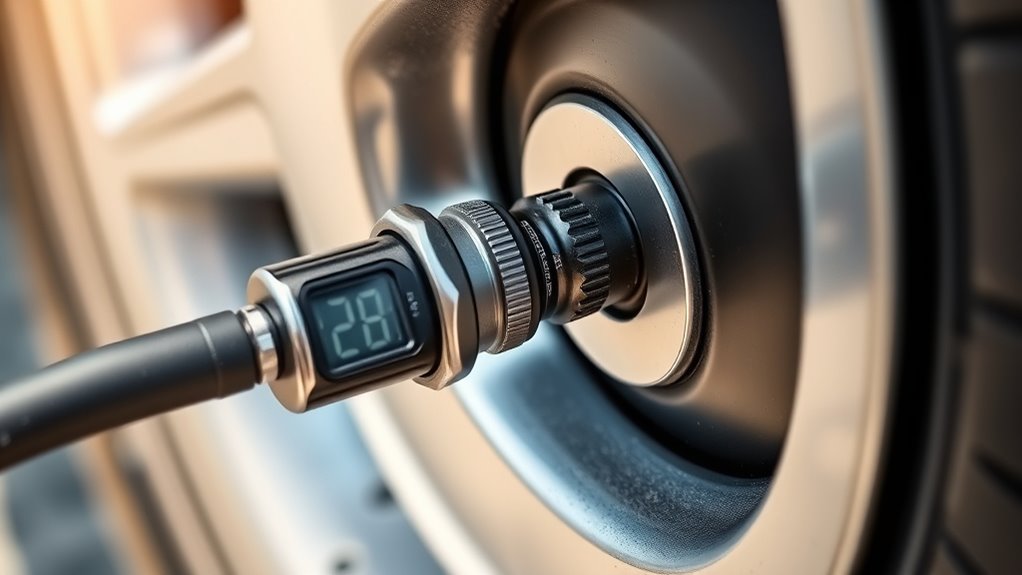
A tire pressure gauge works by measuring the force exerted by air inside the tire and converting that force into a readable pressure value, usually in PSI.
When you press tire pressure gauges onto the tire valve, you create a sealed chamber, so trapped air pushes against a sensing element. In mechanical gauges, that force bends a Bourdon tube or moves a needle directly. In digital gauges, sensors detect pressure and send it to an electronic display.
You get accurate readings when the seal is tight and the tool is calibrated. Because precision can drift by a few PSI, you should check calibration regularly.
Use the gauge on cold tires, since heat can raise the reading and distort the result. With correct use, you gain reliable PSI data, resist guesswork, and take control of tire maintenance.
How Tire PSI Readings Work
When you connect a tire pressure gauge to the valve stem, it forms a sealed path that lets the tire’s internal air pressure act directly on a sensing element, and that action gets converted into a PSI reading.
You then see how Tire Pressure Gauges measure tire pressure by translating force per unit area into a numeric value you can trust. In a mechanical gauge, that force moves an internal element; in an electronic gauge, a sensor converts the signal into data.
Either way, the result tells you the tire’s PSI with minimal delay. When you check tire pressure, you’re not guessing—you’re verifying a measurable condition that affects grip, efficiency, and blowout risk.
Either way, the result tells you the tire’s PSI quickly, helping you verify a condition that affects safety and performance.
Underinflated tires can cut fuel economy and strain the casing, so accurate readings matter. For best results, measure tire pressure when the tire is cold, before heat adds temporary pressure.
That small routine gives you control, safety, and freedom on the road.
Bourdon Tube vs. Digital vs. Pencil Gauges
Bourdon tube, digital, and pencil gauges each measure tire PSI differently, and that difference affects how you read, trust, and use the result.
With a Bourdon Tube, a curved metal tube flexes as tire pressure rises, then drives a mechanical pointer. You get a robust, reliable reading that suits hard use, though low-light visibility can slow you down.
Digital Gauges convert pressure into an electrical signal and display numbers directly, so you get fast, accurate measurement with minimal interpretation; they’re precise, but they need batteries and cost more.
Pencil Gauges use a calibrated spring in a slim body, giving you a lightweight, simple tool for tire maintenance, yet you sacrifice ease of reading and often some accuracy.
If you want freedom from guesswork, choose the gauge that matches your routine, budget, and need for consistent tire pressure control without unnecessary complexity.
Why Tire Gauge Accuracy Matters
Gauge type matters, but accuracy determines whether the number you read actually protects your tires, fuel budget, and safety. Tire gauge accuracy isn’t optional; a 1 PSI error can cut fuel efficiency by up to 3%, and that loss compounds fast.
When you check tire pressure with a reliable gauge, you’re making a direct control decision about proper tire inflation, tread wear, and handling. Inaccurate readings can leave tires underinflated, raising heat, rolling resistance, and crash risk. Those mistakes matter, since underinflation contributes to about 250,000 accidents each year.
Digital gauges usually deliver tighter tolerances than analog tools, and many self-calibrate for more precise readings. Regular calibration keeps any gauge within a few PSI of true pressure, which helps you extend tire life by thousands of miles.
Digital gauges often read more precisely, and regular calibration helps keep your tire pressure measurements within a few PSI.
Accurate measurement gives you technical clarity and the freedom to drive efficiently, safely, and on your terms.
How to Check Tire PSI Correctly
To check tire PSI correctly, start with cold tires that’ve been stationary for at least three hours, since heat from driving can raise pressure and distort the reading.
Next, find the recommended cold pressure on the driver’s door jamb sticker or in your owner’s manual; that value gives you the proper PSI target in pounds per square inch.
When Tire Pressure Gauges Work as intended, you can check your tire pressure by pressing the measuring device firmly onto the valve stem until hissing stops.
Read and record each tire’s PSI, then compare front and rear values for imbalance. If a tire’s low, add air with a compressor, then recheck to confirm accuracy.
This process lets you maintain peak performance, protects tread wear, and keeps you in command of your vehicle’s condition.
Consistent measurements also reveal slow leaks early, so you can address them before they compromise safety or efficiency.
Which Tire Pressure Gauge Should You Buy?
When you choose a tire pressure gauge, compare digital, Bourdon tube, and pencil models by accuracy, readability, durability, and cost.
You’ll usually get the best balance of precision and ease of use with a calibrated digital gauge, while an analog Bourdon tube gauge suits you if you value robustness.
If you need a compact, low-cost tool, a pencil gauge works, but you shouldn’t expect the same consistency.
Gauge Type Comparison
Choosing the right tire pressure gauge depends on how you balance accuracy, convenience, durability, and cost.
Tire gauges vary by mechanism: bourdon tube models give accurate readings through a curved metal tube, but they can be hard to read in dim conditions.
Digital gauges deliver a clear pressure reading, fast accurate readings, and simple controls, yet they need batteries and cost more.
Pencil or stick gauges stay compact and cheap, though you’ll trade some precision.
Analog gauges use mechanical movement, resist battery dependence, and feel rugged.
Smart gauges add Bluetooth monitoring and alerts, giving you data freedom through your phone.
If you want control without complexity, compare the gauge body, display, and maintenance needs before you decide.
Best Gauge For Needs
Your best tire pressure gauge depends on how you weigh accuracy, durability, portability, and features.
If you want the most precise tire pressure gauge, choose digital gauges; they’re easy to read, work well in low light, and help you reach the correct PSI, though batteries matter.
If you value mechanical resilience, a Bourdon tube model gives you a reliable gauge with strong durability.
If you need freedom through simplicity, a pencil or stick gauge stays compact and cheap, but you may trade accuracy.
For checking tire pressure across vehicles, buy a calibrated tool in PSI, Bar, or kPa.
If you want smarter monitoring, choose a Bluetooth-enabled model.
The best gauge is the one that fits your routine and keeps maintenance under your control.
How to Calibrate Or Test Your Gauge
To calibrate a tire inflator pressure gauge, compare its reading with a known accurate reference gauge under the same temperature and pressure conditions. This testing method gives you a precise baseline and shows whether your gauge is tracking true PSI.
If you use a digital model, check for a calibration function; many units let you reset to zero or adjust the reading to match the reference gauge. If you use an analog gauge, you’ll usually need professional recalibration, where the internal mechanism is tuned against a certified standard.
Test your gauge at least every six months, because mechanical wear can shift readings over time. If you find a difference greater than 1-2 PSI, replace the gauge instead of forcing trust in a faulty tool.
Reliable pressure readings let you make informed, independent decisions about safety, performance, and tire care without guesswork.
How to Keep Your Gauge Accurate
You should calibrate your tire inflator pressure gauge on a regular schedule and verify it against a trusted reference gauge to catch drift early.
You also need to keep the nozzle and valve contact clean, since debris can compromise the seal and distort readings.
If you use a digital gauge, replace weak batteries promptly because low power can reduce measurement accuracy.
Regular Gauge Calibration
Regular calibration keeps a tire pressure gauge accurate, since many gauges drift by a few PSI over time and that can affect tire wear, fuel economy, and safety. You should use regular calibration to preserve accuracy in every tire gauge you rely on to check pressure.
If you use a digital model, look for automatic calibration, but still verify it manually at set intervals. If you use an analog gauge, compare it against a known reference or send it for professional recalibration when readings differ.
Increase calibration frequency after heavy use, drops, or exposure to extreme conditions, because those stressors can shift results. A reliable gauge gives you consistent data, and consistent data lets you control your vehicle with less dependence on guesswork and more autonomy on the road.
Clean Valve Contact
Keep the valve contact clean to preserve measurement accuracy. After each use, wipe the gauge’s contact point with a soft cloth or blow away grit with compressed air.
You should also check the tire valve stem; dirt there can break the seal and distort pressure readings. When you connect the gauge, seat it squarely on the valve to keep the measurement path tight and accurate.
Inspect the rubber seal for wear, cuts, or hardening, because a compromised seal can leak air and falsify readings. If the gauge has been dropped or exposed to harsh conditions, perform a calibration check before you rely on it.
Clean contact surfaces let you measure Tires with confidence, control pressure precisely, and keep your system free from contamination.
Replace Weak Batteries
When the battery in a digital tire inflator pressure gauge starts to weaken, its sensor and display can drift enough to produce inaccurate pressure readings. You should replace weak batteries before voltage drops enough to corrupt the signal.
Digital gauges use electronic components that need stable power to deliver accurate pressure readings and peak performance. Check battery life indicators, if your model includes them, and test the gauge regularly; many units need fresh cells every 6 to 12 months, depending on use.
Choose high-quality batteries recommended by the manufacturer, and keep a spare set nearby so you can restore function without delay. That small maintenance step protects vehicle safety and keeps your pressure checks precise, independent, and reliable.
Frequently Asked Questions
How Much Is 60 PSI on a Tire Gauge?
60 PSI on your tire gauge means a high tire pressure reading, roughly double many passenger-car recommendations. You’ll see it on gauge types that measure pneumatic force directly.
For proper tire pressure, follow inflation tips from your manual, use safety measures to avoid overinflation, and skip common mistakes like guessing.
Routine maintenance advice: check pressure cold, inspect wear, and confirm 60 PSI only if your tire’s design supports it.
How to Read PSI on Tire Pressure Gauge?
You read PSI by pressing the gauge firmly on the valve stem, then noting the number it shows once the hiss stops.
For tire maintenance tips, check cold tires. Gauge calibration importance matters because errors skew readings.
Pressure effects explained: heat raises PSI. Watch seasonal pressure adjustments, avoid common gauge mistakes, and compare digital versus analog displays so you can choose the clearest, most accurate reading and act with confidence.
What Is a Good PSI for a Tire Inflator?
A good PSI for your tire inflator is usually 30 to 35 PSI for most passenger vehicles. You’re steering a wheel through a steady road, and that balance matters.
Check tire maintenance tips, compare air compressor types, and use tire inflator features with pressure calibration methods.
During seasonal tire checks, follow the door-jamb sticker or manual. That precision protects tire safety importance, improves mileage, and keeps you free to drive confidently.
How to Check Tire Pressure With Tire Inflator?
You attach the inflator nozzle firmly to the valve stem, wait until the hiss stops, and read the PSI on the screen.
Check it with the tire cold for accurate results, then adjust to the vehicle’s recommended PSI.
Follow tire maintenance tips, use this inflator usage guide, apply pressure calibration methods, and include seasonal tire checks.
Watch for common tire issues, and follow inflator safety precautions to keep your vehicle free.
Conclusion
When you use a tire inflator pressure gauge, you’re reading the air force inside the tire as psi, and that number guides safe inflation. Whether you choose a Bourdon tube, digital, or pencil gauge, accuracy shapes handling, wear, and fuel use. So, wouldn’t you want a gauge you can trust? Check pressure when tires are cold, test your gauge regularly, and store it properly. That way, you’ll keep readings consistent and your tires performing as intended.
