
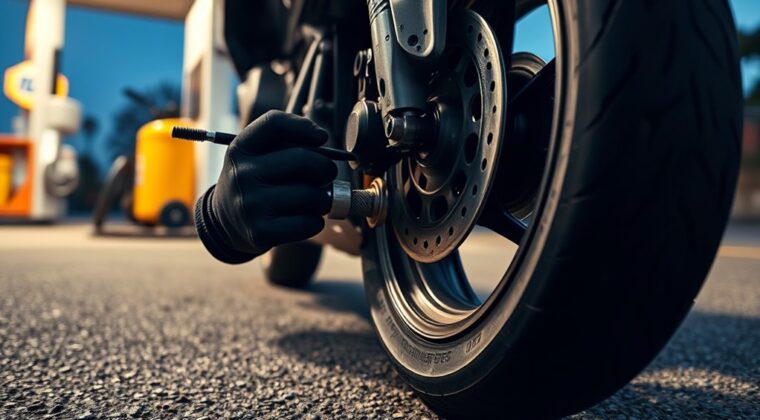
Check your motorcycle’s recommended PSI on the placard or in the owner’s manual, and inflate only when the tires are cold. Gather a reliable air pump, a separate pressure gauge, and the correct valve adapter if needed. Attach the pump securely, add air in small bursts, and stop at the target PSI. Heavier bikes may need 36 to 42 PSI; dirt bikes often run 12 to 18 PSI. Then inspect for leaks and verify the pressure holds.
Key Takeaways
- Check the motorcycle’s recommended PSI from the owner’s manual or tire placard before inflating.
- Use a reliable pump and separate gauge, and make sure the valve type matches.
- Inflate the tire in small bursts while monitoring pressure with cold tires.
- Stop at the recommended PSI, or release air in short intervals if you overinflate.
- Inspect for leaks with soapy water and recheck the pressure after inflation.
Find Your Motorcycle’s Recommended PSI
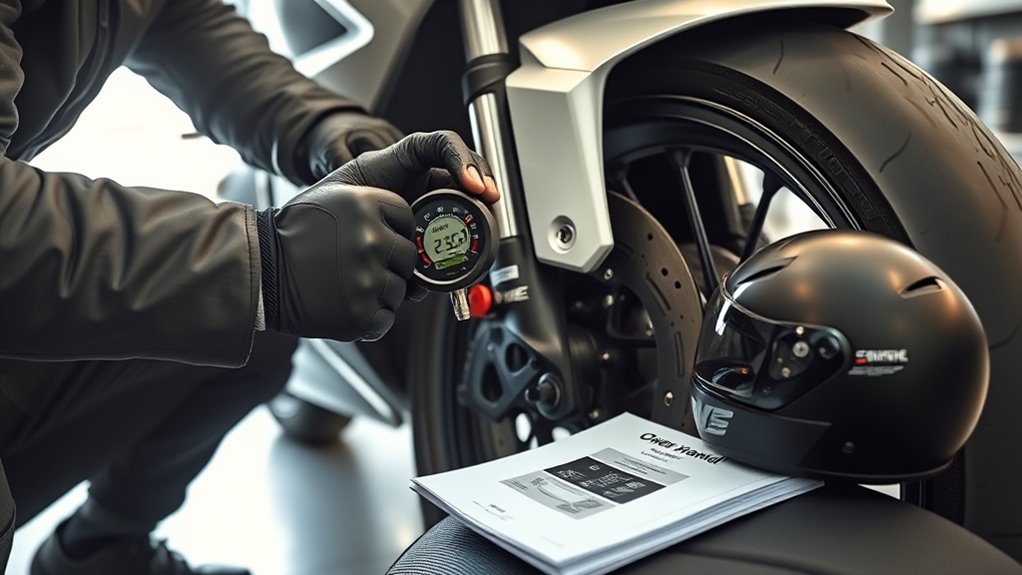
To find your motorcycle’s recommended PSI, start with the vehicle placard on the frame or swingarm, or check the owner’s manual. That specification tells you the manufacturer’s recommended tire pressure for your model, usually listed in PSI.
Heavier motorcycles often need higher pressure than lighter ones, so don’t assume one setting fits every machine. Before you adjust anything, inspect the sidewall on each tire for the marked pressure range; that confirms the limits for safe operation of your motorcycle tires.
When measuring, do it with cold tires, because heat from riding raises pressure and skews the reading. Use the exact value, then verify it regularly, especially before long rides.
Staying within the recommended range sharpens handling, supports stability, and extends tire life. You stay in command when your tire pressure is correct, and you won’t let avoidable inflation errors control your ride.
Gather Motorcycle Tire Inflation Tools
Before you start, gather the tools you’ll need so the inflation process goes smoothly and accurately. You need a reliable air pump: an electric compressor, a manual pump, or a gas station air pump if convenience matters.
Keep a pressure gauge separate from the pump so you can verify exact tire pressure instead of guessing. For tire inflation, match your valve type. If your tire uses Presta valves, carry a Presta-to-Schrader valve adapter, since many pumps are built for Schrader fittings.
Keep a pressure gauge separate from the pump so you can verify exact tire pressure, and match your valve type.
Add a valve core remover if you need to deflate the tire fast before installing or reseating it. If you’re also mounting a tire, have tire lubricant or soapy water ready to help seat the bead cleanly and reduce friction.
Organize these tools before you begin so you can work deliberately, stay in control, and meet the manufacturer’s PSI without dependence on rushed, imprecise methods.
Inflate the Tire Safely
Check the motorcycle’s recommended tire pressure on the placard or in the owner’s manual, then verify it with a reliable gauge while the tires are cold and have been stationary for at least three hours.
Match the pump head to the valve type before you attach it; if needed, use a Presta-to-Schrader adapter. Secure the connection, then inflate the tire in small bursts while watching the gauge closely. Keep the motorcycle stable so you can work with control and precision.
Stop as soon as you reach the manufacturer’s recommended tire pressure. Don’t chase extra psi, because overinflation reduces grip, harshens the ride, and can damage the casing.
If you overshoot, release air in short intervals and recheck with the reliable pressure gauge until you’re back on target. Once you finish, close the valve firmly and replace the valve cap to keep dirt and debris out.
This careful process protects performance, safety, and your freedom on the road.
Choose the Right PSI for Your Bike
Your bike’s correct PSI starts with the manufacturer’s recommendation on the placard or in the owner’s manual, and you should verify it with a reliable gauge when the tires are cold and the bike has been parked for at least three hours. That reading gives you the baseline for motorcycle tires and helps you reach peak performance without guesswork.
- Heavier cruisers and touring bikes often need higher pressures, around 36 to 42 PSI.
- Lighter dirt bikes usually run lower, about 12 to 18 PSI, for better compliance.
- Match tire pressure to riding conditions: lower it slightly off-road for traction, raise it for highway stability.
- Recheck PSI regularly to prevent damage, reduce wear, and improve handling and fuel efficiency.
Correct tire pressure also preserves tread patterns and keeps the machine responsive, so you can ride with precision and freedom.
Check for Leaks After Inflation
Once the tire is inflated, inspect the tire, valve, and bead area for any signs of air loss, including hissing sounds or bubbles if you spray on soapy water.
After inflating, inspect the tire, valve, and bead for leaks, using soapy water to spot bubbles.
You should check for leaks right away, then wait a few minutes and verify pressure with a tire pressure gauge. If the reading drops, you’re dealing with air leaks that need attention.
Spray soap and water on the valve area, rim and bead, and around the valve core; bubbles show exactly where air escapes. Look closely for gaps, uneven seating, or damage at the rim and bead that could prevent a proper seal.
If the valve core leaks, tighten it with a valve core tool and retest. Keep checking until the pressure stays steady.
This quick inspection protects your ride, preserves control, and lets you move forward without hidden failure.
Frequently Asked Questions
How Do I Put Air in My Motorcycle Tires?
Check your tire pressure first, then use the right inflation techniques for your valve types.
You’ll need an air compressor or pump with a gauge, and you should fill the tire slowly to the recommended PSI.
Take safety precautions by working on cold tires and avoiding overinflation.
Don’t make common mistakes like ignoring leaks.
Finish with maintenance tips: recheck pressure, tighten the cap, and ride with confidence.
Can I Inflate a Motorcycle Tire With a Bike Pump?
Yes—you can, but it’ll feel like filling a storm with a teacup.
You should check motorcycle tire pressure with a reliable pressure gauge, respect bike pump limitations, and match valve stem types, usually Schrader.
A floor pump works better than a hand pump, though air compressor use is faster.
Watch tire inflation frequency, verify pressure gauge accuracy, and follow safety precautions so you stay free to ride with confidence.
How to Properly Pump up a Bike Tire?
You pump up a bike tire by checking the recommended tire pressure, then attaching your pump firmly to the valve stem.
Use an air gauge to track pressure as you add air, stopping at the target PSI.
Make safety checks for leaks, then tighten the cap.
These tire maintenance and inflation tips help you ride free and confidently, and you should adjust for seasonal changes that affect pressure.
How to Inflate Tires Correctly?
Nail it: check tire pressure when tires are cold, then use tire gauges to hit the manufacturer’s spec.
Match valve types to the right chuck or adapter, and use air compressors slowly to avoid overinflation.
Set your inflation frequency around weekly checks, plus before trips.
Build in maintenance tips and safety checks: inspect wear, leaks, and damage, and stop at the sidewall max.
Conclusion
Keeping your motorcycle tires at the right PSI matters more than you might think: underinflated tires can reduce fuel efficiency by up to 3% and wear out faster. To finish, check your owner’s manual, use a quality gauge, and inflate each tire to the recommended pressure before every ride. Inflate slowly, recheck often, and inspect for leaks after you’re done. A few careful minutes now can improve handling, safety, and tire life on every trip.