
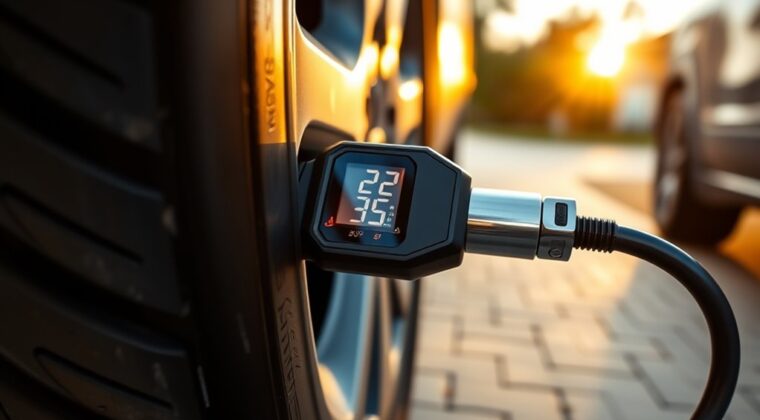
PSI on a tire inflator means pounds per square inch, the unit used to measure air pressure in your tires. You use it to match the recommended tire pressure, usually listed on the driver’s door jamb sticker or in the owner’s manual. Correct PSI helps you improve traction, ride quality, fuel efficiency, and tire life. Check tires when they’re cold, and you’ll avoid overinflation while getting a safer, more accurate setup—and there’s more to know.
Key Takeaways
- PSI means pounds per square inch, the pressure a tire inflator can measure or deliver.
- It shows how much air pressure is in a tire or what pressure to set.
- Check the vehicle’s door-jamb label or owner’s manual for the recommended PSI.
- Inflate tires when they are cold for the most accurate pressure reading.
- Correct PSI improves traction, tire wear, fuel efficiency, and overall safety.
What PSI Means on a Tire Inflator
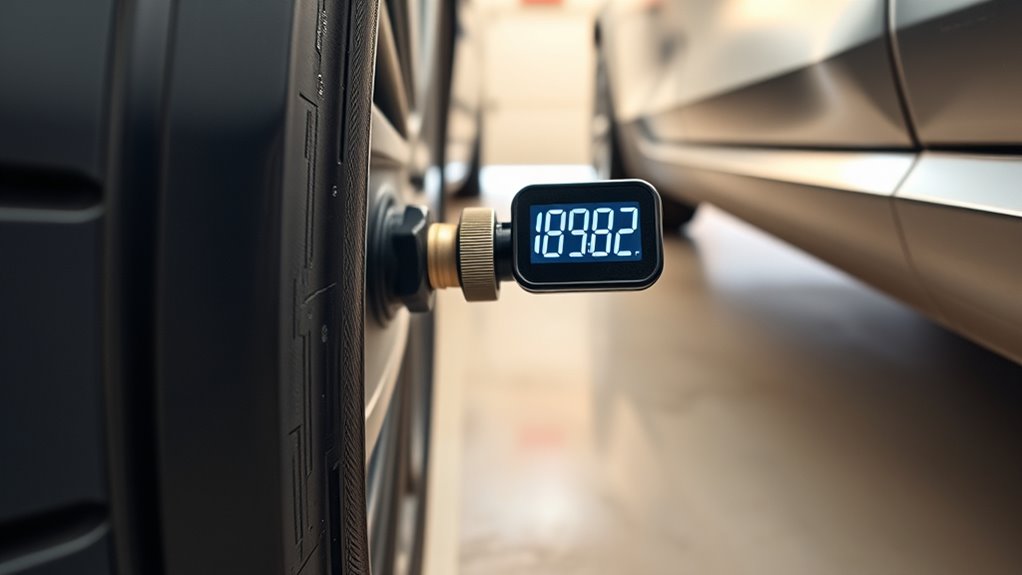
PSI stands for pounds per square inch, and it tells you how much air pressure a tire inflator can deliver or measure. When you read PSI on a tire inflator, you’re seeing the limit or output rating that guides inflation.
Use the pressure gauge to track tire pressure as you add air, not after you’ve already gone too far. Your vehicle’s recommended pressure usually falls between 29 and 80 PSI, depending on the tire and vehicle specs, so don’t guess.
Check the tire sidewall for the maximum PSI rating before you connect the tire inflator. That number tells you the safest ceiling for the tire. If you exceed it, you risk over-inflation and damage.
Why Correct Tire PSI Matters
Keeping your tires at the correct PSI improves traction, which helps your vehicle stay stable and handle predictably on the road.
When you measure tire pressure regularly, you reduce uneven wear and protect tread life, so you’re not forced into premature replacements. Holding the correct tire PSI also supports fuel efficiency; even a small drop in average pressure can raise fuel use and cost you more over time.
If you overinflate, you’ll feel a harsher ride and may lose braking performance, which can compromise control when you need it most. Underinflation does the opposite by increasing drag and heat.
For safe and efficient driving, check pressure at least once a month and before long trips. That simple habit keeps your tires working as designed, helps you stay independent from avoidable repairs, and gives you more control over every mile.
Where to Find Your Recommended Tire PSI
Your recommended tire PSI is usually listed on a sticker inside the driver’s side door jamb, where you’ll find the correct front and rear pressure specs for your vehicle.
Your recommended tire PSI is usually on the driver’s side door-jamb sticker, listing the correct front and rear specs.
That label gives you the recommended tire pressure set by vehicle manufacturers, so you can trust the PSI target instead of guessing. If the sticker’s missing or hard to read, check your owner’s manual; it often repeats the same tire pressure measurement values.
Some vehicles also place this data on the fuel filler cap, which makes it quick to verify during routine use. For the most accurate reading, inspect the tires when they’re cold.
- Door-jamb labels show model-specific PSI, not generic advice.
- The owner’s manual helps you confirm the exact recommended tire pressure.
- Sidewall numbers show tire limits, but they don’t replace manufacturer specs.
How to Set Tire PSI Without Overfilling
Once you’ve confirmed the recommended PSI from the door-jamb label or fuel cap, use a reliable tire pressure gauge to check the tires before adding air.
Cold tires give you the most accurate reading, so measure the pressure before driving or after the car has sat long enough to cool.
Compare that reading with the target PSI, then set your air compressor to the desired value before you start inflating. That way, it can shut off automatically when the tire reaches the set point, reducing the risk of overfilling.
Use pressure gauges on each tire, because small differences matter and can affect handling, wear, and fuel efficiency.
If the reading is low, add air in short bursts and recheck often. Don’t guess; controlled inflation gives you freedom from pressure errors.
Check tire pressure at least monthly to stay ahead of slow leaks and keep performance stable.
PSI, BAR, and KPA Explained
When you check a tire inflator, you’ll usually see PSI, BAR, or kPa as the pressure units. PSI means pounds per square inch, and you’ll often use it in the U.S. to verify tire pressure. BAR is the metric standard: 1 BAR equals about 14.5 PSI. kPa also measures tire pressure, and 1 BAR equals 100 kPa, while 1 kPa equals about 0.145 PSI.
Each measurement tells you how much air force pushes against the tire’s inner walls, so you can inflate with control, not guesswork.
- Use the unit shown on your vehicle’s placard or sidewall.
- Convert carefully when you travel, so you don’t underinflate or overinflate.
- Match the gauge reading to the recommended tire pressure for safer, freer driving.
Knowing PSI, BAR, and kPa helps you make precise inflation choices and keep your tires performing as designed.
Frequently Asked Questions
What Is a Good PSI for a Tire Inflator?
A good PSI for a tire inflator is usually 30–50 PSI for most passenger vehicles, but you should choose a unit that can reach 60–80 PSI for larger or performance tires.
You’ll get better tire pressure control with stronger inflator accuracy and more reliable ideal inflation.
Always match the vehicle maker’s spec to meet safety standards, protect tire longevity, and keep your routine practical, efficient, and independent.
Is 40 PSI Too High for Tires?
40 PSI is often too high for your tires; most passenger tires need only 29–35 PSI. That 15% overinflation can cut grip and raise safety concerns.
You should check tire pressure against the sidewall and door-jamb specs, not guess. This affects performance impact, inflation frequency, and seasonal adjustments.
Keep your tires within the manufacturer’s range, and you’ll protect freedom on the road while avoiding blowouts and uneven wear.
Is 30 PSI Normal for Tires?
Yes, 30 psi is normal for many passenger tires, but you should verify your vehicle’s tire pressure spec first.
Check the door jamb placard or owner’s manual, then set your inflator settings to match. Measure when tires’re cold for accurate tire maintenance.
Correct pressure supports safety standards, improves fuel efficiency, and extends tire life.
SUVs and trucks often need higher psi, so don’t assume one value fits all.
Is a 150 PSI Air Compressor Good for Car Tires?
Yes, a 150 psi air compressor is good for car tires, and you’ll have enough capacity for most passenger vehicles.
You should still check your tire pressure, because ideal inflation depends on the manufacturer’s specs, not the compressor’s max rating.
Use safety tips like an accurate gauge and avoid overfilling.
For maintenance advice, inspect hoses, valves, and automatic shut-off so you can inflate reliably and travel with confidence.
Conclusion
When you set your tire inflator to the right PSI, you’re giving your tires the steady pulse they need for safe, efficient driving. The gauge is your guide, and the air inside becomes the invisible frame that supports every mile. Too little or too much pressure can throw that balance off. Check your door-jamb label, match the recommended number, and let your tires hold firm, roll smoothly, and carry you with confidence.
