

A tire inflator is a compact tool that helps you add air to your tires at home, on the road, or in an emergency. You power it with a battery, 12-volt outlet, or wall plug, then the motor-driven pump compresses air into the tire. A built-in gauge tracks pressure, and auto shutoff stops inflation at your target PSI. Corded models inflate faster, cordless models travel easier, and the right features matter more than you might think.
Key Takeaways
- A tire inflator is a compact device that adds air to tires without needing a gas station pump.
- Portable inflators use battery, 12-volt, or wall power to run a small motor-driven air pump.
- The pump compresses air into the tire while a built-in gauge tracks pressure during inflation.
- Many inflators include automatic shutoff, stopping at the target PSI to prevent overinflation.
- Portable inflators are useful for home use, roadside emergencies, and maintaining safe tire pressure.
What Is a Portable Tire Inflator?
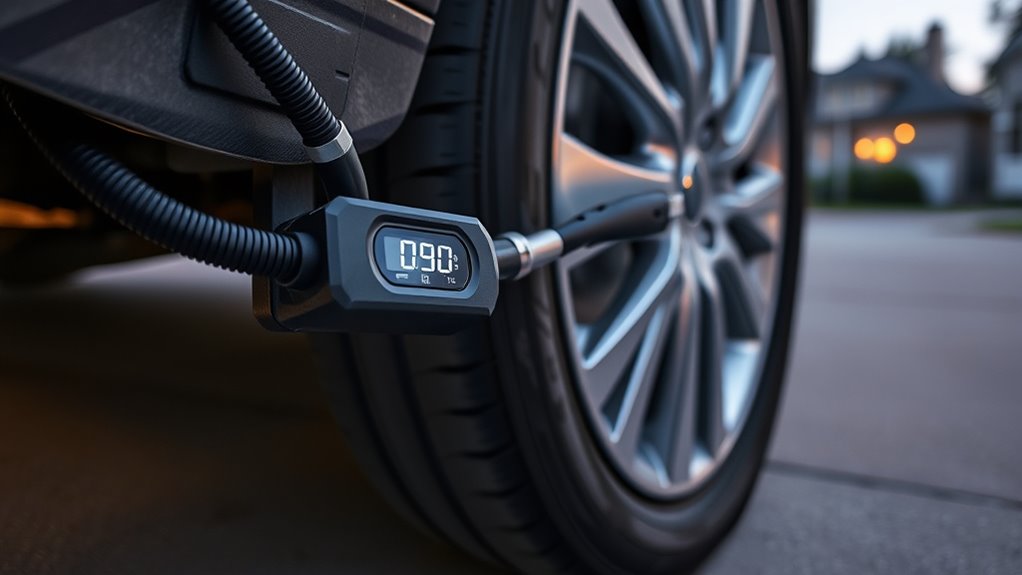
A portable tire inflator is a compact, on-the-go device that lets you inflate tires without relying on gas station air pumps or bulky compressors. You use portable tire inflators to restore proper tire pressure wherever you’re parked, whether you’re at home, on the road, or far from service.
Most models run on battery power, a 12-volt outlet, or wall power, so you can match the tool to your setup. A built-in tire pressure gauge helps you monitor inflation accurately, and automatic shutoff stops the unit when you reach your target. That precision protects your tires and saves fuel.
Many units include multiple valve attachments, so you can handle different tire types quickly. Because they’re a compact device, they store easily in your trunk or garage.
With fast tire inflation, often reaching 30 psi in under five minutes, you keep control, reduce dependence, and stay ready.
How Portable Tire Inflators Work
You power a portable tire inflator from a rechargeable battery, a 12-volt vehicle outlet, or a wall outlet, depending on the model.
The unit’s motor-driven pump compresses air and raises tire pressure until you reach the target PSI. You monitor inflation with the built-in gauge, and many models shut off automatically when they hit the set pressure.
Power Source Options
Portable tire inflators typically rely on one of three power sources: a rechargeable battery, a 12-volt vehicle outlet, or a standard wall outlet.
Your power source shapes how portable inflators fit your needs. A battery pack gives you cordless freedom, but you’ll need to recharge it, and long sessions can heat the unit. That makes it less ideal for completely flat tires.
With 12-volt vehicle outlets, you plug into the car’s cigarette lighter and keep the vehicle running, which helps in emergencies.
Wall outlets suit home use; they’re usually stronger and faster, but they limit mobility.
Choose the source that matches your routine, so you can stay independent and keep the inflation process under your control.
Inflation Process Basics
When you connect the inflator to a wall outlet, rechargeable battery, or 12-volt vehicle port, it uses that power to push air into the tire through a hose attached securely to the valve stem. Portable inflators act like a compact air compressor, delivering controlled inflation while you watch the built-in gauge. Check the recommended pressure on the door jamb or owner’s manual, then stop at the target PSI.
| Step | What you do | Why it matters |
|---|---|---|
| 1 | Lock hose on valve stem | Prevents leaks |
| 2 | Start inflators | Begins inflation |
| 3 | Monitor pressure | Reaches PSI |
| 4 | Pause after 10 minutes | Reduces heat |
| 5 | Let cool | Extends life |
Because many models inflate slower than gas station units, patience keeps you free from roadside stress.
Corded vs. Cordless Tire Inflators
Corded tire inflators plug into a car’s cigarette lighter or a standard outlet, so they deliver steady power and usually inflate tires faster and more consistently than cordless models.
If you want reliable performance for home or garage use, corded tire inflators give you a direct link to dependable power sources, and they usually cost less too. Their price range often falls between $10 and $50, which keeps maintenance simple and ownership accessible.
Cordless inflators trade that consistent output for freedom: you can carry them anywhere, store them easily, and use them when no outlet is nearby. They’re ideal for emergencies or long trips, but battery limits can reduce performance during repeated inflation.
If you value portability and independence, cordless models offer that flexibility. If you want steady results and lower cost, corded units are the more practical choice.
Key Tire Inflator Features to Compare
When you compare tire inflators, start with power and PSI range to confirm the unit can reach your target pressure efficiently.
Check the hose length, gauge accuracy, and automatic shutoff so you can fill tires safely and without repositioning the tool.
These features determine how precise, convenient, and practical the inflator’ll be in daily use.
Power And PSI Range
Power and PSI range are two of the most important specs to compare, because they determine whether a tire inflator can actually handle your tires and how quickly it’ll do the job.
You should match the tool’s power sources to your freedom needs: rechargeable batteries maximize portable air use, while 12-volt and wall options usually deliver steadier output.
Check the PSI range first; aim for a tire inflator that can exceed your vehicle’s recommended pressure, ideally covering 30 to 80 PSI for margin and versatility.
A higher CFM rating usually means faster filling, and a digital display helps you read pressure accurately while you work.
When these specs align, you get control, less waiting, and inflation that fits your schedule, not the other way around.
Hose, Gauge, And Shutoff
The hose, gauge, and shutoff features determine how easy a tire inflator is to use and how accurately it performs. With a portable tire inflator, a longer hose, about 15 feet, lets you reach each valve without wrestling the unit. | Feature | Benefit |
| hose | Easier access on larger vehicles |
|---|---|
| gauge | Better gauge accuracy with digital readout |
| shutoff | Stops at target pressure automatically |
| connector types | Clamp styles save time over screw-ons |
| inflation speed | Higher CFM means faster filling |
You’ll want a digital gauge because it shows precise pressure and can trigger shutoff before overinflation. Clamp-style connector types reduce friction during setup. Higher inflation speed helps you move quickly, but it may add noise. Choose tools that let you work efficiently, safely, and on your terms.
How to Choose the Best Tire Inflator
Choosing the best tire inflator starts with matching the tool to your needs: cordless models give you portability, while corded units deliver steady power as long as you have a plug.
If you want freedom on the road, compare cordless options and battery runtime against your typical tasks. For home use, a corded tire inflator can keep going without recharge breaks.
Prioritize a digital gauge so you can verify pressure precisely when topping off car tires, and look for automatic shutoff to stop at your target PSI.
Prioritize a digital gauge and automatic shutoff so you can top off tires precisely without overinflating.
Check inflation speed next; higher PSI and CFM ratings usually mean faster fills, and some portable models reach 30 psi in under 3 minutes.
Size matters too: choose a compact, lightweight unit that fits your vehicle.
Finally, weigh additional accessories such as valve adapters and built-in work lights, which can expand what you can do without extra gear.
Portable Tire Inflator Safety Tips
Once you’ve picked a portable tire inflator, safe operation matters just as much as performance. Use these safety tips to keep quick inflation controlled and effective. Before you start, check your tire pressure so you’re not overworking the tire inflator on underinflated tires.
| Safety step | Why it matters | Action |
|---|---|---|
| Cool-down | Prevents overheating | Stop after 10 minutes |
| Hose fit | Stops leakage | Attach straight and tight |
| Power and noise | Protects performance and hearing | Maintain power source; wear ear protection |
Keep the unit clean; debris can clog the intake and reduce performance when you service multiple tires. Inspect the rechargeable battery or 12-volt lead regularly so your portable inflator’s power source won’t fail when freedom’s on the line. If the compressor runs above 90 decibels, protect your ears. These safety tips help your tire inflator work reliably, without waste, damage, or delay.
Frequently Asked Questions
Is It Worth Buying a Tire Inflator?
Yes, it’s worth buying a tire inflator if you value tire maintenance, inflation efficiency, and emergency preparedness.
You’ll save time through better user convenience, and portability benefits let you inflate anywhere without relying on gas stations.
Compare the upfront cost against repeated service fees, and you’ll see strong value.
Choose trusted brand recommendations with automatic shut-off and a gauge for precise, safe pressure control.
Does a Car Need to Be Running to Use a Tire Inflator?
No, not always: about 60% of 12-volt tire inflators work best with the engine running, so you protect tire pressure and battery life.
You can use battery-powered inflator types without starting the car. Check electrical sources in user manuals, then follow safety tips and maintenance advice.
Running the engine usually improves inflation speed, but you’ve got freedom to choose portable power when you’re stranded, remote, or simply want independence.
Is a Tire Inflator the Same as an Air Compressor?
No, you’re not using the same tool: a tire inflator handles tire maintenance tips, while an air compressor serves broader jobs.
In an inflator types comparison, you’ll see lower output but better portability advantages, plus built-in inflator safety features like gauges and auto shutoff.
For air pressure importance, that’s usually enough for routine checks. Higher usage frequency benefits may favor compressors, so compare brand recommendations before you buy.
What Is the Best Portable Tire Inflator for Home Use?
For home use, you’ll likely find the AstroAI Cordless Tire Inflator the best portable tire inflator: strong best features, solid inflation speed, flexible power source, and compact size capacity.
You’ll get automatic shutoff, rechargeable convenience, and 12-volt backup.
Compare user reviews and price comparison against the Craftsman 12V Max and Viair 88P.
For maintenance tips, keep it charged, clean, and stored dry so you stay ready and unrestrained.
Conclusion
When you choose a tire inflator, you’re really choosing your roadside backup. A corded model is like a steady river, while a cordless one is a quick traveling lantern—each useful in the right moment. You’ll get the best results when you match power, portability, pressure range, and safety features to your needs. Check the gauge, connect securely, and stop at the correct PSI. With the right inflator, you’re always prepared to roll.
