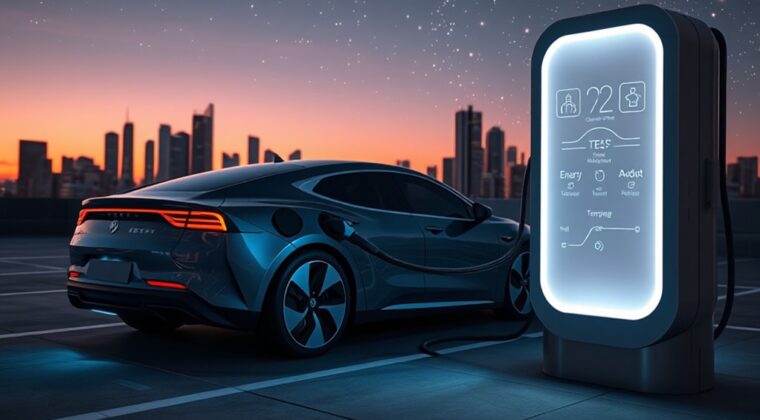
Battery preconditioning prepares your electric vehicle’s high-voltage battery for better charging, driving, or both. In simple terms, the car warms or cools the battery so it can accept power more safely and efficiently, especially before DC fast charging in cold weather.
The exact temperature target is not something you need to manage yourself. Your EV’s battery management system decides what the pack needs based on battery temperature, state of charge, charger power, route, weather, and software settings. Your job is to give the car enough time and the right signal, usually by setting a fast charger as your navigation destination.
Quick Answer
Precondition your EV battery before DC fast charging when the weather is cold, very hot, or your car recommends it. The easiest method is to select a compatible fast charger in the vehicle’s navigation system and allow the car time to warm or cool the battery before you arrive.
Key Takeaways
- Battery preconditioning is most useful before DC fast charging, especially in cold weather.
- The car, not the driver, controls the exact battery temperature target through the battery management system.
- Using the built-in navigation to route to a fast charger is often the most reliable way to trigger battery preconditioning.
- Preconditioning while plugged in can save driving range because the car can draw energy from the grid instead of the battery.
- Preconditioning cannot override normal charging taper, a weak charger, a full battery, or a battery warning that needs service.
At a Glance
| Time Required | Usually 15 to 45 minutes before fast charging; longer if the battery is deeply cold-soaked. |
| Difficulty | Easy. Most drivers only need the EV’s navigation system or mobile app. |
| Tools Needed | In-car navigation, EV mobile app, and a charger or plug when preconditioning before departure. |
| Cost | Usually only the small amount of electricity used for battery heating or cooling. |
Understanding Battery Preconditioning: Why It Matters
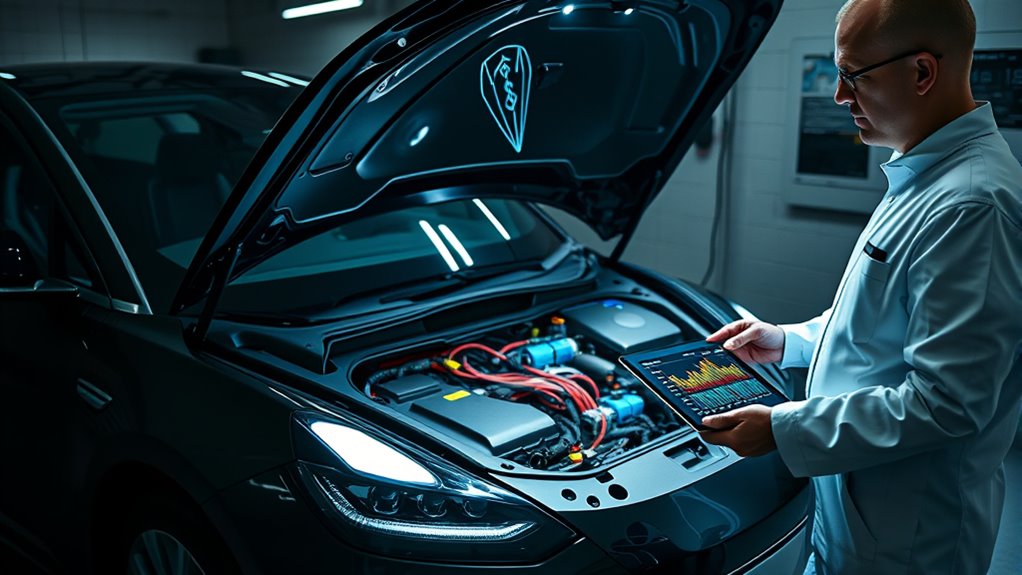
Battery preconditioning means your EV uses its thermal management system to bring the battery closer to the temperature it wants for the next task. That task may be fast charging, leaving for a scheduled drive, or protecting the battery in extreme heat or cold.
This matters because lithium-ion batteries are temperature-sensitive. In cold weather, chemical reactions slow down and the battery may accept less power. In very hot conditions, the car may limit charging to protect the pack. Modern EVs use battery management software, heaters, coolant loops, heat pumps, or chillers to keep the battery in a safer working range.
Cold-weather reports have shown that EVs can lose noticeable driving range and charge more slowly in freezing conditions. AP/Edmunds winter EV guidance notes that very cold weather can reduce range and slow fast charging, while preconditioning can improve charging speed.
Note: Battery preconditioning does not mean forcing your battery to one fixed temperature. The correct target depends on the vehicle, battery chemistry, charger power, ambient temperature, and state of charge.
How Battery Temperature Influences Preconditioning Efficiency
Battery temperature affects how quickly energy can move into or out of the pack. When the battery is too cold, the EV may limit DC fast-charging power to protect the cells. When the battery is too hot, the EV may cool the pack or reduce charging power to avoid extra stress.
Preconditioning helps by letting the vehicle prepare the battery before the moment you need peak performance. If you wait until you plug into a fast charger, the car may spend the first part of the charging session heating the pack instead of accepting high charging power.
Research on fast charging and thermal management shows why this is more complex than a single temperature number. Charging current, pack temperature, cooling health, voltage limits, and lithium-plating risk all have to be managed together during high-power charging. Recent battery fast-charging research highlights that safe fast charging must respect thermal and electrochemical limits.
A warm enough battery can usually accept DC fast-charging power more readily than a cold-soaked battery, but your EV’s software decides the safe charging limit.
Ideal Temperature Range for EV Battery Performance
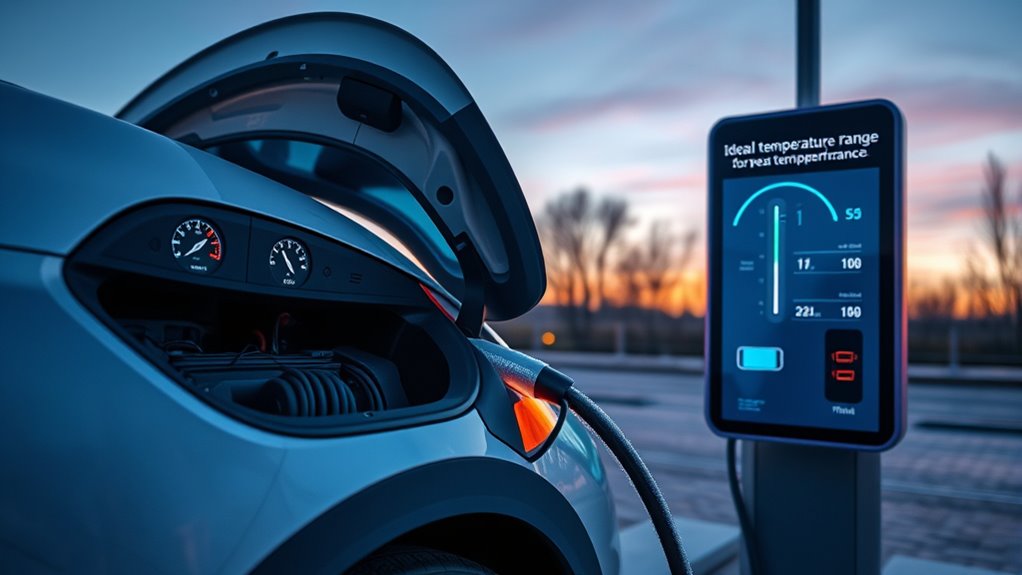
For everyday driving, EV batteries generally perform best in moderate temperatures. For DC fast charging, the pack may need to be warmer than it would be during normal parking, but the exact range is controlled by the vehicle. That is why your owner manual and in-car messages matter more than any general number you see online.
Optimal Temperature Range
A practical way to think about the ideal range is this: your battery likes mild conditions for daily efficiency, needs extra warmth for cold-weather fast charging, and needs cooling support in high heat. The battery management system handles these adjustments automatically when the car supports the feature.
Some EVs show a battery heating or conditioning message. Others do the work silently in the background. Either way, you do not need to manually measure pack temperature unless your vehicle provides that information as part of its normal display.
Temperature Impact on Charging
Charging speed is not based on temperature alone. It also depends on battery state of charge, charger capacity, battery size, charging curve, software, and whether the charger is sharing power with another vehicle.
Even with a perfectly preconditioned battery, charging will usually slow as the battery fills. That taper is normal. A warm battery can help you reach higher charging power earlier, but it will not make a battery charge at peak speed all the way to 100%.
Signs Your EV Battery Needs Preconditioning
Your EV may not always say “preconditioning needed.” Instead, you may notice performance clues, charging messages, or reduced energy recovery. These signs are most common in winter, after the car sits outside for hours, or before a high-power charging stop.
Reduced Charging Speed
A cold battery may accept much less power than expected at a DC fast charger. You may see a low kilowatt number, a “battery heating” message, or a charging estimate that starts long and improves after the pack warms.
- Slow DC charging: The charger is capable of more power, but your car is taking much less than usual.
- Battery heating message: The vehicle says it is warming the battery before or during charging.
- Cold-weather arrival: You reached a fast charger after parking outside in freezing weather.
- Limited regenerative braking: The car reduces regen because the battery is too cold or too full.
Decreased Range Performance
Cold weather can reduce range because the battery is less efficient and the car uses energy for heat. Preconditioning before departure, especially while plugged in, can help because the cabin and sometimes the battery start warmer before you drive.
Do not treat the range estimate as a fixed promise. Speed, wind, tires, rain, elevation, road conditions, HVAC use, and battery temperature can all change real-world range.
Inconsistent Battery Temperature
You may feel inconsistent performance when the battery starts very cold, heats during driving, and then reaches a fast charger before it is fully ready. The car may also limit power in extreme heat if the pack needs cooling.
If the vehicle repeatedly shows battery temperature warnings, refuses to charge normally in mild weather, or limits power without an obvious reason, schedule service instead of assuming preconditioning will fix it.
Warning: Do not ignore battery, charging, or thermal warnings. Follow your EV’s owner manual and dashboard instructions. Preconditioning is a normal convenience feature, not a repair for a battery fault.
Preconditioning Your EV Battery: A Simple How-To
The best method depends on your EV, but the general process is simple. Use these steps before a DC fast-charging stop, especially in winter.
- Choose the fast charger in your car’s navigation system. Select the actual charging station, not just a nearby address, when your EV supports charger-based routing.
- Give the car enough driving time. Many EVs need around 15 to 45 minutes to prepare the battery. A deeply cold-soaked battery may need longer.
- Keep enough charge for heating. Avoid arriving at a charger with an extremely low battery in severe cold. The car may need energy to warm the pack.
- Precondition while plugged in before departure. If you are leaving from home, schedule cabin or battery preconditioning while the car is still connected to power.
- Let the car manage the temperature. Do not try to override the process with repeated plug-ins, aggressive driving, or unofficial workarounds.
- Expect normal charging taper. Even after preconditioning, charging slows as the battery fills, especially above roughly 80% on many EVs.
Pro Tip: If your EV has route-based battery conditioning, selecting the charger in the built-in navigation is usually more reliable than simply driving to the charger with a phone map.
Why Preconditioning Boosts Your Charging Experience
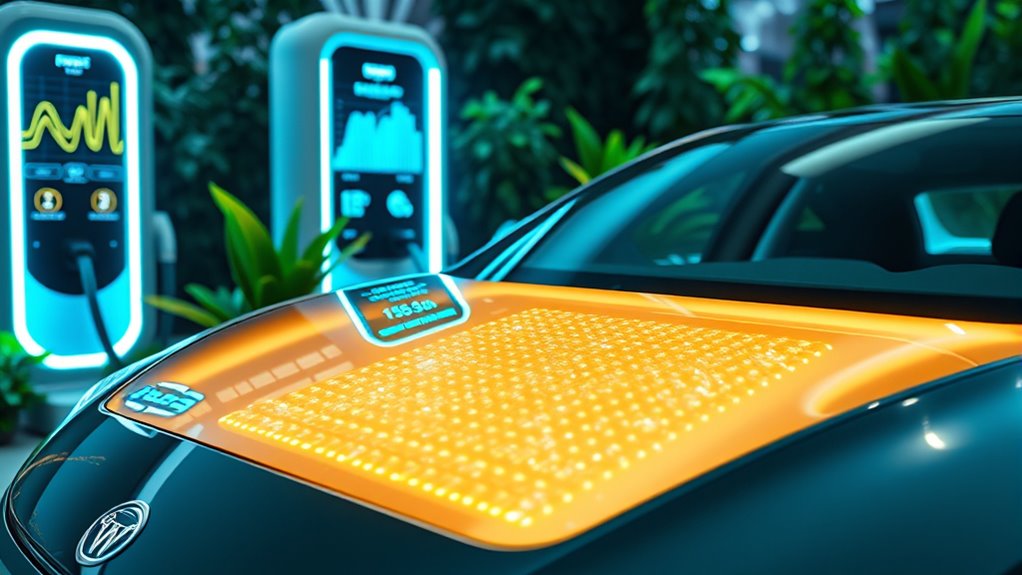
Preconditioning can make charging feel smoother because the battery is closer to the condition it needs before the session starts. Instead of spending the first part of the stop waiting for the pack to warm or cool, the car may be ready to accept stronger charging power sooner.
That benefit is most noticeable when the battery is cold and you are using a DC fast charger. It is usually less important for overnight Level 1 or Level 2 charging because those charging speeds are much lower and the car has more time to manage temperature.
- Faster early-session charging: A prepared battery may reach better DC charging power sooner.
- Less range wasted on warm-up: Preconditioning while plugged in can use grid power instead of stored battery energy.
- Better cold-weather drivability: A warmer battery may restore stronger regenerative braking and more consistent acceleration.
- Battery protection: The BMS can limit charging or adjust temperature to reduce stress during high-power sessions.
Top Preconditioning Mistakes That Could Harm Your Battery
Preconditioning is easy, but a few habits can reduce the benefit or create unnecessary stress. The goal is to let the car manage the battery, not to force a result.
| Mistake | Why It Matters | Better Move |
|---|---|---|
| Assuming cabin heat equals battery preconditioning | Some cars separate cabin comfort from battery conditioning. | Use the car’s battery conditioning, scheduled departure, or route-to-charger feature. |
| Starting too late | The battery may still be cold when you plug in. | Set the charger in navigation early enough to give the car time. |
| Arriving nearly empty in severe cold | The car may need energy to heat the pack before accepting strong charging power. | Keep a safer buffer in freezing weather. |
| Expecting peak speed at high state of charge | Most EVs taper charging as the battery fills. | Fast charge mainly through the lower and middle part of the battery when practical. |
| Ignoring heat warnings | A hot battery may need cooling before safe high-power charging. | Let the vehicle cool the pack and follow dashboard prompts. |
How Preconditioning Enhances Charging Efficiency: Best Practices
To get the best results, use battery preconditioning as part of your charging plan rather than as a last-minute fix. This is especially important for road trips, winter commuting, and long charging stops.
- Use built-in trip planning: EV navigation can often plan charger stops and prepare the battery along the way.
- Precondition while plugged in: This reduces the amount of battery energy used to heat or cool the car before driving.
- Do not chase 100% on road trips: Charging often slows near the top of the battery, even when the pack is warm.
- Check charger power: A 50 kW charger will not deliver 250 kW just because your battery is preconditioned.
- Update vehicle software: Automakers often improve charging behavior and route planning through software updates.
Recent research on battery thermal management shows that the best result comes from coordinating charging power with heating or cooling, rather than treating temperature as a separate issue. Integrated fast-charging and thermal-management research supports this balance between speed, energy use, and battery health.
Battery vs. Cabin Preconditioning: Key Differences
Battery preconditioning and cabin preconditioning are related, but they are not the same thing. One prepares the high-voltage battery. The other prepares the interior for comfort.
| Feature | Battery Preconditioning | Cabin Preconditioning |
|---|---|---|
| Main purpose | Prepare the battery for charging, driving, or thermal protection. | Heat or cool the interior before you get in. |
| Best use | Before DC fast charging or extreme-weather driving. | Before departure for comfort and range savings. |
| How it starts | Often through charger navigation, scheduled departure, or automatic BMS control. | Usually through the app, timer, or climate menu. |
| Effect on charging | Can help DC fast-charging performance when the battery is too cold or too hot. | Mainly improves comfort, but may indirectly save range when done while plugged in. |
Tips for Maximizing Preconditioning Benefits in Different Weather Conditions
The right preconditioning strategy changes with the weather. Cold weather usually means warming the battery. Hot weather may mean cooling the battery before or during charging.
Cold Weather Preconditioning Tips
- Set your departure time while plugged in: This warms the cabin and may help prepare the battery before you leave.
- Route to the charger early: Give the car enough time to warm the pack before a DC fast-charging stop.
- Keep a charge buffer: In freezing weather, avoid arriving at a charger with the battery extremely low.
- Expect slower charging if the battery sat outside: A cold-soaked battery can take longer to prepare.
Hot Weather Preconditioning Tips
- Park in shade when possible: Less heat soak can reduce the cooling work needed later.
- Let the car cool the battery: If your EV limits charging due to heat, follow the dashboard guidance.
- Avoid repeated high-power charging when unnecessary: Heat and fast charging can add stress, so use Level 2 charging when it fits your schedule.
- Keep software updated: Charging and thermal-management updates can improve hot-weather behavior.
Note: In both hot and cold weather, preconditioning uses energy. When you can, do it while plugged in so more of your stored battery energy remains available for driving.
What Preconditioning Can and Cannot Do
Preconditioning is useful, but it is not magic. It improves the conditions for charging or driving, but it does not remove every limit in the system.
| Preconditioning Can Help With | Preconditioning Cannot Fix |
|---|---|
| Cold-battery DC fast-charging limits | A charger that is broken, shared, or power-limited |
| Cold-weather range loss from starting with a cold cabin and battery | Normal charging taper at high state of charge |
| Reduced regenerative braking when the battery is cold | Battery degradation, service warnings, or hardware faults |
| Hot-weather thermal preparation before charging | A vehicle that does not support active battery conditioning |
Frequently Asked Questions
Should you precondition an EV before charging?
Yes, precondition before DC fast charging when the weather is cold, very hot, or your EV recommends it. It is less important for normal overnight Level 1 or Level 2 charging unless your car uses scheduled departure to prepare the battery and cabin.
What drains EV batteries the most?
High speed, hard acceleration, cabin heat, extreme cold, underinflated tires, heavy loads, roof racks, and steep climbs can all drain an EV battery faster. In winter, cabin heating and battery warming can use noticeable energy, so preconditioning while plugged in can help preserve range.
What happens if you do not precondition your battery?
If the battery is already at a good temperature, you may not notice much difference. If the battery is very cold or hot, the car may limit charging power, reduce regenerative braking, show longer charging estimates, or use energy during the session to heat or cool the pack.
When should I use battery preconditioning?
Use it before DC fast charging in cold weather, before a planned departure in extreme temperatures, and whenever your EV’s navigation or dashboard recommends it. For road trips, set the charging stop in the car’s navigation early enough for the battery to prepare.
Is battery preconditioning the same as cabin preconditioning?
No. Cabin preconditioning heats or cools the interior for comfort. Battery preconditioning prepares the high-voltage battery for charging, driving, or thermal protection. Some vehicles coordinate both, especially during scheduled departure while plugged in.
Does battery preconditioning use range?
Yes, it uses energy. If the vehicle is unplugged, that energy comes from the battery. If it is plugged in, much of the energy can come from the grid, which is why scheduled departure and plugged-in preconditioning are useful before cold-weather driving.
Conclusion
Battery preconditioning is one of the easiest ways to improve your EV charging experience in extreme weather. Use your EV’s navigation or scheduled departure feature, give the battery time to prepare, and precondition while plugged in whenever you can. The benefit will vary by vehicle, charger, weather, and state of charge, but the rule is simple: let the car prepare the battery before you ask it to charge or drive hard.
Sources
- AP / Edmunds winter EV driving guidance – backs cold-weather range loss, slower fast charging, and preheating while plugged in.
- Associated Press report on EV cold-weather charging – backs navigation-based preconditioning and cold-battery charging delays.
- Repair-before-veto control for safe lithium-ion fast charging – backs fast-charging thermal and electrochemical safety limits.
- Integrated optimal fast charging and active thermal management of lithium-ion batteries – backs the role of active thermal management during fast charging.
- Online EV charging control with battery thermal management in cold environments – backs cold-weather charging control and battery heating needs.