
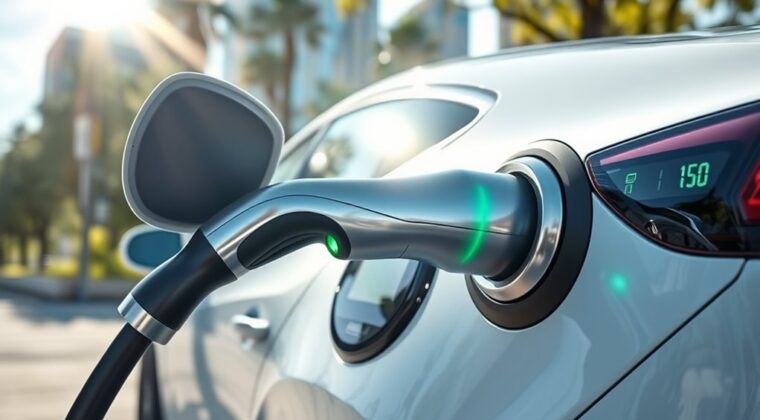
CCS charging is one of the main fast-charging systems used by electric vehicles, especially non-Tesla EVs in North America and many EVs in Europe. It matters because the same vehicle charge port can support slower AC charging and high-power DC fast charging, but the real charging speed depends on your vehicle, battery, charger, and connector support.
Quick Answer
CCS, short for Combined Charging System, lets many EVs use one charge port for AC Level 1/2 charging and DC fast charging. Some CCS stations can deliver very high power, but your real speed depends on the car, battery temperature, state of charge, charger rating, and whether power is being shared.
Key Takeaways
- CCS combines AC and DC charging access in one vehicle inlet, using extra lower pins for DC fast charging.
- A high-power CCS charger does not guarantee a high charging speed; your EV controls how much power it accepts.
- A realistic public DC fast-charging estimate is often about 100 to 200+ miles in 30 minutes, not a fixed number for every EV.
- In North America, CCS remains important while SAE J3400, also called NACS, expands across new EVs and charging networks.
- Plug&Charge can make charging easier, but it requires a compatible vehicle, charger, account, and enrollment.
Understanding CCS Charging: How It Works and Why It Matters
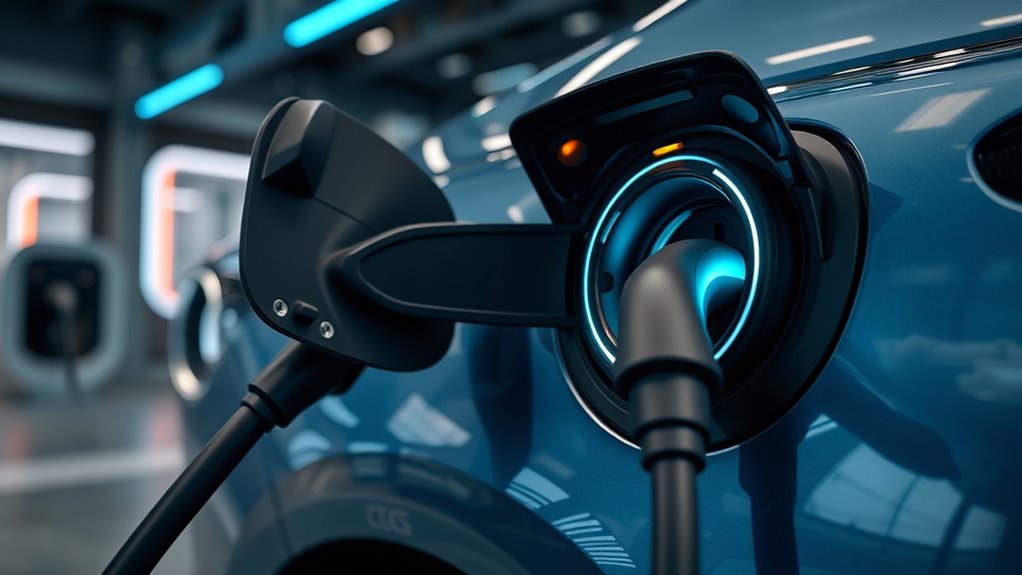
CCS stands for Combined Charging System. The “combined” part means the connector family supports both regular AC charging and DC fast charging through one vehicle charge port.
In North America, CCS is usually called CCS1 or SAE J1772 Combo. It builds on the J1772 AC connector and adds two large DC pins below it. In Europe and many other markets, the common version is CCS2, which builds on the Type 2 AC connector.
The U.S. Department of Energy’s Alternative Fuels Data Center explains that the CCS charge port can accept Level 1, Level 2, and DC fast charging equipment. That is the key benefit: one vehicle inlet can handle home charging, workplace charging, public Level 2 charging, and road-trip fast charging when the connector and station match your vehicle.
CCS is not just a plug shape. It is a connector system, charging method, and communication setup that helps the EV and charger agree on power, safety limits, and session details.
For DC fast charging, the station converts grid power to direct current before it reaches your battery. This bypasses the car’s onboard AC charger and allows much higher power than typical home charging. Your EV still controls the session by requesting only the power it can safely accept.
How Fast Is CCS Charging in Real Life?
Some public CCS fast chargers are rated up to 350 kW, and the DOE notes that DC fast charging equipment can be installed at outputs up to 500 kW. But those numbers are charger ratings, not guaranteed charging speeds for every vehicle.
A better real-world expectation is this: DC fast charging can often add about 100 to 200+ miles of range in 30 minutes, depending on the EV and conditions. That estimate is more useful than saying every CCS charger can add a fixed number of miles, because different EVs use different battery sizes, voltages, efficiency ratings, and charging curves.
Note: A 350 kW charger does not mean your EV will charge at 350 kW. Many EVs peak far below that, and even high-speed EVs usually hold their top speed only for part of the session.
Your actual CCS charging speed can be affected by:
- Vehicle maximum DC charging rate: Your EV sets the upper limit.
- Battery state of charge: Charging is usually fastest at a lower state of charge and slower near the top.
- Battery temperature: A very cold or very hot battery may charge more slowly.
- Battery preconditioning: Some EVs warm or cool the battery before fast charging.
- Charger power rating: A 50 kW charger and a 350 kW charger will not perform the same.
- Shared power cabinets: Some stations split power between charging stalls.
- Vehicle efficiency: Miles added per kWh varies by model, weather, speed, tires, and load.
Top Benefits of CCS Charging for EV Owners
CCS charging helps make EV ownership easier because it works across many brands and charging networks. For drivers, the biggest benefit is flexibility: you can use AC charging for daily needs and DC fast charging for longer trips when your vehicle and station support it.
The main benefits include:
- Broad vehicle support: Many non-Tesla EVs sold in North America use CCS1 for DC fast charging, while many European-market EVs use CCS2.
- One charge port for multiple charging types: The same inlet can support AC and DC charging.
- Road-trip usefulness: CCS fast chargers can reduce stops compared with Level 2 charging.
- Network availability: Major public fast-charging networks have deployed CCS connectors at many sites.
- Support for newer features: CCS communication can support features such as Plug&Charge when the vehicle, charger, and account are compatible.
CCS is especially useful if you drive a non-Tesla EV with a CCS inlet and want access to public fast charging along highways, in cities, or near shopping areas. It is also helpful for plug-in hybrid models that support DC fast charging, though not all plug-in hybrids do.
CCS vs NACS, CHAdeMO, and MCS
The EV charging world is changing quickly, especially in North America. CCS still matters, but SAE J3400, often called NACS, is expanding as many automakers move toward that connector for future North American EVs. The DOE now lists SAE CCS, CHAdeMO, and J3400 as DC fast-charging systems.
| Connector / Standard | Best Known For | What EV Owners Should Know |
| CCS1 | DC fast charging for many non-Tesla EVs in North America. | Still very important for existing EVs and many public fast chargers. |
| CCS2 | Common AC and DC fast-charging connector format in Europe and several other markets. | Connector shape differs from CCS1, so regional compatibility matters. |
| SAE J3400 / NACS | Tesla-style connector used for AC and DC charging in North America. | Growing across new North American EVs and some public charging networks. |
| CHAdeMO | Older DC fast-charging connector used by some Japanese EVs. | Less common on newer EVs in North America, but still relevant for some older models. |
| MCS | Megawatt Charging System for medium- and heavy-duty vehicles. | Not a normal passenger-car connector; it is aimed at trucks, buses, and fleet use. |
In short, CCS is not “dead” just because J3400 is growing. Millions of EVs still use CCS, many charging sites still provide CCS, and adapters will keep the transition period messy for a while. For your own EV, the best answer always comes from your owner’s manual, infotainment charging settings, and your automaker’s official adapter guidance.
Supporting Electric Mobility Through CCS Charging
CCS charging supports electric mobility by giving many drivers access to practical public fast charging. That matters most when you cannot charge at home, need to make a long trip, or need a quick top-up between errands.
Public charging infrastructure also depends on clear terminology. The DOE separates a charging location, an EV charging port, and a connector. One charging port may have multiple connector types, but it usually charges only one vehicle at a time. This is why a station can list both CCS and CHAdeMO, but one stall may not be able to charge two vehicles at once.
CCS also works with modern communication standards. ISO 15118-1:2019 covers high-level communication use cases between an EV and charging equipment, including identification, payment, load leveling, cybersecurity, privacy, and energy transfer. That communication layer is what makes advanced features possible.
Plug&Charge and ISO 15118
Plug&Charge is designed to reduce app juggling, card swiping, and account lookup at public chargers. When it works, you plug in and the charger automatically identifies your eligible vehicle or account and starts the session.
That does not mean every CCS vehicle can use Plug&Charge at every CCS charger. Electrify America, for example, says Plug&Charge requires an eligible vehicle and activation, and not all vehicles are eligible even when chargers are Plug&Charge capable.
Pro Tip: Before a road trip, set up your charging network accounts, payment methods, and Plug&Charge enrollment at home. Doing this at the charger can be slower, especially with weak cell service.
Future versions and deployments of ISO 15118 are also tied to smart charging and bidirectional energy use. ISO 15118-20:2022 includes communication requirements for bidirectional power transfer, which can support future vehicle-to-home, vehicle-to-grid, and smart energy features when the vehicle, charger, utility, and local rules allow it.
How to Use a CCS Fast Charger
Using a CCS fast charger is usually simple, but a few checks can save time and frustration.
- Check your vehicle port. Confirm whether your EV uses CCS1, CCS2, J3400/NACS, CHAdeMO, or another connector.
- Find a compatible station. Use your vehicle navigation, a charging app, or a network map and filter for CCS.
- Check charger power. A 50 kW station and a 350 kW station may look similar in an app, but they can charge very differently.
- Precondition the battery if your EV supports it. Many EVs do this when you navigate to a fast charger.
- Park so the cable reaches without strain. CCS cables can be heavy, especially high-power liquid-cooled cables.
- Plug in fully. Make sure the connector is seated and locked before starting the session.
- Start the session. Use Plug&Charge, the vehicle screen, the station screen, an app, RFID card, or contactless payment if available.
- Watch the charging curve. Speed may rise, peak, then taper as the battery fills.
- Consider leaving around 80% on road trips. Charging from 80% to 100% is often much slower than charging from a lower state of charge.
Warning: Never force a connector, use a damaged cable, or use an adapter that your automaker has not approved for your vehicle. The wrong adapter can fail, overheat, or simply refuse to start a session.
Why CCS Charging Still Matters Compared to Other Standards
CCS still matters because many EVs on the road use it, many fast chargers still offer it, and the J3400 transition will take time. Even if new EVs increasingly move to J3400 in North America, CCS vehicles will need reliable charging for years.
CCS also remains important outside North America. In Europe, CCS2 is deeply established, and public DC fast charging is built around that connector. This is why EV charging advice should always be regional. A connector that is common in one market may be rare in another.
For EV owners, the practical question is not which standard is “best” in the abstract. The real question is: Which connector does your vehicle have, which adapters are approved, and which chargers are available where you drive?
Future Trends in CCS Charging Infrastructure and Technology
The future of CCS charging is not just about higher peak power. It is about better reliability, clearer pricing, easier payment, stronger interoperability, and smarter use of the electric grid.
Expect these trends to shape the next phase of EV charging:
- More dual-connector sites: During the North American transition, many stations will support both CCS and J3400/NACS.
- Higher power hardware: Some DC fast chargers already reach very high ratings, but vehicle limits still matter.
- Better Plug&Charge support: More automakers and charging networks are working toward simpler automatic authentication.
- Smarter charging: ISO 15118 and related systems can help coordinate charging with grid needs, prices, and energy supply.
- Heavy-duty charging growth: MCS is aimed at trucks, buses, and commercial fleets that need much more power than passenger cars.
- Improved reliability expectations: Drivers care less about the connector name and more about whether the charger starts, bills correctly, and delivers the promised power.
For now, CCS remains a core part of EV charging. It is not the only standard, and it is not always the fastest option for every EV, but it continues to support a large share of public fast charging.
Frequently Asked Questions
What is CCS charging for EVs?
CCS charging means Combined Charging System charging. It lets a compatible EV use one charge port for AC Level 1 or Level 2 charging and DC fast charging. In North America, this is usually CCS1. In Europe and many other markets, it is usually CCS2.
What is the 80/20 rule for EV charging?
The 80/20 rule means many drivers try to fast charge between about 20% and 80% on road trips. Charging is often faster in that middle range and slower above about 80%, because the car protects the battery by reducing charging power as it fills.
Do Teslas use CCS charging?
Most Tesla vehicles in North America use the Tesla-style connector now standardized as SAE J3400/NACS. Some Tesla models can use CCS fast chargers with the correct Tesla or Tesla-approved adapter and vehicle support. In Europe, many Tesla vehicles use CCS2 for fast charging.
Can a CCS car use a Tesla Supercharger?
Sometimes. Access depends on your vehicle brand, adapter support, software, charging network rules, and the Supercharger hardware. Some non-Tesla EVs can use supported Tesla Superchargers with an approved adapter, while others cannot.
What stops someone from unplugging your electric car?
Many EVs lock the connector during active charging, especially during DC fast charging. Some stations also require account authentication before a session can start or stop. Lock behavior varies by vehicle and charger, so check your owner’s manual and never unplug another driver’s EV unless there is an emergency or clear permission.
Is CCS charging bad for the battery?
Occasional CCS fast charging is normal for EVs designed to support it. Frequent fast charging, very high heat, and charging to 100% more often than needed can add stress over time. For daily use, home or Level 2 charging is usually gentler and more convenient.
Conclusion
CCS charging is still one of the most important EV fast-charging systems. It gives many EV owners one port for AC charging and DC fast charging, supports road-trip charging, and works across many public networks. The key is to treat peak power numbers carefully. A charger may be rated for 350 kW or more, but your EV decides how much power it can accept.
As J3400/NACS grows in North America, CCS will remain part of the charging landscape for existing vehicles, dual-standard stations, adapters, and regions where CCS2 is the dominant fast-charging connector. Before you plug in, check your vehicle’s connector, approved adapters, battery preconditioning options, and the station’s real power rating. That simple habit will give you a smoother charging stop and fewer surprises.
Sources
- U.S. Department of Energy Alternative Fuels Data Center: Electric Vehicle Charging Stations — CCS connector use, DC fast charging range estimates, J3400 context, and charging speed variables.
- ISO 15118-1:2019 — vehicle-to-grid communication interface use cases, payment, load leveling, cybersecurity, and interoperability context.
- ISO 15118-20:2022 — second-generation EV-to-EVSE communication and bidirectional power transfer requirements.
- Electrify America: How to Use EV Charging Stations — CCS connector speeds, vehicle charging limits, charging curve behavior, and battery preconditioning guidance.
- Electrify America: Plug&Charge — Plug&Charge enrollment, account identification, and eligible vehicle limitations.
- Tesla: Opening the North American Charging System — NACS/J3400 background and SAE recommended practice update.