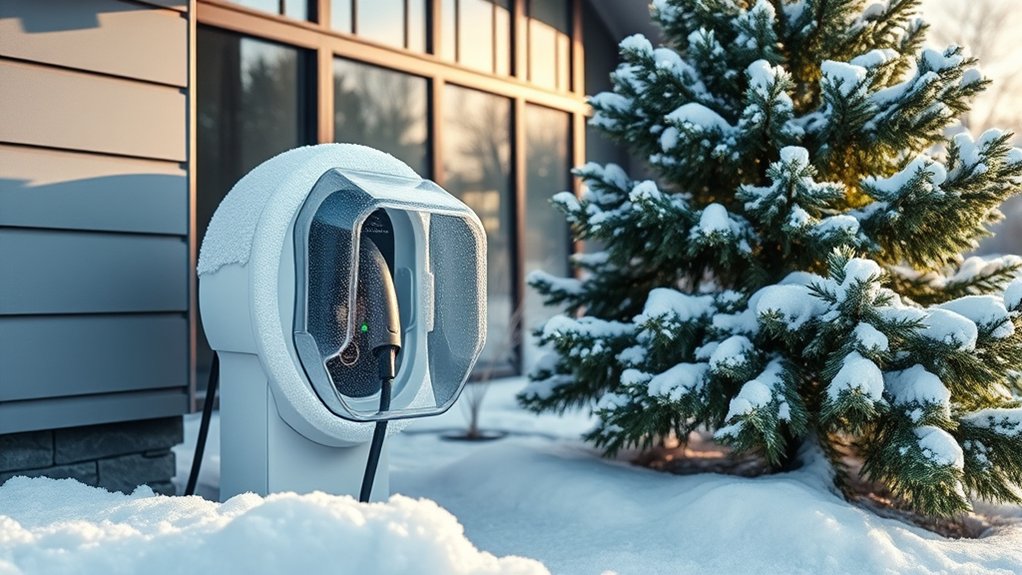
Winter can make EV charging slower, messier, and harder on your equipment if snow, ice, salt, or moisture reach the connector area. The good news is that most problems are preventable. If you keep the charge port covered, clear snow early, store cables correctly, precondition the vehicle while plugged in, and inspect the charger before each use, you can reduce frozen connector problems and keep your EV ready in cold weather.
Quick Answer
To protect your EV charger in winter, keep the connector and vehicle inlet covered, clear snow before it turns to ice, store cables off the ground, inspect for damage, and precondition the EV while it is plugged in. Never force a frozen connector, use damaged charging equipment, or rely on unapproved adapters.
Key Takeaways
- Use a fitted weatherproof cover, connector cap, or compatible magnetic inlet cover to block snow and freezing rain.
- Clear snow early with a soft brush so it does not pack around the charger, cable, or charge door.
- Leave your EV plugged in when possible and use scheduled preconditioning to warm the cabin and battery before departure.
- Stop charging and call a qualified electrician if you see damaged insulation, loose wiring, heat marks, repeated breaker trips, or a burning smell.
At a Glance
| Time Required | 5 minutes for daily checks; 15 to 30 minutes for storm prep |
| Difficulty | Easy for routine care; call a qualified electrician for wiring or charger damage |
| Tools Needed | Soft snow brush, microfiber towel, fitted connector cover, cable hook, flashlight, EV app |
| Cost | $0 to $40 for basic covers and storage accessories; more if electrical service is needed |
Why Cold Weather Is a Challenge for EV Chargers
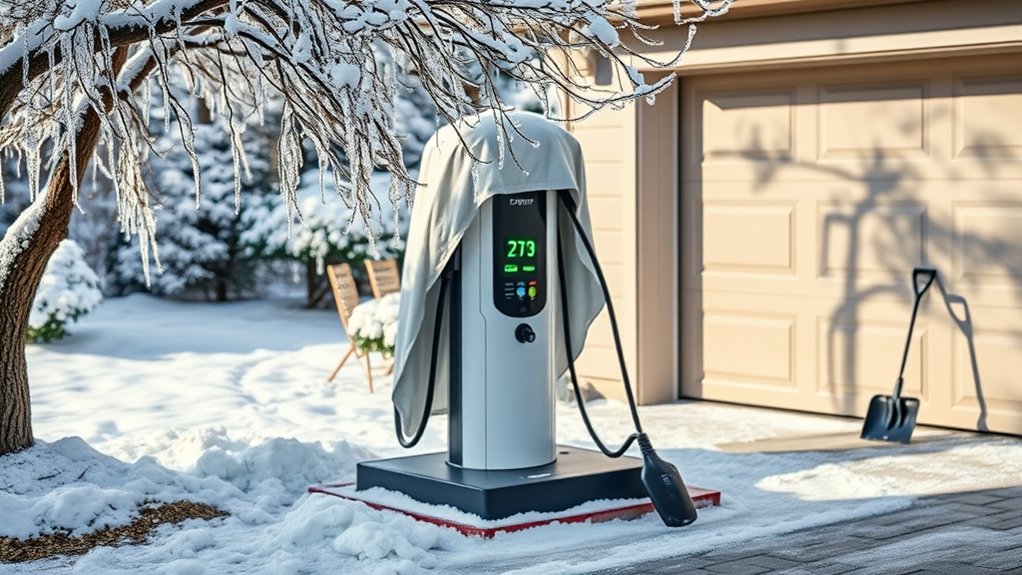
Cold weather affects two different parts of your charging routine: the charging equipment outside the vehicle and the EV battery inside the vehicle. The charger, cable, plug, and vehicle inlet can collect snow, road salt, and freezing rain. The battery can also accept power more slowly when it is cold.
FuelEconomy.gov, a U.S. Department of Energy and EPA resource, reports that EV fuel economy and range can drop in cold weather, especially when cabin heat is running. AAA testing also found a major range decrease at 20°F when HVAC heat was used. That does not mean winter EV charging is unsafe, but it does mean you need more planning.
Snow and ice can also freeze around the charge door, connector latch, or cable handle. If the plug cannot seat fully, the vehicle may refuse to charge or may charge at a reduced rate. If the latch freezes while the cable is inserted, you may need the vehicle’s charge-port heater, defrost function, or manual release procedure.
Note: A charger problem and a cold battery problem can look similar. If the cable is seated correctly but charging is slow, the battery may simply be cold. If the connector is wet, damaged, loose, or will not latch, treat it as an equipment issue.
How to Protect Your Charger From Snow and Ice
Start by protecting the connector, not just the wall unit. A weather-rated wall charger can handle outdoor conditions when installed correctly, but the plug and vehicle inlet still need help during storms. Use a fitted connector cap, a manufacturer-approved holster, or a compatible magnetic inlet cover if it does not interfere with the charge door, latch, sensors, or seals.
Before a storm, plug in before snow starts falling if your vehicle will be parked outside. Route the cable so it does not sit in a puddle, snowbank, or tire path. If the cable must cross a walking area, keep it visible and avoid creating a trip hazard. After each snowfall, use a soft brush to clear the charger face, cable handle, charge door, and the ground around your parking spot.
Do not chip ice with a screwdriver, knife, metal scraper, or hard tool. These can damage the plastic connector, rubber seals, paint around the charge port, or locking mechanism. If ice has formed, use the vehicle’s app or in-car settings to activate defrost or a charge-port heater if equipped. Tesla, for example, says its Defrost Car and inlet heater features can help thaw frozen charge-port parts on supported vehicles.
Warning: Never force a frozen connector, pour hot water into the charge port, use an open flame, or use a damaged charger. If the cable is stuck or the port will not latch after gentle thawing, check your owner’s manual or call roadside assistance.
Winter Maintenance Tips for Your Charger
Regular winter maintenance should be simple, but it needs to be consistent. Before plugging in, look over the charging cable and connector for cracked insulation, exposed wiring, bent pins, loose parts, discoloration, or melted plastic. The Electrical Safety Foundation International recommends visually inspecting the charging cable before use, never using a damaged charger, avoiding extension cords and multiplug adapters, and using certified charging equipment.
Keep the connector stored in its holster when it is not attached to the vehicle. Do not leave the plug lying in snow, mud, standing water, or road salt. If your charger has a cable hook, wrap the cable loosely so it does not kink. If you use a portable EVSE, store it indoors or in a dry, weather-resistant storage area when it is not in use.
- Clear snow from the charger body, cable path, and vehicle inlet before it hardens.
- Wipe the outside of the connector handle with a dry microfiber towel when needed.
- Keep cable loops off the ground so plows, tires, and frozen slush do not damage them.
- Check that the wall-mounted unit is secure and that its cover, holster, or door closes properly.
- Do not apply grease, sealant, spray lubricant, or protective coating to connector pins unless the manufacturer specifically allows it.
If you notice repeated breaker trips, a hot connector, buzzing, a burning smell, or moisture inside the charger enclosure, stop using the charger. A qualified electrician should inspect the circuit, GFCI protection, wiring, and EVSE before you use it again.
Effective Charging Strategies for Cold Weather
Winter charging is easier when you plan around battery temperature. Leave your EV plugged in when possible, especially overnight or before an early commute. On many EVs, this lets preconditioning draw power from the wall instead of using the battery alone. Tesla’s owner guidance, for example, says leaving the vehicle plugged in allows the charging system to help keep the battery warm when the car is not in use.
Use your EV’s scheduled departure or preconditioning feature before you drive. Preconditioning warms the cabin and, when needed, the high-voltage battery. This can improve comfort, help range, and reduce the energy needed right after you unplug. If you are heading to a DC fast charger, use the vehicle’s navigation-based route planning when available. Some EVs warm the battery automatically when the charger is set as the destination.
For daily charging, follow the charge limit recommended by your vehicle maker. Many drivers use a daily limit below 100%, but cold weather may justify charging higher before a long trip, a storm, or a day with limited charger access. The safest rule is simple: set the limit based on your owner’s manual, your next drive, and the weather.
Pro Tip: Schedule charging to finish close to your departure time. A battery that just finished charging is usually warmer than one that finished hours earlier in freezing temperatures.
Level 1 vs. Level 2 Charging in Winter
Level 1 charging from a standard household outlet can be useful for light daily driving, but it may feel very slow in deep winter. In very cold temperatures, the vehicle may use some incoming power to warm the battery and cabin, leaving less power for actual range recovery. If you rely on Level 1 outside, check the vehicle app to confirm that charging is adding range and not just maintaining the battery.
Level 2 charging is usually better for winter because it provides more power and gives the EV more room to charge while supporting thermal management. A permanently installed Level 2 charger should be installed by a qualified electrician and should use the correct circuit, breaker, wire size, weather rating, and GFCI protection for your location.
Do not use household extension cords, multiplug adapters, or unapproved plug adapters to “stretch” your charger to the vehicle. EV charging is a high-load task that can run for hours. Using the wrong cord or adapter can overheat equipment and create a fire or shock hazard.
How to Use Tech to Keep Your Charger Healthy
Smart charger apps and vehicle apps can help you catch winter charging problems before they become bigger issues. Check your app after plugging in to confirm the session actually started, the charge rate looks normal, and the vehicle is scheduled to reach the target charge before you leave.
- Set cold-weather alerts: Turn on notifications for charging interrupted, cable disconnected, low battery, or delayed charging.
- Use scheduled charging: Time charging so it ends near departure, especially before very cold mornings.
- Watch for reduced charge rate: A slower rate can be normal with a cold battery, but a sudden drop after a connector wiggle may point to a seating issue.
- Check charger status lights: Learn your charger’s normal light pattern so you can spot faults quickly.
- Keep firmware current: If your charger supports updates, install them through the official app or manufacturer instructions.
If your app reports repeated faults during storms, inspect the connector area first. Snow packed behind the charge door, a partially seated plug, or ice around the latch can interrupt charging. If the equipment looks clean and dry but faults continue, contact the charger manufacturer or an electrician.
Cold-weather charging is not just about adding power. It is about keeping the connector dry, the cable protected, and the battery warm enough to accept energy efficiently.
Community Insights for Winter Charger Care
EV owners in snowy climates tend to develop a few habits that make winter charging less frustrating. The most useful habit is checking the charger area before a storm, not after. If you wait until freezing rain has already sealed the charge door or cable handle, the fix takes longer and carries more risk of damage.
Proper Charger Storage Techniques
Proper storage keeps the connector clean and prevents cable damage. Keep the plug in its holster with the opening facing down or protected as designed. Store portable charging equipment in a dry place when not in use. If you charge outdoors every day, add a wall hook or cable hanger so the cable does not freeze into slush.
- Keep the connector off the ground when it is not plugged in.
- Do not close a garage door, trunk, or gate on a charging cable.
- Keep cables away from snowblower paths, plow piles, and sharp ice edges.
- Do not coil the cable tightly in extreme cold, because stiff insulation can crack more easily.
Insulation and Weatherproofing Options
Weatherproofing should protect the equipment without trapping moisture or blocking ventilation. Use covers and caps that fit your charger and vehicle inlet. Avoid homemade covers that press on the latch, bend the cable, block drainage, or interfere with connector seating.
| Winter Problem | Best Protection |
|---|---|
| Snow packs around connector | Use a fitted inlet cover and brush snow away after each storm. |
| Cable freezes to ground | Hang the cable loosely on a wall hook and route it away from puddles. |
| Charge door freezes shut | Use vehicle preconditioning, app-based defrost, or the manual procedure in your owner’s guide. |
| Salt and grime collect on handle | Wipe only the exterior handle with a dry cloth; do not spray cleaner into the connector. |
Regular Maintenance Practices
A quick inspection before each winter charging session can prevent most avoidable issues. Look for cracked cable jackets, exposed wire, loose wall mounts, missing connector caps, water inside the holster, unusual charger lights, or a plug that feels loose when inserted.
After major storms, check the area around the charger before driving away. Snow piled against the unit can hide cable strain, ice buildup, or impact damage. If a snowblower, shovel, or vehicle hits the charger, stop using it until it has been inspected.
What Not to Do During Winter Charging
- Do not use extension cords or multiplug adapters for EV charging.
- Do not charge with a cable that has cuts, cracks, exposed wire, melted areas, or a loose plug.
- Do not force the connector into or out of the vehicle inlet.
- Do not pour boiling water into the charge port or onto the connector.
- Do not pack snow around the charger base when shoveling.
- Do not ignore repeated charger faults, breaker trips, or heat marks.
EV charging equipment is designed with safety systems, but those systems cannot protect you from every damaged cable, incorrect installation, or improvised adapter. When in doubt, stop charging and get the equipment checked.
Frequently Asked Questions
Should I keep my EV plugged in during winter?
Yes, keep it plugged in when possible, especially before cold mornings or long trips. This lets the vehicle use wall power for scheduled preconditioning and battery warming when supported. Follow your owner’s manual for daily charge limits and long-term storage settings.
How do I avoid battery drain during winter?
Precondition the cabin and battery while plugged in, keep the battery above your normal low-charge comfort level, use seat heaters when practical, keep tires inflated, and avoid repeated short trips from a cold start. For long winter drives, charge higher before departure if your vehicle maker allows it.
How do I protect my EV charger outside?
Use outdoor-rated charging equipment, keep the connector in its holster, cover the inlet with a compatible cap or weather cover, keep the cable off the ground, and clear snow before it hardens. Do not use damaged cables, extension cords, or unapproved adapters.
What drains EV batteries the most in cold weather?
Cabin heating, battery warming, low tire pressure, dense cold air, snow-covered roads, and aggressive driving all use extra energy. Cold batteries may also limit regenerative braking and fast-charging speed until they warm up.
What should I do if my charge port freezes?
Do not force it. Use the vehicle’s app-based defrost, charge-port heater, scheduled preconditioning, or owner’s-manual release procedure if available. If the cable is stuck or the latch will not work after gentle thawing, contact roadside assistance or service.
Conclusion
Protecting your EV charger in winter comes down to prevention: keep snow and ice away from the connector, store the cable properly, inspect for damage, and use your EV’s preconditioning tools before cold departures. A charger that is clean, dry, securely mounted, and used according to the manufacturer’s instructions is far more likely to stay reliable through freezing mornings and heavy storms.
If anything looks damaged, overheated, loose, or wet inside the charger, do not treat it as a minor winter inconvenience. Stop charging and have the equipment checked by a qualified electrician or the charger manufacturer before using it again.
Sources
- FuelEconomy.gov: Fuel Economy in Cold Weather — supports cold-weather EV range and efficiency impacts.
- AAA Newsroom: Icy Temperatures Cut Electric Vehicle Range Nearly in Half — supports 20°F range-loss testing and preheating guidance.
- Tesla Model 3 Owner’s Manual: Cold Weather Best Practices — supports charge-port thawing, plugged-in storage, and preconditioning guidance.
- Tesla Support: Winter Driving Tips — supports scheduling, preconditioning, plugged-in charging, and winter energy tips.
- Electrical Safety Foundation International: Electric Vehicle Charging Safety — supports charger inspection, approved cables, GFCI protection, and avoiding extension cords.
- Alternative Fuels Data Center: Maintenance and Safety of Electric Vehicles — supports EV maintenance and high-voltage safety context.