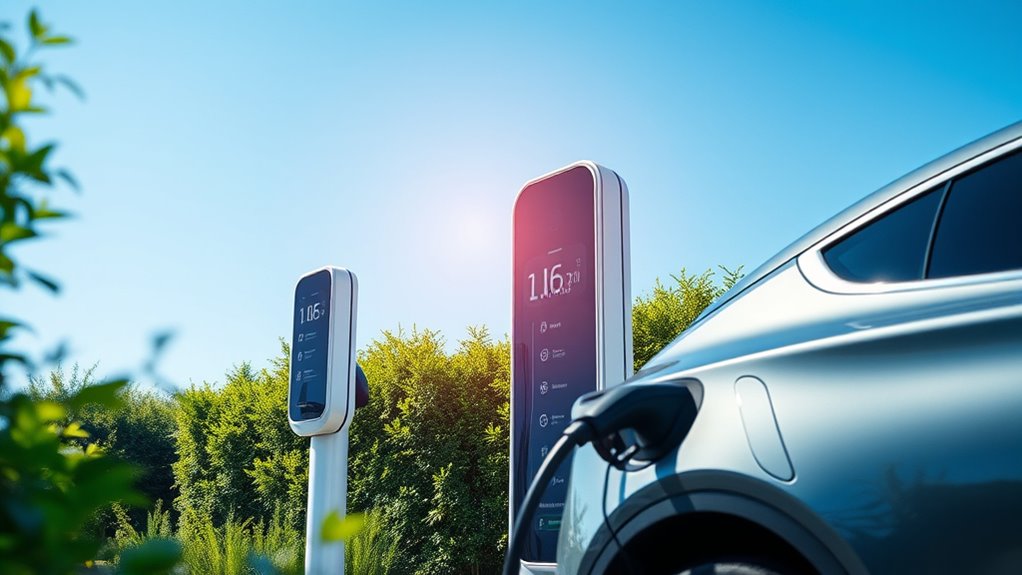
OCPP, short for Open Charge Point Protocol, is the open communication standard that helps electric vehicle chargers talk to the software platforms that manage them. For drivers, it can mean more reliable charging. For site owners and charging networks, it can mean easier monitoring, billing, maintenance, and vendor flexibility.
Quick Answer
OCPP is an open protocol that connects EV charging stations to charging management systems. It helps operators start and stop sessions, monitor charger status, handle authorization, support billing, manage energy use, and reduce vendor lock-in when chargers and software support compatible OCPP versions.
Key Takeaways
- OCPP mainly handles communication between a charger and the back-end charging management system.
- It helps charge point operators monitor chargers, manage sessions, support pricing, and avoid being locked into one vendor.
- OCPP 1.6 is still widely used, while OCPP 2.0.1 and OCPP 2.1 add stronger support for security, device management, smart charging, and future grid features.
- OCPP is different from ISO 15118, which covers vehicle-to-charger communication, and OCPI, which supports network-to-network roaming and data exchange.
- Compatibility is not automatic. Chargers, software, security profiles, firmware, and certification all matter.
What Is OCPP and Why It Matters for EV Charging

OCPP is a global open communication protocol between charging stations and charging management systems. In simple terms, it gives chargers and back-end software a shared language.
That matters because public and commercial EV charging networks often include hardware, software, payment tools, energy controls, and maintenance systems from different companies. Without a common protocol, a site owner may be locked into one vendor or struggle to switch networks later.
With OCPP, a compatible charger can send status updates, report errors, start and stop sessions, share meter values, receive configuration changes, and connect to billing or user authorization systems. This helps charging networks operate more reliably and gives site owners more flexibility when choosing equipment and software.
Note: OCPP does not mean every charger will work perfectly with every network. The charger and software still need compatible OCPP versions, correct configuration, secure communication settings, and real-world testing.
How OCPP Works During a Charging Session
OCPP works in the background. A driver may only see a charger screen, app, RFID card, or payment terminal, but the charger is also exchanging messages with its charging station management system.
- The charger connects to the back end. The charging station checks in with the management system and reports that it is available, busy, offline, or in fault mode.
- The user starts a session. The charger may accept an app request, RFID card, payment method, Plug & Charge flow, or remote start command.
- The system authorizes the session. The back end checks whether the driver, account, fleet card, or payment method is allowed to charge.
- The charger reports live session data. It can send meter values, charging status, connector status, and error codes.
- The operator can manage the charger remotely. Depending on the OCPP version and implementation, the operator may adjust settings, apply smart charging limits, restart the unit, update firmware, or diagnose faults.
- The session ends and billing data is recorded. The system stores energy use, time, pricing details, and transaction records for reporting or billing.
OCPP vs ISO 15118 vs OCPI
OCPP is often mentioned with other EV charging standards, especially ISO 15118 and OCPI. They are related, but they do different jobs.
| Standard | Main Communication Path | What It Helps With |
|---|---|---|
| OCPP | Charger to charging management system | Remote monitoring, session control, smart charging, billing data, device management, vendor flexibility |
| ISO 15118 | Vehicle to charger | Plug & Charge, vehicle-to-grid communication, secure vehicle-charger data exchange, bidirectional power-transfer communication |
| OCPI | Charging network to charging network | Roaming, public charger location data, pricing data, network-to-network communication, app visibility |
Think of it this way: ISO 15118 helps the car and charger communicate, OCPP helps the charger and network software communicate, and OCPI helps charging networks share data with each other.
Key Features of the Open Charge Point Protocol
The most useful OCPP features depend on the version and the way the charger manufacturer and software provider implement it. In general, OCPP can support these functions:
| Feature | What It Means |
|---|---|
| Interoperability | Helps chargers and management systems from different vendors work together when they support compatible OCPP versions. |
| Remote Monitoring | Allows operators to see charger status, connector status, faults, and transaction data from a central dashboard. |
| Authorization | Supports user access through RFID cards, apps, accounts, remote start commands, and other configured methods. |
| Smart Charging | Can help operators manage load, reduce demand spikes, and apply charging profiles across one or more stations. |
| Device Management | OCPP 2.0.1 and newer versions improve configuration, monitoring, transaction handling, security, and management features. |
| Future Grid Support | OCPP 2.1 adds support for ISO 15118-20, bidirectional charging, distributed energy resources, and more flexible transaction options. |
A Timeline of OCPP Versions and Their Impact
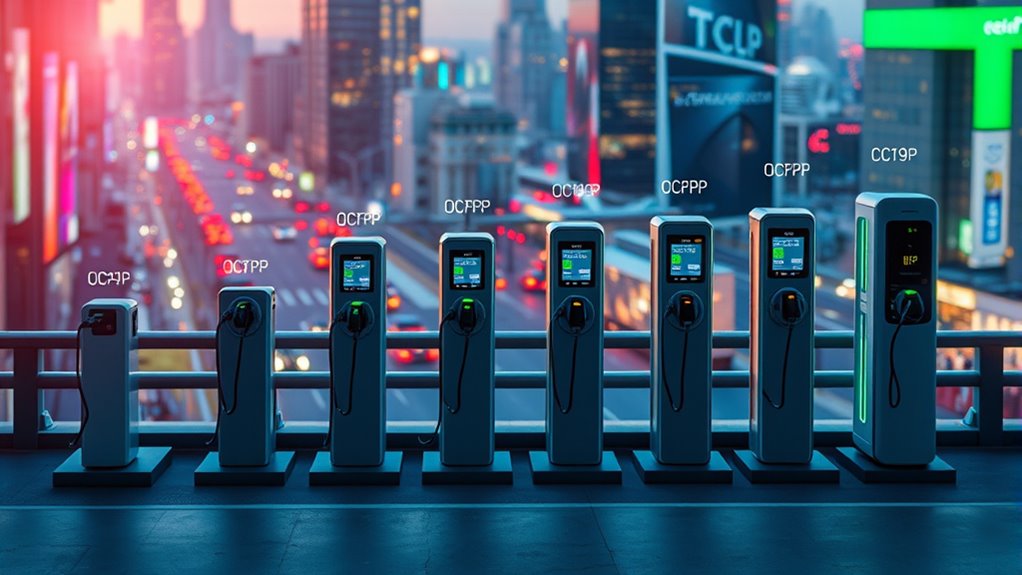
OCPP has changed as EV charging networks have become larger, smarter, and more security-focused. The three main versions you are most likely to see today are OCPP 1.6, OCPP 2.0.1, and OCPP 2.1.
| Version | Status and Main Value | Compatibility Note |
|---|---|---|
| OCPP 1.6 | Released in 2015 and still widely implemented. It supports SOAP and JSON versions, plus smart charging for load balancing and charging profiles. | Common in existing deployments, but it is not compatible with OCPP 2.0.1 application logic. |
| OCPP 2.0.1 | Released in 2020. It adds stronger device management, improved transaction handling, added security, smart charging functions, ISO 15118 support, and display or messaging support. | A major step up from 1.6, but not backward-compatible with OCPP 1.6. |
| OCPP 2.1 | Released in 2025. It adds ISO 15118-20 support, bidirectional charging functions, DER control, improved smart charging, local cost calculation, battery swapping support, and new authorization options. | Designed to build on OCPP 2.0.1 so application logic developed for 2.0.1 can continue to work in OCPP 2.1. |
Warning: Do not choose a charger based on “OCPP compatible” wording alone. Ask which version is supported, which security profile is used, whether the product is certified, and whether it has been tested with your chosen charging management system.
Understanding OCPP’s Role in Communication
OCPP is mainly about the communication between a charging station and a central charging station management system. It is not the same as the physical plug, the charging connector, or the vehicle-to-charger communication standard.
Key Communication Functions
Common OCPP communication functions include:
- Heartbeat messages: The charger regularly tells the management system it is online.
- Status notifications: The charger reports whether a connector is available, charging, reserved, unavailable, or faulted.
- Authorization checks: The system checks whether a driver, RFID card, app account, or fleet credential is allowed to charge.
- Transaction messages: The charger and back end record when a session starts, how much energy is delivered, and when the session ends.
- Meter values: The charger sends energy and power data that may support reporting, billing, fleet tracking, or load management.
- Remote commands: Operators may start, stop, unlock, configure, reboot, or update chargers remotely when supported.
Enhancing Interoperability Standards
OCPP helps reduce vendor lock-in because a site owner can choose chargers and software that use the same open protocol. This can make it easier to change a charging network provider later without replacing every charger.
Interoperability still depends on details. A charger that supports OCPP 1.6 may not support the same functions as a charger using OCPP 2.0.1 or 2.1. A charger may also support only a subset of features. That is why version support, certification, test results, security configuration, and service agreements matter.
Real-World Applications of OCPP
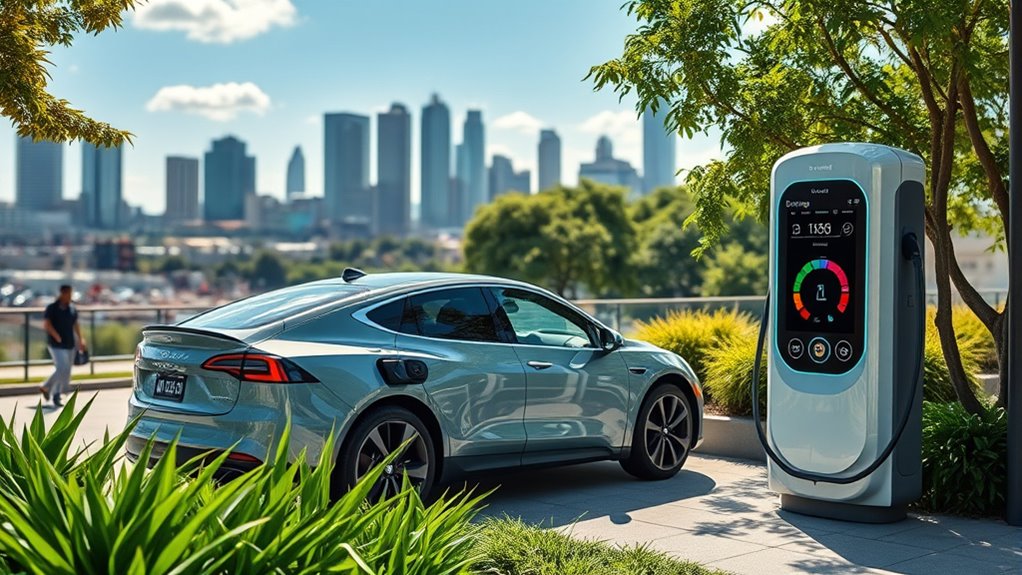
OCPP is most useful for charging networks and site owners that need to operate more than a simple plug-in charger. It is common in public charging, workplace charging, fleet depots, multifamily properties, retail locations, parking garages, and utility-managed programs.
- Public charging networks: Operators can monitor uptime, manage faults, collect transaction data, and support user access.
- Fleet depots: Fleet managers can schedule charging, limit demand, track energy use, and prioritize vehicles by route needs.
- Workplaces and apartments: Site owners can control access, assign users, track usage, and apply pricing rules.
- Retail and hospitality sites: Operators can see charger availability, troubleshoot faults, and manage customer-facing charging.
- Utilities and energy programs: Smart charging functions can help reduce peak load when supported by the charger, back end, and local program design.
OCPP is less about the plug in your hand and more about the software language that keeps chargers visible, manageable, billable, and flexible behind the scenes.
OCPP Certification and Buying Checklist
The Open Charge Alliance certification program lets vendors test OCPP implementations through approved independent laboratories. Certification can help buyers reduce integration risk, but it should still be paired with real testing in your own network setup.
Before buying or deploying OCPP chargers, ask these questions:
- Which OCPP version is supported? Ask whether it is OCPP 1.6J, 2.0.1, or 2.1.
- Is the product OCA-certified? Ask for the certificate and verify it with the Open Charge Alliance.
- Which security profile is used? Stronger deployments should use secure connections and proper certificate handling.
- Has the charger been tested with your exact back end? OCPP support on paper does not always guarantee smooth integration.
- Can the charger switch networks? This matters if you want to avoid vendor lock-in.
- Which features are actually implemented? Smart charging, reservations, Plug & Charge support, display messaging, firmware updates, and diagnostics can vary.
- Who handles updates and support? Firmware, backend software, and payment integrations all need ongoing maintenance.
Pro Tip: If you operate commercial chargers, request a written compatibility matrix from both the charger vendor and the software provider. It should list OCPP version, supported feature profiles, certification status, payment options, and tested firmware versions.
Is OCPP Mandatory?
OCPP is not universally mandatory for every EV charger. A basic home charger, for example, may not need OCPP at all. The answer depends on the country, funding program, utility program, site type, and procurement rules.
In the United States, the Federal Highway Administration’s National Electric Vehicle Infrastructure standards state that covered chargers must conform to OCPP 1.6J or higher and, by February 28, 2024, must conform to OCPP 2.0.1. Those same standards also address ISO 15118 and OCPI for broader interoperability. Requirements can vary outside that program, so operators should confirm the rules that apply to their specific project.
What’s Next for OCPP in EV Charging?
The next stage of OCPP is less about simply turning chargers on and off and more about making charging networks smarter, safer, and easier to integrate with energy systems.
Future Enhancements and Features
OCPP 2.1 adds features designed for a more flexible charging ecosystem. These include support for ISO 15118-20, bidirectional charging, distributed energy resource control, improved smart charging, local cost calculation, ad hoc payment options, prepaid charge cards, dynamic QR codes, and battery swapping support.
These features are especially important as charging networks grow beyond simple public charging. Future deployments may need to support fleets, grid services, vehicle-to-building charging, renewable energy integration, and more complex pricing models.
Global Adoption Trends
OCPP adoption continues to grow because it supports a more open charging market. Charging site owners do not want hardware that can only talk to one software platform. Public agencies also want standards that improve reliability, competition, and long-term stewardship.
For drivers, this work is mostly invisible. The benefit shows up when chargers are easier to monitor, easier to repair, easier to pay for, and easier to connect across networks. For operators, the benefit is more control over hardware, software, energy use, and user access.
Frequently Asked Questions
How does OCPP work?
OCPP works by letting a charging station exchange messages with a charging management system. These messages can cover charger status, user authorization, session start and stop commands, meter values, fault reporting, configuration changes, smart charging limits, and transaction records.
Is OCPP mandatory?
OCPP is not mandatory for every EV charger. It may be required by certain public funding programs, tenders, utility programs, or local rules. For example, U.S. NEVI standards require covered chargers to use OCPP 1.6J or higher and OCPP 2.0.1 by the stated compliance date. Always check the rules for your specific project.
What does OCPP mean?
OCPP means Open Charge Point Protocol. It is an open standard used for communication between EV charging stations and the charging management systems that remotely monitor, control, authorize, and manage those stations.
Is Tesla OCPP?
Do not assume Tesla automatically means OCPP. Tesla has historically operated a tightly controlled charging ecosystem, while many non-Tesla commercial charging systems use OCPP. A charger with a Tesla-style or NACS connector can still use OCPP if the charger and back-end software support it, so the specific hardware and network must be verified.
Is OCPP the same as Plug & Charge?
No. Plug & Charge is mainly tied to ISO 15118 vehicle-to-charger communication and secure automatic authorization. OCPP handles charger-to-backend communication. A charging station may use both, but they are not the same standard.
Which OCPP version should I look for?
For many existing networks, OCPP 1.6J is still common. For new commercial or public deployments, OCPP 2.0.1 or OCPP 2.1 is often a better long-term choice because these versions add stronger device management, security, transaction handling, ISO 15118 support, and advanced smart charging features.
Conclusion
OCPP is one of the most important standards behind modern EV charging because it helps chargers communicate with the systems that manage them. It supports remote monitoring, authorization, billing data, diagnostics, smart charging, and vendor flexibility.
The key is to look beyond the phrase “OCPP compatible.” Check the version, certification status, security settings, supported feature profiles, and real-world compatibility with your charging management system. When OCPP is implemented well, it helps create EV charging networks that are easier to manage, easier to scale, and less dependent on one vendor.
Sources
- Open Charge Alliance: Open Charge Point Protocol — backs up OCPP definition, available versions, and version feature summaries.
- Open Charge Alliance: OCPP 2.1 is now available — backs up OCPP 2.1 release status and new features.
- Open Charge Alliance: OCPP Certification Program — backs up certification and buyer verification guidance.
- Federal Register: National Electric Vehicle Infrastructure Standards and Requirements — backs up U.S. NEVI OCPP, ISO 15118, and OCPI interoperability requirements.
- ISO 15118-20:2022 — backs up ISO 15118-20 and bidirectional power-transfer communication requirements.