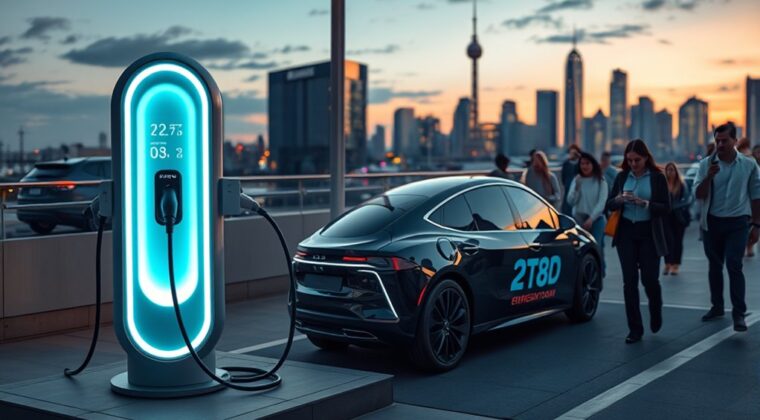
Smart EV charging means your electric vehicle charger can communicate with an app, charging network, home energy system, or utility program instead of simply starting at full power the moment you plug in. That connection lets the charger schedule sessions, adjust power, track energy use, and, in some setups, respond to grid or solar conditions.
Quick Answer
Smart EV charging uses software, sensors, and network communication to control when and how fast an electric vehicle charges. It can help lower charging costs, reduce strain on your home electrical panel, support solar charging, and improve grid stability. Some advanced systems also support bidirectional charging, but not every smart charger has that feature.
Key Takeaways
- Smart EV charging is mainly about control: scheduling, power adjustment, monitoring, and energy management.
- Savings depend on your utility rate plan, charging schedule, solar setup, and how often you drive.
- Connector type and smart features are separate. J1772 and J3400/NACS are plugs; OCPP and ISO 15118 are communication standards.
- Bidirectional charging can send energy from the EV to a home, building, or grid, but it needs compatible hardware, a supported vehicle, and local utility approval.
- A qualified electrician should confirm panel capacity, circuit size, breaker requirements, and code compliance before installation.
What Is Smart EV Charging and How Does It Work?
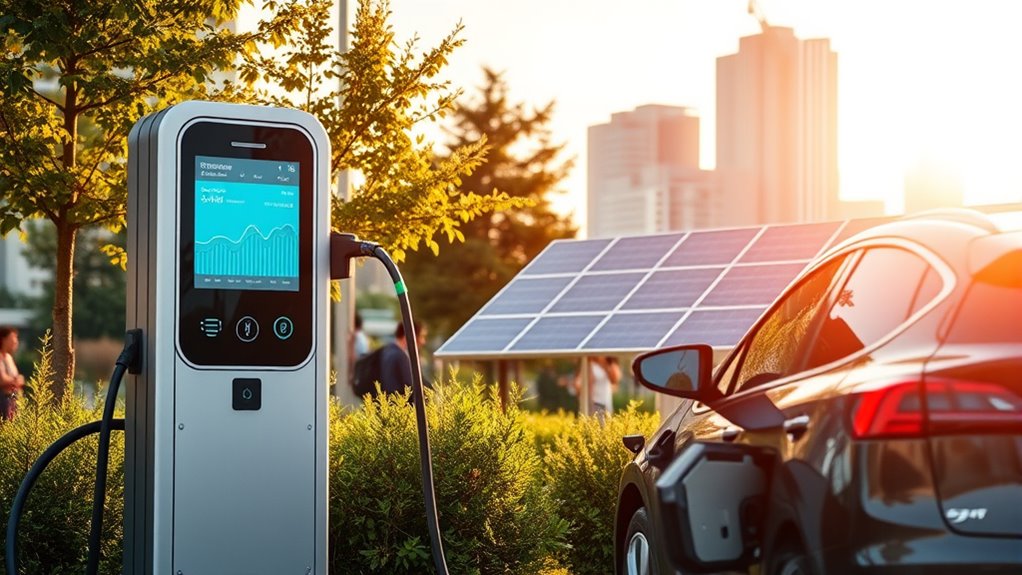
Smart EV charging is a connected way to manage electric vehicle charging. A regular charger mostly delivers power when the car is plugged in. A smart charger can also use data from the charger, vehicle, app, utility rate plan, solar system, or charging network to decide the best time and power level for the session.
In a typical home setup, you plug in your EV at night and set a departure time in the charger app. The charger waits until your lower-rate window begins, then charges enough to reach your target battery level before you leave. At a workplace or apartment building, smart charging can share limited electrical capacity across several vehicles so one charger does not overload the system.
Smart charging usually involves four parts:
- The EV: The vehicle controls its own battery limits and maximum charging speed.
- The charger or EVSE: The charging unit supplies power and may adjust amperage based on settings or commands.
- The software layer: A mobile app, network platform, or charging management system handles schedules, user permissions, billing, and reports.
- The energy signal: The system may use electricity prices, solar output, household load, or utility demand-response events to change the charging plan.
Open standards help these systems work together. OCPP, for example, is a communication protocol used between charging stations and charging management systems. ISO 15118-20 covers communication between the EV and charging equipment and includes requirements for bidirectional power transfer.
Smart Charging vs. Regular EV Charging
The main difference is control. Regular charging is simple: plug in, charge, stop when the vehicle battery reaches its limit. Smart charging adds rules and data, so charging can happen at a better time or at a safer power level.
| Feature | Regular Charging | Smart Charging |
|---|---|---|
| Start time | Usually starts right away | Can start during off-peak hours or solar production |
| Power control | Fixed by charger, circuit, and vehicle limits | Can reduce or shift power based on household load or network rules |
| Monitoring | Limited or vehicle-only | App-based status, history, alerts, and energy reports |
| Best use | Simple charging with no schedule needs | Lower-rate charging, solar use, load sharing, fleets, apartments, and utility programs |
Note: A smart charger does not automatically make your EV charge faster. Charging speed is still limited by the vehicle’s onboard charger, the EVSE rating, the circuit size, battery temperature, and the battery’s state of charge.
Why Smart EV Charging Matters for Energy Efficiency
Smart EV charging matters because millions of vehicles do not need to charge at the same time. If many drivers plug in after work and every vehicle starts charging at full power, evening demand can rise sharply. Smart charging can spread that demand across the night, move charging into cheaper rate windows, or align charging with cleaner electricity when it is available.
The International Energy Agency estimates that EVs used about 180 TWh of electricity globally in 2024 and could reach 780 TWh in 2030 under its Stated Policies Scenario. That means charging habits will matter more as EV adoption grows.
| Feature | Benefit | Impact |
|---|---|---|
| Off-Peak Charging | Uses lower-rate time windows where available | Can lower charging costs |
| Real-Time Adjustments | Changes power based on demand or household load | Reduces waste and overload risk |
| Renewable Integration | Charges during solar or wind-rich periods when supported | Can reduce charging emissions |
| Dynamic Load Management | Shares available power across chargers or appliances | Helps avoid panel upgrades in some cases |
The biggest smart-charging win is not always faster charging. It is charging at the right time, at the right power level, without making the grid or your home electrical system work harder than necessary.
How Smart Charging Solves Common EV Charging Problems
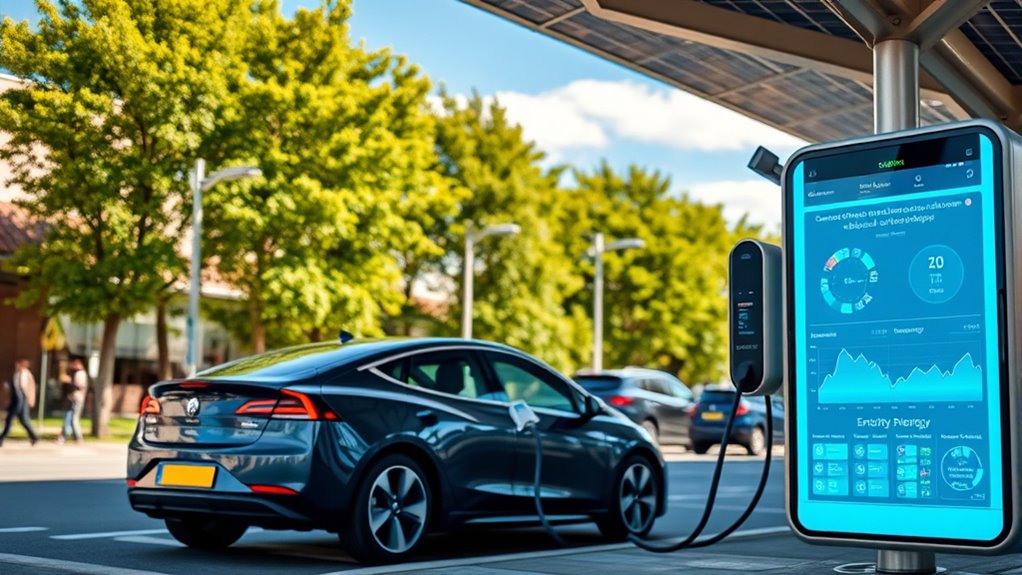
Electric vehicle owners often face practical charging problems: high electricity costs, limited panel capacity, forgotten charging sessions, app confusion, and uncertainty about whether the vehicle will be ready in the morning. Smart charging helps by making the session more visible and more controllable.
High Electricity Costs
If your utility offers time-of-use rates, smart charging can delay charging until the lower-cost window begins. This is useful when you plug in at 6 p.m. but the cheapest electricity starts at midnight. You still wake up with the charge you need, but the session happens later.
Limited Home Electrical Capacity
Some homes cannot safely run a high-amp EV charger at the same time as an electric oven, dryer, heat pump, or second EV charger. A smart charger with load management can lower charging power when household demand rises, then increase it again when capacity is available.
Multiple EVs or Shared Chargers
In apartments, workplaces, and fleet depots, smart charging can divide power among several vehicles. Instead of every charger pulling maximum power at once, the system can prioritize vehicles by departure time, state of charge, driver need, or site rules.
Solar Charging
Some smart chargers can follow home solar output. They may increase charging when rooftop solar production is strong and reduce charging when clouds pass or household use rises. This can help you use more of your own solar energy instead of exporting it.
Pro Tip: Before buying a charger for solar charging, confirm that it works with your inverter, home energy monitor, or utility meter. “Smart” does not always mean “solar-aware.”
Top Benefits of Smart EV Charging for EV Owners
Cost Savings Opportunities
Smart EV charging can reduce your charging cost if your utility rewards off-peak charging or offers an EV-specific rate. The charger can schedule charging automatically so you do not have to remember when the cheaper window starts.
Some utilities also offer managed charging or demand-response programs. In those programs, you may receive bill credits or incentives for letting the utility or software provider shift your charging within limits you approve. Read the program rules carefully, including opt-out limits, vehicle eligibility, and privacy terms.
Enhanced Charging Control
Smart chargers usually let you check charging status from a phone, set start and stop times, view energy use, receive alerts, and lock or restrict access. These features are especially useful if the charger is outdoors, shared by multiple drivers, or used for a small business fleet.
Adjustable power settings also help. For example, you may set the charger to 24 amps instead of 40 amps if your panel is limited or if you want to reduce load during hot weather when air conditioning is running.
Environmental Impact Reduction
Smart charging can lower the environmental impact of EV charging when it moves sessions to times with cleaner electricity or more renewable production. The effect depends on your local grid mix, your utility rate design, and whether you have solar or battery storage at home.
For drivers with rooftop solar, smart charging can make daytime charging more useful. For utilities, managed charging can reduce peak demand and make it easier to add more renewable energy without wasting low-cost production during low-demand hours.
Essential Features to Consider When Choosing a Smart EV Charger
At a Glance
| Time Required | 20 to 30 minutes to compare features, plus electrician time for installation planning |
| Difficulty | Easy for feature comparison; professional help needed for electrical work |
| Tools Needed | EV manual, utility rate plan, Wi-Fi signal check, panel capacity review, and charger spec sheet |
| Cost | Varies by charger, circuit length, panel work, permits, and local incentives |
When choosing a smart EV charger, look beyond the app. The best charger for you depends on your vehicle, plug type, electrical panel, parking location, Wi-Fi coverage, utility rates, and whether you want basic scheduling or advanced energy management.
- Connector type: Match the charger connector to your EV. In North America, many non-Tesla EVs use J1772 for Level 2 AC charging, while Tesla and newer vehicles may use J3400/NACS. Some vehicles can use adapters, but you should follow the vehicle maker’s guidance.
- Amperage and circuit size: Choose a charger your electrical system can support. A higher-amp charger is not better if your panel cannot safely handle it.
- Scheduling: Look for start/stop scheduling, departure-time charging, and off-peak rate settings.
- Load management: This is important for homes with limited electrical capacity, two EVs, or other high-demand electric appliances.
- Connectivity: Confirm whether the charger uses Wi-Fi, Ethernet, cellular, or Bluetooth. A weak garage Wi-Fi signal can make a smart charger feel unreliable.
- Weather rating: Outdoor chargers should be rated for the installation location and protected according to local code.
- Safety listing: Choose equipment with recognized safety certification and protection features such as ground-fault, overcurrent, and thermal protection.
- Software support: Prefer chargers with ongoing firmware updates, clear privacy terms, and reliable customer support.
Warning: Do not guess on breaker size, wiring, outlet type, or panel capacity. A Level 2 EV charger should be installed or reviewed by a qualified electrician who follows local electrical code and permit requirements.
Connector Standards and Communication Protocols
EV charging terms can be confusing because people often mix plug types with software protocols. They are not the same thing.
- J1772: A common AC charging connector for many non-Tesla EVs in North America.
- J3400/NACS: The connector based on Tesla’s North American Charging System and standardized by SAE as J3400. It supports AC and DC charging when the vehicle and charger are designed for it.
- CCS: A DC fast-charging connector system used by many non-Tesla EVs. In North America, CCS Combo 1 has been common for DC fast charging.
- OCPP: A communication protocol between charging stations and charging management systems. It helps with network control, billing, monitoring, and smart charging functions.
- ISO 15118: A vehicle-to-charger communication standard. It supports use cases such as Plug & Charge, smart charging, and bidirectional power transfer in compatible systems.
This distinction matters when you shop. A charger can have the right plug but weak software. Another charger can have strong software but the wrong connector for your vehicle. Check both before buying.
What You Need Before Installing a Smart EV Charger
Before you buy a smart charger, gather a few details. This avoids buying a charger that your home, car, or utility plan cannot fully use.
- Your EV’s maximum AC charging rate: If your vehicle can only accept 7.2 kW on AC, a much larger Level 2 charger will not make it charge faster.
- Your daily driving needs: Many drivers do not need a full battery every morning. A lower overnight charge may be enough.
- Your electrical panel capacity: An electrician can confirm whether your panel supports the charger or needs upgrades.
- Your parking location: Outdoor, detached garage, shared parking, and long cable runs can change the installation plan.
- Your internet connection: Smart features often need reliable Wi-Fi, Ethernet, or cellular service.
- Your utility rate plan: Smart charging saves the most when you have off-peak rates, demand-response incentives, or solar credits.
- Local incentives: Some utilities and governments offer rebates only for approved charger models or managed charging programs.
Bidirectional Charging: V2G, V2H, and V2X
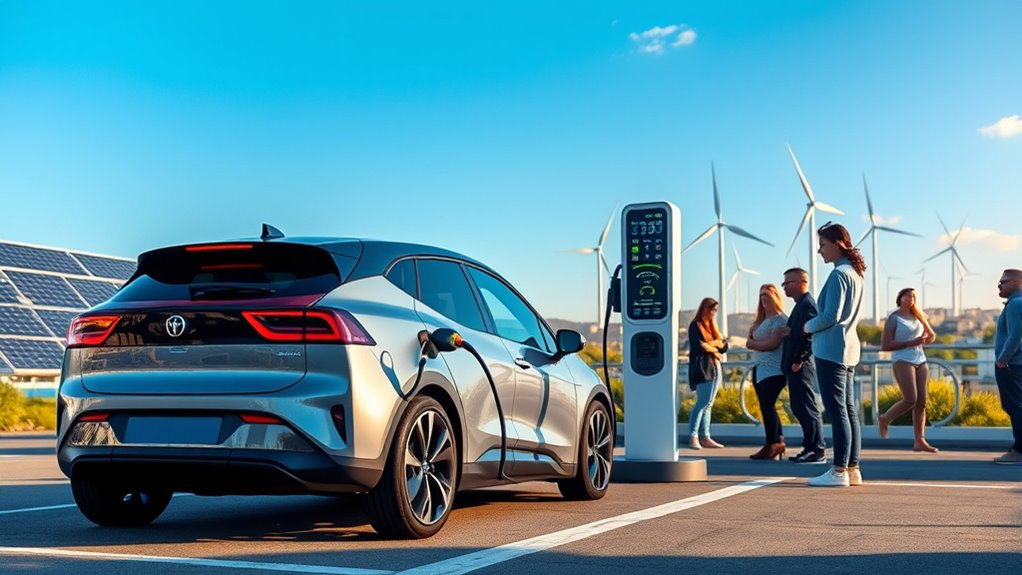
Bidirectional charging lets energy move both into and out of an EV battery. This is different from ordinary smart charging, which only manages when and how fast the car charges.
- V2H: Vehicle-to-home, where the EV can help power a home during an outage or high-rate period.
- V2B: Vehicle-to-building, often used for commercial sites or fleets.
- V2G: Vehicle-to-grid, where the EV can export power to the grid through an approved program.
- V2X: A broad term for vehicle-to-everything energy use.
Bidirectional charging is promising, but it is not universal. You need a compatible EV, compatible bidirectional charger or inverter, approved interconnection, utility support, safety equipment, and software that manages battery limits. Warranty terms also matter, so check your vehicle maker’s policy before relying on V2G or V2H.
What’s Next for Smart EV Charging?
Smart EV charging is moving from a nice extra feature to a normal part of charging infrastructure. OCPP 2.1, released in 2025 by the Open Charge Alliance, adds improved smart charging, distributed energy resource control, and bidirectional charging support. That does not mean every charger will use every feature right away, but it shows where the industry is heading.
More Managed Charging Programs
Utilities are expanding programs that reward drivers for charging outside peak demand. These programs may become more common as EV electricity demand rises. The key for drivers is control: good programs let you set a target charge, departure time, and opt-out rules.
Better Home Energy Integration
Smart chargers are increasingly being connected with rooftop solar, home batteries, smart panels, and energy monitors. This can help a home decide whether to charge the car, run appliances, store solar energy, or reduce grid use during expensive hours.
More Focus on Reliability and Security
Because smart chargers are connected devices, software quality matters. Future buyers should look for stable apps, update history, clear privacy terms, and strong support. Charging is becoming part of the home energy system, so cybersecurity and long-term software support should be treated as buying criteria.
How to Choose the Right Smart EV Charger for Your Needs
To choose the right smart EV charger, start with your real charging problem. A driver who wants cheaper overnight charging needs different features than a solar owner, a two-EV household, or a landlord managing shared chargers.
Best for Lower Electricity Bills
Choose a charger with strong scheduling, utility rate integration, and clear energy reports. Make sure your utility plan actually has off-peak savings before paying extra for advanced scheduling.
Best for Solar Homes
Look for solar matching, home energy monitor compatibility, and adjustable amperage. The charger should respond to changing solar output instead of using only a fixed timer.
Best for Limited Electrical Panels
Prioritize load management. Some systems can monitor whole-home demand and reduce EV charging automatically when other appliances are running. This may reduce the need for a major panel upgrade, but an electrician should confirm the design.
Best for Shared Parking or Rentals
Look for access control, RFID or app authorization, billing reports, durable hardware, cable management, and remote diagnostics. For multifamily buildings, OCPP support can help avoid being locked into one network provider.
Best for Future-Proofing
Choose a charger with reliable firmware updates, open standards where practical, a connector that matches your current and likely future vehicle, and a company with a clear support record. If you want bidirectional charging later, do not assume a normal smart charger can be upgraded. Buy hardware designed for that job.
Common Smart EV Charging Problems and Fixes
| Problem | Likely Cause | What to Check |
|---|---|---|
| Charging did not start | Schedule, vehicle charge limit, or app setting | Confirm start time, departure time, battery target, and vehicle-side schedule |
| Breaker trips | Circuit overload or incorrect settings | Stop using the charger and have an electrician inspect the circuit and charger configuration |
| App loses connection | Weak Wi-Fi or network issue | Check garage signal, router placement, firmware updates, and offline charging behavior |
| Charging is slower than expected | Vehicle limit, charger amperage, battery temperature, or load management | Compare EV max AC rate, charger setting, circuit rating, and current battery state |
| Off-peak savings are small | Rate plan has small price difference or schedule is wrong | Review your utility tariff and charger history to confirm charging happened in the low-rate window |
Frequently Asked Questions
Can smart EV charging work with any electric vehicle model?
Smart EV charging can work with many EVs, but compatibility depends on the plug, the vehicle’s charging limits, the charger software, and any utility program rules. A basic smart schedule may work with most EVs. Advanced features such as Plug & Charge, solar matching, or bidirectional power need more specific vehicle and charger support.
How do smart chargers communicate with the electricity grid?
Most home smart chargers do not talk directly to the grid. They communicate with an app, cloud platform, charger network, utility program, or home energy system. That software may then use utility rate data, demand-response signals, or energy-management rules to change the charging schedule or power level.
Are there subscription fees for smart EV charging services?
Some home smart chargers have no required subscription, while some networked, commercial, or shared-parking chargers charge monthly fees for billing, access control, reporting, or remote management. Before buying, check whether app access, energy reports, cellular service, load management, or fleet tools require a paid plan.
What safety features should I look for in a smart charger?
Look for recognized safety certification, ground-fault protection, overcurrent protection, thermal monitoring, a weather rating that matches the location, secure cable storage, and clear installation instructions. For connected features, also check firmware updates, account security, and privacy controls.
How do I update my smart EV charger’s software?
Open the charger’s mobile app or web dashboard and check the device or firmware section. Some chargers update automatically when connected to Wi-Fi or Ethernet. Keep the charger online, follow the manufacturer’s instructions, and avoid turning off power during an update unless support tells you to do so.
Is smart EV charging worth it for home use?
Smart charging is often worth it if you have time-of-use electricity rates, solar panels, two EVs, limited panel capacity, or a utility incentive. If you drive little, have flat electricity rates, and only need simple overnight charging, a basic Level 2 charger may be enough.
Can smart charging protect my EV battery?
Smart charging can support better habits, such as charging to a daily target instead of 100% when you do not need the full range. Battery care still depends mostly on your vehicle’s battery management system, temperature, charging speed, and the charge limits recommended by the manufacturer.
Conclusion
Smart EV charging gives you more control over when, how, and how much your electric vehicle charges. For many drivers, the biggest benefits are lower off-peak charging costs, better visibility through an app, safer power management, and easier use of solar or utility programs.
The right charger is not just the one with the most features. It is the one that fits your vehicle, connector, electrical panel, parking setup, internet connection, utility rate plan, and future needs. If you plan to install Level 2 charging at home, start with your EV’s charging limit and a professional electrical review, then choose the smart features that solve your real charging problems.
Sources
- U.S. Department of Energy Alternative Fuels Data Center: Electric Vehicle Charging Stations — charging levels, connector basics, Level 2 home charging, and DC fast charging.
- Open Charge Alliance: Open Charge Point Protocol — OCPP versions, smart charging support, security, ISO 15118 support, and OCPP 2.1 features.
- ISO 15118-20:2022 — vehicle-to-grid communication interface and bidirectional power-transfer communication requirements.
- IEA Global EV Outlook 2025: Electric Vehicle Charging — global public charging infrastructure trends and charging deployment data.
- IEA Global EV Outlook 2025: Outlook for Energy Demand — EV electricity demand in 2024 and projected 2030 demand.