
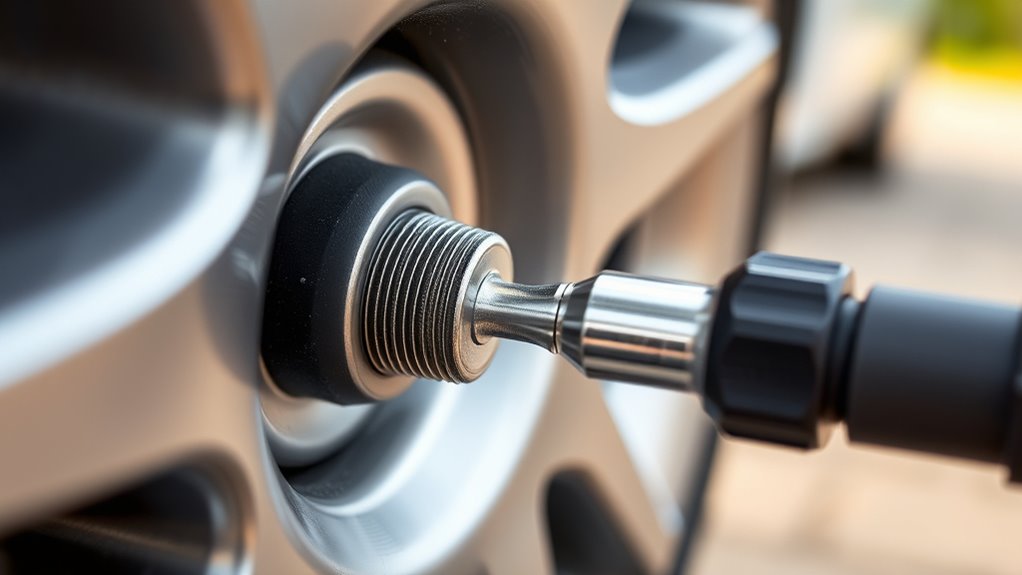
Yes, a tire inflator can damage a valve stem if the stem is worn, cracked, poorly installed, or hit with excessive pressure. You should inspect the stem before connecting the nozzle and make sure it seats straight and snug. Listen for hissing, watch for sudden pressure loss, and stop if the stem shifts or feels soft. Rubber stems fail sooner than metal ones, and a few simple checks can prevent bigger problems ahead.
Key Takeaways
- Yes, a tire inflator can damage a valve stem if pressure is excessive or the nozzle is misaligned.
- Worn, cracked, or poorly installed valve stems are more likely to fail during inflation.
- Hissing, cracks, or difficulty attaching the inflator can indicate existing stem damage.
- Inflate slowly, use a proper-fitting nozzle, and inspect the stem before and during inflation.
- Replace damaged stems promptly to prevent air leaks, pressure loss, and further tire problems.
Can a Tire Inflator Damage a Valve Stem?
Yes—a tire inflator can damage a valve stem if you use too much pressure or if the stem is already worn, cracked, or poorly installed. You can also trigger failure when you match a high-pressure inflator with a rubber valve stem that can’t tolerate the load. In that case, the stem may degrade, leak, or fail during inflation.
You should inspect the valve stem before you connect the inflator, because aging rubber, loose fitment, and visible cracks increase risk. The valve core inside the stem is also sensitive; if you overinflate, it can malfunction and vent air even when the stem looks intact.
Replace questionable stems before inflation, and keep maintenance current. When you check components first, you protect your tire, preserve pressure, and keep control over your vehicle’s performance.
Why Tire Inflators Damage Valve Stems
You can damage a valve stem when the inflator nozzle isn’t aligned correctly, because side load and uneven contact can stress the stem and weaken the seal.
If you apply pressure at an angle or attach the chuck too aggressively, you’ll increase the risk of cracking, bending, or loosening the valve core.
Weak or aging stems fail faster under repeated inflation cycles, so worn rubber or fatigued metal needs extra care.
Improper Inflator Alignment
Misaligned tire inflators can place uneven, excessive force on the valve stem, which may crack or break rubber stems that have already degraded with age.
When you attach the nozzle at an angle, it can push the valve core off center, damage the core, and weaken the seal. That’s not just sloppy; it can create leaks, reduce control, and raise the chance of a blowout.
Repeated inflation at awkward angles also wears the sealing surfaces, while fast inflation can add heat and stress to the stem.
You protect yourself by aligning the inflator straight with the valve stem, locking it on securely, and checking for a firm, centered fit before you add air.
Weak Or Aging Stems
Weak or aging valve stems are far more likely to crack, leak, or fail when a tire inflator adds pressure, especially if the rubber has hardened or become brittle over time.
When you use weak or aging stems, the inflator’s sudden pressure spike can split the stem or open an existing leak. Rubber stems degrade with age, so they can’t always hold inflation loads safely.
Metal clamp-in stems resist wear better, but a faulty valve core can still let damage occur during inflation. If you install the wrong stem type or fit it poorly, you raise the failure risk further.
Inspect stems regularly, replace worn parts on time, and choose components matched to your tire setup.
Signs Your Valve Stem Was Damaged
A damaged valve stem often shows up through clear warning signs: hissing from the stem area, visible cracks or wear on the stem surface, or tire pressure that drops unexpectedly. You can verify the problem with a quick inspection. If the stem leaks, the tire won’t hold steady pressure, and the valve stem may need replacement.
| Sign | What You Notice | Meaning |
|---|---|---|
| Hissing | Air near the stem | Leak present |
| Cracks | Surface splits or wear | Material failure |
| Pressure change | Sudden drop or fluctuation | Compromised seal |
If the inflator won’t seat cleanly, or inflation feels unusually difficult, the stem may be damaged or the fit may be wrong. Don’t ignore missing valve caps either; contamination can reach the valve core and worsen failure. Check the valve stem early, act quickly, and keep your tire system working with precision and freedom.
How to Inflate a Tire Safely
Before you start inflating, inspect the valve stem for cracks, wear, or looseness, because a damaged stem can leak or fail under pressure.
Choose a tire inflator with a nozzle that fits securely on the stem, so you don’t pry, twist, or dislodge it during tire inflation. Attach it straight, then add air at a steady, controlled rate.
Watch the gauge closely and stop at the recommended pressure; over-inflation can overload an aged or weakened stem and trigger failure. If the stem feels soft, leaks, or shifts, stop and repair it before continuing.
After inflation, reinstall the valve cap to block dirt and moisture that can degrade valve function.
Make valve stem inspection part of every tire change and routine maintenance, and replace worn stems promptly.
That’s how you keep inflation safe, precise, and under your control.
Rubber vs. Metal Valve Stems
Once you’ve confirmed the stem is sound during inflation, the next choice is the stem material itself: rubber or metal. You’ll usually see rubber valve stems on standard wheels, and they’re fine when you match the inflator nozzle correctly. They’re lighter and cheaper, but environmental exposure can age them faster, and aggressive or incompatible inflators can deform them, causing leaks or blowouts. Metal clamp-in stems cost more, yet they give you a tougher structure, better heat resistance, and stronger protection against pressure stress, which makes them smart for high-speed or performance setups.
| Type | Best use |
|---|---|
| Rubber valve stems | Standard vehicles |
| Metal valve stems | High-performance vehicles |
| Service life | Rubber: 5-7 years; metal: longer |
If you want reliability and fewer replacements, choose the stem that fits your wheel and driving demands. Check compatibility first, then inflate with a properly designed nozzle so you keep control.
When to Replace a Damaged Valve Stem
You should replace a valve stem as soon as you see cracking, wear, corrosion, or other physical damage, because those defects can cause leaks and sudden tire failure.
If your stem has taken excess pressure or stress from a tire inflator, don’t keep using it without inspection and replacement as needed.
Replace it before you drive at high speed so you don’t risk losing tire pressure under load.
Signs Of Stem Damage
A damaged valve stem often shows clear warning signs, and any visible cracks, splits, or wear mean it should be replaced right away to prevent air leaks and possible tire failure.
You should inspect the valve stem closely for more than surface damage. Watch for these signs:
- Frequent pressure loss after proper inflation
- Hissing or whistling while you’re inflating
- Corrosion, discoloration, or a stuck valve core
If your tire won’t hold pressure, the stem may be compromised even when the tire looks fine.
If the core binds or air escapes around the base, replace the entire valve stem.
Don’t ignore these cues; they point to a failing seal that can limit your control and freedom on the road.
Replace Before Driving Fast
If a valve stem shows cracks, brittleness, corrosion, or any sign of leakage, replace it before you drive at highway speeds. A damaged valve stem can bleed air, drop tire pressure, and reduce stability when speed loads increase.
Inspect each valve stem during routine checks and whenever you change tires; age can weaken rubber push-in stems and trigger failure without warning. If you run a performance vehicle, consider metal clamp-in stems for higher durability.
Choose a replacement valve stem that matches your wheel type and size exactly, because poor fit can leak and compromise control. Don’t gamble with unsafe hardware.
Replace now, drive free, and keep your tires sealed, pressurized, and ready for fast road use.
Frequently Asked Questions
How Does a Valve Stem Get Damaged?
You damage a valve stem by overinflating it, striking it on curbs or potholes, or installing the wrong type for your tire.
Heat, cold, road chemicals, and aging rubber can weaken it too.
If you skip Preventive Maintenance, small cracks and leaks can grow into sudden failure.
You should inspect the stem during every tire service, replace worn parts early, and keep pressure within spec to protect performance and safety.
What Is the Average Lifespan of a Valve Stem?
You can expect a rubber valve stem to last about 5 to 7 years, while a metal stem often lasts 10 years or more.
Lifespan factors like UV exposure, road chemicals, weather, and usage can cut that time short.
You should inspect the stem regularly for brittleness, cracks, or leaks, and replace it during tire changes to keep your ride safe, reliable, and free from avoidable failure.
Can I Drive With a Damaged Valve Stem?
No, you shouldn’t drive with a damaged valve stem.
Like a slow leak whispering danger, it can drop tire pressure fast and trigger a blowout, especially at speed. Protect your freedom by fixing it immediately.
Check for hissing, erratic pressure, or visible damage, then replace or repair the stem before you drive.
Valve Stem Safety means refusing risk and restoring reliable handling, stability, and control.
Is a Valve Stem Expensive to Fix?
No, you usually won’t face high Repair Costs.
You can replace a basic valve stem for about $10 to $30, and you might add $20 to $50 if the tire must come off for mounting and balancing.
If you choose a specialized stem, you could pay $50 or more.
You’ll save money by fixing it early, and you’ll protect your freedom to drive safely.
Conclusion
You can use a tire inflator safely, but you still need to watch the valve stem. If you force the chuck, overinflate, or bend the stem, you can damage it and cause a slow leak. Check for cracking, hissing, or wobbling after filling the tire. Rubber stems wear out faster than metal ones, so inspect them regularly. Don’t wait for failure; replace a damaged stem promptly. Even in this digital age, a small seal still matters.

