
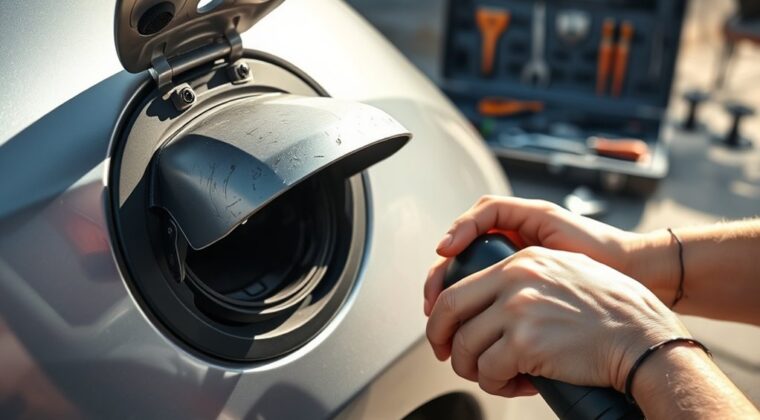
Your EV charging port flap may be stuck, loose, or broken because of ice, dirt, a weak latch, a failed actuator, misalignment, or damage around the charge door. Start with safe checks first: unlock the vehicle, stop charging, inspect the edges, clear debris gently, and lubricate only the moving hinge or latch area. If the flap still will not open or close, the actuator, lock pin, wiring, or charge-port assembly may need dealer diagnosis.
Quick Answer
An EV charging port flap usually fails because the latch is dirty, frozen, misaligned, or worn, or because the powered actuator is not releasing. Try unlocking the car, clearing ice or debris with plastic tools, cleaning the seal, and applying a small amount of silicone lubricant to the hinge or latch. Do not force the flap or spray lubricant into electrical contacts.
Key Takeaways
- A stuck charge flap is often caused by ice, road grit, dried lubricant, a weak latch spring, or actuator failure.
- Use gentle plastic tools only. Metal screwdrivers can chip paint, crack trim, or damage the charge-port housing.
- Silicone lubricant can help hinges, seals, and linkages, but it should not be sprayed into the charging contacts.
- If the charger cable is locked in the port, follow your vehicle manual because connector-lock releases vary by model.
- If the flap issue repeats, check your warranty and search your VIN for recalls before paying out of pocket.
At a Glance
| Time Required | 5 to 20 minutes for cleaning and basic troubleshooting; longer if parts need diagnosis. |
| Difficulty | Easy for cleaning and ice removal; moderate to professional for actuator, lock, wiring, or port assembly repairs. |
| Tools Needed | Microfiber cloth, warm damp towel, plastic trim tool or plastic card, soft brush, flashlight, and vehicle-safe silicone lubricant. |
| Cost | Usually under $20 for cleaning supplies or lubricant; dealer repairs can range from a small trim part to several hundred dollars or more if the actuator or charge-port assembly is replaced. |
Warning: Do not pry the charging flap with a metal tool, pour boiling water on it, use a heat gun near the charge port, or spray lubricant into the electrical contacts. Stop DIY work if the flap resists, the car shows a charge-port fault, wiring is visible, or the charger cable is locked in place.
Common Causes of Charging Flap Problems
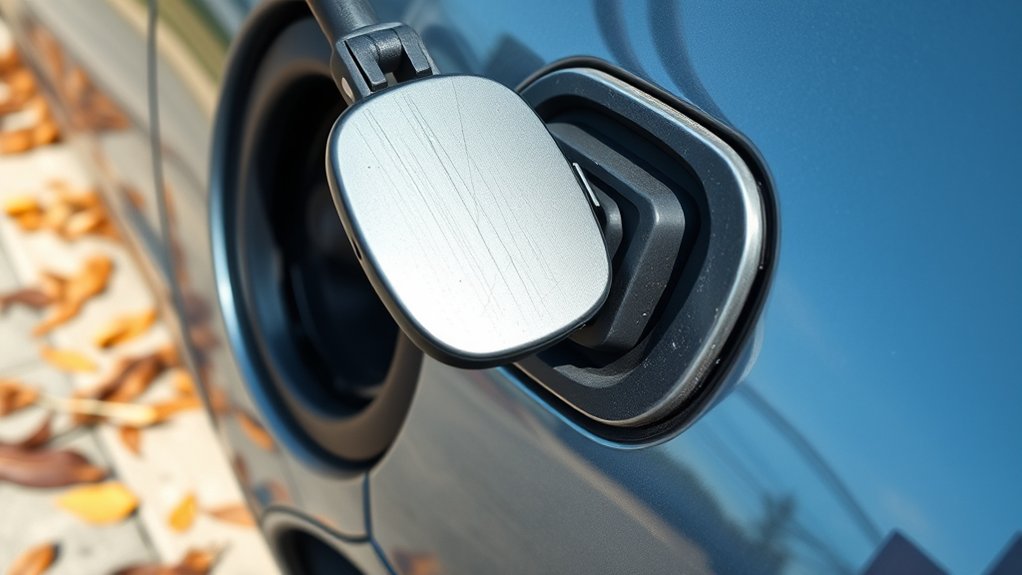
When an EV charging flap stops working, the problem is usually mechanical before it is electrical. The flap may be blocked, misaligned, frozen, or unable to latch. On vehicles with powered charge doors, the issue may also involve an actuator, lock pin, release switch, software command, or wiring connection.
The most common causes include:
- Ice or frozen moisture: Water can collect around the door edge, seal, hinge, or latch and freeze overnight.
- Road grit and debris: Dust, salt, sand, leaves, or small stones can stop the flap from moving freely.
- Dry hinge or latch: A moving part may stick when old lubricant dries out or washes away.
- Misalignment: A light bump, repeated pressure, or weak hinge can shift the flap so it no longer clicks shut.
- Weak latch spring: The flap may pop back open or fail to sit flush with the body panel.
- Actuator failure: A powered flap may not respond even when the car is unlocked and the release button works.
- Charge-port lock issue: The exterior flap may be fine, but the connector lock or charge-cable release may be stuck.
Note: The outside charge flap is not the same thing as the charging connector lock. If the cable is stuck in the port, use the manual release procedure in your owner’s manual instead of pulling on the cable.
Signs Your Charging Flap Needs Attention
A charging flap problem is easier to fix when you catch it early. Pay attention if the flap starts to feel loose, does not sit flush, clicks inconsistently, or needs more pressure than usual.
| Sign of Issue | Likely Cause | What to Try First |
|---|---|---|
| Flap will not open | Vehicle locked, frozen seal, stuck latch, or actuator issue | Unlock the car, stop charging, warm the edge with a damp towel, and clear debris with plastic only. |
| Flap will not close | Obstruction, bent hinge, latch wear, or misalignment | Inspect the latch pocket and seal, clean the hinge area, and check whether the flap sits evenly. |
| Flap pops open | Weak latch, broken clip, or body-panel alignment issue | Do not tape it shut long-term. Have the latch or flap alignment inspected. |
| Charger cable is stuck | Connector lock or charging session has not released | Stop charging from the app or screen, unlock the car, then follow your manual’s release process. |
| Dashboard shows charge-port fault | Sensor, actuator, lock, or wiring fault | Stop DIY troubleshooting and contact service, especially if charging is affected. |
Simple DIY Solutions for Stuck Charging Flaps
If your charging flap is stuck, start with the least aggressive fix. Your goal is to free the flap without bending the hinge, cracking the trim, or damaging the port seal.
Step 1: Unlock and Reset the Release
Before touching the flap, make sure the vehicle is awake and unlocked. Many EVs keep the charge door or connector locked when the vehicle is locked, charging is active, or the system has not finished ending the session.
- Stop the charging session from the vehicle screen, charger, or app if a cable is connected.
- Unlock the vehicle with the key fob, phone key, door handle, or app.
- Press the charge-door release once, then wait a few seconds.
- Try the flap again with light fingertip pressure only.
If nothing moves and you hear no actuator sound, the issue may be electrical or actuator-related rather than simple dirt or ice.
Step 2: Check for Ice, Dirt, and Obstructions
Use a flashlight and look around the flap edge, hinge side, latch pocket, and rubber seal. Road grit, salt, or a small piece of ice can stop the flap from releasing or closing.
- Use a plastic card or plastic trim tool to clear loose debris around the edge.
- Use a soft brush to remove dirt from the hinge and latch pocket.
- Wipe the outer seal with a damp microfiber cloth.
- Dry the area before closing the flap so moisture does not refreeze.
Step 3: Thaw a Frozen Charging Flap Safely
Cold weather is one of the most common reasons a charge flap sticks. The safest approach is slow, gentle warming.
- Hold a warm damp towel against the flap edge for several minutes.
- Move the vehicle into a garage or sheltered area if possible.
- Use cabin preconditioning if your EV warms the charge-port area as part of its cold-weather routine.
- Clear softened ice with a plastic card, not a screwdriver.
Warning: Do not use boiling water. It can refreeze quickly, shock cold plastic, and leave more water inside the hinge or latch area.
Step 4: Lubricate the Hinge or Latch Carefully
A small amount of silicone lubricant can help the hinge, latch, or rubber seal move smoothly. Choose a product labeled safe for automotive plastic and rubber. For example, WD-40 Specialist Silicone is described by the manufacturer as safe on most metals, plastics, rubbers, and vinyl when used as directed.
- Open the flap fully if it can open without force.
- Spray lubricant onto a cloth or cotton swab, not directly into the charge-port area.
- Apply a thin film to the hinge pivot, latch contact point, or rubber seal.
- Open and close the flap gently several times.
- Wipe away extra lubricant so it does not collect dust.
Pro Tip: Apply lubricant to the moving hinge and latch surfaces only. A thin film is enough. Extra spray attracts dirt and can make the problem return faster.
Step 5: Check Alignment and Latch Action
After cleaning and lubricating, check whether the flap sits flush with the body panel. If one edge sticks out, the hinge may be bent or the latch may not line up with the catch.
Do not force the flap closed. Repeated hard pushes can break a plastic clip or damage a powered actuator. If it still pops open, treat it as a latch or alignment problem that needs parts inspection.
What Not to Do When the Charge Flap Is Stuck
A stuck flap is frustrating, especially when you need to charge, but the wrong fix can turn a small problem into a costly repair.
- Do not use metal pry tools. They can chip paint, crack plastic, or short a nearby contact if used carelessly.
- Do not pull the flap hard. A powered flap or actuator can break if forced against its mechanism.
- Do not spray cleaners or lubricants into the charging socket. Keep chemicals away from electrical contacts.
- Do not ignore a loose flap. Water and road debris can enter the port area if the door will not close properly.
- Do not assume every EV releases the same way. J1772, CCS, NACS, and brand-specific lock systems use different hardware and software steps.
When to Consult a Dealer for Charging Flap Issues?
Consult a dealer or qualified EV technician if the flap will not work after basic cleaning, if the issue repeats, or if the vehicle shows a charge-port warning. Dealer diagnosis is also the safer choice when the flap is powered, the actuator does not make noise, the charge cable is locked, or the port seal is damaged.
| Issue | Best Action |
|---|---|
| Flap will not open after unlocking and cleaning | Have the latch, actuator, and release command checked. |
| Flap will not stay closed | Inspect for latch wear, broken clips, or body-panel misalignment. |
| Charge cable is stuck | Stop charging, unlock the vehicle, and use the manual-release method in your owner’s manual. |
| Visible broken plastic, wiring, or water intrusion | Avoid charging until the port area is inspected. |
| Vehicle is still under warranty | Document the problem with photos and ask the dealer to confirm coverage before repair. |
Many charge-door parts are not repaired piece by piece at the counter. Depending on the vehicle, the technician may replace a latch, flap, hinge, actuator, or a larger charge-port door assembly. Ask for the part name, labor estimate, and warranty decision in writing.
What You Need to Know About Warranty Coverage
Warranty coverage depends on your vehicle’s age, mileage, market, cause of failure, and manufacturer terms. A defective latch or actuator may be handled differently from damage caused by impact, forced prying, road debris, or frozen-water damage.
Before paying for a repair, take these steps:
- Check the basic bumper-to-bumper warranty period for your vehicle.
- Search your VIN on the NHTSA recall lookup tool if you are in the United States.
- Save photos or videos showing the flap failing to open, close, or latch.
- Write down the date, temperature, and whether the car was charging when the problem happened.
- Ask the dealer whether the diagnosis points to a manufacturing defect, wear item, accidental damage, or environmental damage.
A recall is different from a normal warranty repair. NHTSA explains that manufacturers must remedy safety recalls by repairing the issue, replacing the part, offering a refund, or in rare cases repurchasing the vehicle. That is why a VIN check is worth doing when a charge-port problem repeats or appears on many vehicles of the same model.
How Much Does EV Charging Flap Repair Cost?
Cost depends on what failed. A dirty or frozen flap may cost nothing to fix beyond cleaning supplies. A broken trim door or hinge may be a smaller parts job. A powered actuator, lock sensor, wiring issue, or full charge-port door assembly can cost much more because diagnosis and labor are involved.
| Repair Type | Typical Cost Expectation |
|---|---|
| Cleaning, thawing, or lubrication | Usually free to under $20 if you already have basic supplies. |
| Replacement flap, cap, clip, or hinge | Often a modest parts-and-labor repair, but pricing varies by brand and paint/trim design. |
| Actuator, lock, sensor, or charge-port assembly | Can reach several hundred dollars or more, especially if diagnosis, calibration, or assembly replacement is required. |
If the car is under warranty, do not modify the flap, drill it, glue magnets to it, or force it open before a dealer inspection. Those changes can make coverage harder to prove.
Preventative Measures to Avoid Charging Flap Issues
Regular care helps prevent charging port flap issues, especially if you park outside, drive on salted roads, or charge in freezing weather.
A clean, dry, lightly lubricated hinge is less likely to stick, freeze, or wear out before the rest of the charge-door assembly.
- Wipe the flap area weekly in winter. Remove salt, grit, and moisture around the seal and hinge.
- Dry the port surround after washing. Water trapped in the hinge or latch can freeze later.
- Use silicone lubricant sparingly. Apply it to the hinge or latch contact point, not the electrical socket.
- Do not slam or push hard. Let the latch click naturally.
- Check alignment after minor bumps. A light parking-lot hit can shift the flap enough to affect closure.
- Follow your manual for cable release. If the charging connector sticks, use the model-specific release method.
Connector types and lock designs are changing as the market shifts among J1772, CCS, and SAE J3400/NACS. The basic care steps above still apply, but release procedures and lock hardware vary by vehicle.
Frequently Asked Questions
Can a broken EV charging port flap be fixed?
Yes. If the flap is only dirty, frozen, or dry, cleaning and light silicone lubrication may fix it. If the latch, hinge, actuator, sensor, or housing is broken, the vehicle may need a replacement part or dealer service.
How much does it cost to fix a charging port flap?
A simple cleaning or lubrication fix may cost under $20. A flap, hinge, or latch replacement varies by brand and paint/trim design. A powered actuator, lock, wiring issue, or larger charge-port assembly can cost several hundred dollars or more. Check warranty and recalls before approving paid work.
Is it worth fixing a charging port flap?
Yes. A flap that will not close can let water, salt, and debris collect around the charging area. A flap that will not open can leave you unable to charge when you need range. Fixing it early is usually cheaper than waiting until the latch or port assembly is damaged.
What should I do if my EV charging flap is frozen shut?
Unlock the vehicle, stop any charging session, and warm the flap edge slowly with a warm damp towel or by moving the car into a sheltered area. Use a plastic card to clear softened ice. Do not use boiling water, a heat gun, or a metal screwdriver.
Can I use WD-40 on an EV charging flap?
Use a silicone lubricant that is safe for rubber and plastic, and apply it only to the hinge, seal, or latch area. Do not spray any lubricant into the electrical charging contacts. If you are unsure, test a small hidden area first and follow the product label.
What if the charger cable is stuck in the port?
That is usually a connector-lock issue, not a flap issue. Stop charging from the app, charger, or vehicle screen, unlock the car, and follow your owner’s manual for the manual release. Do not pull hard on the cable.
Conclusion
A broken or stuck EV charging flap is usually caused by ice, dirt, dried lubricant, latch wear, misalignment, or actuator failure. Start with safe, gentle fixes: unlock the vehicle, stop charging, inspect the edge, clear debris, thaw ice slowly, and lubricate only the hinge or latch area. If the flap still will not work, if the charger cable is locked, or if the car shows a charge-port warning, stop troubleshooting and contact a dealer or qualified EV technician. Early repair protects the port area and helps keep charging simple.
Sources
- NHTSA Recall Lookup — checking VIN-specific recalls and understanding recall remedies.
- U.S. Department of Energy Alternative Fuels Data Center: Electricity Basics — EV charging and electric vehicle background.
- SAE J1772 Standard — North American AC charging connector standard reference.
- SAE J3400/NACS Standard — North American Charging System standard reference.
- WD-40 Specialist Silicone Lubricant — silicone lubricant use on common surfaces such as metals, plastics, rubbers, and vinyl when used as directed.
- Reliability of Open Public Electric Vehicle Direct Current Fast Chargers — research context on charging-system reliability and connector-related station issues.