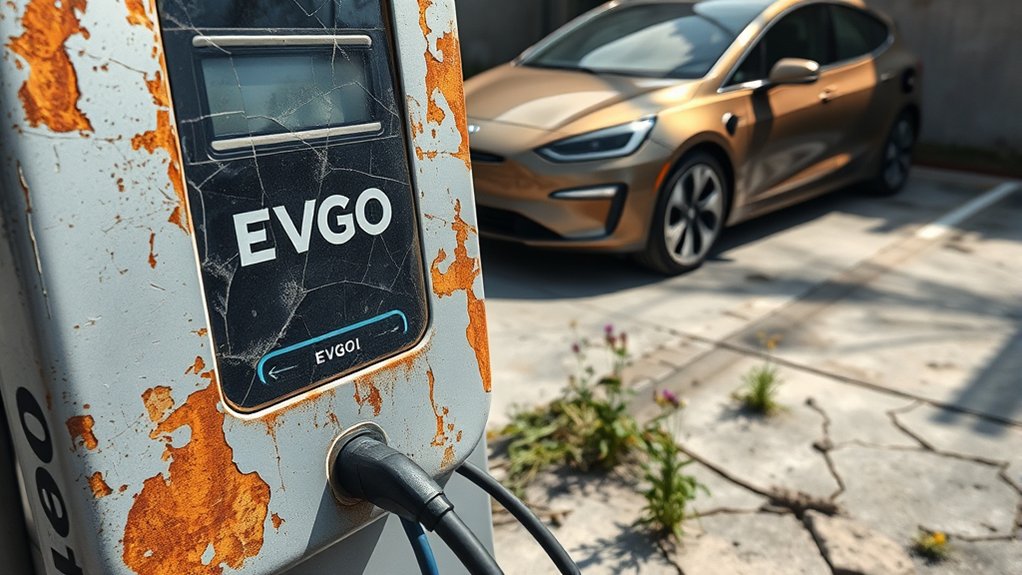
If your EVgo charger is not working, first check whether the station is marked under maintenance in the EVgo app, then make sure the correct connector is fully seated in your vehicle. If the session still will not start, check your payment method or charging method and look for an emergency-stop message on the charger. EVgo’s official retry procedure is to disconnect the connector, return it to the charger holder, wait 10–15 seconds, reconnect it firmly, and start the session again. If that fails, call the EVgo Charging Crew at 877-494-3833, available 24/7.
Last updated: September 8, 2026. This guide was updated to correct charging-problem statistics, add EVgo’s current troubleshooting procedure, and reflect current connector and support guidance.
EVgo Charger Not Working? Start With These Checks
| Problem | First check | What to do next |
|---|---|---|
| Charger will not start | Connector fit and charger status | Reseat the connector. If needed, return it to the holder, wait 10–15 seconds, reconnect, and retry. |
| Station appears unavailable | EVgo app map | A grayed-out station may be under maintenance. Choose another available charger if possible. |
| Payment error | Payment method and account balance | Update or re-add the payment method. You may also be able to use a station credit-card reader. |
| EVgo app will not start the session | App version, location permission, and mobile signal | Update and reopen the app. Consider an activated RFID card or call EVgo support if mobile service is poor. |
| Connector does not fit | CCS, CHAdeMO, or NACS compatibility | Check the connector listed for your vehicle and station in the EVgo app. |
| Emergency-stop message | Charger screen | Follow the on-screen reset instructions. Do not use the emergency stop as a normal session-reset button. |
| Connector is stuck | Whether the session has fully ended and the vehicle is unlocked | End the session, unlock the vehicle and charge port, then follow the vehicle-specific release procedure. |
| Smoke, exposed wires, severe damage, or burning smell | Safety | Stay clear of the charger. For an immediate safety hazard, call 911 first, then report the charger to EVgo. |
EVgo publishes these troubleshooting steps in its charging-session guidance. For urgent or unresolved problems, EVgo’s Charging Crew is available 24/7.
Understanding Common Issues at EVgo Chargers
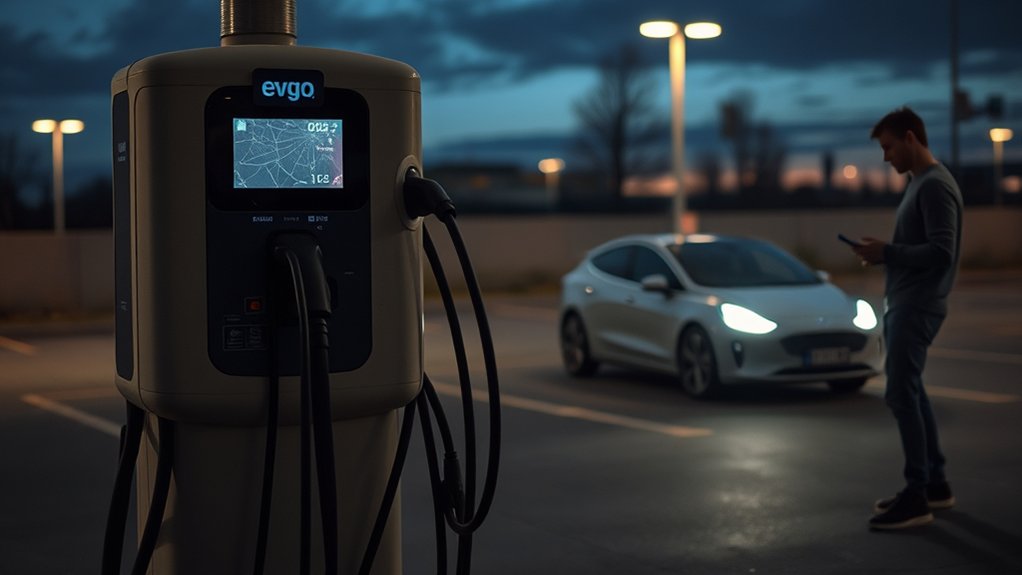
A Consumer Reports survey of 1,230 EV and plug-in-hybrid owners found that EVgo users reported a problem during 43% of their submitted EVgo charging sessions. That figure is specific to EVgo sessions in the survey and should not be confused with the survey’s breakdown of problem types across charging networks.
Across the survey’s reported charging problems, hardware accounted for 36% and payment problems accounted for 23%. Among hardware problems, 76% involved a charger screen that was broken, unresponsive, or displaying an error. These category percentages describe the broader survey data rather than EVgo alone.
For someone standing at a charger, however, the cause matters less than identifying whether the problem is the station, connector, vehicle, charging method, payment account, or app. EVgo’s current Help Center gives separate checks for each of these failure points.
Why Hardware Problems Can Stop an EVgo Session
Hardware problems can include a damaged cable or connector, a non-responsive screen, physical damage, or other station faults. EVgo also notes that software problems can cause a charger to be unavailable.
Before attempting repeated starts, check the EVgo app. EVgo says chargers that are under maintenance may appear grayed out on the map. If another charger is available at the same location, moving to the working unit may be faster than repeatedly attempting the unavailable one.
If the equipment looks physically damaged, use extra caution. EVgo asks drivers to report broken chargers and says urgent conditions can include exposed wiring, a cut or missing cable, smoke, a burning smell, major impact damage, or leakage from electrical equipment. See EVgo’s broken-charger guidance for current reporting instructions.
How to Troubleshoot EVgo Payment Issues
Payment failures are a common public-charging problem, but the original statistics need careful interpretation. In Consumer Reports’ broader survey, payment issues represented 23% of reported charging problems. Within that payment category, 56% involved users who could pay but encountered another payment-related problem, 25% involved a failed payment that prevented charging, and 19% involved a successful payment followed by a session that did not start.
If you are charging through an EVgo account, EVgo requires a valid payment method. If your card information is current but you receive a billing error, EVgo recommends trying to re-add the payment method to refresh it. You can review EVgo’s payment-error instructions.
You do not always need an EVgo account to charge. At supported stations, a driver without an account can generally initiate a charging session using a credit card reader or station kiosk. EVgo notes that availability of card-payment hardware varies by location, and account benefits or receipts may not apply to an unaffiliated card-reader session. See EVgo’s credit-card charging guide.
Setup and Compatibility Checks That Prevent False Starts
Not every failed charging attempt means the station is broken. A connector that is not fully seated, an incompatible connector, an inactive RFID card, an outdated app, or an account/payment problem can all prevent a session from starting.
Check the EVgo App and Account
The EVgo app is EVgo’s recommended method for starting a standard charging session, but the app needs to be working correctly. EVgo recommends keeping the app updated and enabling location services so it can identify nearby stations.
If the app is having trouble, close and reopen it after changing location settings. Weak mobile reception can also cause loading problems, particularly in covered garages. An activated EVgo RFID program card can provide a backup method for account holders when phone reception is poor.
Before starting, confirm that your account has a valid payment method and that any RFID program card you plan to use has been activated. See EVgo’s current app charging instructions.
Confirm Charger and Connector Compatibility
Before plugging in, confirm that the connector matches your vehicle. EVgo’s network includes different connector types, including CCS, CHAdeMO, and NACS, and availability varies by charging location.
The EVgo app shows connector information for individual chargers. Selecting your vehicle in the app can also help filter stations based on charging needs.
NACS availability is expanding but is not universal. EVgo reported 240 NACS connectors in operation as of July 31, 2026, so NACS-equipped drivers should still confirm connector availability before arriving. The figure is from EVgo’s second-quarter 2026 results.
What Should You Do When an EVgo Charge Won’t Start?
EVgo recommends checking the physical connection first. Remove the connector from your vehicle, return it to the charging-station holder, and make sure the connector and station are ready before trying again.
If you need to retry the session, follow this sequence:
- Unplug the connector from your vehicle.
- Return the connector to the charging-station holder.
- Wait 10–15 seconds for the station to reset its session state.
- Remove the connector again and insert it fully into your vehicle.
- Listen or feel for the connection click where applicable.
- Start the charging session using your chosen method.
If your vehicle’s battery percentage appears on the charger screen, that can indicate that the charger and vehicle have established a connection. If the charger still cannot initiate a session, check for a maintenance notice, emergency-stop message, app problem, or billing blocker.
What If EVgo Stops Charging During the Session?
A session that ends unexpectedly is not automatically proof that the charger hardware failed. The vehicle can control charging behavior, and charging speed changes throughout a session as the battery management system adjusts current and voltage.
Check both the vehicle and charger for an error message. Then verify that the vehicle has not reached a charging limit configured in its settings. If the session ended with an error and you still need energy, use the same 10–15-second retry sequence before starting another session.
If the charger repeatedly stops or displays the same error, switch to another available charger rather than continually restarting the same unit. Report the problem to EVgo so its support team can review the station.
How Do You Safely Reset or Retry an EVgo Charger?
Do not attempt to unplug, open, or power-cycle public EVgo charging equipment. The normal driver-level reset is the session retry procedure: disconnect your vehicle, return the connector to its holder, wait 10–15 seconds, then reconnect and try again.
Most EVgo fast chargers also have an emergency-stop button. That button is intended for emergencies, not routine troubleshooting. If the charger screen says the emergency stop has already been pressed, follow the instructions displayed by the charger. EVgo says the general reset process may involve twisting the red emergency-stop button clockwise until it pops back out.
If you believe you actually need to use an emergency stop, contact the EVgo Charging Crew for guidance. EVgo’s current session-stop instructions explain the procedure.
Why Regular Maintenance Is Crucial for EVgo Chargers
Public fast chargers combine high-power electrical equipment, cables, screens, payment hardware, software, communications systems, and vehicle-to-charger communication. A problem in any part of that chain can prevent a successful session.
EVgo’s ReNew program focuses on six areas: prevention, diagnostics, rapid response, analysis, resilience, and continuous customer service. EVgo says the program includes monitoring, preventive maintenance, diagnostic tools, replacement or upgrading of aging equipment, and customer-support processes.
That is more specific than simply saying maintenance “could” improve reliability. EVgo is already using a formal maintenance and replacement program to address aging or problematic equipment. More information is available on the company’s EVgo ReNew page.
How to Report an EVgo Charger That Is Not Working
If a charger is broken or repeatedly fails, reporting the specific charger gives EVgo more information than simply leaving the location.
What Details Should You Report?
EVgo asks drivers to report broken chargers and says additional details or photos can help its technical team. When possible, provide:
- the charger or station name;
- the charger asset ID if visible;
- the error message shown on the screen;
- whether the connector physically attached to the vehicle;
- whether payment was accepted;
- whether the session started and then stopped;
- photos of visible damage when safe to take them.
EVgo’s support number is 877-494-3833, and the Charging Crew is available 24/7, 365 days a year.
When Is a Broken Charger an Emergency?
Ordinary errors can be reported through EVgo support. Physical safety hazards require more caution. EVgo identifies conditions such as exposed wiring, smoke, a burning smell, substantial crash damage, or leakage from electrical equipment as urgent situations.
If there is an immediate danger to people or property, move away from the charger and call 911 first. Do not touch damaged cables, open electrical panels, or attempt your own repair.
Best Practices for a Smoother EVgo Charging Experience
A few checks before arriving can reduce the chance that one unavailable charger leaves you stranded:
- Check the EVgo app for station availability and maintenance status before arrival.
- Confirm that the station has the connector your vehicle needs.
- Keep the EVgo app updated and your payment method current if you use an account.
- Activate your RFID program card before depending on it as a backup.
- Know at least one alternate charger or charging location when traveling with a low battery.
- Distinguish slow charging from a failed charger. Your vehicle’s battery temperature, state of charge, voltage, and charging curve can limit charging speed.
- Report broken equipment so EVgo has the charger-specific information needed to investigate it.
What EVgo Is Doing to Improve Reliability
EVgo’s reliability work now centers on its ReNew program rather than hypothetical future improvements. The company says it uses network monitoring, diagnostic tools, preventive site visits, repair processes, customer reports, and the replacement or removal of aging charging hardware.
EVgo also continues to modernize the physical network. In its second-quarter 2026 results, the company said it ended the quarter with 5,380 stalls in operation and that 175 legacy stalls had been removed during the quarter through the ReNew program. EVgo also reported that testing was underway for its next-generation charging equipment.
These network improvements do not guarantee that every individual charging attempt will succeed. For drivers, the most useful response is still to identify whether a failed session comes from station status, connector communication, vehicle settings, payment, or the charging method—and then use the appropriate troubleshooting step.
Frequently Asked Questions
Why Is the EVgo Charger Not Working?
An EVgo charger may not work because the station is under maintenance, the connector is not fully seated, the charger and vehicle are not completing their communication handshake, the wrong connector was selected, the emergency stop is engaged, or there is an app, account, or payment problem. Check the EVgo app for station status, reconnect the cable, and retry after returning the connector to its holder for 10–15 seconds.
Why Do EV Chargers Fail so Often?
Public EV chargers depend on several systems working together, including power electronics, cables, connectors, screens, payment hardware, communications networks, software, and the vehicle itself. Consumer Reports found hardware and payment problems among the most common issue categories in its public-charging survey, but a failed session does not always mean the charger itself is defective.
How to Reset EV Charging Station?
Do not unplug or power-cycle a public EVgo charging station. For a normal retry, disconnect the charging connector from your vehicle, return it to the charger’s holder, wait 10–15 seconds, reconnect it securely, and start the session again. If the screen says the emergency stop is engaged, follow the charger’s on-screen instructions or call EVgo support.
What Causes Charging System Failure?
A charging failure can originate from the charger, cable, connector, station software, network connection, payment system, account, vehicle charging settings, or the communication between the EV and charger. Checking each layer in order is more effective than assuming the charging unit is broken.
Can You Use EVgo Without the App?
Yes. EVgo says drivers without an account can generally use a credit card at stations equipped with a card reader or payment kiosk. Account holders may also use an activated EVgo RFID program card. Payment options vary by station, so check the charger or EVgo app before relying on a specific method.
What Do I Do If an EVgo Connector Is Stuck?
First make sure the fast-charging session has completely ended. Unlock your vehicle and its charging-port lock, then gently operate the connector release as described in your vehicle owner’s manual. Vehicle locking systems can keep the plug attached after charging. If it still will not release, call EVgo at 877-494-3833 rather than forcing the connector.
Who Do I Call If an EVgo Charger Is Broken?
Call the EVgo Charging Crew at 877-494-3833. EVgo says driver support is available 24 hours a day, 365 days a year. If the charger presents an immediate danger such as fire, smoke, exposed electrical wiring, or a serious injury risk, call 911 first.
Conclusion
If an EVgo charger is not working, start with the simplest checks: confirm that the station is available, use the correct connector, make sure it is fully inserted, and verify your app or payment method. For a failed start, return the connector to the charger, wait 10–15 seconds, reconnect it, and retry.
If the same error returns, use another available charger and report the faulty unit. For troubleshooting assistance, call the EVgo Charging Crew at 877-494-3833. If the charger has exposed wires, smoke, fire, a burning smell, or other immediate electrical danger, stay clear and contact emergency services first.