Yes, you can use a tire inflator with an inverter if the inverter can handle both the inflator’s continuous wattage and its startup surge. Most small 12V inflators draw about 100 to 120 watts, but check the label before you plug in. A direct battery connection is often safer and more stable, especially for higher-draw compressors. If you want the best match for your setup, there’s more to compare next.
Key Takeaways
- Yes, if the inverter’s continuous and surge wattage match the tire inflator’s actual power draw.
- Many small 12V inflators draw about 100–120 watts, but startup surge can be higher.
- A 1000W inverter usually provides enough headroom for most tire inflation jobs.
- Direct battery connection is often safer and more reliable than using a lighter socket or weak wiring.
- 12V compressor models that clip to battery terminals, like VIAIR 88P, are ideal for inverter use.
Can a Tire Inflator Run on an Inverter?
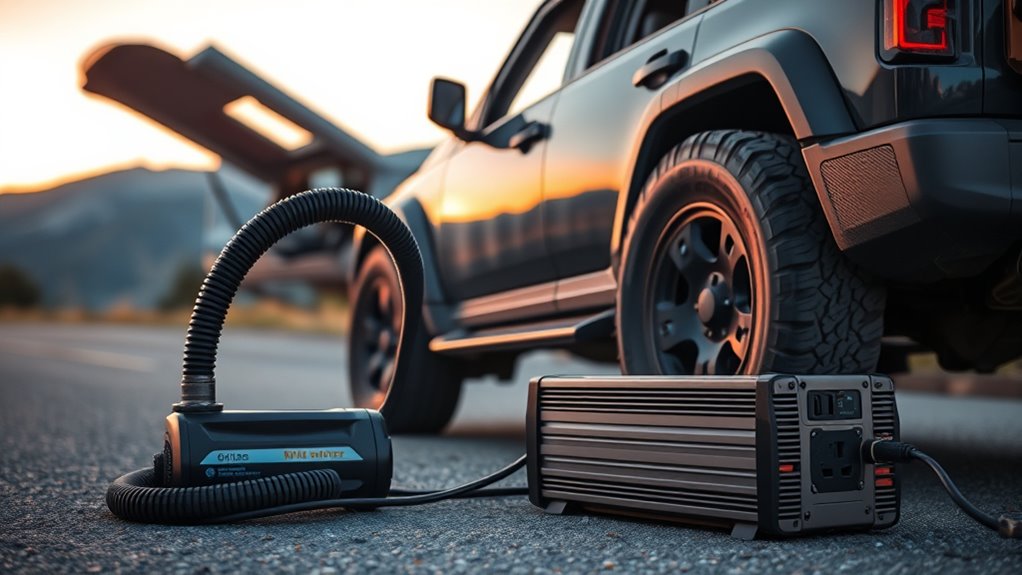
Yes, a tire inflator can run on an inverter if the inverter’s continuous wattage rating matches or exceeds the inflator’s power draw, which is typically about 100 to 120 watts for smaller models.
You should compare the tire inflator’s power requirements with the inverter’s output, because startup amperage can exceed the running load. If the inverter lacks enough surge capacity, it may trip, stall the inflator, or overheat.
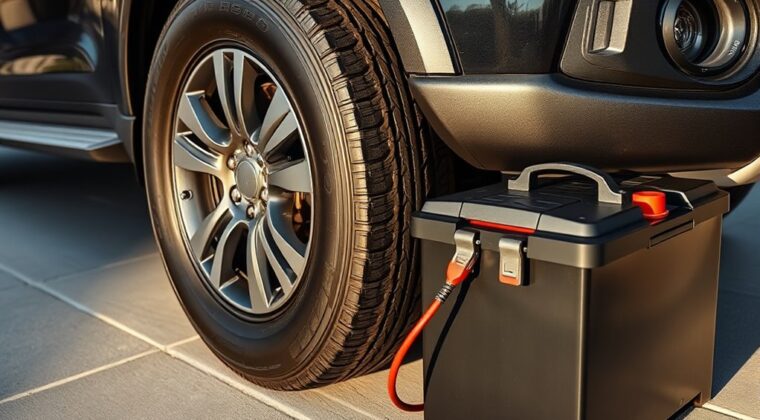
For a direct, reliable setup, a 12V tire inflator connected to your vehicle battery often avoids unnecessary inverter stress, especially with high-draw units.
Check the inverter’s compatibility before use, and confirm that it can handle both the initial spike and continuous demand. This keeps your gear efficient, protects the vehicle battery, and prevents damage.
You gain more control when you match the system correctly, instead of forcing weak equipment to carry the load.
How Much Power Does Your Inflator Need?
Once you know an inflator can run on an inverter, the next step is checking its actual power draw. You need to match your tire inflator’s amperage to the inverter’s power output, because many units pull more than you’d expect. A typical 12V air compressor may draw about 10 amps, or roughly 120 watts of continuous power. That’s only the running load; startup can spike higher.
- Check both continuous power and surge ratings on the inverter.
- Compare them with the inflator’s label, manual, or spec sheet.
- Respect the duty cycle so you don’t overheat the inflator or inverter.
If your inverter’s capacity is tight, the system may shut down or suffer stress.
Battery technology matters too, but the key is sizing correctly and keeping margins. The VIAIR 88P shows how efficient design can reduce risk when properly matched.
Choose gear that supports your freedom to inflate without wasted heat or weak performance.
Why Direct Battery Connection Is Safer
If you want the safest setup for a high-draw tire inflator, connect it directly to the truck battery instead of relying on a cigarette lighter port or inverter. A direct battery connection gives you a stable power supply and the high amperage your tire inflator needs at startup and during steady operation.
That matters because weak wiring or shared accessory circuits can trigger overheating issues, especially when the inflator pulls hard for several minutes. You also avoid fuse failures that often happen when an inverter faces a heavy load.
With a truck battery, you don’t have to worry about continuous-wattage limits versus surge-wattage limits. The circuit stays simpler, and your inflator gets the current it needs without extra conversion losses.
Best of all, you can run it even when the engine isn’t running, which gives you more freedom in the field. For dependable, no-drama inflation, a direct battery connection delivers reliable performance.
Which Inflators Work Best on an Inverter?
Not every tire inflator is a good match for inverter power, so you’ll get the best results with 12V DC units that draw modest current, such as the VIAIR 88P.
These tire inflators let you use the inverter as a bridge from your car battery to the tool, while keeping demand within the continuous wattage rating. For most portable tire inflators, a 1000W inverter gives you workable headroom for inflating tires without strain.
- Choose models that clip to battery terminals instead of using a cigarette lighter port.
- Check startup surge, since some compressors need more wattage at launch than they do while running.
- If you’re filling larger tires, dual compressors can shorten cycle time and stay more practical.
You stay in control when you match the inverter, power source, and compressor carefully. That approach keeps the setup efficient, mobile, and ready for real roadside freedom.
When a 12V Compressor Is the Better Choice
A 12V compressor is often the better choice because you can connect it directly to your vehicle’s battery, which skips the inverter entirely and lowers the chance of blowing a fuse or overloading a lighter port. For tire inflation, this direct vehicle power path also cuts heat buildup and keeps the unit powerful enough for larger tires.
| Feature | 12V compressor | Inverter setup |
|---|---|---|
| Power source | Direct battery | AC conversion |
| Inflation speed | 3-5 min | 10+ min |
| Portability | Lightweight portable air | Bulkier |
If you drive trucks, SUVs, or go off-road, a model like a Viair 88P or 450P gives you practical freedom: fast inflation, simple hookup, and easy storage. You won’t need to depend on a cigarette lighter port or a rechargeable battery that may run flat when you need air most. Use the 12V compressor when speed, reliability, and field-ready control matter most.
Frequently Asked Questions
What Should You Not Plug Into an Inverter?
Don’t plug in high-startup devices, heaters, toasters, refrigerators, or power tools unless your inverter type supports them.
You should check inverter wattage, power ratings, surge capacity, and device compatibility first.
Stay under 80% of continuous output, or you’ll risk overheating risks and failure.
Follow safety precautions, and avoid any load that exceeds the inverter’s design.
You’ll protect your gear, your power source, and your autonomy.
Will a 3000W Inverter Run an Air Compressor?
Yes, a 3000W inverter can usually run a small or medium air compressor, so you’re not boxed in.
You should match air compressor types to inverter power ratings, and account for inverter efficiency losses and compressor duty cycle.
Check inflator voltage requirements, compressor size considerations, and surge demand.
Many automotive power sources can handle it, but only if the inverter’s peak rating exceeds startup load and your wiring stays solid.
What Are the Downsides of Using a Car Inverter?
You’ll face inverter efficiency losses, so more battery power gets wasted as heat.
Power limitations can stop you from running high-draw tools, and noise levels may rise from fans under load.
Heat generation also increases failure risk.
Safety concerns include blown fuses and overload shutdowns.
Size constraints can crowd your cabin or cargo space.
Cost factors add up with quality gear, cables, and batteries.
Will Tire Inflator Drain Car Battery?
Absolutely—your tire inflator can drain your battery faster than you’d expect.
You should check tire inflator compatibility, battery capacity considerations, and power consumption impact before you plug in. If you run a high-draw unit with the engine off, you’ll stress inverter efficiency and risk dead battery drama.
Use safety measures, follow ideal usage tips, and watch charging time effects. Running the vehicle keeps your power flow freer and safer.
Conclusion
So, can you use a tire inflator with an inverter? Yes, but only if you match the inverter’s continuous watt rating to your inflator’s startup load. Many 12V inflators draw 120 to 180 watts, and some surge higher for a few seconds. That means a 150-watt inflator may trip a small inverter. For the safest, most efficient setup, you’re usually better off clipping a 12V compressor directly to your battery and avoiding conversion losses.
