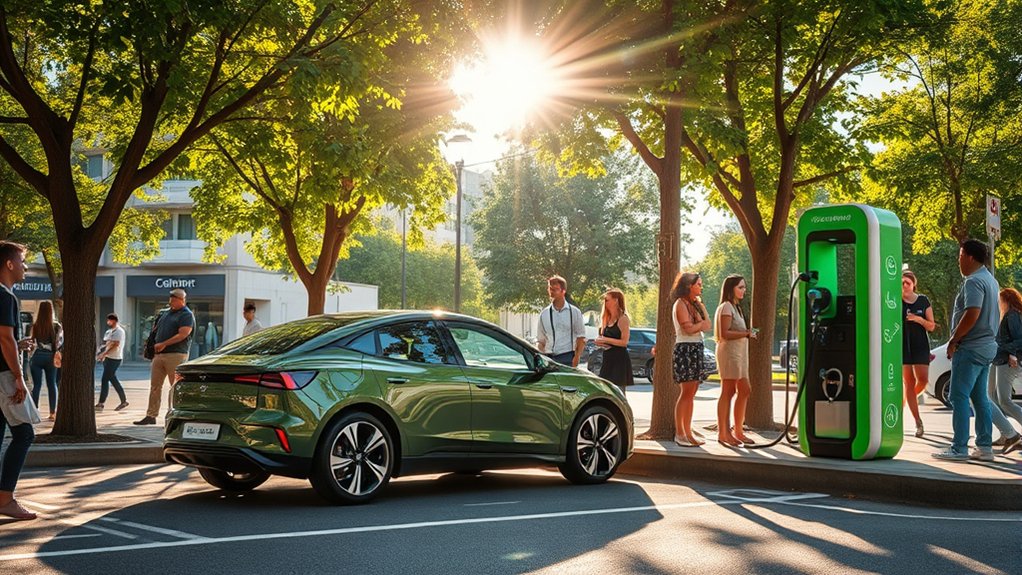
Yes, free EV charging still exists in the U.S., but it is not universal and the rules vary by location. You may find no-cost charging at some shopping centers, hotels, workplaces, municipal properties, dealerships, and other host sites. The safest way to find it is to use a charging app with a free-price filter, then confirm the station’s access rules, connector, hours, and any parking or overstay fees before you drive there.
The Current Landscape of Free EV Charging in the US

Free public charging is usually offered by the property owner or charging-station host rather than by a nationwide rule. On networks such as ChargePoint, station owners set their own pricing, so one location may be free while another charges by energy, time, session, or another fee structure.
Free charging can also come with restrictions. A station may be available only to customers, hotel guests, employees, dealership visitors, or people using a particular parking facility. Some sites also set time limits or charge an overstay fee after a free period.
That means a charger labeled “free” should not automatically be treated as unrestricted. Always open the station details before arriving and check the latest pricing, access notes, operating hours, and recent driver reports.
Best Places to Discover Free Charging Stations
Common places to look for free EV charging stations include the following:
- Shopping centers and supermarkets: Some retailers and shopping properties provide charging as a customer amenity.
- Municipal buildings, libraries, and public parking areas: Some cities and public agencies offer charging at selected sites.
- Hotels: Some properties provide complimentary charging for registered guests, while others charge a fee.
- Car dealerships: Some dealers allow customer charging, although access may depend on business hours, vehicle brand, or dealer policy.
- Workplaces: Some employers provide free or subsidized charging to employees, while others charge a fee or impose time limits.
Because host policies can change, verify the station before relying on it for a trip. A recent check-in or current network status is more useful than an old list of “free chargers.”
Use Apps to Find Free Charging Stations
Charging apps are the easiest way to narrow your search. As of October 7, 2026, PlugShare, ChargePoint, and ChargeHub all provide tools that can help you identify no-cost charging locations, although the exact filters and station data differ by app.
| App Name | Useful Features for Free Charging |
|---|---|
| PlugShare | Free Charging amenity filter, connector filters, station details, recent check-ins, comments, and availability data where available |
| ChargePoint | Free quick filter, price filters, connector filters, charging-speed filters, and real-time station status for supported locations |
| ChargeHub | Free Stations filter, connector and charging-level filters, network information, and station-status information |
Before navigating to a station, confirm that your EV can use the connector shown. Also read the station description for access restrictions, parking fees, time limits, and instructions that may not be obvious from the map pin alone.
For an additional source of public-charging locations, the U.S. Department of Energy’s Alternative Fueling Station Locator lists public EV charging sites across the United States and Canada. It is especially useful for checking station locations and network information, although you should still confirm current pricing with the station operator or charging app.
Tips for Maximizing Your Free Charging Opportunities
- Filter for free stations first. Use the app’s free-price or free-charging filter instead of assuming a public charger is free.
- Check the station details immediately before your trip. Pricing, access, and operating status can change.
- Confirm connector compatibility. Make sure the site has a connector your vehicle can use directly or with an approved adapter.
- Read recent check-ins and comments. They can reveal broken equipment, blocked spaces, access restrictions, or recent successful charging sessions.
- Watch for parking and overstay fees. A charging session can be free while parking, idle time, or overstaying still costs money.
- Use busy-time information when available. If an app shows popular times or current availability, use that data to reduce the chance of arriving at a full site.
- Move your vehicle when charging is complete. This helps other drivers use the station and can help you avoid overstay charges where they apply.
Key Terms to Know About Free Charging Offers
Free charging usually means the charging host has set the energy or session price to zero. It does not always mean the entire visit is free, because parking, access, idle, or overstay charges can still apply.
Complimentary charging is often a benefit tied to a hotel stay, workplace, vehicle purchase, lease, dealership visit, or promotional plan. These offers may be limited by model year, vehicle identification number, charging network, session length, or enrollment deadline.
Level 2 charging is common at workplaces, hotels, shopping areas, and public parking locations. It is generally intended for longer stops rather than a quick highway top-up.
DC fast charging provides much faster charging for compatible EVs, but pricing and promotional eligibility vary by network and vehicle. Do not assume a fast charger is free just because your vehicle came with a charging benefit.
Idle or overstay fees are charges that may begin when a vehicle remains connected or occupies a charging space beyond the allowed period. The exact rule depends on the station owner or network.
Do Automakers Still Include Free Charging?
Some EV purchases and leases have included complimentary or discounted public charging, but these programs change frequently by brand, model year, purchase date, and network. Treat any manufacturer charging benefit as a specific promotion, not a permanent feature of the vehicle.
For example, older Hyundai IONIQ 5 promotions included limited complimentary Electrify America charging for eligible vehicles. By contrast, Volkswagen’s 2026 ID.4 charging benefit includes two years of Electrify America Pass+ membership, which provides discounted charging rates rather than unlimited free charging.
If free charging is important to your purchase decision, verify the current offer for the exact model year and trim before buying. Read the promotion terms for enrollment requirements, session limits, idle fees, transfer restrictions, and expiration dates.
Frequently Asked Questions
Do Free EV Chargers Still Exist?
Yes. Free EV chargers still exist in the U.S., including some stations at shopping centers, hotels, municipal properties, dealerships, workplaces, and other host sites. Availability varies by location, and free stations may have access or time restrictions.
Is EV Charging Free in the USA?
No, EV charging is not generally free across the United States. Some individual stations or promotional charging plans cost nothing to eligible drivers, while many public chargers require payment. Check the price shown in the charging app or station details before starting a session.
Which EV Gives Free Charging?
There is no single permanent list because manufacturer charging promotions change by model year and purchase date. Some past EV offers included complimentary charging, while current programs may provide only discounts or a fixed credit. Verify the exact offer on the automaker or charging-network website before buying an EV based on a charging incentive.
Can a Free Charger Still Charge Parking or Idle Fees?
Yes. A station can have a zero charging price while the property owner or network still applies parking, idle, overstay, or access fees. Review the full station pricing and rules before plugging in.
How Can I Tell If a Free Charger Is Working?
Check the network or mapping app for current station status when available, then review recent driver check-ins or comments. If the station is important to your route, identify a backup charger nearby in case the free unit is occupied, restricted, or out of service.
Conclusion
Free EV charging in the U.S. is still available, but the most reliable strategy is to verify each station instead of depending on old lists or broad promises. Use PlugShare, ChargePoint, or ChargeHub to filter for free locations, confirm connector compatibility and access rules, and check for parking or overstay fees.
Manufacturer charging benefits can also reduce your costs, but the terms can change from one model year to the next. Confirm the current promotion before you buy, and always keep a backup charging option for longer trips.