
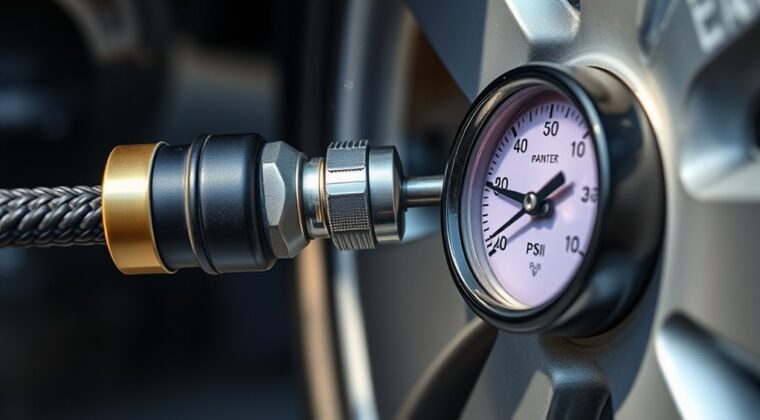
A portable tire inflator uses an electric motor to drive a piston that draws in air on the downstroke and compresses it on the upstroke. You connect the hose to the valve stem, and the pressurized air flows into the tire while a check valve prevents backflow. A PSI sensor tracks pressure, and the unit stops at the target level to avoid overinflation. Understanding the airflow path helps you choose the right inflator and use it correctly.
Key Takeaways
- A tire inflator uses an electric motor to drive a piston that compresses air into the tire.
- The piston draws in air on the downstroke and pushes it out on the upstroke.
- A check valve prevents air from flowing backward, helping pressure rise steadily.
- PSI increases as compressed air enters the tire, and a gauge or sensor tracks inflation.
- Automatic shutoff or careful monitoring prevents overinflation and keeps tire pressure safe.
What Is a Portable Tire Inflator?
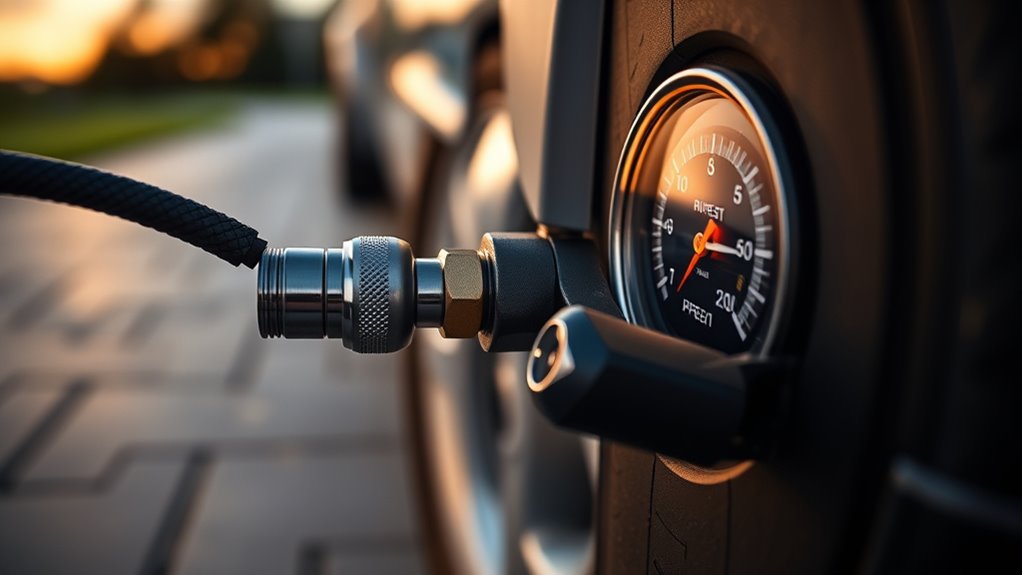
A portable tire inflator is a compact tool that uses a motor-driven piston to compress air and deliver it directly into a vehicle tire. You use portable tire inflators when you need controlled tire air without relying on fixed service equipment.
The motor drives compressed air into the tire, while a tire pressure gauge lets you verify PSI as you work. Unlike larger air pumps, this inflator usually runs from a wall outlet, a 12V car port, or a rechargeable battery, so you can act wherever pressure drops.
You won’t find a storage tank, so continuous operation is short, often 5-10 minutes before cooling. That limitation still supports practical autonomy: you can restore ideal tire pressure quickly, then move on.
A one-way valve helps keep air inside the tire, preventing backflow and preserving the result. Portable tire inflators give you precise, portable control over inflation.
The Parts Inside a Portable Tire Inflator
Inside a portable tire inflator, the power source—whether a wall plug or 12V car port—feeds an electric motor that converts electrical energy into mechanical motion.
You rely on that motor to drive gears linked to a piston and cylinder, the core of many air compressors. As the piston cycles, it compresses portable air for tire inflation, while a check valve keeps flow one way and blocks backflow. That control preserves pressure inside the chamber and prevents wasted work.
A connector then routes the compressed air into your tire inflator hose and into the tire. Many units also include a pressure sensor that monitors PSI and cuts power when the preset level arrives, so you don’t overinflate.
In effect, each part works as a precise, self-governing system: motor, gears, piston, valve, and sensor. When you use it, you’re directing machine energy toward freedom from low pressure and stalled movement.
How a Portable Tire Inflator Moves Air
As the electric motor turns the gears, it drives the piston through a repeating downstroke and upstroke that moves air into your tire. You feed the inflator with 12V power from a vehicle outlet, wall plug, or battery, and the mechanism converts that power into fluid motion.
On the downstroke, the piston creates a partial vacuum, drawing air through an intake valve. On the upstroke, it compresses that air and sends it through a connector toward the tire, while a check valve blocks backflow so pressure rises steadily.
- Motor spins
- Piston drops
- Air enters
- Air compresses
This cycle follows fluid mechanics: as air density increases inside the portable chamber, PSI climbs to your target. You’re not forcing freedom through guesswork; you’re controlling flow with measured pressure, using the inflator’s mechanical rhythm to reclaim mobility, one compression at a time.
How to Use a Portable Tire Inflator Safely
Once the inflator is moving air properly, safe use comes down to setup, pressure control, and heat management.
First, read your vehicle’s recommended tire pressure from the door jamb or owner’s manual, then attach the hose straight to the valve stem so the tire inflator seals cleanly and pushes air into your tire without leakage.
Read your vehicle’s recommended tire pressure, then attach the hose straight to the valve stem for a clean, leak-free seal.
If you’re using a 12V portable tire inflator, keep the engine running to protect the battery and maintain stable power.
During inflation, monitor the built-in PSI gauge and stop before you reach the target, because over-inflation reduces grip and increases wear.
After shutting the unit off, verify pressure with a handheld gauge for accuracy.
Then let the portable tire inflator cool down after use for about 10 minutes; that pause limits overheating and preserves motor life.
With disciplined setup and measurement, you control the system instead of letting pressure control you.
What to Check Before Buying One
Before you buy a tire inflator, compare the power source, pressure capability, and safety controls against how you’ll actually use it. For home garages, 110V AC works; for freedom on the road, battery power or a 12V cigarette lighter plug may fit better.
- Check the PSI output and make sure it can reach your recommended tire pressure.
- Read the pressure gauge; real-time data keeps you from guessing as air is sucked into the tire.
- Confirm automatic shutoff or pressure sensors so your portable tire setup won’t overfill.
- Inspect duty cycle and cooling time; most inflators are a great tool, but only for 5–10 minute runs before they need rest.
You should also verify hose length, connector fit, and noise level.
A precise inflator helps you act without dependence, keeping maintenance under your control and your mobility uncompromised.
Frequently Asked Questions
Does a Car Need to Be Running to Use a Tire Inflator?
No, your car doesn’t have to be running, but you should often leave it on for tire inflator use.
You’ll protect tire pressure, reduce battery drain, and improve inflation speed with 12V inflator types.
Check inflator features, power sources, and portability options before use.
Follow usage safety and maintenance tips, since some inflator brands need steady voltage.
Battery-powered models can work off-engine if fully charged, but may deliver less output.
Is It Worth Buying a Tire Inflator?
Yes, you should buy a tire inflator if you value tire inflator benefits, cost savings, and the convenience factor.
You’ll improve emergency preparedness, avoid repeated station stops, and reduce under-inflation damage.
Compare brand comparisons, size options, inflation speed, and user experiences to match your needs.
Follow maintenance tips, and you’ll keep it reliable.
For you, the device gives practical autonomy, technical control, and a cleaner, more liberated driving routine.
What Are the Common Problems With Car Tire Inflators?
You’ll hit common inflator issues: overheating problems after about 10 minutes, weak inflation speed performance on flats, and pressure gauge accuracy that can drift.
Then comes the hum—noise level concerns, limited power source options, and battery drop-offs.
Tire inflator maintenance matters, as does checking safety precautions, portability features, and the one-way valve for backflow.
Stay analytical, test PSI manually, and you’ll keep control, not dependency.
What Is the Difference Between a Tire Inflator and an Air Compressor?
A tire inflator is a compact, portable option for quick inflation, while an air compressor delivers higher pressure, airflow, and broader use.
You’ll notice tire inflator types often run on 12V or battery power, so inflation speed is slower but PSI accuracy can improve with digital features.
Use maintenance tips and safety precautions, and compare user reviews.
Air compressors suit tools; inflators suit tires and freedom.
Conclusion
In the end, a tire inflator works by drawing in ambient air, compressing it, and pushing that air into your tire until the pressure reaches the target PSI. You can think of it as a controlled airflow system: motor, pump, hose, and gauge all work together. If you choose the right model and use it correctly, you’re not just keeping tires full—you’re staying ahead of wear, handling, and safety issues before they snowball.
