
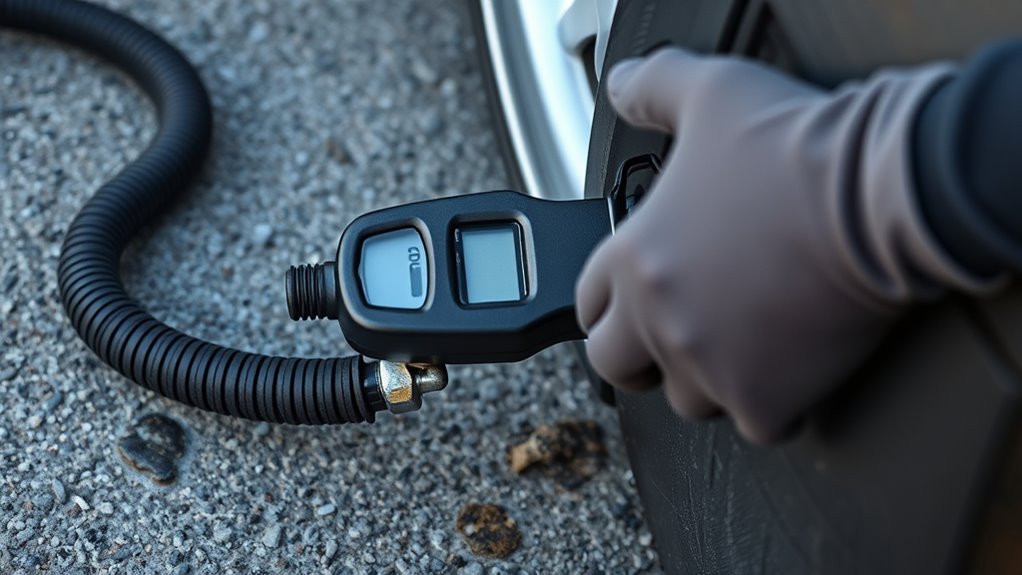
If your tire inflator shows 0 PSI, check the hose, chuck, and valve stem first for leaks, cracks, kinks, dirt, or a loose fit. Verify the battery is charged and the unit hasn’t overheated, then power it off for 10 seconds and restart it. If the screen still disagrees with a manual gauge, the pressure sensor or display circuit may be failing, and a reset or repair may be next. There’s more to confirm below.
Key Takeaways
- Check the hose, chuck, and valve stem for cracks, kinks, dirt, or loose connections causing false zero readings.
- Verify the tire’s actual pressure with a manual gauge to confirm whether the inflator display is inaccurate.
- Replace or recharge the battery, since low power can cause unstable readings and failed inflation.
- Power cycle or reset the inflator, and let it cool if thermal shutdown may be triggering a zero PSI display.
- If zero PSI persists, the pressure sensor or display circuit may be faulty and require service or warranty repair.
Why Your Tire Inflator Reads 0 PSI
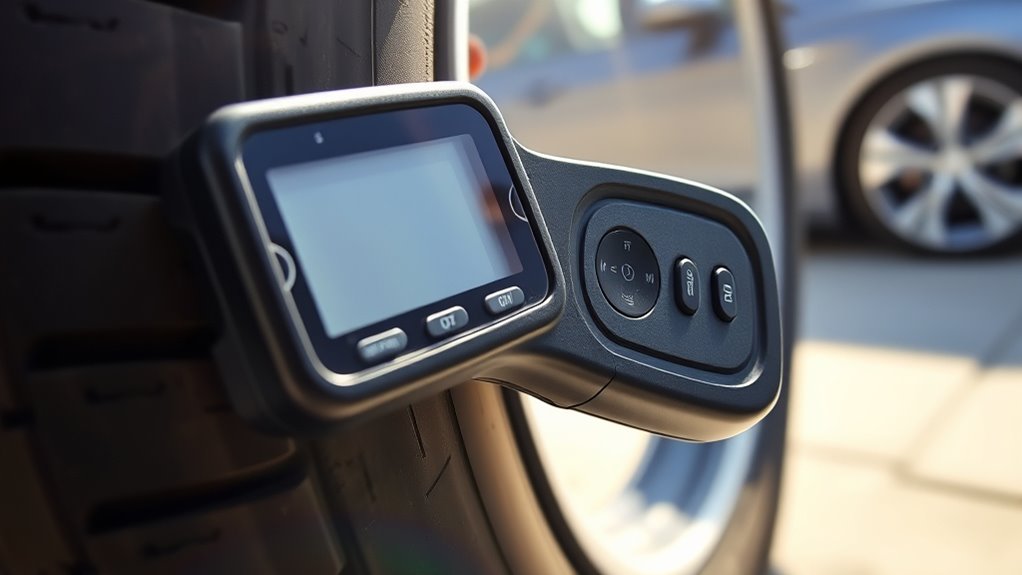
If your tire inflator reads 0 PSI, the issue is often a faulty pressure sensor, a poor hose or valve connection, a damaged hose, or a low battery.
You should treat the zero on the pressure gauge as a diagnostic signal, not proof that your tire lacks air pressure. A failed sensor can miss real pressure while the unit still powers on. A weak battery can also starve the air compressor of stable voltage, so tire inflation becomes erratic or stops.
If you’ve run the inflator continuously, thermal shutdown may force a temporary zero reading until it cools. Check whether the display returns after a pause.
Regular maintenance helps you keep control: inspect seals, verify connections, and charge the battery before use. When your tire inflator stays accurate, you avoid guesswork and keep your mobility on your terms.
Check the Hose, Chuck, and Valve Stem
Once you’ve ruled out a sensor or battery issue, inspect the hose, chuck, and valve stem for airflow problems that can make the inflator read zero PSI.
Examine the hose for cracks, splits, or kinks; any restriction can block airflow and distort tire pressure readings.
Then check the chuck and make sure it locks firmly onto the valve stem. If the connection feels loose, air can escape before the inflator measures pressure, producing a zero reading.
Inspect the valve stem for dirt, corrosion, or damage that could obstruct flow. Clean both the chuck and valve stem so buildup doesn’t interfere with sealing or inflation.
To confirm the fault, use a tire pressure gauge. If the gauge shows normal pressure while the inflator still reads zero, the inflator likely needs repair or replacement.
This troubleshooting step gives you direct control over the system and helps you isolate the failure fast.
Reset the Sensor and Power Cycle the Unit
Start by resetting the pressure sensor on your tire inflator: locate the reset button, usually near the display, and press it to clear any false readings. Then power cycle the inflator to flush stale data and restore control logic.
| Step | Action |
|---|---|
| 1 | Reset the sensor |
| 2 | Turn off the unit |
| 3 | Wait 10 seconds |
| 4 | Turn it back on |
Keep the inflator disconnected from any tire during this power cycle. That break lets the pressure sensor recalibrate without load-induced noise or erroneous readings. If the display still shows 0.0 PSI, inspect the hose-to-valve connection for looseness, because an insecure seal can block accurate measurement. Check your manual for model-specific reset procedures; some units use different button sequences or hold times. This reset routine gives you direct control over the system and helps you isolate whether the fault lives in the sensor, the electronics, or the connection path.
Why the Screen and Gauge Don’t Match
When the screen and your manual gauge don’t agree, the problem usually points to the inflator’s sensing system, not the tire itself. Your manual gauge may show true pressure while the display reads 0 psi because a sensor, wiring, or connector has failed.
Start with the hose: make sure it’s locked on, sealed, and leak-free, because a bad connection can distort both readings. Then inspect the unit for moisture, overheating, or corrosion, since those conditions can skew electronic pressure feedback.
Clean the contacts, check for loose leads, and confirm the display isn’t intermittently dropping out. In Troubleshooting Air, this split reading tells you the inflator isn’t translating air pressure correctly, so don’t chase phantom tire wear symptoms until you verify the measurement chain.
If the gauge stays stable but the screen doesn’t, the fault is in the electronics, and your tire may still be fine.
When to Repair or Warranty the Inflator
If the screen and manual gauge still disagree after you’ve ruled out hose and connection issues, the next step is to decide whether the inflator needs repair or warranty service.
On a Portable Inflator, a persistent zero PSI reading usually points to a failing pressure sensor or display circuit, not the hose, especially if manual inflation still works.
When you’ve used the unit successfully on multiple tires before, treat the change as a real malfunction, not user error.
Check your warranty options before opening the case; manufacturer service often returns units quickly and restores reliable field use.
If the sensor needs recalibration or replacement, a qualified repair can bring the tool back online.
Until then, keep a backup inflator ready so your freedom to move doesn’t depend on one failing device.
For emergency or fleet use, continuity matters more than waiting.
Frequently Asked Questions
How to Reset Portable Tire Inflator?
Disconnect your portable inflator from power and the hose, then hold the power button for 10–15 seconds to clear faults.
Reconnect it, charge the battery to 50–60%, and let the hose attach so the sensor recalibrates.
These inflator maintenance tips improve pressure gauge accuracy and reduce battery charging issues.
If zero PSI persists, use user manual insights and advanced troubleshooting techniques, or contact support for model-specific reset steps.
Why Is My Tire Pressure Saying 0?
Your tire pressure reads 0 when the sensor fails, the connection’s blocked, or the valve isn’t seated.
You should check tire pressure sensors, inspect hose flow, and verify the chuck seals tight.
Then perform air compressor maintenance, digital gauge calibration, and follow tire maintenance tips with inflation safety precautions.
If manual inflation still shows zero, you’re likely facing a faulty sensor, damaged hose, or deeper unit fault needing service.
Why Is My Tire Inflator Not Working?
Your inflator isn’t working because a sensor, hose, valve, or power fault is interrupting operation.
Check inflator pressure settings, secure every connection, and clear debris.
If manual inflation works, you’ve likely got a gauge or electronics failure, not a blocked hose.
Follow inflator maintenance tips, verify inflator usage safety, and compare tire inflator brands and best tire inflators for reliable replacement.
Charge the battery and reset the unit, if possible.
What Are the Common Problems With Car Tire Inflators?
Aye, you’ll usually face Air leakage issues, Gauge calibration errors, Power supply failures, Hose blockages, and Compressor malfunctions.
You should inspect seals, valves, and fittings, then verify gauge accuracy with a known source.
Check batteries, cords, and fuses for power loss, and clear any hose obstruction.
If the compressor overheats or stalls, let it cool and retest.
Your diagnostics should be systematic, so you can reclaim reliable inflation fast.
Conclusion
If your tire inflator still shows 0 PSI, don’t ignore the basics: a loose hose, faulty chuck, or damaged valve stem can block accurate readings. Reset the sensor, power cycle the unit, and compare the screen to a trusted gauge to isolate the fault. If the problem persists, you’re likely dealing with a worn sensor or internal failure. A stitch in time saves nine—repair it or use the warranty before the issue worsens.

