
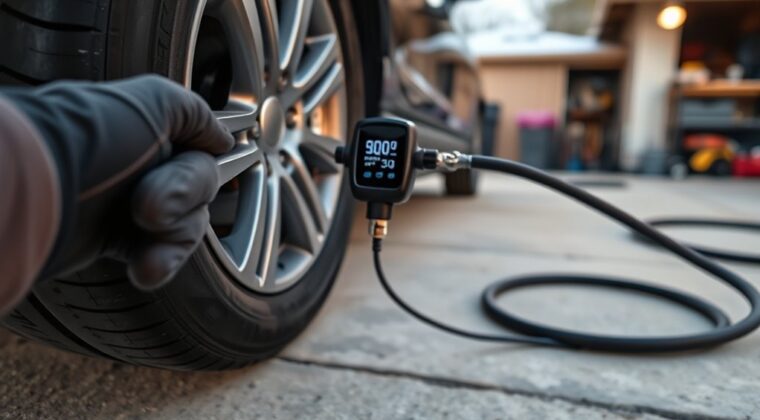
If your tire inflator shuts off before target PSI, first check the hose and valve for dirt, grit, or blockages that restrict airflow. Make sure the valve connection is tight and the brass nut isn’t worn. Then verify the battery is fully charged and the power cable, plug, and fuse are sound. Confirm the set PSI matches the tire placard exactly. If it still stops early, the sensor or auto-shutoff path may need deeper troubleshooting.
Key Takeaways
- Check the air hose and valve for debris, blockages, or loose connections causing airflow loss.
- Inspect the brass-nut crossbar and pressure sensor for wear or inaccurate readings.
- Fully charge the battery and verify power cable, plug, and vehicle fuse condition.
- Confirm the target PSI matches the tire placard exactly to avoid early auto shutoff.
- Let the inflator cool, reset settings, and contact support if it still stops early.
Why Your Tire Inflator Shuts Off Early
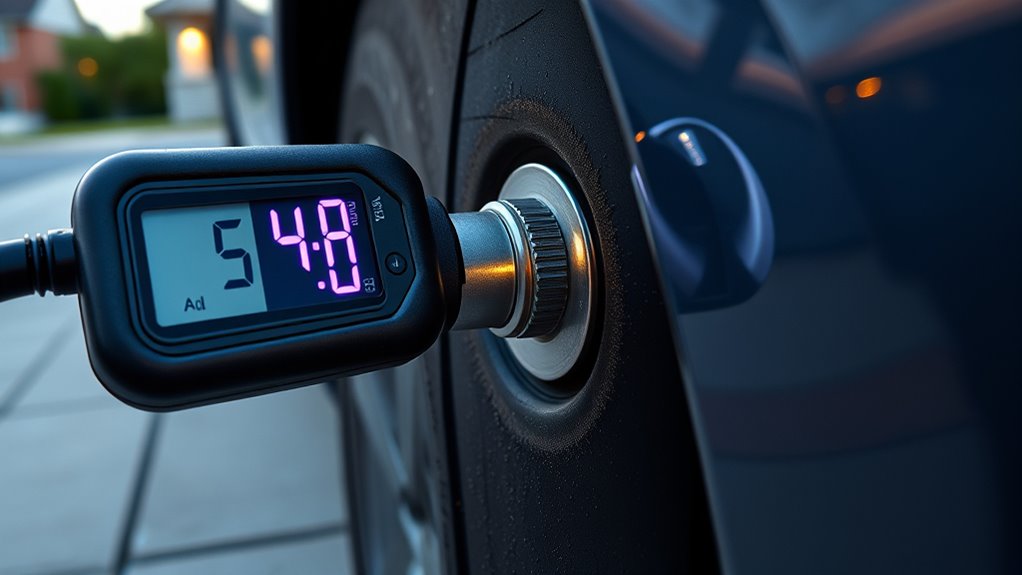
If your tire inflator shuts off early, the problem often comes down to airflow or power. You’re likely seeing one of the common issues that affect tire inflators: debris in the air hose, a loose valve connection, or a worn brass-nut crossbar that interrupts flow.
When airflow drops, the sensor can read incorrect pressure and signal completion before you’ve reached target PSI. You should check the battery, because low voltage can weaken portable inflators and make them stop under load.
Inspect the hose and fittings for damage, kinks, or contamination, and confirm the connection seals tightly at the valve stem. If the inflator’s internal path is restricted, it won’t deliver consistent pressure, even though the display looks normal.
Regular cleaning and connection checks restore control, reduce premature shutoff, and help you reclaim accurate inflation without wasting time or energy.
Check the Hose and Valve for Blockages
Start with the high-pressure hose and valve, because even a small blockage can make the inflator read false pressure and shut off too early.
Inspect the hose for dirt, grit, or debris that could restrict airflow. Check the hose opening and brass connector closely; use tweezers or a thin tool to clear any obstruction you can see. This simple diagnostic step restores an unobstructed path and helps the inflator read pressure correctly.
Inspect the hose opening and brass connector for debris; clear any blockage to restore proper airflow and pressure readings.
Before each use, inspect the hose so debris doesn’t build up and control your results. After cleaning, reconnect the hose securely to the tire valve and valve stem so you get a tight seal and avoid air leaks.
If the inflator still behaves erratically, inspect the brass nut for damage or a broken crossbar. That fault can mimic a blockage and may need professional service.
When you check this path carefully, you regain reliable inflation and more control.
Test Battery Power and Cable Connections
Next, verify the battery and power path, because low voltage can make the inflator shut down early or run inconsistently.
Start with the battery: fully charge it, then retest. If you use a rechargeable lithium battery, note its age; after about 2 to 3 years, capacity often drops enough to cause premature cutoff.
Then check the power source with a multimeter and confirm the input voltage matches the inflator’s rating.
Inspect the power cable, plug, and hose connection for cuts, corrosion, or looseness, because any resistance can starve the motor.
If you’re running from a vehicle outlet, inspect the fuse in the cigarette lighter circuit and the internal plug fuse; replace any blown fuse before testing again.
Secure every connection, then run the unit under load. Clear, stable voltage means the inflator can keep working on your terms, not on a failing supply.
Fix Pressure Sensor and Auto Shutoff Errors
When your tire inflator shuts off before it reaches the target PSI, inspect the air hose for blockages or debris, since restricted airflow can distort pressure readings and trigger premature auto shutoff. On a Portable Tire Inflator, verify the target pressure matches the tire placard exactly; a mismatch makes the device shuts early. If the hose is clear, check for a faulty pressure gauge or a damaged brass-nut crossbar that can misread airflow.
| Check | Meaning |
|---|---|
| air hose | Blockage skews sensor data |
| target pressure | Wrong setting causes shutdown |
| pressure sensor | Faults force false cutoff |
If the unit has run hot, let it cool before retesting. Heat can bias the sensor and stop inflation. Regular maintenance keeps your equipment honest: keep connections tight, inspect for debris, and confirm readings before each use. You deserve control, not guesswork.
Clean the Inflator or Replace Faulty Parts
Clear the high-pressure hose and inflator intake first, since debris can distort pressure readings and trigger premature shutoff.
You should clean the inflator with care, then inspect the hose cap, brass nut, and intake path for obstruction. Even small debris can skew pressure sensing and stop inflation early.
Clean the inflator carefully, then inspect the hose cap, brass nut, and intake path for obstructions.
If the hose still misreads pressure after cleaning, check the brass nut for a damaged crossbar; that part may need professional repair or replacement.
A faulty pressure sensor can also force the auto shutoff to trip too soon, so reset the settings if the unit keeps stopping below target PSI.
For ongoing maintenance, keep the hose cap on when you’re not using the inflator to block debris and preserve performance.
If the problem persists, stop guessing and contact ETENWOLF Support with your documentation. That keeps your diagnostic path clean, direct, and free from avoidable waste.
Frequently Asked Questions
Why Does My Tire Inflator Keep Shutting Off?
Your inflator keeps shutting off because you’re likely hitting a fault in airflow, power, or heat control.
Check for blocked hoses, loose valve connections, debris, or a damaged brass nut crossbar.
Verify inflator power sources, battery charge, and pressure gauge accuracy.
Use proper usage techniques, avoid overheating, and follow inflator maintenance advice.
These inflator troubleshooting tips address common inflator issues and help you restore reliable, autonomous inflation.
Why Does My Air Compressor Shut off Before Reaching Full Pressure?
Your air compressor likely shuts off early because airflow issues, hose blockages, or a bad connection trick its controls.
Check pressure settings and gauge accuracy first, since a false reading can trigger shutdown.
Inspect safety features for overheating cutoffs, then confirm compressor maintenance is current.
You may also have a weak battery or damaged brass fitting.
Fix leaks, let it cool, and restore full pressure on your terms.
What Psi Should My Compressor Shut off At?
Your compressor should shut off at the vehicle’s specified PSI, usually 32–35, like a gauge needle settling into place.
You’ll find the exact target on the door jamb sticker. Follow tire pressure guidelines and understanding PSI limits, then set ideal pressure settings accordingly.
If it stops early, use inflator troubleshooting steps, check common inflator issues, and apply compressor maintenance tips to free your system from wasted air and guesswork.
Why Does My Air Compressor Shut off at 40 Psi?
Your air compressor may shut off at 40 psi because pressure settings are misread, the gauge isn’t accurate, or a blocked hose limits flow.
You should check compressor maintenance, air leaks, and the power supply first. Low battery voltage can cut performance, and motor overheating from overuse can trigger thermal shutdown.
Inspect the sensor, hose, and brass nut crossbar for damage so you can restore reliable, self-directed inflation.
Conclusion
When your tire inflator shuts off early, treat it like a warning light, not a dead end. Check the hose, valve, battery, and sensor as you would inspect each link in a chain; one weak link can stop the whole system. Clean away debris, correct faulty connections, and replace worn parts before they trigger false cutoff. A well-tuned inflator keeps pressure rising smoothly, like a compass pointing true under load.