
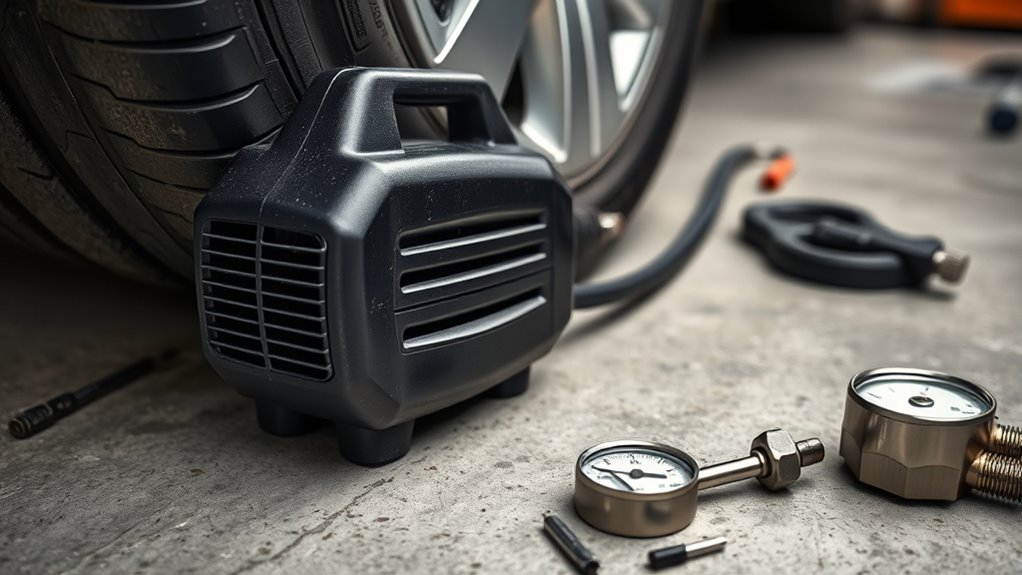
If your tire inflator is vibrating too much, start by checking the mount, base, and fasteners for looseness or uneven contact. Make sure the floor is level and any grommets or dampening pads are intact. Next, inspect the motor, belt, piston, and bearings for wear, rough startup, or overheating. Also check the hose, chuck, and valve stem for kinks, leaks, or blockage; the next steps can narrow it down further.
Key Takeaways
- Place the inflator on a stable, level surface to prevent wobbling and external vibration transfer.
- Tighten loose brackets, bolts, and mounting parts to specification to stop shifting under load.
- Inspect the motor, piston, bearings, and crankshaft for wear, damage, overheating, or rough operation.
- Check the belt tension and lubrication, since too-tight, too-loose, or dry components increase vibration.
- Examine the hose, chuck, and valve stem for kinks, leaks, dirt, or damage that can strain the inflator.
Common Causes of Tire Inflator Vibration
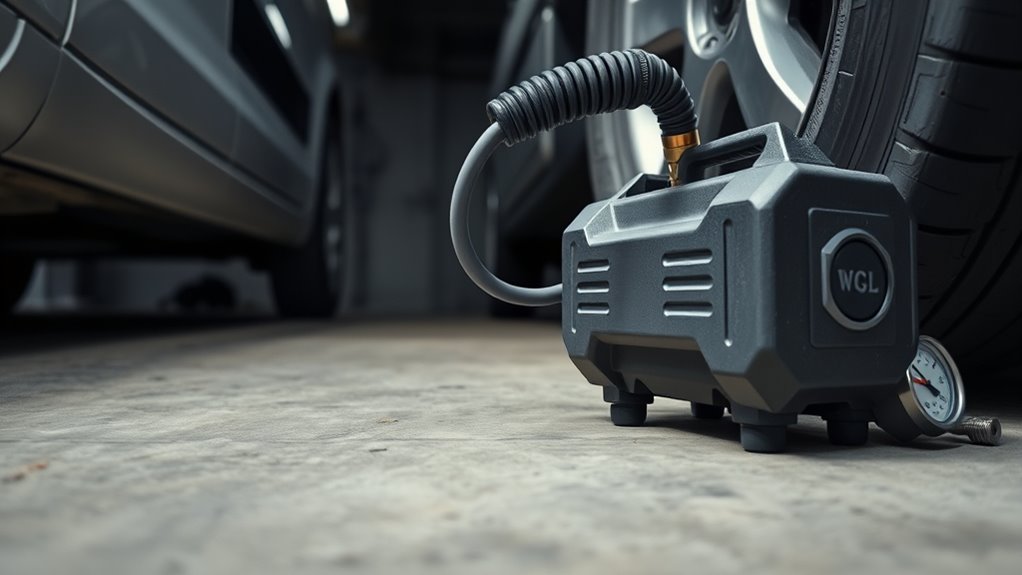
Tire inflator vibration often starts with loose or uneven mounting components that let the unit shift under load. You should treat that movement as one of the main common causes of Tire Inflator vibration.
Next, inspect for mechanical issues like worn bearings or a bent crankshaft; both can throw rotating parts off center and amplify shake. You may also feel vibration rise when airflow obstructions, such as dirty or damaged valve stems, force the inflator to work harder.
External vibration from nearby machines or an unstable floor can transfer directly into the housing, making the problem seem worse.
Regular maintenance matters here: lubrication and close inspection of mounted components help you catch wear before it spreads.
When you test the unit, listen for irregular noise and watch for erratic motion. If you identify the source early, you keep control, reduce stress on parts, and preserve reliable performance without wasting energy.
Check the Mounting and Base
Start by checking the mounting points and base because even a slight shift can create persistent vibration. Place your portable inflator on a stable, even surface; an unstable surface can magnify movement and make diagnosis harder.
Inspect the mounting brackets, then tighten all bolts and brackets to spec so nothing can work loose under load. If the unit has rubber grommets or dampening pads, verify they’re intact, seated correctly, and not compressed flat.
Look for bent or damaged legs that break full contact with the floor and transmit vibration into the frame. When you operate the inflator, hold it securely if it’s portable, so it can’t walk or tip.
These checks remove avoidable instability and support disciplined compressor maintenance. If vibration persists after the base is secure, you’ve ruled out the foundation and can move on with confidence.
Inspect the Motor, Piston, and Belt
Next, inspect the motor, piston, and belt for the kinds of faults that create vibration under load. First, inspect the motor for unusual noises, overheating, or rough startup; these signs point to internal binding and a clear cause of vibration.
Then check the piston for dirt, scoring, or damage. A dirty or jammed piston disrupts stroke symmetry and can amplify vibrations during operation.
Examine the belt next. If it’s too tight, the drive can pull the assembly out of line; if it’s too loose, slip and erratic movement can appear. Confirm proper tension and alignment across all pulleys.
Also verify bearing lubrication, because dry bearings raise friction and can threaten motor life.
During troubleshooting air delivery, trace any wobble back to the drive train, not just the tank or lines.
When you inspect the motor, piston, and belt carefully, you reclaim control and reduce mechanical noise without guessing.
Rule Out Hose, Chuck, and Valve Problems
If the drive train checks out, rule out airflow faults at the hose, chuck, and valve next.
On your portable air compressor or air pump, inspect the hose for kinks, blockages, cracks, or abrasion that can choke air flow and spike vibration.
Verify the hose-to-chuck connection is tight; a loose joint leaks pressure and makes the compressor hunt.
A loose hose-to-chuck connection leaks pressure and makes the compressor hunt.
Seat the chuck squarely on the valve stem, because poor contact creates instability and uneven tire pressure.
Examine the valve stem for dirt, corrosion, or damage that can restrict flow into the tire and force the inflator to work harder.
If the chuck rocks or hisses, clean the parts and reconnect them.
Keep the hose, chuck, and valve clean so buildup doesn’t compound the fault.
When you clear these passages, the unit can deliver steady air, reduce shake, and let you read tire pressure accurately.
Fix Tire Inflator Vibration for Good
Set the tire inflator on a solid, level surface so the unit doesn’t wobble under load, then check every mounting bolt and bracket for looseness. You can fix tire inflator vibration by isolating the source, not guessing. A portable unit should run steady; excessive Air Compressor Vibration usually means instability, wear, or poor damping.
- Make sure the base is flat and rigid.
- Tighten all fasteners and brackets to spec.
- Inspect the crankshaft and bearings for wear or damage.
- Add rubber grommets or vibration dampening pads to help prevent shock transfer.
Keep internal parts lubricated; dry motion raises friction and vibration. If the machine still shakes, stop and diagnose it before you create extra tire wear or damage the pump.
These controls are designed to protect performance, preserve alignment, and restore quiet operation. When you correct the foundation and the mechanics together, you regain control and the inflator works for you, not against you.
Frequently Asked Questions
How to Reset Portable Tire Inflator?
You can reset your portable tire inflator by disconnecting power, waiting a few minutes, then using the reset button if it has one. If it doesn’t, switch it off and back on.
Check inflator settings, battery issues, pressure gauge readings, and cord management on a stable surface.
For precise reset methods, follow the user manual. Good compressor maintenance helps restore control and keeps you liberated from faulty operation.
What Are the Common Problems With Car Tire Inflators?
You’ll commonly face Inflator noise issues, Air hose leaks, Power cord problems, Gauge accuracy concerns, Overheating issues, Pump motor failures, and User handling mistakes.
You can also see loose fittings, clogged valve stems, weak seals, and unstable mounting, each reducing pressure delivery and raising vibration.
Inspect connections, verify calibration, and test airflow.
If you hear grinding, smell heat, or see erratic readings, you’re dealing with mechanical wear or electrical fault.
How to Reduce Vibration in a Pump?
You can reduce pump vibration by tightening all mounts, aligning components, and replacing worn bearings.
Your vibration causes often include poor pump maintenance, so check lubrication and inspect the air compressor base for cracks.
Add vibration dampening pads or rubber grommets to improve equipment stability and cut noise reduction.
Keep the unit on a flat surface, verify tire pressure isn’t forcing load spikes, and test again for smoother operation.
How to Fix Vibration Problems?
Tighten the bolts, and the machine will sing, not shudder.
You should inspect vibration causes by checking motor balance, worn bearings, and loose brackets.
Improve pump stability with rubber feet and a level base, then verify air pressure and lubricate moving parts during inflator maintenance.
Replace damaged belts or seals to restore noise reduction.
If the shake persists, you’ll need a technician to diagnose deeper faults and free the system.
Conclusion
When your tire inflator starts shaking like a jackhammer on thin ice, don’t ignore it. Recheck the mount, tighten the base, and listen for worn bearings, a loose belt, or a piston that’s out of rhythm. Trace the vibration through the hose, chuck, and valve until the fault shows itself. Once you correct the source, the machine should run steady again, delivering smooth pressure instead of a rattling storm.

