
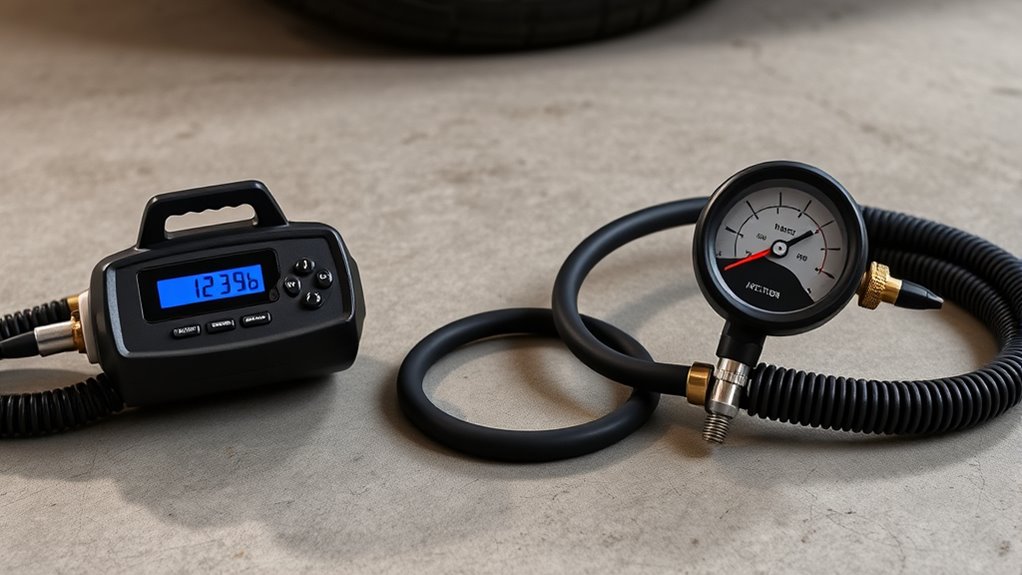
Digital tire inflators give you 0.1 PSI readings, faster stabilization, backlit displays, and preset shutoff features, so you get tighter control and fewer guesswork errors. Analog models are simpler, cheaper, and battery-free, but they usually read within about ±2 PSI and can be harder to read at an angle. If you need precision for track tuning, digital fits best; if you want rugged, low-maintenance gear, analog works well, and there’s more to compare.
Key Takeaways
- Digital tire inflators offer greater precision, usually reading to 0.1 PSI, while analog models are typically accurate within about ±2 PSI.
- Digital displays are easier to read, often backlit, and may include presets and auto shut-off for convenience.
- Analog tire inflators are simpler, battery-free, and better for rugged or remote use, but they can be harder to read accurately.
- Digital inflators cost more upfront, but they are better for track tuning and detailed pressure adjustments.
- Analog inflators are cheaper and low-maintenance, while digital units need batteries and occasional recalibration.
Digital Vs. Analog Tire Inflators at a Glance
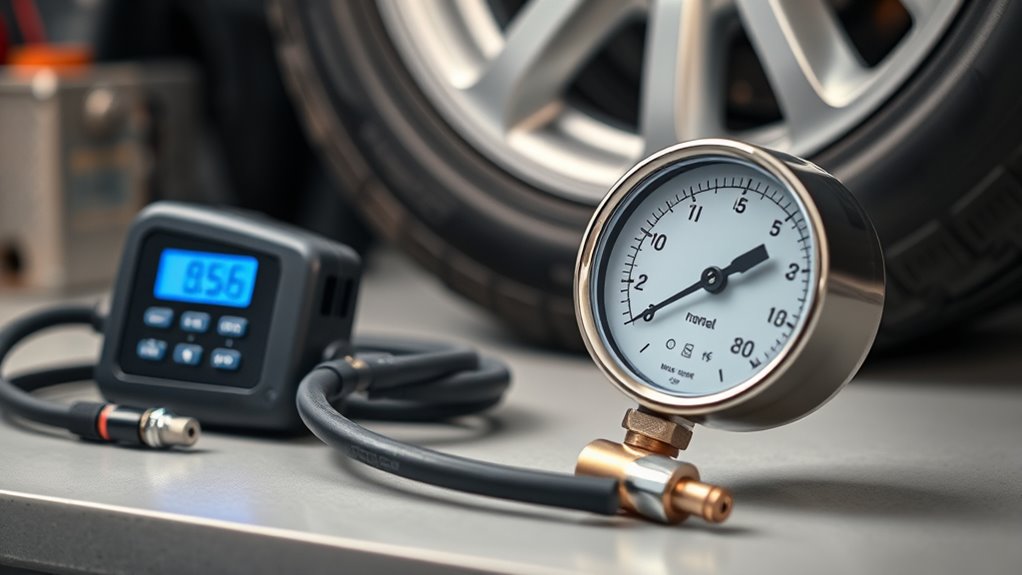
At a glance, digital tire inflators offer greater measurement precision, often reading to 0.1 PSI, while analog models typically fall within about ±2 PSI. You get more accurate readings from a digital tire inflator, and that can reduce guesswork when you set pressure targets.
Digital units usually include user-friendly backlit displays, so you can check values in dim garages or on the road. Many also add programmable features such as preset pressure and automatic shut-off, which support precise top-offs.
Analog options use dial indicators and cost less, usually $15 to $50, but you may see parallax error if you don’t view the gauge straight on. Digital models often run $70 to $200 and may need batteries.
Analog gauges stay battery-free, so they can work reliably in harsh environments without electrical power. If you want a more controlled tire setup, choose the format that matches your budget and conditions.
How Each Inflator Type Works
An analog tire inflator uses a mechanical pressure-sensing element, usually a Bourdon tube, that flexes as air pressure rises and moves a needle across a dial to show PSI. You read the Analog gauge directly; no power source is needed, so you keep control in the field. Digital units use electronic sensors to convert Pressure into numbers on an LCD, giving you easy-to-read output and extra features.
| Type | Works by |
|---|---|
| Analog | Mechanical gauge, needle motion |
| Digital | Sensor, electronic display |
| Analog | Manual calibration |
| Digital | Software calibration |
You can trust both when you maintain calibration. Analog Gauges suit rugged use, while Digital models offer backlighting, programmable settings, and auto shut-off that support freedom from guesswork. Choose the inflator that matches your environment, because the mechanism shapes how you measure, adjust, and move on with confidence.
Accuracy, Readability, and Speed
Digital tire inflators usually give you tighter accuracy, often reading within ±0.5 to 1.0 PSI, while analog gauges commonly sit closer to ±2 PSI. That difference matters when you’re setting tire pressure for consistent readings and exact control.
Digital gauges also improve readability: their backlit LCDs stay easy-to-read in dim garages, while analog gauges depend on dial markings that can be hard to parse at awkward angles. You’ll usually get decimal-point precision from digital gauges, so you can tune pressure with less guesswork.
Digital gauges improve readability with backlit LCDs and decimal precision, making tire pressure adjustments easier and more exact.
Speed is another advantage. Digital inflators stabilize quickly, letting you measure, inflate, and bleed in one workflow.
Analog gauges can take longer to settle, and parallax error can distort what you see if you don’t view the needle straight on. If you want faster adjustments and tighter accuracy, digital tools give you a more direct path to reliable tire pressure without extra steps or interpretation.
Durability and Maintenance Differences
Beyond accuracy and speed, durability and upkeep also shape which inflator works best for your needs.
Digital inflators usually use sealed buttons, shock-absorbing housings, and protective casings, so you get better durability in vibration, impact, and rough handling. Many also carry IP-rated environmental sealing, which helps block moisture and splash exposure.
By contrast, analog gauges have no electronics or battery life to manage, but their pointer mechanisms can bend, and moisture intrusion can degrade readings or corrode parts. You’ll often need to clean them and store them dry.
Digital units need less physical care, yet you should monitor battery life and plan occasional recalibration to preserve performance.
Analog gauges may also need recalibration more often because mechanical shocks can shift precision.
In practice, digital inflators reduce routine maintenance, while analog gauges trade simplicity for more exposure-sensitive upkeep.
Which Inflator Fits Your Use Case?
Which inflator fits your use case depends on how much precision, convenience, and self-sufficiency you need. If you tune performance vehicles, Digital Tire Pressure Gauges can help guarantee accurate readings within 0.1 PSI. Their easy-to-read digital screens add convenience in dim garages, and integrated inflate/bleed control supports specific requirements.
| Use case | Best fit | Why |
|---|---|---|
| Track tuning | Digital | Tight tolerance |
| Night checks | Digital | Backlit display |
| Remote travel | Analog | No power needed |
| Budget setup | Analog | Lower cost |
| Harsh field work | Analog | Handles extreme conditions |
You should still consider temperature changes, since all pressure tools can shift with ambient swings. Analog gauges give broader 1-2 PSI tolerance, but they work without batteries, so you stay self-reliant in emergencies. If you want liberation from chargers and cables, analog gauges fit. If you want precision and convenience, choose digital.
Features That Matter Most
When you compare digital and analog tire inflators, accuracy and precision usually come first, since digital units often read to 0.1 PSI while analog gauges typically resolve only 1–2 PSI.
You’ll also want to weigh speed and readability, because backlit displays, programmable settings, and integrated triggers can make digital inflators faster and easier to monitor than manual analog valves.
Durability and cost then become the tradeoff, with sealed, shock-absorbing digital designs often lasting well in harsh conditions, while analog models may cost less upfront.
Accuracy And Precision
Accuracy and precision are where digital tire inflators usually pull ahead, especially if you want repeatable, fine-grained pressure control. You can expect accuracy around ±0.5 to ±1.0 PSI, while analog gauges may drift closer to ±2 PSI.
Digital gauges also read in 0.1 PSI increments, so you avoid parallax error and get cleaner readings from your tire gauge. That matters when you’re setting equal pressures across all tires.
Analog gauges rely on a Bourdon tube, and pointer backlash can skew results near the limits. Calibration is usually simpler on digital units, often through software, whereas analog gauges need physical adjustment and periodic recalibration.
For consistency, digital displays stay stable and repeatable; analog gauges can vary with wear, temperature, and handling.
Speed And Readability
Digital tire inflators are usually faster to read and easier to use because their gauges display pressure in 0.1 PSI increments on backlit LCD screens, reducing parallax error and making precise measurements easier to see in poor lighting. You get better speed and readability, especially when you’re servicing multiple tires. Digital gauges consolidate reading, inflating, and bleeding, so you can work with less interruption and more convenience.
| Feature | Effect |
|---|---|
| Digital gauges | Easy to read, quick response |
| Analog gauges | Slower, 1–2 PSI steps |
| Backlit display | Better visibility at night |
Analog gauges depend on mechanical movement, so vibration and environment can slow interpretation and reduce accuracy. If you want efficient, technically clear tire service, digital gauges usually deliver the more liberating workflow.
Durability And Cost
If durability and total ownership cost matter most, the tradeoff between digital and analog tire inflators becomes clear: digital models often use rugged, sealed housings with shock resistance and IP-style splash protection, which helps them hold up better in wet, dusty, or high-impact environments.
On the other hand, analog gauges can be more vulnerable to pointer damage and moisture intrusion. You’ll usually pay more upfront for digital gauges, often $70 to $200, while analog gauges can cost $15 to $50.
Digital gauges may deliver accurate results and useful additional features, but battery life and replacements add to cost. Analog gauges stay battery-free, so maintenance is lower and ownership is simpler.
If you want durability plus precision, digital wins; if you want lower cost and minimal upkeep, analog remains practical.
How to Choose the Right Tire Inflator
Choosing the right tire inflator starts with matching the tool to your accuracy, workflow, and operating conditions. First, set your required accuracy level: digital inflators often read to 0.1 PSI, while a gauge on analog models may vary by ±2 PSI.
If you want easy-to-read pressure and more features, choose digital inflators with backlit displays and programmable presets, especially for night work. If you prefer a simpler maintenance routine, analog units usually need less attention, though they can still need recalibration.
Consider speed of operation too: digital inflators usually support faster inflation and fine adjustments with bleed valves, while analog tools can be better for quick checks in harsh environments.
Then weigh your budget: analog gauges often cost $15–$50, while digital inflators run $70–$200. In professional use, the higher price can pay off through better efficiency and repeatable control.
Frequently Asked Questions
Who Makes the Best Digital Tire Inflator?
JACO ElitePro Digital Tire Inflator is your best overall pick for accuracy ratings and user convenience. You’ll get precise 0.1 PSI readings, strong inflation speed, and solid portability options.
If you want durability factors and a rugged pro tool, Astro Pneumatic 3018’s a strong contender.
For price comparison, Accutire MS-4021B gives you value and battery life.
Your brand recommendations should depend on whether you prioritize precision, speed, or freedom from frequent replacements.
What Is More Accurate, a Digital or Analog Tire Pressure Gauge?
Digital gauges are usually more accurate than analog ones, and you’ll see tighter digital accuracy, often within 0.5–1.0 PSI. You get finer readings, fewer temperature effects, and easier calibration differences.
Analog reliability still matters in rough use, but its pressure range is coarser and user preferences vary. When you compare cost comparison and battery dependency, digital wins on precision; analog wins on simplicity and toughness.
What Is a Disadvantage of Digital Gauges?
Batteries fail when you need them most: a key disadvantage of digital gauges is battery dependency issues.
You also face digital accuracy concerns if calibration drifts, plus display readability challenges in bright sun.
In your cost comparison analysis, you’ll notice higher upfront cost than analog.
Though ease of use is strong, durability factors and measurement consistency can suffer.
Your user preference trends may favor them, but freedom means choosing dependable tools.
Should All Four Tyres Be the Same Psi?
Yes, you should keep all four tires at the same tire pressure for your vehicle’s recommended PSI. You’ll improve vehicle performance, tire longevity, and fuel efficiency while reducing safety concerns from uneven handling.
Check for temperature effects, since pressure shifts with weather. Follow proper inflation frequency, and use maintenance tips from your manual or door placard.
Matching pressures helps you drive with more control, stability, and confidence on every road.
Conclusion
In your garage, the digital inflator is the librarian: it gives you quick, precise readings, clear enough to trust at a glance. The analog inflator is the old clockmaker: slower to read, but rugged and less dependent on batteries or fragile screens. You should choose the tool that matches your road and your routine. If you value speed and clarity, go digital; if you want durability and simplicity, analog still does the job.

