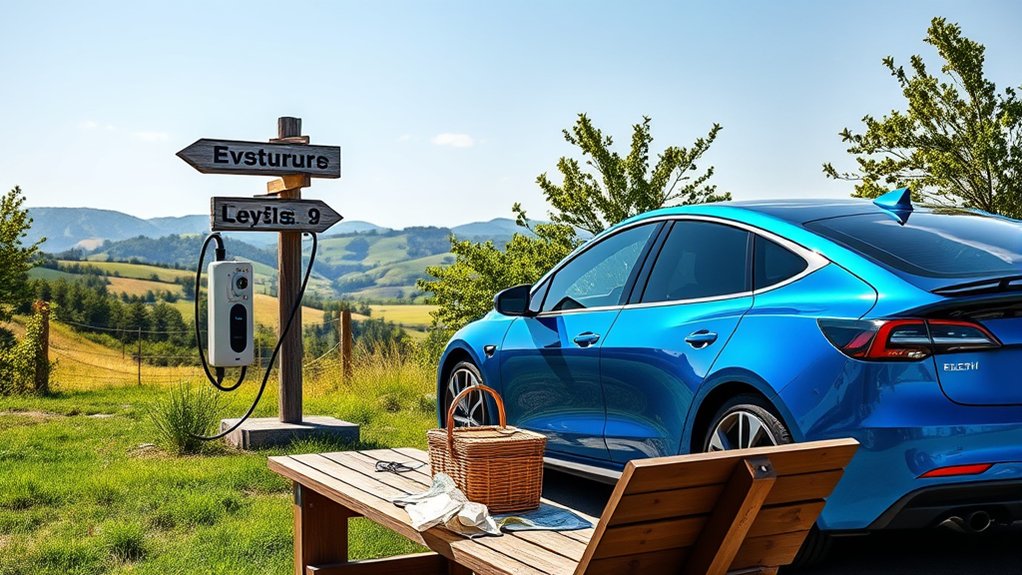
Planning a weekend getaway in an EV is easier when you treat charging stops like part of the trip, not an emergency backup. The goal is simple: leave home with a full-enough battery, map chargers before you go, keep a safe range buffer, and choose stops where you can eat, stretch, or explore while the car charges.
Quick Answer
For a weekend EV trip, plan your route with an EV-specific app, leave with enough charge, stop near 10% to 25% battery, and use DC fast chargers for quick highway top-ups. Aim for about 80% at fast chargers, then keep driving to save time.
Key Takeaways
- Use your car’s navigation, A Better Routeplanner, PlugShare, or the Alternative Fuels Data Center Station Locator to map chargers before you leave.
- Pick chargers that match your EV’s connector, network access, and charging speed. Not every fast charger works with every EV.
- Fast charging usually works best for road trips when you charge to about 80%, because charging often slows at higher battery levels.
- Always choose a backup charger within comfortable range in case the first station is full, broken, blocked, or too slow.
- Cold weather, high speeds, hills, cargo, roof boxes, and towing can reduce range, so add a larger battery buffer in tough conditions.
At a Glance
| Time Required | 10 to 25 minutes to plan a simple weekend route |
| Difficulty | Easy once you know your EV’s range, connector, and charging curve |
| Tools Needed | EV navigation, route-planning app, charging-network apps, payment method, and any approved adapter your vehicle needs |
| Cost | Varies by network, speed, location, idle fees, and electricity rate |
How to Plan Your EV Route With Essential Charging Stops
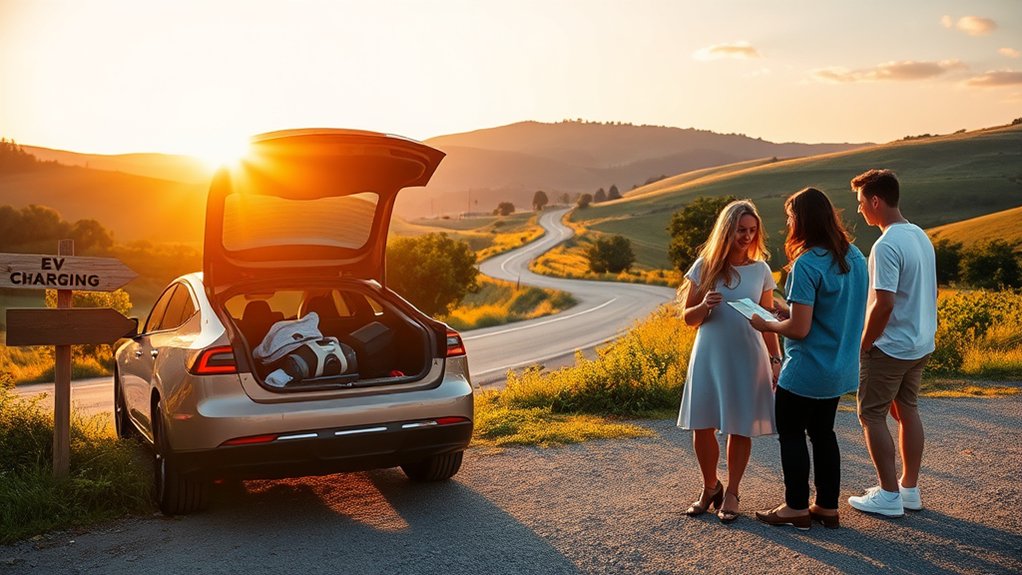
Start with your destination, round-trip mileage, and how much battery you want to have when you arrive. For most weekend trips, it is smart to plan around your real-world range, not just the EPA estimate or the number shown after a full charge.
Use your EV’s built-in navigation first if it includes battery-aware routing. Many modern EVs can estimate your arrival battery, add charging stops, and precondition the battery before a DC fast charger. Then cross-check the route with apps like A Better Routeplanner, PlugShare, or the Alternative Fuels Data Center Station Locator.
When you choose charging stops, look at more than the pin on the map. Check the charger speed, connector type, number of stalls, recent driver reviews, network status, nearby food, restrooms, lighting, and whether the station is easy to reach from the highway.
Pro Tip: Build your route around useful stops. A 25-minute charge feels much shorter when it lines up with lunch, coffee, a scenic overlook, a restroom break, or a grocery stop.
A good weekend route usually includes one primary charger and one backup charger for each charging area. If the first station is full, broken, blocked, or slower than expected, you should still have enough battery to reach the backup without stress.
Before You Leave: Check Range, Connectors, and Apps
Before you pack the car, spend a few minutes checking the basics. This prevents the most common EV road-trip delays.
- Charge at home or at your hotel before leaving: Starting with a high battery level is usually cheaper and easier than relying only on public chargers.
- Confirm your connector: Most non-Tesla EVs in North America use J1772 for Level 1 and Level 2 charging. Many use CCS1 for DC fast charging. Some older vehicles use CHAdeMO. Tesla and many newer North American EVs use or are moving toward J3400, also known as NACS.
- Bring only approved adapters: Use adapters recommended by your automaker or charging network. Do not improvise with unapproved hardware.
- Set up charging apps: Add payment details before the trip so you are not creating accounts in a parking lot with weak cell service.
- Check tire pressure and cargo: Low tire pressure, heavy cargo, roof boxes, bikes, and towing can reduce range.
- Download offline maps: This helps if your route passes through rural areas with poor service.
Warning: Do not charge an EV through a power strip, damaged outlet, loose outlet, or unapproved extension cord. For household charging, follow your owner’s manual and use the charging equipment rated for that outlet and location.
Maximize Charging Efficiency on the Go
Fast charging is quickest when your battery is lower and slows as the battery fills. That is why many EV road trips work best when you arrive at a fast charger around 10% to 25% and leave around 70% to 80%, unless you need more range to reach the next stop.
Charging to 100% at a DC fast charger can take much longer than charging to 80%. Save a full charge for cases where you truly need it, such as a rural route with long gaps between chargers, towing, winter driving, or a destination with no charging nearby.
If your EV has battery preconditioning, use your car’s navigation to route to the fast charger. Preconditioning warms or cools the battery so it can accept power more efficiently when you arrive. This is especially helpful in cold weather.
The fastest stop is not always the charger with the biggest number. Your actual charging speed depends on the charger, your EV’s maximum charging rate, battery temperature, and current state of charge.
Move the vehicle when charging is finished. Many networks charge idle fees after a grace period, and leaving your car plugged in blocks the stall for the next driver.
Selecting the Best Charging Station Types for Your Journey
Choosing the right station type helps you avoid wasting time. Level 1 and Level 2 charging are useful when the car will sit for hours. DC fast charging is best for highway top-ups during a weekend getaway.
| Charger Type | Typical Use | Best Weekend-Trip Strategy |
|---|---|---|
| Level 1 | Standard 120V outlet; slow charging, often only a few miles of range per hour. | Use only for overnight backup, cabin rentals, or very short daily driving. |
| Level 2 | 208V or 240V charging; common at homes, hotels, workplaces, garages, and attractions. | Best for hotels, overnight parking, long meals, museums, hikes, or destination stops. |
| DC Fast Charging | High-power public charging along highways and busy travel corridors. | Use for quick 10% to 80% or 20% to 80% road-trip stops when your EV supports the charger. |
For short scenic stops, Level 2 may be enough if you are parked for several hours. For highway travel, choose DC fast chargers with several stalls and a backup station nearby. A slower but reliable charger can beat a faster charger that has poor reviews or only one working stall.
How Much Battery Buffer Should You Keep?
For a simple weekend route with plenty of chargers, plan to reach each stop with at least 10% to 20% battery. For rural routes, mountain roads, winter trips, towing, or unfamiliar areas, aim for a larger buffer of 20% to 30%.
Do not wait until the battery is nearly empty just because a charger appears on the map. Chargers can be occupied, offline, blocked by non-charging cars, or limited by network problems. Your buffer is what turns a problem into a minor detour.
Note: Your EV’s estimated range can change during the drive. Watch the arrival battery estimate, not just the miles remaining at departure.
Account for Weather, Speed, Hills, and Cargo
Weather can change your charging plan. Cold temperatures can reduce range and slow fast charging until the battery warms up. Hot weather can increase energy use because the car must cool the cabin and battery. Rain, snow, headwinds, steep climbs, high highway speeds, and heavy cargo can also reduce efficiency.
Use these habits to protect your range:
- Precondition while plugged in: Warm or cool the cabin before leaving so less battery energy is used on the road.
- Route through your car’s navigation: If supported, this can trigger battery preconditioning before fast charging.
- Slow down slightly: High highway speeds can drain range faster than expected.
- Use seat heaters wisely: In cold weather, heated seats and steering wheels can use less energy than heavy cabin heat.
- Add a bigger buffer: Plan extra battery margin when weather or terrain is uncertain.
What to Do if a Charging Station Is Broken or Full
If a charger does not work, do not spend too long troubleshooting one stall. Try another connector or stall first. If the station has an app, check whether that port shows as available, busy, or out of service.
Use this order:
- Check that the connector is fully seated and your vehicle is unlocked if your charge port requires it.
- Try starting the session from the charger screen, then from the network app, then from your vehicle app if supported.
- Move to another stall if one is open.
- Call the network support number listed on the charger if you need help.
- Report the broken charger in the app so other drivers know.
- Leave for your backup charger before your battery buffer gets too low.
If all stalls are occupied, check whether drivers are actively charging. If someone is idle and the network allows contact through the app, use the app feature instead of touching another person’s vehicle or cable.
Be a Good Neighbor: Charging Etiquette
Good charging etiquette keeps road trips easier for everyone. Use fast chargers for active charging, not long parking. When your session is done, unplug and move your vehicle promptly.
At a busy DC fast charger, charge only to the level you need to reach your next stop with a safe buffer. In many cases, that means leaving around 70% to 80% instead of waiting for 100%.
Keep the cable neat when you leave, avoid parking in a charging space if you are not charging, and do not unplug another vehicle unless the driver has clearly given permission. If a charger has time limits, follow them. If a station charges idle fees, treat them as a reminder to move quickly.
At hotels, ask the front desk about charging rules when you arrive. Some hotels ask drivers to move after charging so other guests can use the station overnight.
What’s New in EV Tech? Stay Updated!
EV road trips are improving quickly, but the details matter. The most useful changes for weekend travel are better route planning, more reliable charging locations, connector standardization, and easier payment.
- J3400/NACS transition: Many automakers are moving toward the J3400 connector in North America. Depending on your EV, you may need a CCS1, J1772, CHAdeMO, or J3400/NACS adapter.
- Native route planning: More EVs can calculate charging stops, estimate arrival battery, and prepare the battery before fast charging.
- Plug & Charge: Some vehicles and networks can start and bill a session automatically after you plug in, though support still varies.
- Higher-power DC chargers: Newer fast chargers may offer very high power, but your actual speed depends on your EV’s charging limit and battery condition.
- Driver-assist systems: Hands-free highway systems can reduce fatigue on compatible roads, but they still require attention and are not a replacement for driving.
Before each trip, check your vehicle app or owner portal for software updates, charging-network access changes, and adapter guidance. EV charging is improving, but the best road-trip plan is still the one that matches your exact vehicle.
Frequently Asked Questions
How do weather conditions affect EV charging efficiency?
Cold weather can reduce range and slow fast charging because the battery may need to warm before it accepts high power. Hot weather can also increase energy use because the car must cool the cabin and battery. In harsh weather, precondition while plugged in and plan a larger battery buffer.
Can I charge my EV at non-dedicated outlets?
You can often use a standard 120V outlet with the portable charging cord approved for your vehicle, but it will be slow. The outlet should be grounded, in good condition, and rated for the load. Do not use power strips, damaged outlets, or unapproved extension cords.
What should I do if I encounter a broken charging station?
Try another stall first, then restart the session from the app or charger screen. If it still fails, call the network support number, report the issue in the app, and leave for your backup charger before your battery buffer gets too low.
Are charging speeds consistent across different EV models?
No. Charging speed depends on the charger’s power, your EV’s maximum charging rate, battery size, battery temperature, and current state of charge. Two EVs plugged into the same fast charger can charge at very different speeds.
How can I find EV-friendly attractions during my trip?
Use PlugShare, Google Maps, your vehicle navigation, hotel websites, and the Alternative Fuels Data Center Station Locator to find chargers near parks, restaurants, museums, shopping areas, and hotels. Filter by connector, charging speed, reviews, and recent check-ins.
Should I charge to 100% before every weekend trip?
Charge to the level your vehicle maker recommends for daily use, then charge higher when the trip requires it. For road trips, a high departure charge can be useful, but repeated fast-charging to 100% during the trip usually wastes time unless you need the extra range.
Is a 350 kW charger always faster than a 150 kW charger?
Not always. A 350 kW charger only helps if your EV can accept that much power and the battery is in the right temperature and state-of-charge range. Some EVs will charge at the same speed on a lower-power charger because the vehicle is the limiting factor.
What is the best charging stop for a hotel stay?
A Level 2 hotel charger is usually best because the car can charge while you sleep. Call the hotel before booking to confirm the charger works, ask whether it is free or paid, and check if guests must move their cars after charging.
Conclusion
A smooth EV weekend getaway comes down to preparation. Map your route, check your connector, set up charging apps, choose stops with useful amenities, and keep a backup charger within range. Use DC fast chargers for quick highway top-ups, Level 2 chargers for long stops, and a larger battery buffer when weather, terrain, or traffic gets unpredictable. With a smart plan, charging becomes part of the rhythm of the trip instead of a source of stress.
Sources
- U.S. Department of Energy Alternative Fuels Data Center: Electric Vehicle Charging Stations — charging levels, typical charging speeds, connector types, and station terminology.
- U.S. Department of Energy Alternative Fuels Data Center: Charging Electric Vehicles at Home — home charging basics and residential charging safety context.
- Alternative Fuels Data Center Station Locator — finding EV charging stations by location and route.
- Joint Office of Energy and Transportation: SAE J3400 Charging Connector — J3400/NACS standardization, CCS1 requirements, and adapter guidance.
- Reliability of Open Public Electric Vehicle Direct Current Fast Chargers — why backup charging stops matter on road trips.
- Associated Press: Frigid weather can cut electric vehicle range and make charging tough — cold-weather range and charging impacts.