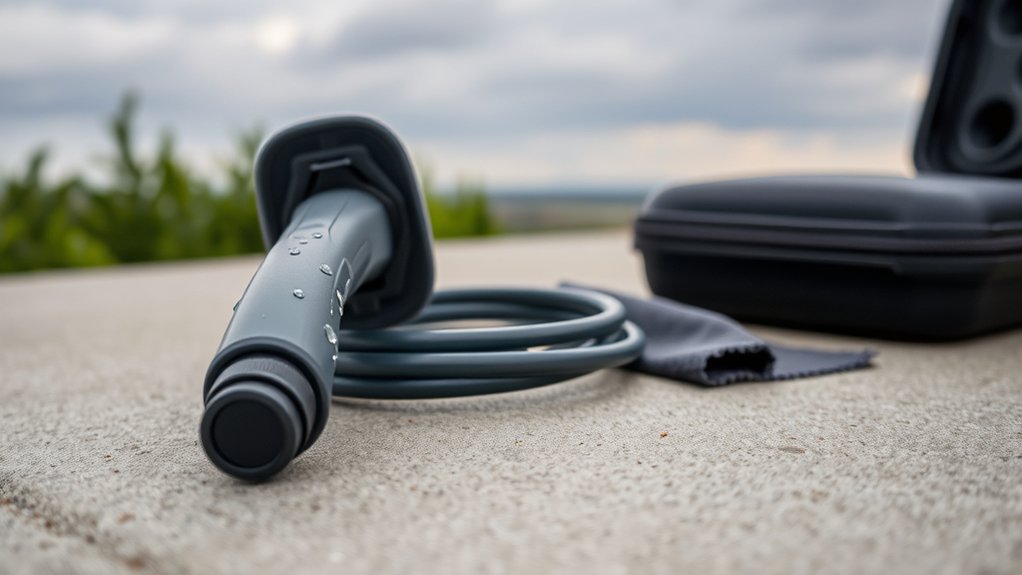
If an EV charging cable gets wet, first identify what got wet. Rain on the outside of properly rated, undamaged charging equipment can be normal; pooled water inside a connector, a wet household plug or outlet, submersion, or floodwater exposure is different. Stop charging if you suspect water has entered an electrical contact area, let the equipment dry fully according to its manufacturer instructions, and do not reuse damaged or flood-exposed equipment until it has been evaluated.
Last updated: September 8, 2026
Author: [VERIFY: add the real author name and relevant EV/electrical-safety credentials in the CMS]
Quick Answer
To dry a wet EV charging cable, stop the charging session if water may have entered the connector or plug, disconnect only when it is safe, wipe the exterior with a dry cloth, and let the connector dry naturally in a clean, ventilated area. There is no universal 24- or 48-hour rule: reuse it only when it is fully dry, undamaged, and the manufacturer instructions allow it. Floodwater, saltwater, submersion, corrosion, or repeated faults call for professional evaluation.
Key Takeaways
- Do not touch the charger, cable, or connector if you are standing in water or the plug is submerged.
- Dry the exterior with a clean cloth and allow trapped moisture to evaporate naturally. Do not apply forced heat unless the manufacturer specifically instructs you to.
- Outdoor-rated EV charging equipment can be used in rain when installed and used as intended, but pooled water inside contacts, a wet mains plug or outlet, or physical damage changes the risk.
- Corrosion, burn marks, exposed wires, cracked insulation, or repeated charging faults mean you should stop using the cable.
- After saltwater, floodwater, or soaking, get professional inspection before charging again.
At a Glance
| Drying Time | No universal fixed time; wait until the connector is completely dry and follow the charger or vehicle manufacturer instructions |
| DIY Scope | Exterior drying and visual inspection only; do not open or repair charging equipment yourself |
| Useful Items | Dry microfiber cloth, safe cable support or holster, flashlight, and a clean ventilated area |
| Cost | No fixed amount; professional inspection or replacement cost depends on the charger, cable, and vehicle |
Warning: If a charger, mains plug, wall outlet, control box, or connector is submerged, in standing water, smoking, sparking, unusually hot, or visibly damaged, do not touch it. Keep away from the wet area. Shut power off only from a dry, safe location if you can do so without entering the hazard area. Contact a qualified electrician, the equipment manufacturer, or emergency services when there is smoke, heat, arcing, or a burning smell.
What Should You Do If an EV Charging Cable Gets Wet?

Start by separating normal weather exposure from actual water intrusion. The U.S. Department of Energy’s Alternative Fuels Data Center says outdoor EV charging is safe in rain when outdoor-rated equipment is used. Manufacturer guidance also distinguishes ordinary rain from pooled water or moisture inside a charge port or connector.
| What Got Wet? | What to Do |
| Cable jacket or outside of an outdoor-rated connector from normal rain | Follow the equipment manual. Wipe the exterior if needed and inspect for damage; normal rain alone does not automatically make properly rated equipment unsafe. |
| Pooled water or unusual moisture inside the vehicle inlet or charging connector | Do not start or restart charging. Let the contact area dry completely and follow the vehicle or charger manufacturer troubleshooting guidance. |
| Household plug, receptacle, control box, or EVSE submerged or exposed to floodwater | Do not touch or re-energize it. Have water-damaged electrical equipment evaluated by a qualified professional before return to service. |
| Saltwater exposure, corrosion, cracked insulation, melted plastic, or repeated charging faults | Stop using the equipment. Arrange professional inspection or replacement according to the manufacturer’s guidance. |
Follow these steps in order:
- Stop charging from the vehicle or charger app if you can do so without touching wet hardware.
- Disconnect only when safe. Keep your hands dry and stay off wet ground. If a mains plug or outlet is submerged, do not approach it to unplug the equipment.
- Check the connector openings for droplets, dirt, grit, rust, discoloration, or a burnt smell.
- Wipe the outside with a clean, dry microfiber cloth. Do not pour water, cleaner, or solvent into the connector.
- Position the cable so trapped water can drain without sharply bending, pinching, or stressing the cable.
- Wait until fully dry before reuse. There is no universal drying-time rule. Follow the vehicle or charging-equipment manual; if the equipment was submerged, flood-exposed, saltwater-exposed, or still reports a fault, get it evaluated.
Note: Rain on the outside of properly rated equipment is not the same as pooled water or unusual moisture inside a connector. For example, Tesla troubleshooting guidance tells owners to inspect the charge port and handle for pooled water or unusual moisture and let both areas dry sufficiently before trying again.
How Should You Position a Wet EV Charging Cable to Dry?
If the manufacturer manual allows you to handle and air-dry the cable, place it in a clean, dry, well-ventilated area and orient the connector so visible water can drain away from the contact area. Do not force the connector open or insert cloth, paper, tools, or loose material into the contacts.
Use a wall hook, cable hanger, ladder rung, or sturdy rail that keeps the cable off the floor. Keep both ends open to air, but do not leave them where dust, metal shavings, rain, pets, or foot traffic can reach them.
Optimal Hanging Position
Use a position that follows the cable maker’s handling instructions and avoids tight bends. If the connector design allows drainage, orient the opening downward or at a gentle angle so visible water can run away from the contact area. Avoid sharp hooks that press into the cable jacket.
| Drying Position | Why It Helps | Avoid |
| Connector opening angled downward, if the design and manual allow it | Helps visible water drain away from the contact area | A position that traps pooled water in the connector |
| Cable raised off the floor | Keeps the jacket away from puddles, dirt, and grit | Laying it on concrete or wet ground |
| Loose loops | Protects internal conductors from bend stress | Tight coils, knots, or sharp bends |
| Clean, room-temperature airflow | Allows moisture to evaporate without opening the connector | Forced heat or any drying method the manufacturer does not approve |
How Long Should an EV Charging Connector Dry Before Reuse?
There is no universal 24- or 48-hour drying rule for every EV charging cable or connector. Manufacturer instructions take priority. Current Tesla troubleshooting guidance, for example, says to let pooled or unusual moisture in the charge port and charge handle dry sufficiently before trying again; it does not prescribe a universal clock time.
Do not rely on time alone. Before reuse, inspect both connector ends with a flashlight. The contact area should be dry and free of pooled water, dirt, corrosion, burnt smell, cracked plastic, damaged insulation, or bent contacts. If the vehicle or charger still reports a ground-fault, connection, or moisture-related error, stop and follow the manufacturer troubleshooting process or get professional help.
Can You Use Airflow to Dry an EV Charging Cable?
Natural ventilation is a low-intervention way to let surface moisture evaporate, but the charger or vehicle manual should control the drying method. The goal is to let the equipment dry without opening the connector, applying heat, or pushing objects into the contacts.
Optimal Airflow Techniques
- Use room-temperature ventilation: If the manufacturer does not prohibit it, a fan placed nearby can improve general airflow. Do not force high-pressure air into the connector.
- Choose a dry indoor space: A garage, utility room, or covered porch works if the area is not damp.
- Keep the connector ends open: Do not wrap them in plastic while moisture is still inside.
- Keep the contact area unobstructed: Do not insert paper, cloth, swabs, rice, loose desiccant, or tools into the connector.
Pro Tip: Check the owner’s manual before trying to speed up drying. A universal “fast-dry” method is less reliable than the manufacturer’s instructions for that connector, portable EVSE, wall unit, or vehicle inlet.
How Should You Support the Cable While It Dries?
Support a heavy cable in more than one place so a single hook does not create a sharp bend or pinch point. Keep the connector protected from dirt and foot traffic, and replace the dust cap or holster only after the connector is dry.
Effective Cleaning Techniques for EV Charging Connectors
Regular inspection and cleaning of EV charging connectors helps maintain safe, reliable charging. The DOE AFDC guidance on EV charging infrastructure maintenance recommends storing charging cables securely, checking parts periodically, and keeping equipment clean.
Use gentle cleaning only:
- Wipe the exterior: Use a soft, dry microfiber cloth on the handle, cable jacket, and outside of the connector.
- Remove loose dirt carefully: Use a clean, dry, soft brush around the connector face. Do not scrape the pins with metal tools.
- Avoid unapproved chemicals: Do not put cleaners, solvents, water, or home remedies into the electrical contacts unless the manufacturer specifically instructs you to use that product and method.
- Stop if you see corrosion: Rust, green deposits, white powder, pitting, or discoloration near the contacts means the cable should be inspected or replaced.
If your manufacturer recommends an electrical contact cleaner, follow the label and the equipment manual exactly. If you are unsure, do not spray anything into the connector.
Common Mistakes to Avoid When Drying Cables
The wrong drying method can damage an EV charging cable even if the water exposure was minor. Avoid these common mistakes:
- Using forced heat without manufacturer approval: Do not use a heat gun, heater, or other hot-air method unless the equipment maker specifically authorizes it.
- Leaving the connector face up: This can trap water around the contact area.
- Charging before the contact area is dry: Moisture can remain in recesses even when the outside of the handle looks dry.
- Putting material into the connector: Do not insert rice, paper, swabs, cloth, tools, or loose particles into the contact area.
- Blasting the connector with high-pressure air: Do not force air into the contacts unless the manufacturer provides that procedure.
- Ignoring error lights: If the charger or vehicle reports a fault after drying, stop and investigate.
Should You Use Silica Gel or Other Desiccants?
There is no universal EV-manufacturer rule that requires silica gel or another desiccant for a wet charging connector. Treat desiccants as optional environmental moisture control only if your equipment manual allows it; never put packets, loose beads, rice, or any other material inside the connector.
The safer priority is simple:
- Follow the manual first: Use the drying and cleaning procedure for your specific vehicle, portable EVSE, wall charger, or cable.
- Keep foreign material out: Do not insert desiccant, cloth, paper, swabs, or tools into the contacts.
- Do not treat drying as repair: Corrosion, cracked insulation, damaged seals, or repeated faults need inspection or replacement.
- Escalate flood exposure: Submerged or flood-damaged electrical equipment should be evaluated before it is returned to service.
If the connector was simply wet from normal weather and the equipment is rated for that use, the manufacturer manual may require no special drying procedure at all. The important distinction is normal exterior rain versus water intrusion, contamination, or damage.
When to Get Professional Help for Cables?
Get professional help if the cable was submerged, exposed to floodwater, exposed to saltwater, physically damaged, or still triggers charging errors after drying. EV charging equipment carries high current, so guessing is not worth the risk.
Floodwater and saltwater deserve extra caution. The Electrical Safety Foundation International guidance on water-damaged electrical equipment warns that contaminated floodwater can affect electrical equipment and that ocean water or salt spray can be especially damaging because salt residue is corrosive and conductive. Water-damaged equipment should be evaluated before it is returned to service.
Signs Of Severe Damage
Replace the cable or get it inspected if you notice any of these signs:
- Corrosion: Rust, green deposits, white powder, or pitted metal near the contacts.
- Cracks: Split connector housing, cracked plug body, or damaged strain relief.
- Exposed wires: Fraying, cuts, crushed insulation, or copper showing through.
- Heat damage: Melted plastic, dark marks, deformation, or a burning smell.
- Persistent faults: The vehicle or charger shows ground-fault, connection, overheating, or charging-interrupted messages after drying.
- Loose fit: The connector no longer locks or seats firmly in the vehicle inlet.
Professional Inspection Benefits
A qualified electrician, EVSE technician, or manufacturer service provider can check problems that are not visible from the outside. Depending on the cable and charger type, they may inspect the connector contacts, strain relief, cable jacket, plug, seals, and electrical protection features.
For installed Level 2 equipment, a professional can also check whether the circuit, breaker, receptacle, and charger are still safe. The IEC 61851-1 EV supply equipment standard covers operating conditions, EVSE-to-EV connection requirements, and electrical safety requirements. For homeowners, the practical takeaway is simple: damaged or soaked charging equipment should be checked by someone qualified.
How to Properly Store Your Charging Cables
Proper storage helps keep your EV charging cable dry, clean, and ready for the next session. It also reduces stress on the cable jacket and connector ends.
- Use a cable holder: Keep the cable off the ground and away from puddles, mud, snow, and road salt.
- Use large loops: Avoid tight coils that can strain internal conductors.
- Cap the connector: If your cable includes a dust cap or holster, use it after the connector is dry.
- Protect it from heat and damage: Store it as the manufacturer directs, away from heat sources, sharp edges, and places where it can be crushed or run over.
- Inspect regularly: Check for cracks, swelling, cuts, corrosion, or a loose connector fit.
If you charge outdoors, mount the holster so the connector points downward or is protected from wind-driven rain. Do not leave the connector lying on the driveway.
Signs Your Cable Is Beyond Repair
Some weather-exposed EV charging cables can continue in service, while water-damaged or physically damaged equipment may need professional evaluation or replacement. Do not open, splice, tape, glue, or improvise repairs on charging equipment unless the manufacturer provides an approved service procedure performed by a qualified person.
| Sign | What It Means | Best Action |
| Corrosion on contacts | Moisture may have reached the conductive parts | Stop using and replace or inspect professionally |
| Cracked connector body | Water can enter again even after drying | Replace the cable or connector assembly |
| Exposed wire or cut jacket | Shock, heat, and short-circuit risk | Do not use; replace |
| Repeated charging errors | Possible internal moisture or damaged contacts | Stop charging and troubleshoot with a technician |
| Burning smell or melted plastic | Possible overheating or arcing | Stop immediately and replace |
Why Does Water Inside an EV Charging Connector Matter?
Water inside an electrical contact area is different from rain on the outside of properly rated equipment. Pooled moisture, contamination, or corrosion can cause charging faults and may indicate that seals, contacts, a plug, receptacle, or other electrical parts need attention. Built-in protection can stop a charging session when a fault is detected, but it does not make damaged or flood-exposed equipment safe to ignore.
The DOE AFDC overview of EV charging stations explains that EV charging ports and connectors are the parts that physically connect the charger to the vehicle. Keeping those contact areas clean and dry helps the charger and vehicle communicate properly and charge safely.
Before plugging in again, use this checklist:
- The connector face is dry and free of droplets.
- The cable jacket has no cuts, cracks, swelling, or crushed spots.
- The plug fits firmly and locks normally.
- There is no corrosion, burnt smell, or melted plastic.
- The charger and vehicle show no warning lights or error messages.
- The cable, plug, control box, outlet, or EVSE was not submerged or flood-exposed unless it has been evaluated for safe return to service.
Normal rain on properly rated, undamaged equipment is not the same as water intrusion. If moisture pools inside a contact area, let it dry completely, follow the manufacturer instructions, and do not reuse damaged or flood-exposed equipment without evaluation.
Frequently Asked Questions
What should I do if my EV charger cable gets wet?
First identify whether only the weather-resistant exterior is wet or whether water has pooled inside a connector, mains plug, outlet, control box, or other contact area. If water may have entered electrical contacts, stop charging, disconnect only when safe, let the equipment dry completely according to the manufacturer instructions, and inspect for damage before reuse.
How can I dry a wet EV charging connector safely?
Wipe only the exterior with a clean, dry cloth, place the equipment in a clean ventilated area if the manual allows air-drying, and let the contact area dry completely. Do not insert material into the contacts or use forced heat unless the manufacturer specifically provides that procedure.
Is it okay if an EV charger gets wet in the rain?
Outdoor-rated EV charging equipment is designed for outdoor conditions and can be used in rain when installed and used correctly. However, do not use the charger if the connector has standing water inside it, the cable is damaged, the unit was submerged, or the vehicle or charger shows a fault.
Are EV charging cables waterproof?
Many EV charging cables and connectors are weather-resistant when they are properly rated and undamaged, but that does not make every cable waterproof or safe after submersion. Always check your charger manual and the rating on the equipment. Replace or inspect any cable with cracks, corrosion, or water inside the connector.
Can I use a hair dryer to dry an EV charging connector?
Do not use a hair dryer or other forced-heat method unless the charging-equipment manufacturer specifically authorizes it. Use the cleaning and drying procedure in the vehicle or charger manual and keep foreign objects out of the electrical contacts.
How long should a wet EV charging connector dry?
There is no universal drying time that applies to every EV charging connector. Wait until the contact area is completely dry and follow the vehicle or charger manufacturer instructions. If moisture-related faults continue, stop and troubleshoot with the manufacturer or a qualified professional.
What if my EV charging cable was in floodwater or saltwater?
Do not reuse it just because it looks dry. Floodwater can contain contaminants, and saltwater can leave corrosive, conductive residue. Keep the equipment out of service and have the water-damaged electrical parts evaluated before they are re-energized.
Conclusion
Drying a wet EV charging cable safely starts with one distinction: normal rain on properly rated equipment is not the same as water inside electrical contacts or flood-damaged hardware. If water may have entered a connector, plug, outlet, control box, or EVSE, stop charging, disconnect only when safe, let it dry completely according to the manufacturer instructions, and inspect for damage before reuse. Submersion, floodwater, saltwater, corrosion, exposed conductors, heat damage, or repeated charging faults are reasons to keep the equipment out of service and get qualified help.
Sources
- U.S. Department of Energy Alternative Fuels Data Center: Charging Electric Vehicles at Home — supports outdoor-rated equipment, rain-use context, safety-certified charging equipment, and code-compliant installation.
- U.S. Department of Energy Alternative Fuels Data Center: Operation and Maintenance for EV Charging Infrastructure — supports cable storage, periodic inspection, and keeping charging equipment clean.
- U.S. Department of Energy Alternative Fuels Data Center: Electric Vehicle Charging Stations — supports EVSE, charging port, connector, and charging-level terminology.
- IEC 61851-1:2017 Electric Vehicle Conductive Charging System — supports EV supply equipment operating conditions, EVSE-to-EV connection requirements, and electrical safety requirements.
- SAE J1772_202401 Electric Vehicle Conductive Charge Coupler — current SAE J1772 revision for North American conductive charging coupler requirements.
- Electrical Safety Foundation International: Water-Damaged Electrical Equipment — supports professional evaluation of water-damaged electrical equipment and extra caution with contaminated or saltwater exposure.
- Tesla Model 3 Owner’s Manual: Charging Troubleshooting — provides an example of manufacturer guidance to inspect for moisture and allow the charge port and connector to dry sufficiently before retrying.